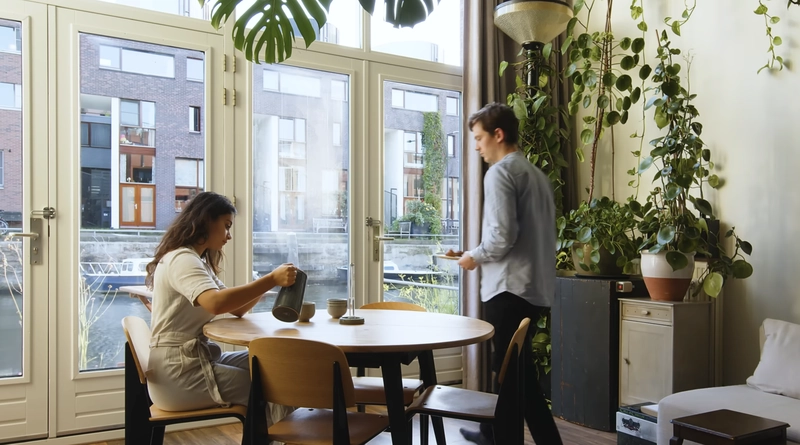
In the heart of Amsterdam’s waterfront, a quiet revolution in residential design is taking place. As urban centers become more crowded, the traditional concept of “home” is shifting from a static collection of rooms to a fluid, highly personalized environment. Leading this charge is Koen Freiman, a maker and designer who shares a 45-square-meter (484 sq. ft.) loft with his girlfriend, Fadeem, and their cat, Suuk. Their home is not just a place to sleep; it is a masterclass in tailored living, where every square inch is considered and iterated upon until it “feels right”.
The Philosophy of Iteration
For Freiman, the secret to mastering small-scale living isn’t found in a blueprint, but in the experience of inhabiting the space. “My philosophy when it comes to designing small spaces is to iterate until it feels right,” Freiman explains, noting that living in the space allows residents to truly discover what works for their specific needs.
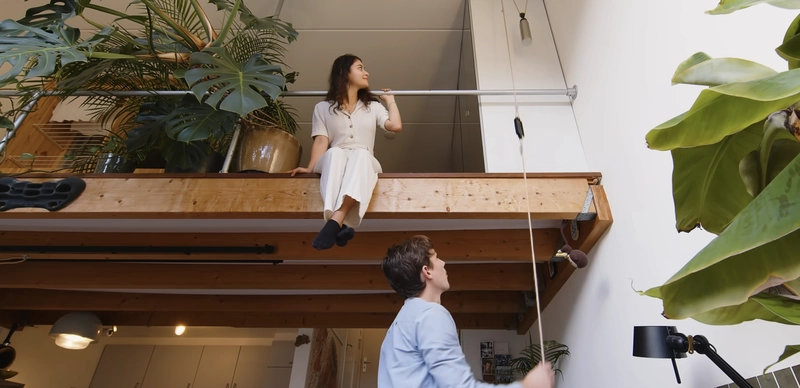
This approach reflects a broader trend in modern housing: the move away from “one-size-fits-all” layouts toward modularity. Freiman utilizes multifunctional furniture, such as “Molecrates”—a system made from sustainable Baltic birch plywood. These units can be transformed from storage and bedside tables into room dividers or seating, allowing the home to evolve as the residents’ needs change.
Designing for Light and Perspective
The loft itself sits in a district transformed by the municipality of Amsterdam in the 1990s, where a lack of aesthetical restrictions led to a diverse and unique streetscape. Finished in 1998, the unit’s greatest assets are its high ceilings and expansive windows facing south, which flood the interior with light and offer views of the waterfront.
To maximize this sense of openness, Freiman kept the entrance “clean and clear,” allowing visitors to look straight through the house to the water. Strategic design choices, such as floor-to-ceiling mirrors on wardrobes and a mirror above the door, help bounce light around the apartment, creating a more spacious feeling than the footprint might suggest.
The Personal and the Practical
Modern living is increasingly defined by the integration of personal history and DIY ingenuity. Freiman’s loft is a curated collection of found objects and custom builds:
• Found Treasures: A hull light discovered in an abandoned factory in Istanbul and industrial light switches from Belgium add a unique, narrative-driven aesthetic.
• Smart Solutions: A television suspended on a ceiling rail can be moved back and forth; when tucked against the wall, it reveals a sculpture on its backside.
• Pet-Centric Design: Even the cat, Suuk, has a dedicated place in the layout, with a hidden litter box integrated into a bathroom cabinet and a “hiding place” built into a large pink storage unit.
Expanding the Footprint
Perhaps the most ambitious aspect of the loft is how it reclaims the outdoors. By building a floating terrace, the couple effectively extended their living space over the water. This was a complex feat of engineering that required building the structure indoors, partially de-assembling it to fit around a central column, and then reassembling it outside.
Inside, flexibility remains key. A round dining table normally occupies a small footprint but can be extended to host up to eight people, proving that a small home does not have to mean a small social life.
A New Standard
The Amsterdam loft demonstrates that modern living is no longer about the quantity of space, but the quality of the design. By combining existing elements, DIY craftsmanship, and modular systems, residents can create a sanctuary that is both a functional machine for living and a deeply personal reflection of their style. As Freiman puts it, the style of a modern home evolves through a “combination of many personal things,” creating a space that is truly “never too small”.