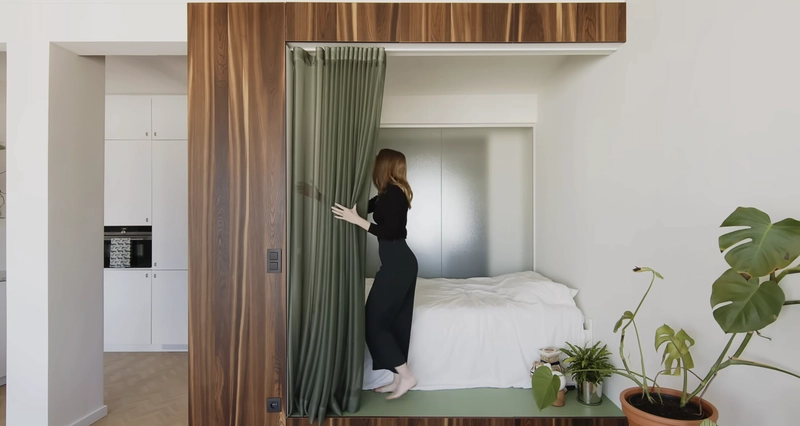
In the heart of bustling city centers, the traditional concept of a “home” is undergoing a radical transformation. As rising housing prices continue to squeeze the market, a new generation of homeowners is discovering that “living large” has less to do with total square footage and everything to do with innovative design.
The Philosophy of the “Compact Home”
Modern living is increasingly defined by the “natural sequence of functions,” a concept championed by interior architect Caroline Potter. According to the sources, Potter believes that a clear and natural floor plan—where every centimeter is intentionally utilized—can significantly enhance how we live, work, and feel within our private spaces.
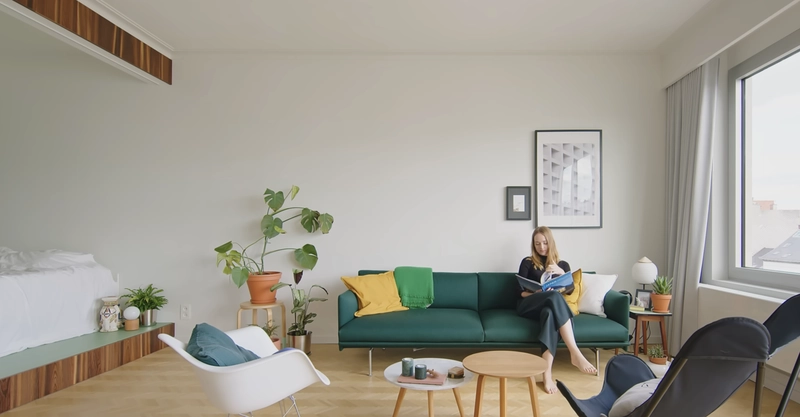
For many, the move toward smaller, more efficient homes is not just a financial necessity but a lifestyle choice. Potter notes that with a bit of creativity, even a modest footprint can be transformed into a fully functioning home. This shift represents a move away from the fragmented, walled-off layouts of the mid-20th century toward open-plan environments that prioritize light and fluidity.
A Case Study in Antwerp
Take, for example, a 51-square-meter apartment in the University District of Antwerp. Built in 1967, the original layout was a maze of dark, separated rooms; the bathroom lacked natural light, and the kitchen was isolated from the living area.
To modernize the space, Potter removed all internal walls, replacing them with a central “box” finished in smoked brushed larch. This central structure acts as a multifunctional anchor, housing the bed and shower while providing essential storage for everything from bike lights to mail. By raising the bed onto a podium, she was able to maximize the space further by creating under-floor storage.
Lifestyles Reshaping Spaces
Today’s urban dwellers require their homes to be as flexible as their professional lives. The sources highlight several ways modern lifestyles are dictating these design choices:
• Multifunctional Furniture: The dining table is no longer just for meals; it often doubles as a work-from-home desk. Similarly, seating benches in the dining area frequently include built-in storage to keep clutter at bay.
• The DIY Movement: Driven by limited budgets, many owners are taking a hands-on approach. Potter, for instance, installed her own herringbone mosaic parquet floor after taking a specialized course.
• Bringing Nature In: In dense urban environments, the connection to nature is vital. Designers are prioritizing natural light by using opaque walls to allow sunlight to reach deep into the apartment, while also integrating indoor plants to foster a sense of tranquility.
• Technology Integration: Modern entertainment is becoming invisible. Rather than a bulky television set, homeowners are opting for projectors that can be stored in cabinets and projected onto empty walls when needed.
The Path Forward
While the challenges of the modern housing market are real, the sources suggest they are also breeding a new era of architectural ingenuity. For young people, a small apartment is more than just a starter home; it is an opportunity to own a space that is custom-tailored to their needs.
By focusing on texture, color, and smart storage, these compact spaces prove that you don’t need a massive footprint to achieve a feeling of warmth and luxury. As the concept of the living space continues to evolve, the emphasis remains clear: it is not about how much space you have, but how creatively you use it.