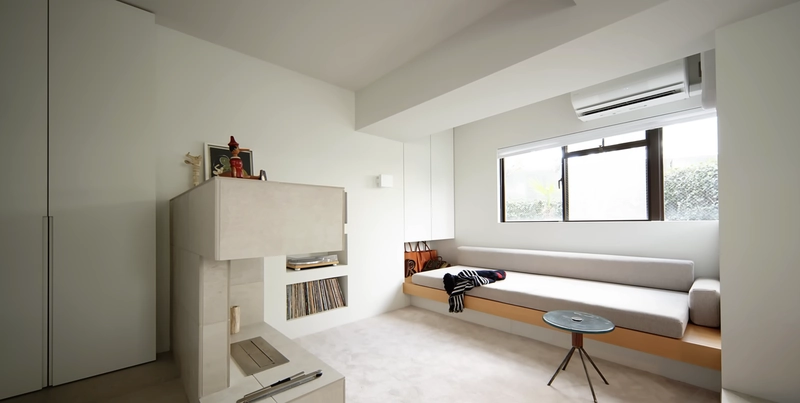
As an architect, I often view my work as a silent dialogue between the physical environment and the human experience. In an era marked by increasing urban density and an aging population, the role of architecture has shifted from merely providing shelter to optimizing every square millimeter for comfort, privacy, and connection. Nowhere is this more evident than in the “Never Too Small” project in Setagaya, Tokyo, where a 46-square-meter apartment was reimagined to house an elderly mother and her adult son.
The Art of Spatial Efficiency
Modern living demands that we move away from static rooms toward multi-purpose environments. In small-scale architecture, efficiency is not just about fitting things in; it is about zoning without walls. In the Setagaya project, for instance, the living room is positioned a step lower than the rest of the apartment and carpeted to create a distinct, comfortable “zone” for relaxation without the need for restrictive partitions.
True spatial efficiency also relies on genius storage solutions that hide the clutter of modern life. We see this through the use of:
• Hidden Storage: Utilizing “water-run” areas and hallways to store everything from golf bags to Wi-Fi routers.
• Integrated Furniture: A wooden bench by the window serves as a sofa by day and converts into a bed by night, with specialized storage underneath for bedding.
• Verticality and Recesses: Using recessed wall shelves for small items and ceiling-hung clothes racks to keep floor paths clear and accessible for elderly residents.
Materiality and Sustainability
While the provided sources focus on specific project details, architecture globally is shifting toward sustainable materials to reduce environmental impact. In the Setagaya apartment, we see a preference for natural wood in kitchen cabinetry and furniture, finished with water-resistant plaster to ensure longevity. Additionally, the inclusion of a bio-ethanol fireplace acts as both a sustainable heating element and a visual divider between the entrance and the living area.
Note: From my professional knowledge outside of the sources, sustainable architecture also frequently incorporates recycled steel, cross-laminated timber (CLT), and low-VOC (volatile organic compound) finishes to improve indoor air quality and reduce carbon footprints. You may want to independently verify the specific environmental ratings of bio-ethanol versus other heating methods.
Architecture and the Relationship with Nature
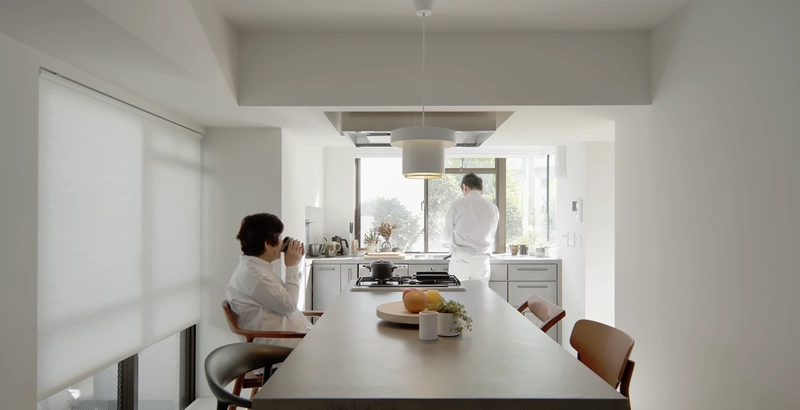
Even in the most populated residential areas, the human psyche craves a connection to the natural world. Architecture facilitates this through strategic orientation and light. In this Tokyo renovation, the kitchen—a space of high activity—was designed to be bright and open, with the sink specifically facing a window that overlooks green space.
Furthermore, lighting is used as a psychological tool. When natural light is unavailable, such as in a compact toilet or a storage hallway, indirect and sensory lighting can be used to create a sense of spaciousness and comfort, preventing the architecture from feeling “closed in”.
Conclusion: Architecture as a Social Solution
Ultimately, the influence of architecture on modern living is most profound in how it manages human relationships. As the number of multi-generational households increases, architecture must provide spaces where individuals can maintain an appropriate distance while sharing a home. By prioritizing bright, open communal areas like an island kitchen for shared meals, while respecting private zones for rest, we can design homes that foster both independence and family bonding, regardless of size.