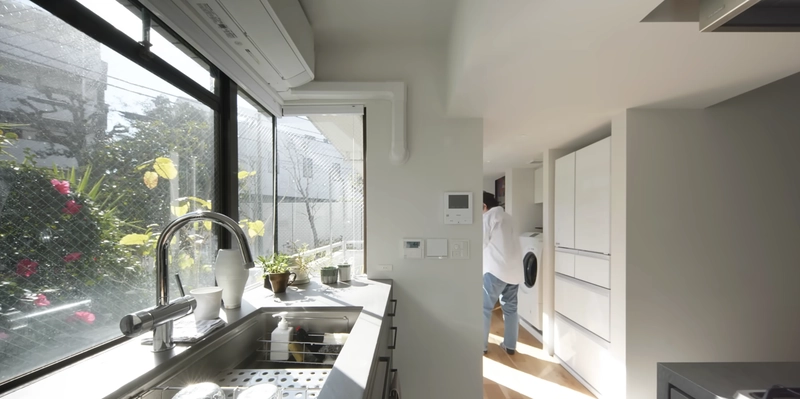
In the heart of Setagaya, one of Tokyo’s most densely populated residential districts, a 46-square-meter apartment is quietly staging a revolution in interior design. What was once a dated, 40-year-old space with difficult-to-use facilities has been transformed into a sophisticated sanctuary for an elderly mother and her adult son. This project, led by architect Kumiko Oi, founder of Small Design Studio, serves as a masterclass in how modern living spaces are being reshaped by the evolving needs of multi-generational households.
The Shift Toward Multi-Generational Living
As global demographics shift, the traditional “nuclear family” model is being replaced by more complex arrangements. In Japan specifically, an aging population has led to a rapid increase in parent and child generations living together. According to the sources, these projects highlight a growing necessity: creating environments where family members can share a life while maintaining “an appropriate distance from each other”.
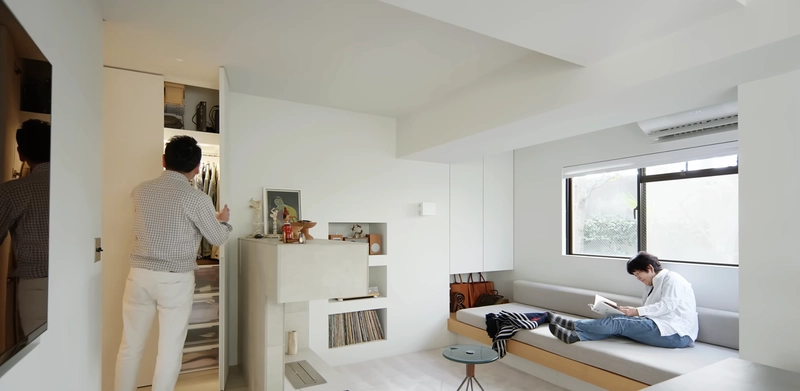
In the Setagaya apartment, the catalyst for change was personal: after the mother was injured, her son moved in to care for her. This required a complete renovation to ensure both adults could live comfortably in less than 500 square feet.
Designing for “Hidden” Functionality
The hallmark of the modern urban home is multi-purpose flexibility. Architect Kumiko Oi reimagined the concept of a room by integrating hidden storage and clever zoning.
• Zoning through Elevation: The living room is uniquely designed a step lower than the rest of the apartment and is carpeted, creating a distinct “separate zone” without the need for restrictive walls.
• The Transformer Room: During the day, the main area serves as a sunlit living room; at night, a wooden bench with custom cushions converts into the son’s bed. Storage is tucked beneath the bed so that bedding can be quickly hidden when guests visit.
• Visual Privacy: To maintain a sense of privacy in a small footprint, a bio-ethanol fireplace was strategically placed in front of the entrance, ensuring the living room is not immediately visible when the front door opens.
The Social Kitchen
Lifestyles are also reshaping the kitchen, moving it from a hidden utility room to the “lively” heart of the home. In this renovation, the kitchen shares an open space with the dining and living areas, featuring an island table that allows for immediate serving. By placing the sink near a window with “green space,” the design prioritizes the psychological well-being of the residents, making daily chores more enjoyable.
Small Space, Big Impact
To prevent a compact home from feeling claustrophobic, Oi utilized indirect and sensor lighting to brighten storage areas and water closets. Storage is meticulously planned to hide everything from Wi-Fi routers and golf bags to linen and household items, keeping the visual landscape “clean” and spacious.
While this specific case study focuses on Tokyo, information from outside the sources suggests that this trend toward “micro-living” and functional densification is a growing global phenomenon as urban housing costs rise and aging-in-place becomes a priority for many families.
Ultimately, the modern home is no longer just a collection of rooms, but a fluid ecosystem. As Oi demonstrates, even the smallest footprint can accommodate complex human needs through “genius ideas” like hidden storage and flexible furniture, proving that “reimagining small space living” is essential for the future of urban society.