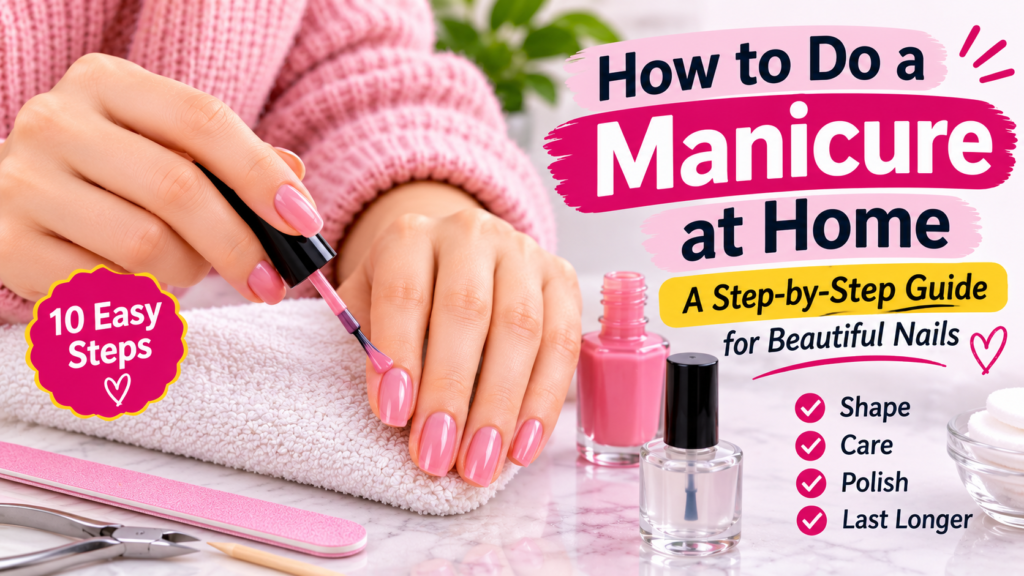
You do not need an expensive salon appointment to enjoy neat, well-groomed nails. With a few basic tools and the right techniques, you can learn how to do a manicure at home and achieve a clean, polished look whenever you want.
An at-home manicure is also a practical way to maintain your natural nails between salon visits. You can choose your preferred nail shape, care for the surrounding skin, and apply your favorite polish without rushing through the process.
The key is to prepare your nails properly and avoid aggressive techniques that can cause damage. From removing old polish to applying a smooth top coat, this guide walks you through each step of a simple manicure at home.
What You Need for an At-Home Manicure
Before starting, gather everything you need. Having your tools ready makes the process easier and helps you avoid unnecessary interruptions.
Here are the basic items:
- Nail polish remover
- Cotton pads or lint-free wipes
- Nail clippers
- Nail file or emery board
- Gentle nail brush
- Base coat
- Your preferred nail polish
- Clear top coat
- Hand cream
- Cuticle oil
- A clean towel
You do not need every specialized manicure tool available. A basic nail-care kit is enough for a neat everyday manicure.
Make sure your nail tools are clean before using them. Avoid sharing personal grooming tools, and never use sharp objects to clean underneath your nails.
How to Do a Manicure at Home: Step by Step
Follow these steps to prepare your nails, care for your hands, and apply polish evenly.
Step 1: Remove Old Nail Polish
Start with a clean nail surface. If you are already wearing nail polish, remove it using a suitable nail polish remover.
Soak a cotton pad with remover, press it gently against the nail for a few seconds, and wipe away the polish. Avoid aggressively rubbing or scraping the nail.
If you are removing dark polish, use a fresh section of the cotton pad when necessary to prevent spreading pigment across your fingers.
Once the polish is removed, wash your hands and dry them thoroughly.
Helpful tip: If your nails feel dry after using remover, apply hand cream around your nails and cuticles after finishing the polish application.
Step 2: Trim Your Nails to a Comfortable Length
Look at the length of your nails and decide whether they need trimming. If they are already at your preferred length, you can skip this step.
Use clean nail clippers to shorten nails gradually. Avoid cutting too close to the skin or removing large sections at once.
For natural fingernails, a slightly rounded shape at the corners can help prevent rough edges from catching on clothing.
If your nails are very long, trim a little at a time rather than trying to achieve the final length in one cut.
Step 3: Shape Your Nails With a File
Nail shaping makes a noticeable difference in the finished manicure. Choose a shape that feels comfortable and suits your natural nail length.
Some popular options include:
- Round: A natural-looking shape with softly rounded edges.
- Square: Straight sides and a flat tip.
- Squoval: A combination of square and oval with softened corners.
- Oval: Slightly tapered sides with a rounded tip.
- Almond: A tapered shape with a softly pointed finish, usually easier to achieve on longer nails.
Use a nail file to smooth uneven edges. File gently in one direction instead of repeatedly moving the file back and forth.
Avoid excessive filing, especially around the sides of your nails. Removing too much material can weaken the nail and make it more likely to split.
Step 4: Clean Your Nails and Fingertips
Before applying polish, make sure your nails are free from visible dirt, leftover remover, and other residue.
Wash your hands with soap and water. Use a soft nail brush if necessary to clean underneath your nails.
Do not use sharp tools or dig into the skin underneath the nail. This area is sensitive and can be injured easily.
Dry your hands completely before moving on to the next step.
Step 5: Take Care of Your Cuticles Gently
The skin around your nails helps protect the area where the nail grows. Although many salon manicures involve cuticle removal, cutting or aggressively pushing back cuticles can increase the risk of infection.
For a safer home manicure, leave your cuticles intact.
If the surrounding skin looks dry, apply a small amount of cuticle oil or moisturizer and massage it gently into the area.
Do not cut living skin, pull loose pieces with your fingers, or use sharp tools to scrape the nail base. If you have a hangnail, trim only the detached piece with clean, sanitized clippers.
Step 6: Moisturize Your Hands
A manicure should leave your hands looking neat, not dry or uncomfortable.
Apply hand cream and massage it gently into your fingers, palms, and the skin around your nails. If your cuticles are particularly dry, a small amount of cuticle oil can help soften them.
However, before applying nail polish, the nail plates themselves need to be clean and free from oily residue.
If you have applied a rich cream or oil, allow it to absorb and gently clean the nail surface with a suitable nail-preparation wipe before polishing.
Step 7: Apply a Base Coat
A base coat creates a smooth foundation for colored nail polish. It can also help reduce staining from highly pigmented shades.
Apply a thin, even layer to each nail. Avoid getting the product onto your surrounding skin.
Allow the base coat to dry according to the manufacturer’s instructions before applying your chosen color.
Skipping this step may seem like a time-saver, but a suitable base coat is a useful part of a well-prepared manicure.
Step 8: Apply Your Favorite Nail Polish
Now comes the part that gives your manicure its finished appearance.
Choose a color that suits your style, whether you prefer soft nude shades, classic red, pastel pink, or a deeper color.
For a smooth result:
- Wipe excess polish from the brush against the inside of the bottle.
- Place a small amount of polish near the center of the nail.
- Gently guide the brush toward the tip.
- Apply polish to the remaining sides.
- Keep each coat thin and even.
- Allow the first coat to dry before applying another.
Two thin coats often provide better coverage than one thick coat, although the number of coats depends on the polish formula and color.
Try not to paint over the surrounding skin. If polish touches your skin, clean the excess carefully before it dries.
Step 9: Finish With a Top Coat
Once the colored polish has dried sufficiently, apply a thin layer of clear top coat.
A top coat adds shine and helps protect the colored layer from everyday wear. Some formulas also help reduce chipping and maintain the appearance of your manicure.
Apply it evenly and follow the product’s drying instructions.
You can refresh the top coat later if the surface begins to lose its shine, provided the polish underneath is still in good condition.
Step 10: Let Your Nails Dry Properly
Do not rush the final stage. Even when the surface of your polish feels dry, deeper layers may still be soft.
Give your nails enough time to set before doing activities that could leave marks or dents.
Avoid immediately washing dishes, handling rough materials, or putting pressure on your fingertips.
If you need to use your hands, move carefully until the polish has fully dried according to the product instructions.
Common At-Home Manicure Mistakes to Avoid
A simple manicure can become uneven or uncomfortable when basic preparation steps are skipped. Avoid these common mistakes to get a cleaner result.
Cutting Your Cuticles
Cutting cuticles may make the nail area appear more exposed, but it can damage the protective barrier around the nail. Leave them intact and focus on moisturizing the surrounding skin.
Filing Too Aggressively
Heavy filing can weaken the nail plate and cause splitting. Use gentle pressure and avoid repeatedly filing the same area.
Applying Thick Layers of Polish
Thick coats can take longer to dry and may create an uneven finish. Apply thin layers and allow each one to set before adding the next.
Skipping the Base Coat
Dark and highly pigmented shades can stain natural nails. A suitable base coat provides an extra layer between the nail and colored polish.
Painting Over Dirty or Oily Nails
Polish may not adhere evenly if the nail surface contains leftover oil, lotion, or residue. Clean and dry the nail plate before application.
Rushing the Drying Process
Touching or using your nails too soon can leave fingerprints, dents, and smudges. Allow enough drying time rather than assuming the surface is ready immediately.
Using Unclean Tools
Dirty grooming tools can spread germs and contribute to nail problems. Clean your tools before use and avoid sharing personal nail files or clippers.
Tips for Making Your At-Home Manicure Last Longer
Once your manicure is complete, a few everyday habits can help maintain its appearance.
Wear gloves during household cleaning: Detergents and prolonged contact with water can affect your polish and dry your hands.
Apply hand cream regularly: Moisturizing helps keep the surrounding skin comfortable and prevents dry, rough cuticles.
Use a quality top coat: A suitable top coat can help maintain shine and protect the colored polish.
Avoid using your nails as tools: Opening packages or scraping hard surfaces with your nails can cause chips and breaks.
Keep your nail length manageable: Very long natural nails may catch on objects more easily during everyday activities.
Touch up carefully: If the polish begins to lose shine, apply a fresh thin layer of top coat when appropriate.
For more detailed advice, read our guide on [How to Make Nail Polish Last Longer on Natural Nails].
How Often Should You Do a Manicure?
There is no fixed schedule that everyone needs to follow. The ideal frequency depends on how quickly your nails grow, how long your polish lasts, and the condition of your natural nails.
Some people prefer a simple manicure every week or two, while others only groom their nails when they become uneven or the polish starts to wear.
You do not need to perform every step each time. If your nails are already clean and shaped, you may only need to refresh your polish or apply moisturizer.
If your nails become weak, peel, or develop unexplained changes, take a break from cosmetic treatments and consider seeking professional advice.
Frequently Asked Questions
Can I do a manicure at home without professional tools?
Yes. You can achieve a neat basic manicure with nail clippers, a nail file, nail polish remover, base coat, colored polish, top coat, and moisturizer. Specialized salon equipment is not necessary for everyday nail care.
Should I soak my nails before a manicure?
A short soak in lukewarm water is not essential for every manicure. If you need to soften your nails before trimming, a brief soak can help. However, dry the nail plates completely before applying polish because moisture on the surface can affect application.
How many coats of nail polish should I apply?
For many regular nail polishes, one thin base coat followed by two thin color coats and a top coat is a practical approach. However, some formulas provide sufficient coverage with fewer coats. Follow the product instructions.
Should I cut my cuticles during a home manicure?
No. Cutting cuticles can damage the protective skin around your nails and increase the risk of infection. Keep the area moisturized instead.
How can I make my manicure look professional?
Start with clean, evenly shaped nails, apply a suitable base coat, use thin layers of polish, avoid painting onto your skin, and finish with a top coat. Taking your time with preparation often makes the biggest difference.
Is it better to file nails wet or dry?
For routine shaping, filing dry nails gives you better control over their shape. If you have soaked your nails, dry them thoroughly before filing and polishing.
Why does my nail polish peel off quickly?
Polish may peel because of oily or damp nail surfaces, thick application, insufficient drying time, or frequent exposure to water and cleaning products. Proper preparation and thin coats can help improve wear.
Can I do a manicure if my nails are weak?
Yes, but keep the routine gentle. Avoid aggressive buffing, excessive filing, and artificial enhancements if your nails are already damaged. Focus on comfortable nail length and regular moisturizing.
Final Thoughts
Learning how to do a manicure at home is a useful way to maintain neat, attractive nails without depending on regular salon appointments. With a few basic tools and a little patience, you can clean, shape, and polish your natural nails in a way that suits your personal style.
Remember that a good manicure is not just about the color. Gentle preparation, clean tools, healthy cuticles, and proper aftercare all contribute to better-looking nails.
Start with the basics, avoid unnecessary cuticle trimming, and give each layer of polish enough time to dry. A simple, consistent approach can help you enjoy a neat manicure while taking better care of your natural nails.
Leave a Reply