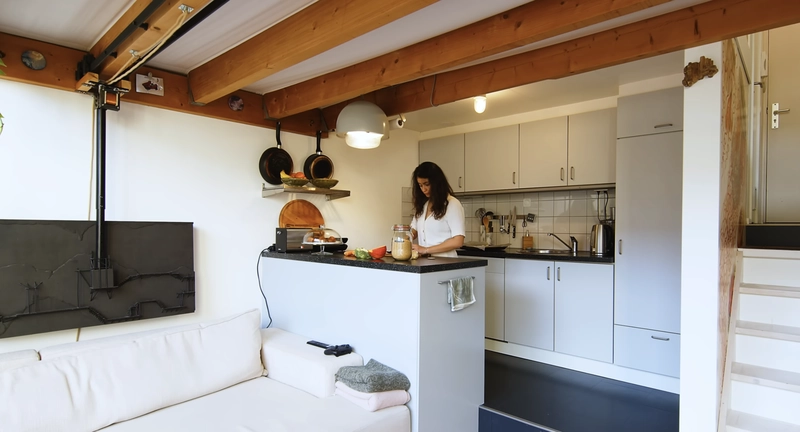
As an architect, I often find that the most profound lessons in design do not come from the grandest skyscrapers, but from the intimate constraints of the domestic sphere. Modern living is increasingly defined by a shift toward tailored environments, where every square centimeter must be considered to meet the specific needs of the inhabitant. This “tailored way of living” is best exemplified in the renovation of small-scale urban dwellings, such as a 45-square-meter loft in Amsterdam, which serves as a masterclass in spatial efficiency, material sustainability, and the integration of the natural world.
The Alchemy of Spatial Efficiency
In the realm of modern architecture, efficiency is no longer just about storage; it is about spatial fluidity and multi-functionality. My philosophy has always been to iterate a design until it “feels right,” a process that is significantly enhanced when one lives within the space to understand its unique rhythms. In a small footprint, furniture must evolve beyond its traditional role. We are seeing a rise in modular and portable systems, such as those made from Baltic birch plywood, which can transform from a side table to a room divider or seating as needs change.
Beyond furniture, the architecture itself must perform multiple duties. For instance, using a shoe cabinet or a drying rack as a room divider allows for the demarcation of zones—such as separating a sleeping area from a living space—without the need for permanent, light-blocking walls. Other ingenious solutions include suspending heavy items like televisions on ceiling rails to allow them to move back and forth, or hiding essential workspaces and pet areas within integrated cabinetry. These “hidden gems” of design ensure that a home remains “clean and clear,” allowing the eye to travel through the space to the horizon beyond.
Materiality: Longevity and the Found Object
The choice of materials in modern living reflects a growing commitment to sustainability and durability. Sustainable Baltic birch plywood is a prime example, offering the strength and longevity required for furniture that is meant to last and be repurposed over time. However, sustainability also encompasses the repurposing of existing elements.
There is a unique architectural soul found in “found objects”—industrial switches from abandoned factories or repurposed municipal street lamps used as interior lighting. This approach not only reduces waste but also creates a “certain style” that is deeply personal. By combining high-quality sustainable manufactured materials with salvaged industrial components, we create spaces that feel both modern and timeless.
The Architecture of the Natural World
Finally, modern architecture must bridge the gap between the interior sanctuary and the natural environment. Even in a dense urban setting, the relationship with nature is paramount. This is often achieved through big windows and south-facing orientations that flood a home with natural light, which can then be further amplified using floor-to-ceiling mirrors to create a more spacious feeling.
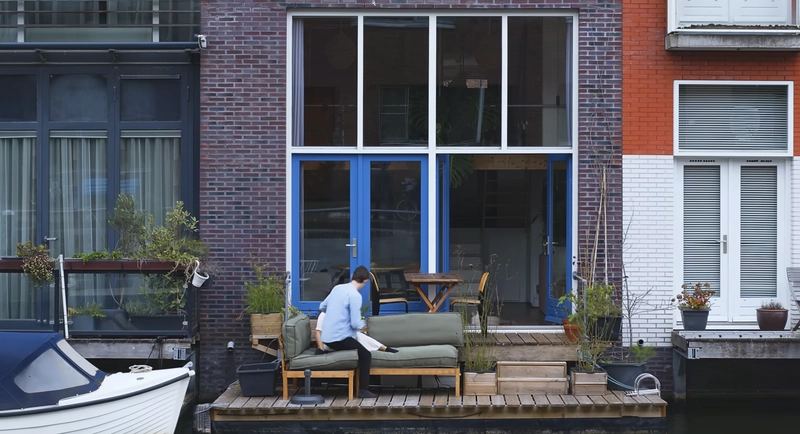
The presence of “big plants” within the living area acts as a living extension of the outdoors, while architectural interventions like floating decks physically extend the living space into the environment. In the Amsterdam loft, the ability to look “straight through the house” to see the water creates a psychological sense of openness that contradicts the physical limitations of a 45-square-meter floor plan.
Ultimately, modern living is not about the amount of space we occupy, but the intelligence with which we inhabit it. Through iterative design, sustainable material choices, and a constant dialogue with light and nature, we can craft homes that are not just places to live, but reflections of a more thoughtful, efficient way of being.