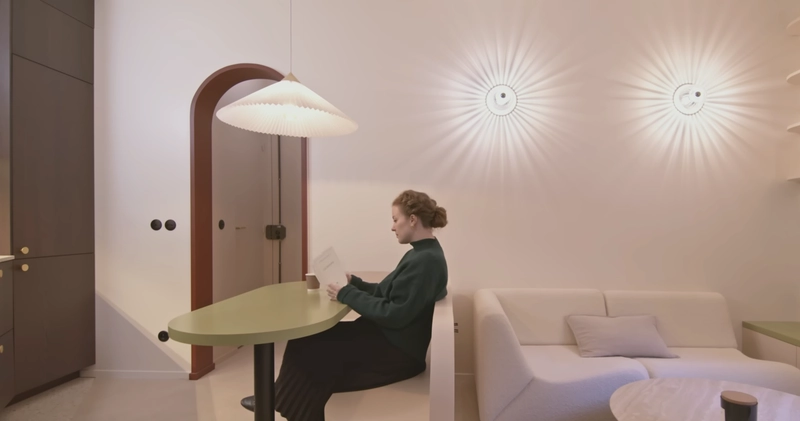
In the heart of Paris, nestled near the unexpected greenery and waterfalls of Parc des Buttes-Chaumont, a 1949 residential building is home to a revolution in urban living. As cities become denser and the cost of property continues to rise, a new generation of homeowners is proving that a “luxurious” lifestyle is no longer tied to square footage. Instead, it is being reshaped by versatile design, high-end materials, and a shift in how we perceive our “sanctuary.”
The Death of the “Big House” Dream
For decades, the standard for a successful life was measured in room counts and sprawling lawns. However, modern lifestyles—characterized by global travel, remote work, and a desire for urban proximity—are turning that concept on its head. According to the designers at Space Factory, a multi-disciplinary creative studio, the mindset regarding luxury is shifting,. “You don’t have to have a large space to experience a luxurious feeling,” they explain, noting that the true value lies in the care put into renovation and the quality of materials used.
This trend isn’t just about aesthetics; it’s an economic strategy. While some property owners look to optimize their living quarters, others are diversifying their wealth into alternative appreciating assets like contemporary art—a market that has seen an average growth of 13.8% annually over the last 26 years—rather than traditional sprawling real estate,.
Case Study: The “Dolce Vita” Suite
One of the most striking examples of this modern living philosophy is a 29-square-meter (312 sq. ft.) apartment in Paris reimagined as the “Dolce Vita Suite”. Inspired by the arches of Venetian palazzos and the playful aesthetic of an Italian gelato bar, the space was designed to be an escape from the city.
The renovation process involved stripping the original one-bedroom layout down to its bones to create an optimized floor plan. The result is a home that functions far beyond its footprint:
• Versatile Living: The main area is designed for entertaining four to six guests, working from home, and relaxing.
• Hidden Technology: To keep the space decluttered, a projector screen is hidden in the ceiling, and a full office is integrated seamlessly into the main room.
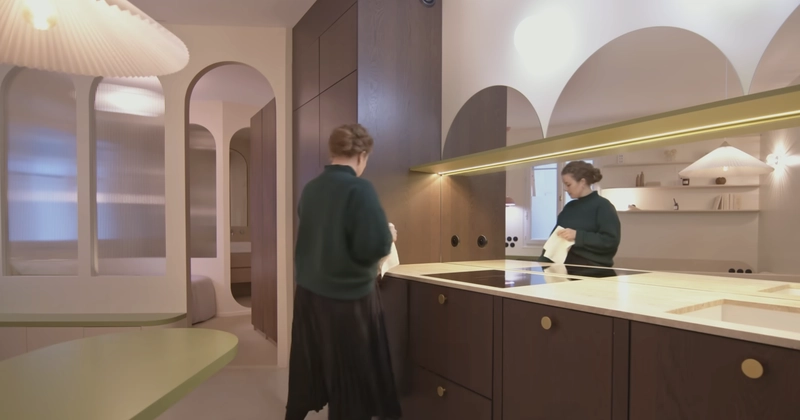
• Visual Expansion: The use of mirrors and fluted glass arches allows light to circulate throughout the day, while “floating” furniture creates an illusion of more floor space.
Functionality Meets Fantasy
Modern living spaces are increasingly required to be “workhorses” that don’t look the part. In the Paris apartment, the kitchen—often the most cluttered area of a home—is large but visually silent, with appliances like the fridge, microwave, and washing machine hidden behind cabinet doors.
Even the color palette plays a psychological role in this new concept of home. Moving away from the clinical “white box” of the past, designers are using “flavor-inspired” palettes—such as pistachio green and strawberry pink—to give small spaces substance and character,. Architectural details, such as a “color box” entrance and boat-inspired bathroom doors, provide a sense of transition and separation that is often missing in small-scale living,.
The Future of the Home
As the “Dolce Vita Suite” demonstrates, the modern home is no longer just a place to sleep; it is a multi-functional hub that mirrors the inhabitant’s personality and travel history. By prioritizing high-end quality materials and smart, built-in storage, urban dwellers are reclaiming their right to a high-quality life, proving that in the world of modern real estate, less is frequently much more.