In the modern era, the role of an architect has shifted from merely constructing new silhouettes on a skyline to thoughtfully reimagining the footprints we already inhabit. As urban density increases, the challenge lies in how we influence modern living through spatial efficiency, sustainable material choices, and a re-established connection to the natural world. A poignant example of this philosophy is found in the renovation of a 42-square-meter apartment in Melbourne, which demonstrates that “small” does not mean “limited” when approached with a futurist, modernist lens.
The Ethics of Adaptation and Materiality
One of the most significant ways architecture influences modern living is through the decision to adapt rather than demolish. In many regions, there is a prevailing tendency to tear down older structures, but there is immense value in the structural integrity and history of post-war buildings. By choosing to reuse and adapt existing complexes, architects can utilize what is already available in a way that is both flexible and well-considered.
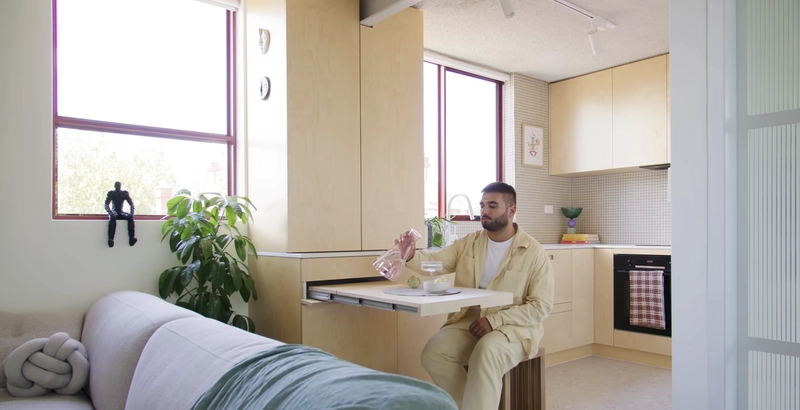
Material selection is the soul of this adaptation. To create a “natural feel” within a confined urban space, materials like timber birch plywood for cabinetry and locally sourced terrazzo tiles are essential. These choices do more than provide aesthetic appeal; the use of continuous flooring throughout an entire unit provides a seamless design that tricks the eye into perceiving a much larger space. Furthermore, paying homage to original architectural features—such as retaining a 1970s popcorn ceiling—preserves the “structural soul” of the home while integrating modern updates.
Spatial Efficiency: The Power of Negative Space
Modern living demands that our homes be high-functioning hubs for work, rest, and socializing. Architecture influences this by transforming rigid floor plans into flexible, open-living environments. Removing internal walls is a primary strategy to improve natural light and create multi-functional areas that can serve as both a dining space and an office.
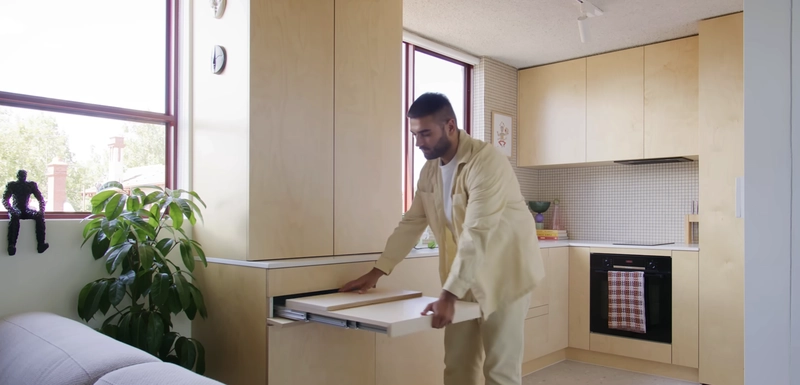
Efficiency is further achieved through bespoke, retractable elements. For instance, a dining table that retracts into cupboard space allows the dynamic of a home to change instantly depending on whether the occupant is alone or hosting friends. We also utilize the concept of “negative space” by installing wall-hung TV units and floating vanities. By keeping the floor clear, the room feels less cluttered and remains easy to maintain, which is a vital consideration for the modern inhabitant. Even furniture must sometimes be physically modified—such as trimming a bed base—to ensure that every centimeter of a floor plan is utilized to its full potential.
Architecture as a Bridge to Nature
Finally, architecture serves as the essential link between the dweller and the environment. Even in a tiny “studio” setting, the relationship with nature can be prioritized through strategic sightlines and light filtration. Architects often use fluted glass doors to provide privacy while ensuring that natural light can still filter deep into the interior rooms.
The outdoor-indoor transition is equally critical. Retaining and tiling a balcony to overlook an internal courtyard garden allows the resident a direct connection to greenery and afternoon sunlight. To further blur these lines, we often select internal color palettes that mirror the outdoors, such as sage green tiles or burgundy accents that contrast with the greenery of a courtyard. This intentional use of color and light ensures that even the smallest modern dwelling feels like a breathable, living sanctuary.
In conclusion, modern architecture is no longer about the scale of the project, but the intelligence of the intervention. By prioritizing sustainable adaptation, maximizing spatial utility through flexible design, and inviting the natural world inside, we can create homes that truly enhance the quality of modern life.