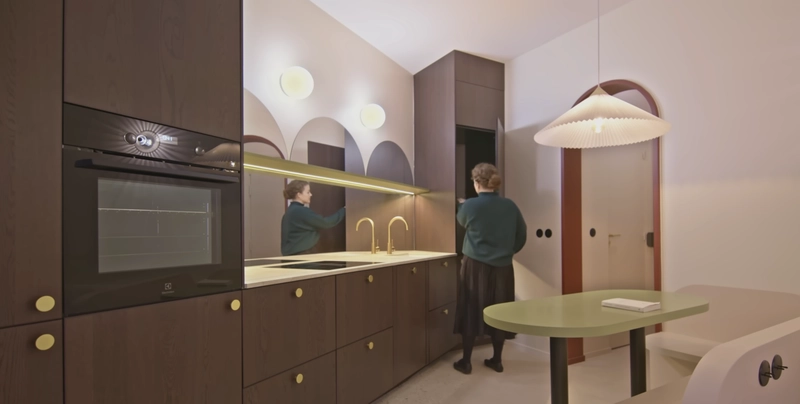
In the contemporary urban landscape, architecture is undergoing a profound transformation. As an architect, I observe that we are shifting away from the “bigger is better” philosophy toward a more nuanced understanding of how design influences our daily lives. Modern living is no longer defined by sheer volume, but by spatial efficiency, the quality of materials, and a curated relationship with the surrounding environment.,
The Art of Spatial Efficiency
The traditional boundaries of a home are being reimagined through optimized floor plans that prioritize functionality without sacrificing beauty. A prime example is the renovation of a compact 29sqm apartment in Paris, where walls were removed to create a versatile, multi-disciplinary space., In such environments, spatial efficiency is achieved through several key strategies:
• Integrated Multi-functionality: Modern spaces must serve multiple roles. For instance, a single main area can house a dining table for six, a living room with hidden storage that doubles as seating, and a fully integrated home office.,
• Visual Decluttering: By hiding appliances—such as fridges, microwaves, and washing machines—behind seamless cabinet doors, we can reduce visual noise and make small areas feel expansive.
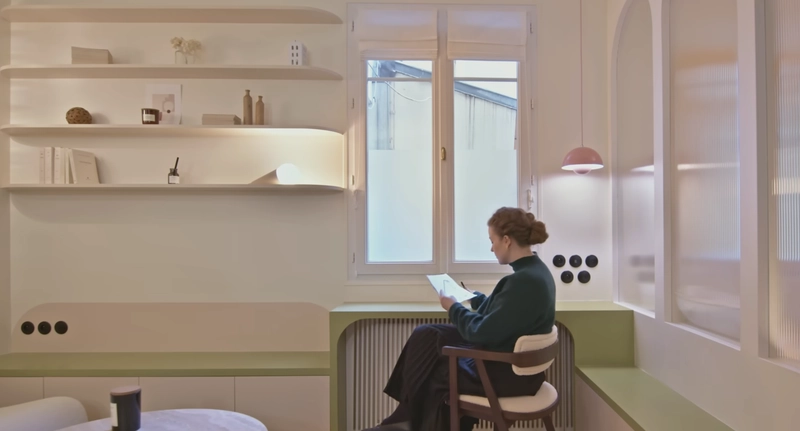
• Maximizing Light and Perception: The use of fluted glass arches and ashed mirrors allows light to circulate throughout an entire floor plan, while “floating” furniture, such as bedside tables, maximizes the floor area and enhances the feeling of openness.
Materials and the New Definition of Luxury
There is a shifting mindset regarding what constitutes “luxury” in modern architecture. It is increasingly viewed not as a result of vast square footage, but as the care put into renovation, attention to detail, and the use of high-end materials.
In the “Dolce Vita Suite” project, the choice of pink and green marbles and dark wood—inspired by Venetian palazzos—creates an atmosphere that feels like an “escape from the city.” These materials do more than provide a surface; they offer a tactile and visual experience akin to a boutique hotel or a “gelato bar.”,
Information regarding specific sustainable materials, such as recycled composites, low-carbon concrete, or rapidly renewable resources like bamboo, is not present in the provided sources. In professional practice, these materials are essential for reducing the environmental footprint of modern buildings. I recommend independently verifying current green building standards like LEED or BREEAM for more information on sustainability.
Architecture as a Bridge to Nature
Modern architecture acts as a vital link between the built environment and the natural world. Even in dense urban centers like Paris, a residence can be designed to interact with its surroundings. The apartment mentioned in the sources is situated near a park featuring large expenses of grass, a lake, and even a waterfall.
The goal of such architecture is to create a “suite” that allows residents to transition from the hectic city into a serene, nature-inspired sanctuary every time they return home. By utilizing soft color palettes—such as pistachio green and strawberry pink—designers can evoke the organic textures and flavors of the natural world, further blurring the line between the indoors and the environment outside.
Conclusion
As we look toward the future, the value of a property is increasingly tied to the designer’s ability to turn tight housing into something beautiful and functional. By focusing on intelligent layouts and high-quality finishes, architecture continues to prove that even the smallest footprint can provide a rich, expansive living experience.