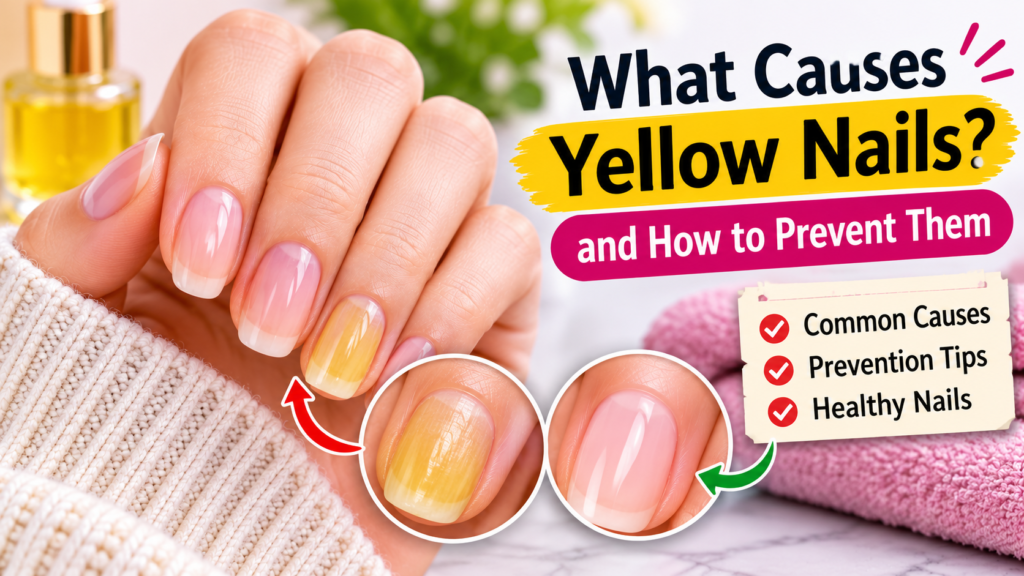
Healthy nails are usually smooth and have a natural, slightly pink appearance. However, you may sometimes notice that your fingernails or toenails start looking yellow, even when they are clean and freshly trimmed. This change can be frustrating, especially if you enjoy wearing nail polish or keeping your nails looking neat.
Yellow nails are not always a sign of a serious problem. In many cases, the discoloration comes from everyday habits, such as wearing dark nail polish without a base coat or smoking. However, yellowing can also develop because of a fungal infection or an underlying health condition.
Understanding what causes yellow nails is the first step toward choosing the right care. In this guide, you will learn about common causes of nail discoloration, practical prevention tips, safe ways to care for stained nails, and signs that should not be ignored.
What Causes Yellow Nails?
There is no single explanation for yellow nail discoloration. The cause often depends on whether the color affects one nail or several, how long it has been present, and whether other changes have developed.
Here are some of the most common reasons nails may turn yellow.
1. Dark Nail Polish and Nail Staining
One of the simplest explanations for yellow nails is repeated use of dark or highly pigmented nail polish.
Shades such as red, burgundy, orange, and deep purple can leave behind stains, particularly when applied directly to the natural nail without a protective base coat. The discoloration may become more noticeable after removing the polish.
This type of staining does not necessarily mean your nails are unhealthy. If the nail surface looks otherwise normal and the color gradually fades, polish residue may be the explanation.
How to prevent it:
- Apply a suitable base coat before using colored polish.
- Avoid wearing dark polish continuously without checking your natural nails.
- Remove old polish gently rather than scraping the nail surface.
- Give your nails occasional breaks from colored products if they become stained or dry.
If the yellow color persists or the nail becomes thick, brittle, or painful, do not automatically assume it is only a polish stain.
2. Fungal Nail Infections
A fungal nail infection, medically known as onychomycosis, is another common cause of yellow nails. It can affect fingernails and toenails, although toenail infections are more common.
A fungal infection may begin as a small yellow or white area near the edge of a nail. Over time, the affected nail may become thicker, brittle, crumbly, or separated from the nail bed.
Other possible signs include:
- Yellow, white, or brown discoloration.
- Thickened nail surface.
- Crumbling or splitting edges.
- Debris collecting underneath the nail.
- Nail lifting away from the skin.
- Discomfort in more advanced cases.
Fungal infections can spread to other nails and may take several months to treat. They usually do not disappear simply by removing nail polish or applying ordinary moisturizer.
If you suspect a fungal infection, seek advice from a healthcare professional or pharmacist. A proper assessment can help determine whether antifungal treatment is appropriate.
3. Smoking
Smoking can contribute to yellow discoloration of the fingernails, particularly when the fingers are repeatedly exposed to tobacco smoke and residue.
The discoloration may also affect the skin around the fingertips. Its appearance can vary depending on smoking habits and how long the exposure has continued.
Reducing or stopping smoking is the most useful step for preventing further tobacco-related staining. Simply scrubbing the nails is unlikely to address the underlying cause.
4. Poor Nail Hygiene
Dirt and residue can collect underneath long nails, especially when they are not cleaned regularly. Although ordinary dirt does not automatically cause yellow nails, poor nail hygiene can make discoloration more noticeable and may contribute to the spread of certain infections.
Keeping your nails clean and properly trimmed supports general nail health.
Try to:
- Wash your hands regularly with soap and water.
- Clean underneath your nails gently.
- Dry your fingertips thoroughly after washing.
- Keep nail clippers and files clean.
- Avoid sharing personal nail grooming tools.
Good hygiene is useful, but it will not cure an established fungal infection.
5. Frequent Use of Nail Products
Regular manicures, artificial nails, and certain nail products can contribute to nail discoloration or damage.
Some products may leave stains, while repeated filing, aggressive removal, or improper application can weaken the nail surface. Artificial nails can also make it harder to notice changes in the natural nail underneath.
If you frequently use gel polish, acrylics, or other enhancements, pay attention to changes in your natural nails between applications.
Avoid covering a nail that has become unusually yellow, thick, painful, or detached. Have the cause assessed before applying another artificial product.
6. Certain Medications and Medical Conditions
Sometimes yellow nails develop for reasons unrelated to nail polish or everyday grooming.
Certain medications can affect nail color. Health conditions such as psoriasis may also cause changes in the appearance and texture of the nails.
A rare condition called yellow nail syndrome can cause nails to become yellow, thick, curved, and slow-growing. It may also occur alongside swelling in the legs or ankles and respiratory symptoms.
Yellow nail syndrome is uncommon, so ordinary yellow discoloration does not mean you have this condition. However, persistent changes involving several nails, especially when accompanied by other symptoms, deserve medical attention.
7. Nail Injuries and Repeated Trauma
Repeated pressure or injury can change the appearance of a nail. Tight shoes, frequent impact, aggressive manicures, and picking at the nail surface may damage the nail plate or the tissue underneath it.
An injured nail may develop discoloration as it grows. Depending on the injury, it may also become weak, split, or partially separate from the nail bed.
Choose comfortable footwear, avoid aggressive nail treatments, and allow damaged nails time to grow out. If discoloration develops after an injury and does not improve, seek medical advice.
How to Prevent Yellow Nails
You cannot prevent every possible cause of nail discoloration, but healthy nail habits can reduce avoidable staining and lower the risk of some infections.
1. Always Use a Base Coat
If you enjoy wearing colored nail polish, applying a base coat is one of the easiest ways to help prevent staining.
A base coat creates a protective layer between the natural nail and pigmented polish. It can be especially useful when wearing darker shades, such as red, burgundy, or deep purple.
Apply it according to the product instructions and allow it to dry before adding colored polish.
2. Avoid Wearing Nail Polish Continuously
Wearing polish for long periods can make it harder to notice natural changes in your nails. Removing it occasionally allows you to check for discoloration, unusual texture, or other changes.
You do not need to follow a strict schedule of polish-free days. Simply pay attention to how your nails look and feel, and avoid covering nails that show unexplained changes.
3. Keep Your Nails Clean and Dry
Clean, dry nails are easier to maintain and help reduce the conditions that encourage fungal growth.
After washing your hands or feet, dry the areas around and underneath your nails. If your feet sweat frequently, change into clean, dry socks and choose footwear that allows airflow.
Avoid remaining in damp socks or sweaty shoes for extended periods.
4. Wear Comfortable, Breathable Shoes
Toenails are particularly vulnerable to fungal infections because shoes can create a warm, moist environment.
To reduce the risk:
- Choose shoes that fit comfortably.
- Avoid footwear that keeps your feet excessively hot.
- Change socks every day.
- Replace damp socks promptly.
- Allow shoes to dry between uses.
- Wear flip-flops in communal showers and pool areas.
These habits are especially useful if your feet sweat frequently or you spend long periods wearing closed shoes.
5. Clean Your Manicure Tools
Unclean nail clippers, files, and other grooming tools can contribute to the spread of infections.
Clean personal tools before and after use, and avoid sharing them with other people. If you visit a nail salon, check that reusable instruments are properly cleaned and sterilized between clients.
Do not use tools that appear dirty or have visible residue.
6. Avoid Aggressive Nail Treatments
Repeatedly scraping, buffing, or filing your nails can damage the nail surface. Cutting or forcefully pushing back cuticles can also increase the risk of infection.
Use gentle grooming techniques and avoid trying to remove discoloration by aggressively scrubbing the nail.
If a nail looks unusually thick or discolored, find out why before attempting to treat its appearance.
7. Do Not Ignore Athlete’s Foot
Athlete’s foot is a fungal skin infection that can spread to the toenails. If you notice itching, peeling, or scaling between your toes, seek appropriate advice and treatment.
Treating athlete’s foot early can help reduce the risk of the infection spreading to your nails.
How to Get Rid of Yellow Nail Stains
If your nails have become yellow because of nail polish, the discoloration may gradually improve as the stained nail grows out.
Start with gentle care rather than harsh home treatments.
Remove nail polish carefully: Use a suitable nail polish remover and avoid scraping or peeling the nail surface.
Give your nails a break from colored polish: Leave the natural nail uncovered occasionally so you can monitor its appearance.
Moisturize your nails and surrounding skin: Apply a suitable hand cream or nail moisturizer, particularly after removing polish.
Keep your nails trimmed: Regular, gentle trimming helps maintain a neat appearance while stained portions gradually grow out.
Use a base coat in the future: This can help reduce staining from pigmented nail polish.
Avoid using bleach, household cleaning chemicals, or aggressive scrubs on your nails. These methods can irritate or damage the surrounding skin and nail surface.
It is also important to understand that a stain and a fungal infection require different approaches. If the nail is thick, crumbly, lifting, or persistently discolored, a cosmetic treatment will not solve the underlying problem.
When Should You See a Doctor About Yellow Nails?
A temporary yellow stain after removing dark nail polish may not require medical treatment. However, persistent or unexplained discoloration should not be ignored.
Consider seeing a dermatologist or healthcare professional if:
- The yellow color does not gradually improve.
- One or more nails become thick or brittle.
- The nail starts crumbling or separating from the nail bed.
- You notice swelling, redness, or pain around the nail.
- Several nails change color without an obvious explanation.
- The discoloration is accompanied by other unusual symptoms.
A healthcare professional may examine the nail and, if a fungal infection is suspected, take a sample for testing. This is important because not every yellow nail is caused by fungus, and the correct treatment depends on the diagnosis.
People with diabetes or a weakened immune system should seek medical advice promptly when they notice a possible nail infection.
Common Mistakes to Avoid When Dealing With Yellow Nails
Trying to remove discoloration quickly can sometimes make the problem worse. Avoid these common mistakes:
Scrubbing too aggressively: Excessive friction can damage the nail surface and surrounding skin.
Using household bleach: Bleach is not a safe nail-whitening treatment and can cause irritation or chemical injury.
Applying polish over an unexplained discoloration: Covering the nail makes it harder to monitor changes and may delay proper assessment.
Assuming every yellow nail has fungus: Nail polish stains, injuries, medications, and medical conditions can also cause discoloration.
Using random antifungal products: Treatment should match the actual cause. Not every discolored nail needs antifungal medication.
Ignoring nail changes for months: Persistent thickening, lifting, pain, or discoloration deserves attention rather than repeated cosmetic treatment.
Frequently Asked Questions
Why are my nails turning yellow?
Yellow nails can develop for several reasons, including dark nail polish stains, smoking, fungal infections, injuries, certain medications, and medical conditions. The appearance of the nail and any additional symptoms can help a healthcare professional identify the cause.
Can nail polish make your nails yellow?
Yes. Dark or highly pigmented nail polish can leave yellow stains, especially when applied without a base coat. The discoloration may gradually fade as the nail grows.
How can I remove yellow stains from my nails naturally?
If the discoloration is caused by nail polish, removing the polish gently, avoiding further staining, and allowing the nail to grow may help. Avoid harsh whitening mixtures and household chemicals. If the yellow color persists, get it checked rather than assuming it is a stain.
Are yellow nails always a sign of fungus?
No. Fungal infections are one possible cause, but nail polish stains, smoking, injuries, medications, and certain medical conditions can also cause yellowing. Thickening, crumbling, and nail lifting may increase suspicion of a fungal infection, but a professional assessment is needed for diagnosis.
How long does it take for yellow nails to return to normal?
It depends on the cause. A superficial polish stain may improve over several weeks, while fungal infections can take many months to treat. Since nails grow slowly, a damaged or discolored section may need time to grow out.
Should I stop wearing nail polish if my nails turn yellow?
It is sensible to remove the polish and check your natural nails. If the discoloration appears to be a temporary stain, using a base coat in the future may help. If the yellowing is unexplained or accompanied by thickening, pain, or nail lifting, avoid covering it until the cause has been assessed.
Can yellow toenails be caused by tight shoes?
Tight shoes can repeatedly put pressure on toenails and cause nail damage. They can also contribute to an environment where feet become warm and damp, which may increase the risk of fungal infections. Choose comfortable shoes with enough room for your toes.
Final Thoughts
Yellow nails can result from something as simple as dark nail polish or from a condition that needs proper treatment. The key is to look beyond the color and pay attention to other changes, such as thickening, brittleness, nail lifting, or discomfort.
For everyday prevention, use a base coat, keep your nails clean and dry, wear comfortable footwear, and avoid aggressive nail treatments. If discoloration persists or comes with other symptoms, seek professional advice instead of relying on cosmetic fixes.
Healthy nail care is not about making every nail look perfect. It is about recognizing changes early, using gentle habits, and giving your natural nails the attention they need.
Leave a Reply