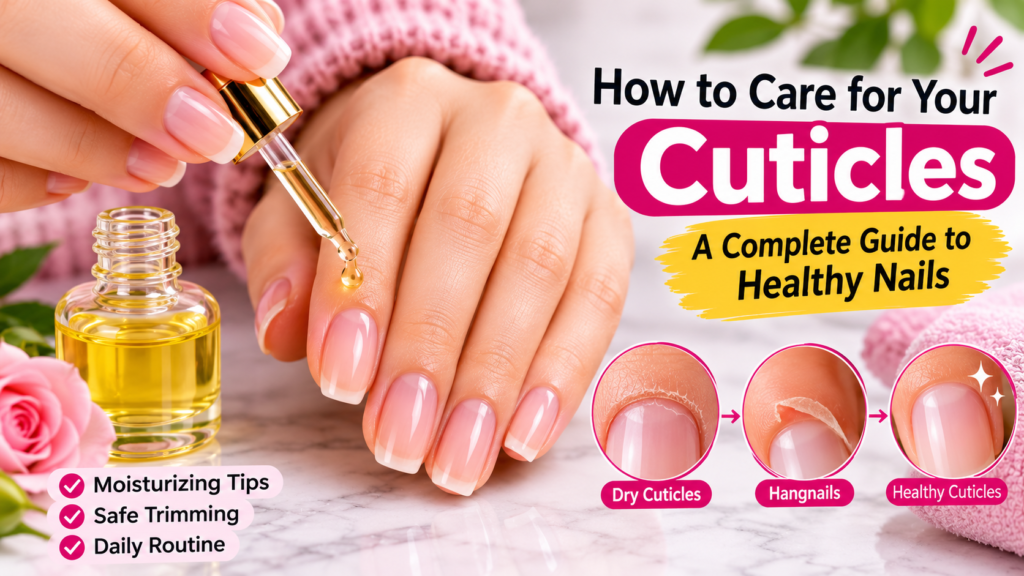
Healthy-looking nails need more than a fresh coat of polish. The skin surrounding your nails also plays an important role in keeping your hands neat and your nails protected. When cuticles become dry, cracked, or damaged, they can look untidy and may leave the surrounding skin more vulnerable to irritation and infection.
The good news is that proper cuticle care does not require an expensive manicure or a complicated collection of products. A few gentle habits, including regular moisturizing, using cuticle oil, and avoiding unnecessary trimming, can help keep the skin around your nails comfortable and healthy.
If you want to learn how to care for your cuticles at home, this guide explains what cuticles do, how to maintain them, which habits to avoid, and how to handle common problems such as dry skin and hangnails.
What Are Cuticles and Why Are They Important?
Cuticles are a thin layer of skin associated with the base of your nails. They help form a protective seal around the area where the nail emerges from the skin. This barrier helps prevent bacteria, fungi, and other irritants from entering the sensitive tissue around the nail.
Although cuticles are often treated as something to remove during a manicure, they serve a useful protective purpose. Cutting or damaging them can create small openings in the skin, increasing the risk of inflammation and infection.
It is also helpful to understand the difference between the cuticle and the surrounding nail fold. The cuticle is the thin layer of dead skin attached to the nail plate, while the proximal nail fold is the living skin at the base of the nail. Both are part of the protective area around your nails, and aggressive manicure techniques can damage this tissue.
Healthy cuticles generally look smooth and comfortable, without persistent redness, swelling, painful cracks, or bleeding. They do not need to be perfectly invisible to look well cared for.
How to Care for Your Cuticles at Home
A consistent home routine is usually enough to maintain healthy cuticles. You do not need to push them back or remove them regularly. Focus instead on keeping the surrounding skin moisturized and protecting it from unnecessary damage.
1. Moisturize Your Cuticles Daily
Moisturizing is one of the simplest ways to prevent dry, rough cuticles. Frequent handwashing, cold weather, household cleaning products, and low humidity can all contribute to skin dryness.
Apply a hand cream or moisturizer to your hands and gently massage the remaining product around your nails. Pay particular attention to the skin at the base and sides of each nail.
For very dry areas, a thicker cream or a small amount of petroleum jelly can help reduce moisture loss. Applying it before bedtime is a convenient option because it has time to remain on the skin overnight.
The most important thing is consistency. Applying moisturizer once and then ignoring your cuticles for several days is less helpful than making it part of your regular routine.
2. Use Cuticle Oil Regularly
Cuticle oil is designed to condition the skin around your nails. Many formulas contain oils such as jojoba, almond, sunflower, or other emollient ingredients that help soften dry skin.
To use cuticle oil:
- Apply a small drop to the base of each nail.
- Gently massage it into the surrounding skin.
- Allow it to absorb before applying nail polish or other products.
- Repeat when your cuticles feel dry.
You can use cuticle oil once or twice a day, depending on how dry your skin is and the product’s directions.
Cuticle oil can make the skin feel softer and look smoother, but it does not repair an infection or guarantee faster nail growth. Think of it as a moisturizing product rather than a treatment that changes how quickly your nails grow.
3. Apply Hand Cream After Washing
Washing your hands is essential for hygiene, but frequent washing can leave the surrounding skin dry. Soap and water remove some of the natural oils that help keep your skin comfortable.
After washing your hands, dry them gently and apply a moisturizing hand cream. Work the cream into your fingertips and the skin around your nails.
If you wash your hands frequently throughout the day, keep a small tube of hand cream nearby. This makes it easier to maintain moisture without needing a separate cuticle product every time.
Choose a formula that feels comfortable enough to use regularly. A simple, fragrance-free moisturizer may be a better option if your skin is sensitive.
4. Protect Your Hands From Water and Chemicals
Repeated exposure to water, detergents, and cleaning products can contribute to dry or irritated skin around the nails.
When washing dishes, cleaning bathrooms, or handling household chemicals, wear protective gloves. If your hands become sweaty inside the gloves, remove them when possible and allow your hands to dry before putting them back on.
Avoid leaving your hands submerged in water for unnecessarily long periods. After wet work, dry your hands thoroughly and apply moisturizer.
These small precautions are particularly useful if you frequently experience peeling skin, rough cuticles, or hangnails.
5. Avoid Picking, Biting, or Peeling Your Cuticles
Picking at loose skin may seem like a quick way to make your nails look tidy, but it can cause more damage than it removes.
Pulling or biting cuticles can create small cuts and tears. These injuries may become painful and allow germs to enter the surrounding tissue.
If you notice a rough piece of skin, do not pull it off with your teeth or fingers. Moisturize the area and deal with any loose skin carefully rather than tearing it.
If nail biting or skin picking is a frequent habit, keeping your nails comfortably trimmed and using a regular hand-care routine may help reduce the temptation.
6. Keep Your Nails and Tools Clean
Good nail hygiene supports the health of the skin around your nails. Dirt and germs can collect around and underneath the nails, especially when they are long.
Wash your hands with soap and water, clean underneath your nails gently, and dry your fingertips thoroughly.
Manicure tools also need attention. Nail clippers, cuticle tools, and other grooming equipment should be clean before use. Avoid sharing personal nail tools, and make sure salon tools are properly sterilized before they are used on you.
Clean tools are especially important when dealing with a hangnail or a small area of damaged skin.
Should You Cut or Push Back Your Cuticles?
For everyday nail care, it is generally best to leave your cuticles alone rather than cutting or aggressively pushing them back.
Cutting the protective skin can damage the barrier around the nail and increase the risk of infection. This is why dermatologists advise against cutting cuticles during routine manicures.
If you prefer a neat manicure, you can focus on moisturizing the area and removing only loose, dead skin that is clearly detached. Do not cut living skin or use sharp tools to scrape the base of your nails.
Some manicure professionals gently push back cuticles after softening them, but this is not necessary for healthy nails. If you choose to have this done, avoid forceful pressure and stop if you experience discomfort, redness, or bleeding.
A clean manicure does not require completely removing the cuticle. Keeping the protective skin intact is a better long-term approach.
How to Deal With Dry, Cracked Cuticles
Dry cuticles can become rough, flaky, and uncomfortable. In some cases, the skin may develop small cracks that catch on clothing or become irritated during everyday activities.
Try these steps to improve dryness:
Use a thicker moisturizer: Apply a rich hand cream or petroleum jelly to dry areas, particularly before bedtime.
Apply cuticle oil: Use a small amount regularly to soften the skin around your nails.
Reduce exposure to harsh products: Wear gloves when cleaning or washing dishes, and avoid unnecessary contact with strong detergents.
Avoid removing loose skin: Do not bite, pull, or peel dry skin. This can make cracks worse.
Choose gentle hand products: If your skin feels irritated after using a particular soap or sanitizer, consider switching to a gentler alternative.
If the skin remains cracked, painful, or inflamed despite gentle care, consult a healthcare professional. Persistent symptoms may have causes beyond ordinary dryness, such as dermatitis or an infection.
How to Remove a Hangnail Safely
A hangnail is a small piece of torn or lifted skin near the edge of a nail. It can catch on clothing, feel uncomfortable, and become painful if pulled.
The safest approach is to trim the loose piece rather than tear it away.
Follow these steps:
- Wash your hands with soap and water.
- If the skin is stiff or dry, soak the affected fingertip in warm water for a few minutes.
- Dry the area gently.
- Use clean, sanitized nail clippers to carefully trim only the loose piece of skin.
- Avoid cutting into the surrounding skin or digging near the base of the nail.
- Apply a gentle moisturizer or petroleum jelly afterward.
If the area is bleeding, painful, or already inflamed, avoid further trimming and protect it with a clean dressing if needed.
Never pull a hangnail with your fingers or teeth. Tearing it can create a larger wound and increase the risk of infection.
A Simple Daily Cuticle Care Routine
You do not need a long manicure routine to maintain healthy cuticles. A few minutes of care each day can help prevent dryness and reduce damage.
Morning Routine
- Wash your hands with a gentle cleanser.
- Dry your hands and fingertips thoroughly.
- Apply hand cream, including around your nails.
- Use a small amount of cuticle oil if the skin feels dry.
During the Day
- Reapply hand cream after washing your hands.
- Wear gloves when handling cleaning products or doing dishes.
- Avoid biting, picking, or pulling loose skin.
- Keep your nails clean and avoid using them as tools.
Night Routine
- Wash and dry your hands.
- Apply cuticle oil around each nail.
- Massage a thicker hand cream into your fingertips.
- Apply a little petroleum jelly to particularly dry areas if needed.
The routine can be adjusted to suit your lifestyle. If your cuticles are already comfortable and moisturized, you may not need to apply oil several times a day.
Common Cuticle Care Mistakes to Avoid
Even people who regularly get manicures can develop unhealthy cuticles if their routine is too aggressive. Avoid these common mistakes:
Cutting cuticles too deeply: Removing the protective skin can cause injuries and increase infection risk.
Using sharp tools unnecessarily: Scraping or cutting around the nail can damage sensitive tissue.
Ignoring dryness: Leaving rough, cracked skin untreated can lead to discomfort and hangnails.
Pulling hangnails: Tearing loose skin can create painful wounds.
Skipping moisturizer: Frequent washing and exposure to cleaning products can dry out the skin around your nails.
Using harsh cuticle removers: Some products can irritate or damage the surrounding skin, particularly when used incorrectly or too often.
Sharing manicure tools: Tools that are not properly cleaned and disinfected can spread germs.
A gentle approach is generally more beneficial than trying to make the skin around your nails look perfectly smooth after every manicure.
When Should You See a Dermatologist?
Most mild cuticle dryness can be managed with regular moisturizing and gentle nail care. However, some symptoms may indicate an infection or another skin condition.
Pay attention to signs such as:
- Redness or swelling around the nail.
- Increasing pain or tenderness.
- Warm skin around the nail.
- Pus or fluid coming from the affected area.
- Persistent cracking or inflammation.
- Changes in the nail’s color, shape, or texture.
An infection of the skin around the nail is known as paronychia. It can develop when bacteria or other germs enter through damaged skin near the cuticle.
If you notice these symptoms, seek medical advice rather than trying to remove the affected skin or treating the area with random products. Prompt assessment is especially important if symptoms are worsening or you have a condition that increases your risk of infection.
Frequently Asked Questions
How often should I apply cuticle oil?
You can apply cuticle oil once or twice a day, depending on your skin’s needs and the product instructions. If your cuticles become dry frequently, regular use may help keep the surrounding skin softer.
Is it better to cut or push back cuticles?
Neither is necessary for routine nail care. Cutting can damage the protective barrier, while forcefully pushing cuticles back can injure the surrounding tissue. It is generally better to leave them alone and keep the area moisturized.
Can I use coconut oil on my cuticles?
Coconut oil can be used as an emollient to soften dry skin around the nails. Apply a small amount and stop using it if you notice irritation. A regular fragrance-free hand cream or petroleum jelly can also work well.
Why do my cuticles keep getting dry?
Frequent handwashing, detergents, cold weather, low humidity, and inadequate moisturizing can contribute to dry cuticles. Repeated picking or aggressive manicures may also damage the surrounding skin.
Does cuticle oil make nails grow faster?
No. Cuticle oil does not directly increase the rate of nail growth. Its main purpose is to moisturize and condition the skin around the nails. Keeping this area healthy can help prevent avoidable damage, but it does not make nails grow faster.
Should I remove cuticles before applying nail polish?
You do not need to remove your cuticles before applying nail polish. Keep polish on the nail plate rather than the surrounding skin, and avoid cutting or aggressively pushing back the protective skin.
How can I prevent hangnails?
Moisturize your hands regularly, use cuticle oil if needed, wear gloves during household cleaning, and avoid biting or picking at the skin around your nails. If a hangnail develops, trim only the loose piece with clean clippers instead of pulling it.
Final Thoughts
Healthy cuticles are the result of gentle, consistent care rather than frequent trimming or complicated manicure treatments. Keeping the surrounding skin moisturized, protecting your hands from harsh products, and avoiding picking or biting can make a noticeable difference in how your nails look and feel.
Remember that cuticles have an important protective function. Instead of trying to remove them completely, focus on maintaining the skin around your nails and preventing unnecessary damage.
With a simple daily routine and careful manicure habits, you can keep your cuticles comfortable, neat, and well cared for.
Leave a Reply