49 Winter Nails for Everyday Outfits to Try in 2026
Winter nails for everyday outfits shouldn’t feel like a commitment to high-maintenance looks or designs that clash with your wardrobe staples. Most manicure guides push festive reds or glittery statement nails, but those don’t translate to real life when you’re layering neutral sweaters, classic coats, and minimal accessories. The disconnect between editorial-worthy nails and what actually works with your closet creates unnecessary decision fatigue every time you book an appointment.
This becomes even more frustrating when you realize that trending winter nail colors often compete with your favorite pieces instead of complementing them. A deep burgundy might photograph beautifully, but it can feel jarring next to camel outerwear or ivory knitwear. What you actually need are nail designs that enhance your existing style without demanding a wardrobe overhaul.
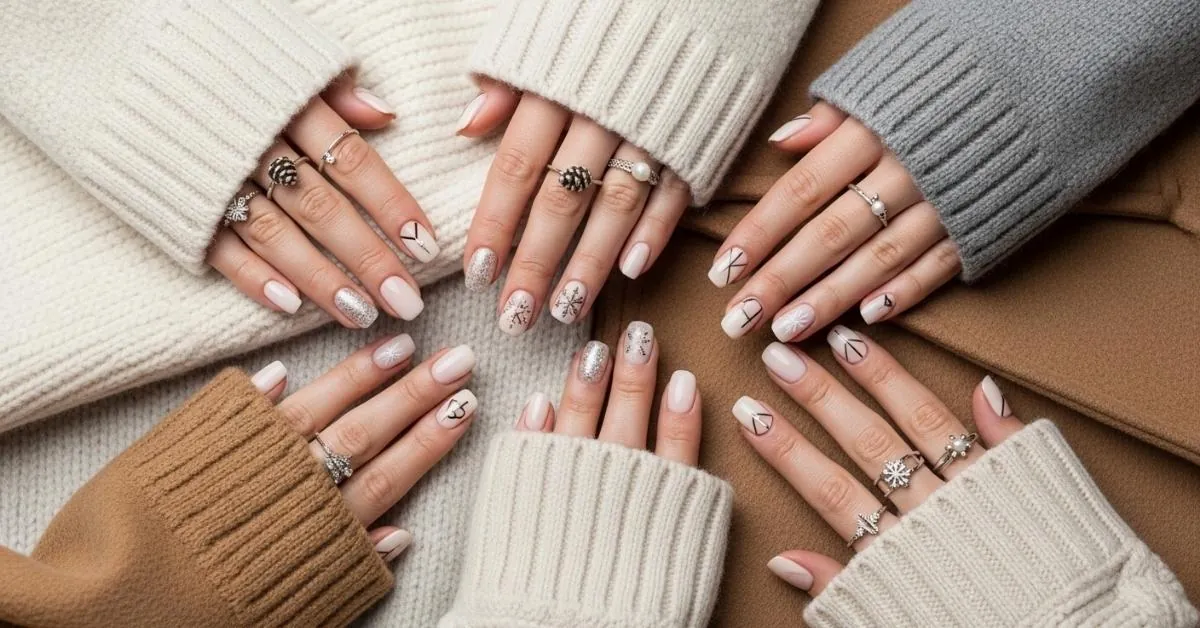
Winter nails for everyday outfits work best when they mirror the textures, tones, and mood of the season while staying wearable across multiple looks. The right approach balances visual interest with versatility, giving you manicures that feel intentional whether you’re in tailored work trousers or weekend denim.
Why Most Winter Nail Inspiration Fails Everyday Wear
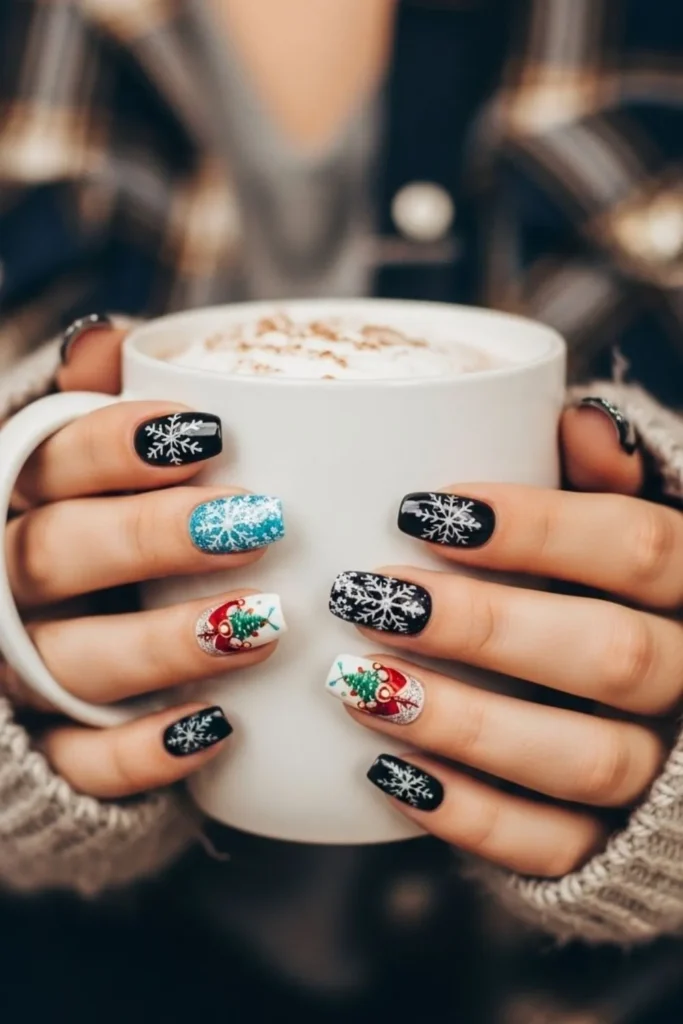
Seasonal nail trends typically prioritize visual impact over practicality, which explains why so many winter manicures feel unwearable after the first week. Editorial boards feature intricate snowflakes, chunky glitter gradients, and jewel-toned stiletto shapes that look stunning in isolation but clash with the muted, layered aesthetic most people actually wear during cold months. These designs assume your entire outfit revolves around your nails, which reverses the natural relationship between accessories and clothing.
The core issue is that trending winter nails rarely consider neutral wardrobes. A bright cranberry polish might dominate Pinterest boards, but it creates visual noise against beige trench coats, gray sweaters, and black boots, the actual foundation of most winter outfits.
This mismatch forces you to either adapt your clothing choices to your manicure or feel slightly off-balance every time you look at your hands. Neither option supports effortless style, which is what everyday wear should deliver.
What Makes a Winter Nail Design Actually Wearable
Wearable winter nails share three qualities: they complement rather than compete with your wardrobe, they maintain visual interest without requiring constant upkeep, and they transition seamlessly from casual to professional settings. The difference between a design that works and one that doesn’t often comes down to finish rather than color a glossy taupe feels more versatile than a glittery taupe, even though the base shade is identical.
Finish determines how a nail color interacts with fabric textures. Creamy mattes soften against chunky knits and wool coats, while subtle sheers create a polished backdrop that won’t clash with patterned scarves or statement jewelry.
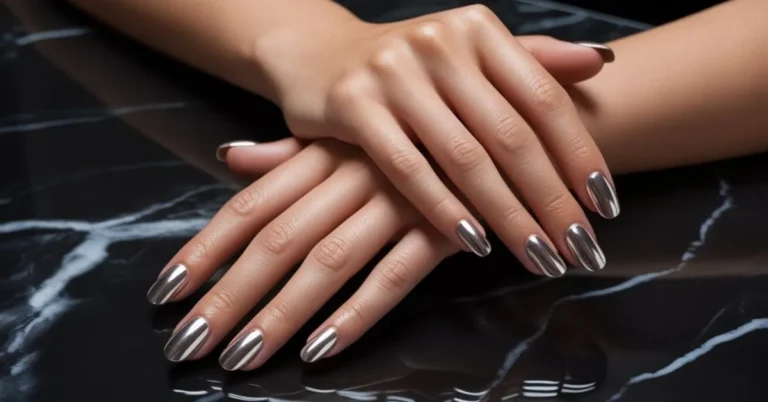
Metallic finishes work when they’re muted think brushed bronze or soft pewter rather than mirror chrome. The goal is to create a manicure that feels like an extension of your outfit’s color story rather than a separate element demanding attention.
Shape plays an equally important role in everyday wearability. Shorter lengths in oval, squoval, or rounded shapes withstand winter activities better than long stilettos or sharp edges.
These practical shapes also read as more modern and intentional than outdated square tips, particularly when paired with sophisticated neutral tones that mirror the season’s natural palette.
See More About : Soft Nail Colors: The Ultimate 2025 Guide to Dreamy Pastel Manicures
How Winter Outfits Should Guide Your Nail Color Choices
Your most-worn winter pieces should dictate your nail palette, not the other way around. If your closet centers on charcoal, navy, and cream, warm-toned nails in caramel, soft taupe, or muted terracotta create cohesion without repetition. These shades pick up undertones already present in neutral fabrics, making your hands look polished rather than mismatched when you’re layering textures throughout the day.
Cool-toned wardrobes benefit from different considerations. Grays, blacks, and icy whites pair beautifully with slate blue, dusty mauve, or greige colors that echo winter’s overcast skies and frosty mornings.
The key is matching the temperature of your outfit’s undertones rather than directly matching the literal color. A cool-toned brown like mushroom works with gray flannel, while a warm-toned brown like cognac complements camel wool.
Pattern integration matters more than most realize. If you frequently wear plaid, houndstooth, or Fair Isle knits, solid nails in one of the pattern’s secondary colors create visual harmony.
Alternatively, choosing a shade one tone lighter or darker than your most common base layer ensures your nails never feel like an afterthought, even when your outfit complexity varies day to day.
The Difference Between Seasonal and Everyday Winter Nails
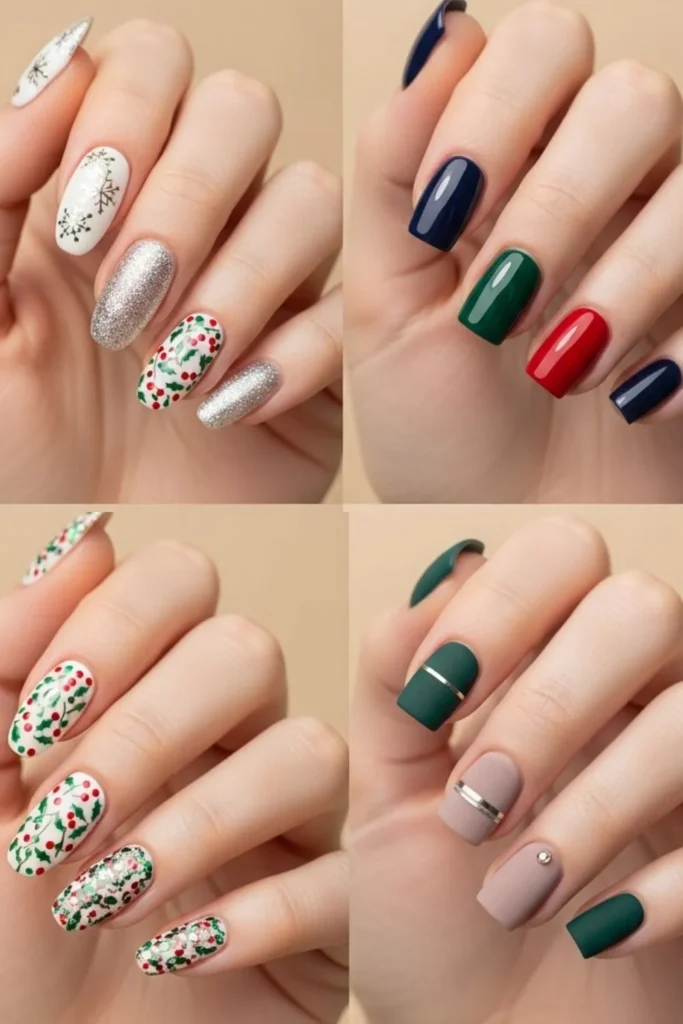
Seasonal winter nails celebrate the holidays and specific events, while everyday winter nails support your routine. Seasonal designs lean into metallics, deep jewel tones, and decorative elements that feel special but impractical for sustained wear.
Everyday designs prioritize longevity, versatility, and emotional neutrality, they shouldn’t announce a specific occasion or require explanation in professional settings.
This distinction becomes clearest when you consider calendar longevity. A deep emerald with gold foil accents works beautifully for December parties but feels out of place by mid-January when winter still stretches ahead for months.
In contrast, a soft greige or milky coffee shade carries through the entire season without feeling dated or overly festive. The best everyday winter nails make you forget you’re wearing a “look” at all, which is the hallmark of genuinely functional design.
Neutral Winter Nail Colors That Work With Everything
Greige sits at the intersection of gray and beige, offering warmth without reading as brown and coolness without feeling stark. This hybrid shade complements both silver and gold jewelry, works across skin tones, and provides enough visual interest to avoid looking unfinished.
Unlike pure gray, which can appear flat against winter’s muted palette, greige has dimensional undertones that shift slightly depending on lighting and surrounding colors.
Soft taupe in a creamy finish delivers quiet sophistication that enhances rather than distracts from your outfit. It’s particularly effective when you want your clothing or accessories to take center stage, think statement coats, textured scarves, or bold footwear.
The color’s neutrality makes it ideal for weeks when your wardrobe varies significantly, from casual denim to tailored suiting.
Milky coffee tones bring warmth to winter’s coolness without veering into orange territory. These shades slightly lighter than traditional browns feel modern and clean, especially in a glossy finish that catches light subtly throughout the day.
They’re especially flattering against cream and ivory knitwear, creating a monochromatic effect that feels intentional rather than accidental.
See More About : Polka Dot French Tip Nails: 2025’s Most Playful Manicure Trend Guide
Cool-Toned Options for Gray and Black Wardrobes
Slate blue provides depth without the heaviness of navy, offering a sophisticated alternative to typical winter darks. It reads as neutral in practice, particularly when paired with charcoal, black, or cool grays, but adds just enough color to keep your look from feeling monotone.
The shade works especially well in matte or satin finishes, which prevent it from skewing too casual or too dressy.
Dusty mauve walks the line between pink and brown with cool undertones that complement winter’s palette. Unlike warmer roses that can clash with black outerwear, dusty mauve maintains visual harmony while adding subtle femininity. It’s one of the few non-neutral colors that genuinely works as a neutral in everyday contexts, feeling appropriate for both office meetings and weekend brunches.
Soft pewter offers a metallic option that doesn’t overwhelm. Unlike traditional silver, which can appear costume-like in certain finishes, pewter has a muted quality that feels intentional and expensive.
It picks up the cool tones in winter fabrics while providing gentle shimmer that elevates simple outfits without requiring additional accessories.
Warm-Toned Nails for Camel, Cream, and Earth Tones
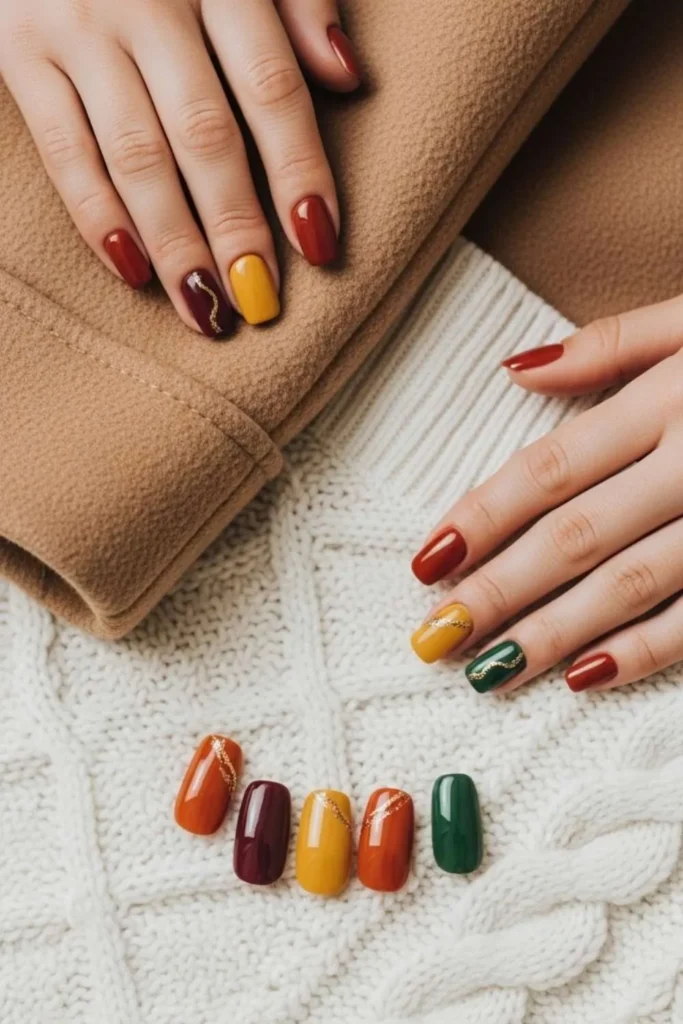
Terracotta in a muted iteration brings warmth without appearing summery or out of season. When styled with a creamy finish rather than high-gloss, it complements camel coats, tan leather accessories, and cream knitwear beautifully. The shade has enough personality to feel like a choice while remaining subdued enough for conservative work environments.
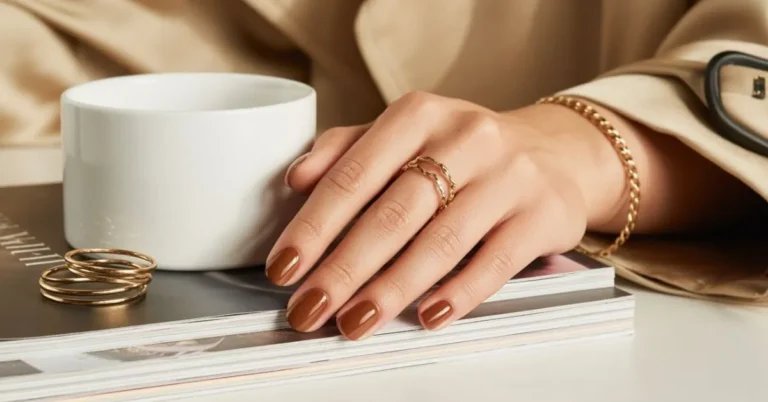
Soft caramel mirrors the exact undertones in popular winter outerwear, creating an intentional monochromatic effect. It’s particularly effective when you wear a lot of neutral layers, as it extends your color story down to your fingertips without introducing competing elements.
The key is choosing a shade that’s one or two tones lighter than your darkest camel piece to maintain contrast.
Warm greige leans slightly more beige than its cooler counterpart, making it ideal for wardrobes built on cognac, chocolate, and wheat tones. This version provides enough warmth to avoid looking washed out against earthy fabrics while maintaining the versatility that makes greige universally wearable. It’s especially flattering in natural light, where its subtle complexity becomes more apparent.
Why Matte and Satin Finishes Outperform Gloss in Winter
Matte finishes absorb rather than reflect light, creating a soft, velvety appearance that complements winter’s textured fabrics. They feel modern and understated, which aligns with the season’s layered, tactile aesthetic better than glossy nails that can appear too polished or summery.
Matte also disguises minor imperfections and chips better than gloss, extending your manicure’s wearable life between salon visits.
The practical advantage becomes clear when you consider winter activities. Matte nails don’t show fingerprints, smudges, or the slight dullness that develops on glossy polish after repeated exposure to dry indoor heat and cold outdoor air. They maintain their intended appearance longer, which matters when you’re navigating a season that’s particularly hard on manicures.
Satin finishes split the difference, offering a subtle sheen without full glossiness. This middle ground works beautifully for professional settings where matte might feel too casual but high gloss feels overly done.
Satin also photographs more naturally than either extreme, which matters if your hands frequently appear in photos or video calls.
See More About : Marble Nails: The Timeless 2025 Trend That’s Making Manicures Luxurious Again
Short Nail Shapes That Actually Suit Winter Layers
Oval shapes create a soft, feminine silhouette that won’t snag on knit fabrics or catch on coat linings. The gentle curve feels intentional rather than accidental, and it complements the rounded shapes already present in winter accessories like scarves, hats, and gloves. Unlike sharp edges, ovals maintain their shape better as they grow, reducing the need for frequent reshaping.
Squoval nails combine the practicality of square tips with the softness of rounded edges, creating a universally flattering shape that works across nail bed shapes. This hybrid prevents the harsh look that pure square nails can create while maintaining enough structure to feel polished.
It’s particularly effective for shorter lengths, where it maximizes the appearance of nail surface area without requiring extended length.
Rounded shapes offer the most natural appearance, making them ideal for conservative work environments or when you want your nails to enhance rather than define your look.
They require minimal maintenance, resist chipping better than other shapes, and feel the most comfortable during winter tasks like buttoning coats, typing in gloves, or handling cold metal zippers.
How to Pair Nail Colors With Winter Jewelry
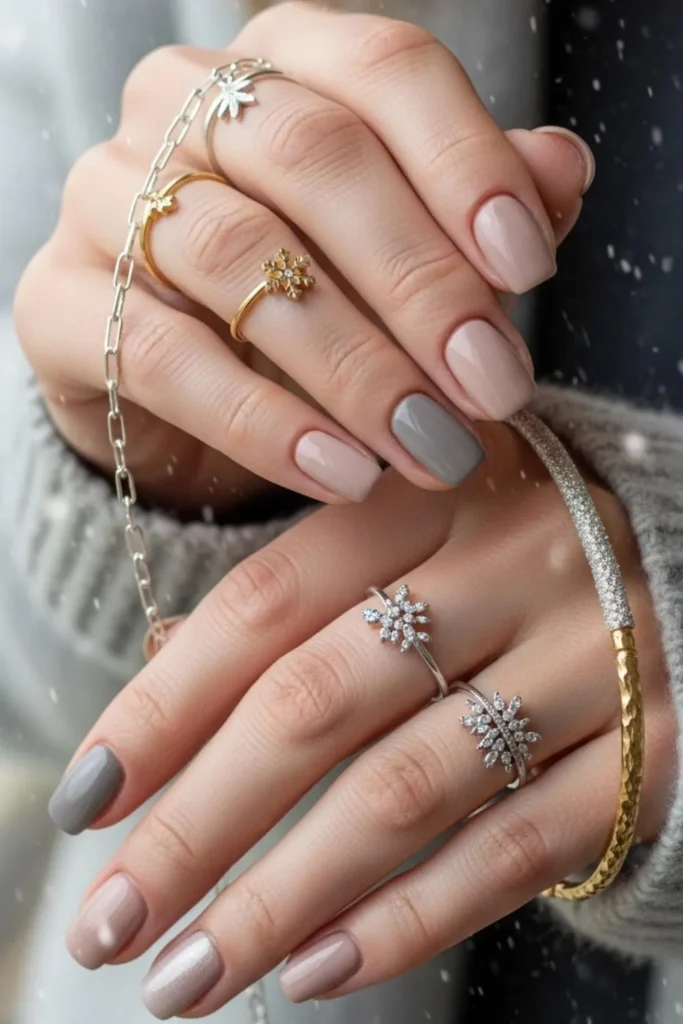
Silver jewelry demands cool-toned nails to maintain visual harmony think slate, mauve, or cool greige rather than warm browns or terracottas. The temperature match prevents your hands from looking disjointed when rings, bracelets, and watches all skew cool. This doesn’t mean exact matching; rather, it’s about ensuring your nails don’t introduce warmth that clashes with your metal choice.
Gold and warm metals pair beautifully with caramel, soft taupe, and muted terracotta shades. These combinations feel rich and intentional, particularly when layering multiple gold pieces. The key is choosing nail colors that are slightly lighter than your jewelry to create contrast while maintaining the same warm undertone family.
Mixed metal wearers have the most flexibility, but true neutrals like greige or soft pewter work best when you’re regularly switching between silver and gold. These shades refuse to commit to either temperature, making them fail-safe options when your jewelry choices vary daily or when you’re unsure what accessories you’ll reach for throughout the week.
Monochromatic Winter Nail Looks That Feel Effortless
Tonal dressing extends naturally to nails when you choose shades that sit one or two tones away from your most-worn base layers. A mushroom manicure with charcoal knitwear, for instance, creates sophisticated depth without introducing new colors into your palette.
This approach feels particularly modern and intentional, suggesting you’ve considered every element of your appearance rather than treating nails as an afterthought.
The monochromatic strategy works especially well for minimalists who build their wardrobes around a limited color range. If you live in black, white, and gray, choosing nails in dove gray or soft charcoal reinforces your aesthetic rather than disrupting it.
The same principle applies to beige-focused wardrobes selecting a nail shade within the tan to taupe family maintains visual continuity.
Texture variation prevents monochromatic looks from feeling flat. When your nails match your outfit’s color temperature but offer a different finish matte nails with a glossy coat, for example you create subtle interest that keeps the overall effect from appearing one-dimensional.
See More About : Leopard French Tips: 40+ Wild Ways to Rock Animal Print Elegance in 2025
Subtle Accent Nail Ideas for Everyday Versatility
Single-finger accents work best when they’re tonal rather than contrasting think a slightly darker shade of your base color or a different finish on the same hue. A greige base with one matte accent nail in the same color creates visual interest without disrupting the overall neutrality. This approach adds intentionality without requiring the bold commitment of traditional accent nails.
Metallic accents in muted tones provide gentle elevation for everyday wear. A soft bronze or brushed gold on your ring finger complements warm-toned nails without feeling costume-like, while a pewter accent works beautifully with cool neutrals. The key is choosing metallics that whisper rather than shout, maintaining the overall wearable aesthetic.
Negative space accents using your natural nail as the design element feel particularly modern and minimal. A simple diagonal line or half-moon shape in your base color against bare nail creates architectural interest that photographs well and transitions seamlessly from casual to professional settings.
When Dark Winter Nails Work for Everyday Outfits
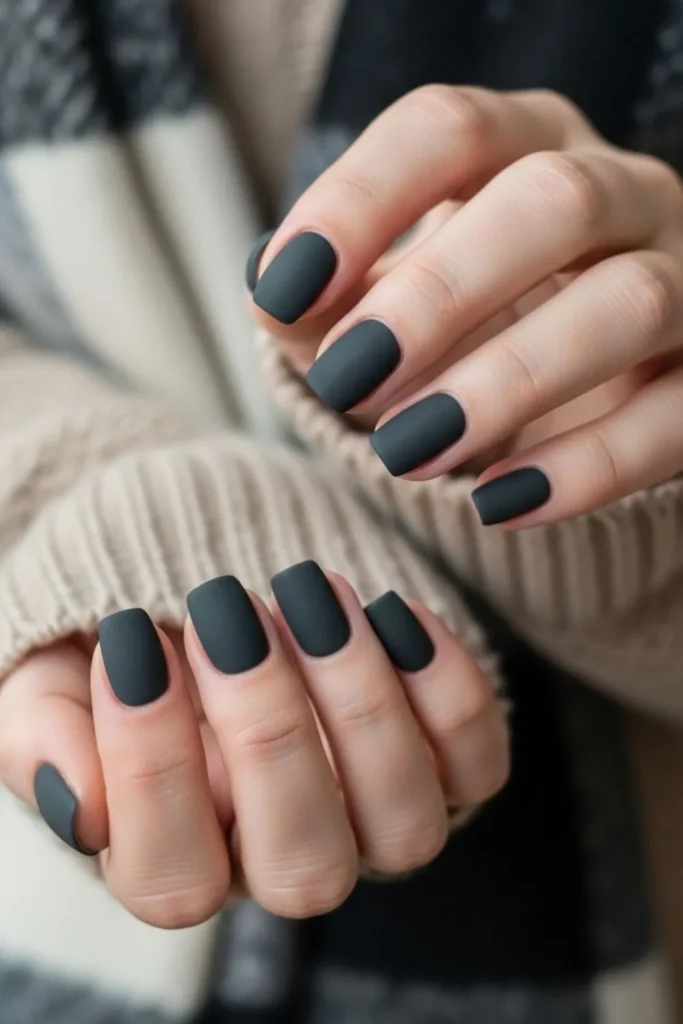
Deep colors function as neutrals when they’re muted rather than saturated. A chocolate brown or charcoal gray reads as sophisticated and versatile, unlike bright burgundy or rich emerald which announce themselves too loudly for everyday wear.
The difference lies in the undertones cooler, grayer versions of dark colors integrate into neutral wardrobes more successfully than their jewel-toned counterparts.
Dark nails work best on shorter lengths where they won’t overwhelm your hands or create excessive visual weight. On longer nails, deep colors can appear dramatic or evening-appropriate rather than everyday-suitable. Keeping length modest maintains the balance between intentional color choice and practical wearability.
Finish selection determines whether dark nails feel approachable or severe. Matte or satin finishes soften dark shades significantly, making them more suitable for daily wear than glossy versions of the same color.
A matte charcoal feels quietly sophisticated, while a glossy charcoal can veer toward gothic or overly styled depending on your overall aesthetic.
Sheer and Translucent Options for Minimal Aesthetics
Milky sheers provide a barely-there look that enhances natural nails without announcing a specific color choice. These translucent shades work beautifully when you want polished hands without the commitment of opaque color, and they complement literally every outfit in your closet.
They’re particularly effective for professional settings where obvious manicures might feel inappropriate but bare nails look unfinished.
Sheer nudes in your exact skin tone create the illusion of longer, healthier nails while maintaining a natural appearance. Unlike opaque nudes that can appear artificial or dated, sheer versions look like an improved version of your natural nails. This subtlety makes them ideal for weeks when you want minimal visual intervention.
Tinted sheers in soft pink, peach, or mauve add gentle warmth without committing to full color. These options split the difference between clear polish and opaque manicures, offering just enough tint to look intentional while maintaining the versatility of neutral nails. They’re especially flattering in natural light, where their subtle complexity becomes more visible.
See More About : Autumn Nails: The Complete 2025 Guide to Fall’s Hottest Manicure Trends
How to Make Winter Nails Last Through Seasonal Activities
Base coat selection matters more in winter when dry air, indoor heating, and cold temperatures stress nail beds. Strengthening formulas with added proteins create a protective barrier that prevents chipping and peeling, extending your manicure’s life by several days.
This foundational step is particularly important for matte finishes, which can appear more obviously damaged when chips occur.
Cuticle oil application becomes critical during winter months when skin dehydration accelerates. Dry cuticles compromise polish adhesion and create lifted edges where chips typically begin.
Applying oil twice daily morning and evening maintains the flexibility that prevents polish from separating from the nail bed during temperature fluctuations.
Top coat refreshing every two to three days dramatically extends manicure longevity, particularly for matte finishes that can appear worn even when the underlying color remains intact.
A thin layer of matte or glossy top coat, depending on your preference, seals minor imperfections and restores the intended finish without requiring complete removal and reapplication.
Nail Shapes That Won’t Snag Winter Fabrics
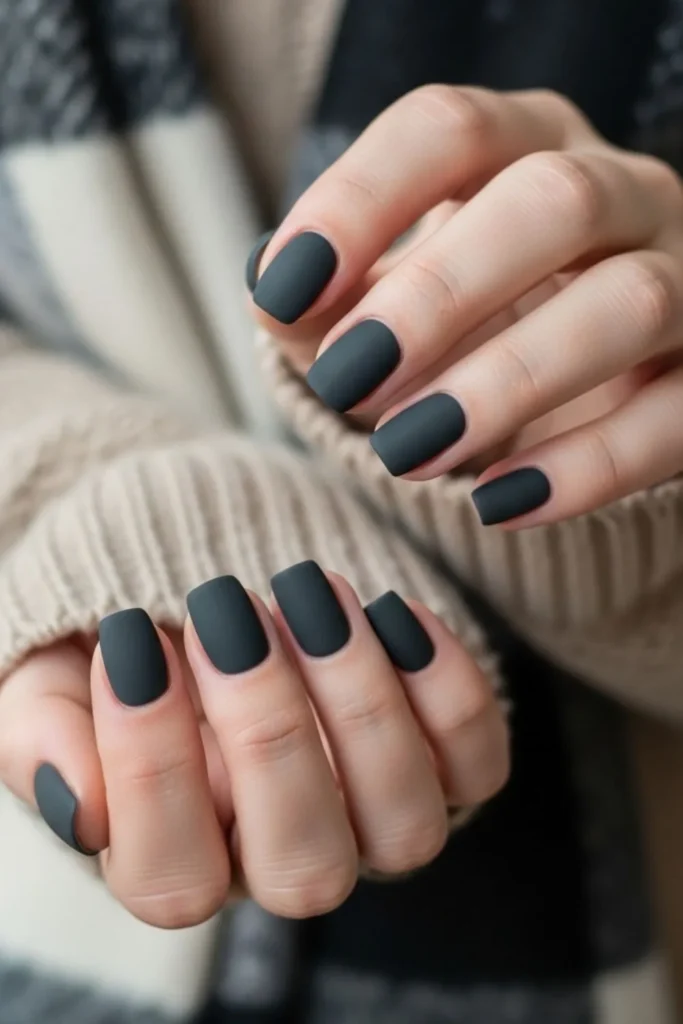
Smooth edges without sharp corners prevent catching on knit sweaters, scarves, and coat linings fabrics you interact with constantly during winter months. This means avoiding stiletto points, sharp squares, or anything with defined angles that can create pulls in delicate weaves.
The practical impact extends beyond fabric preservation to include reduced nail breakage when edges don’t have weak points where stress concentrates.
Rounded and oval shapes distribute pressure evenly across the nail tip, making them significantly more resistant to breaking during winter activities. Whether you’re scraping ice, buttoning heavy coats, or digging through bags for gloves, these shapes withstand daily stress better than angular alternatives. The functional advantage becomes obvious within the first week of wear.
Shorter lengths naturally reduce snagging incidents while maintaining a polished appearance. Nails that extend no more than 2-3mm beyond your fingertip strike the ideal balance between looking intentional and remaining practical for winter’s demands.
This length also feels more proportionate when your hands are frequently visible against heavy fabrics and dark outerwear.
Office-Appropriate Winter Nails That Feel Personal
Conservative workplaces require subtle color choices, but that doesn’t mean boring. Sophisticated neutrals in unexpected finishes like matte taupe or satin greige demonstrate attention to detail while respecting professional boundaries.
These choices signal that you’ve made intentional grooming decisions without introducing elements that might read as too casual or trend-focused for traditional environments.
The key distinction between personal and unprofessional lies in finish and saturation rather than color choice. A muted mauve in creamy matte feels entirely appropriate for conservative offices, while the same shade in high-gloss or with shimmer might cross into too-casual territory.
Understanding this nuance allows for personal expression within professional constraints.
Coordination with your professional wardrobe creates cohesion that reads as polished rather than matchy. If your work clothes center on navy and gray, choosing nails in slate or soft pewter demonstrates thoughtfulness that elevates your overall presentation.
This integrated approach to professional appearance suggests competence and attention to detail.
See More About : Leopard French Tips: 40+ Wild Ways to Rock Animal Print Elegance in 2025
Transitioning Holiday Nails to Everyday Winter Wear
Post-holiday manicure fatigue often stems from overly festive choices that feel dated once celebrations end. If you’re stuck with deep burgundy or glittery gold in early January, transitioning to everyday winter nails might require complete removal rather than attempted adaptation.
The clearest solution involves choosing genuinely neutral shades that work throughout the season rather than committing to holiday-specific colors that have limited wearability windows.
For those who prefer gradual transitions, removing accent nails while keeping neutral bases extends manicure life without requiring total replacement. If you chose a greige base with gold accents for December, simply removing the metallic element returns your nails to everyday-appropriate status.
This strategy works particularly well with gel manicures where partial removal is feasible.
Learning from holiday manicure mistakes means recognizing which elements felt too specific to celebrations versus which offered lasting versatility. If you loved your December nail color but felt it was too festive, the issue likely involved finish or accent choices rather than the base shade itself.
Identifying these distinctions helps refine your approach for future seasonal transitions.
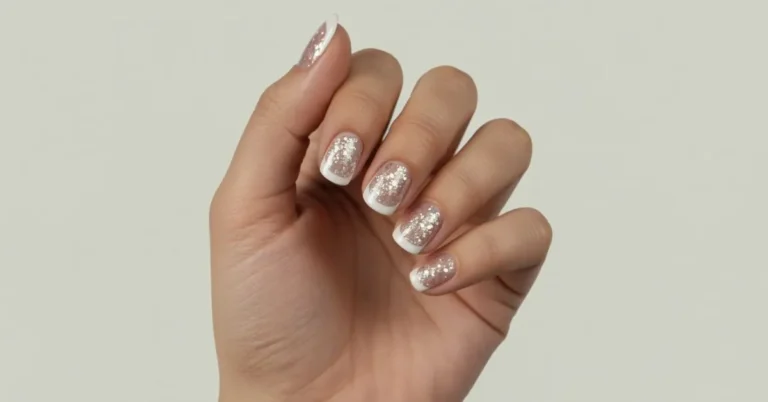
Why French Manicures Feel Dated for Winter 2026
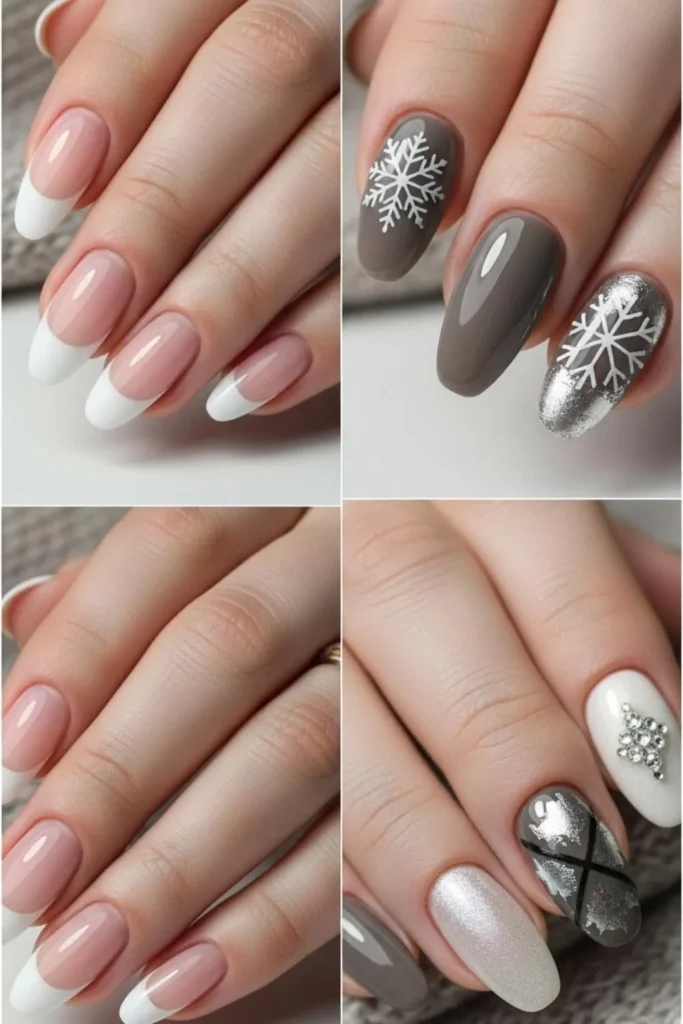
Traditional French tips with stark white and beige contrast feel disconnected from modern winter aesthetics that prioritize subtlety and tonal variation. The high-contrast look reads as early 2000s rather than current, particularly when paired with the muted, layered approach most people take to cold-weather dressing.
The style’s formality also conflicts with the casual sophistication that defines contemporary everyday style.
Modern alternatives maintain the French concept while updating the execution. Tonal French nails using shades within the same color family like taupe tips with greige bases offer the clean, elongating effect without the dated contrast.
These updated versions feel intentional and current while still providing the polished look that made French manicures appealing initially.
Reverse French designs, where color appears at the base rather than the tip, create visual interest that feels more aligned with 2026 aesthetics. This inversion works especially well with subtle color choices like soft mauve or dusty blue against sheer or nude bases, offering gentle creativity without abandoning everyday wearability.
Winter Nail Care That Supports Long-Lasting Color
Hydration determines how long polish adheres to your nails, making moisturizing essential rather than optional during winter. Dry nail beds reject polish more quickly, leading to chips and peeling within days of application.
Hand cream applied multiple times daily, with special attention to cuticles and nail beds, creates the foundation for extended manicure life.
Polish quality matters significantly more in winter when environmental stressors test formulation durability. Professional-grade polishes contain higher concentrations of pigments and resins that withstand temperature fluctuations and humidity changes better than drugstore alternatives.
The investment pays off in extended wear time and reduced need for touch-ups between full manicures.
Application technique influences longevity as much as product choice. Thin, even coats dry more thoroughly and resist chipping better than thick, uneven applications. Taking time to cap the free edge with each coat including base and top coat seals the nail completely, preventing moisture intrusion that causes lifting and separation.
See More About : Almond-Shaped Nails 2025: The Ultimate Guide to Filing, Styling & 30+ Trendy Designs
Common Winter Nail Mistakes That Ruin Everyday Versatility
Choosing trendy colors over wardrobe-compatible shades creates frustration every time you get dressed. A viral nail color might look beautiful in isolation, but if it clashes with your coat, your boots, and your most-worn sweaters, it becomes a source of daily annoyance rather than pleasure.
The solution involves auditing your closet before selecting nail colors, ensuring compatibility with your actual lifestyle rather than aspirational Pinterest boards.
Overlength nails during winter months invite breakage and impracticality. Long nails make buttoning coats difficult, increase snagging risk on winter fabrics, and break more easily during cold-weather activities.
Keeping length modest no more than 3mm beyond your fingertip maintains the polished look while supporting functional use throughout the season.
Ignoring finish selection diminishes color impact and limits versatility. The same shade performs differently in matte, glossy, or satin finishes, and choosing the wrong one for your lifestyle and wardrobe can make an otherwise perfect color feel off.
Understanding how finish interacts with your daily activities and clothing textures ensures your manicure choice enhances rather than detracts from your overall appearance.
How to Choose Winter Nail Colors for Different Skin Tones
Cool undertones benefit from nails in slate, mauve, and cool greige shades that echo the pink and blue notes already present in your skin. These colors create visual harmony that makes your hands look polished and intentional without introducing warmth that would clash with your natural coloring.
The result is a cohesive look where your manicure feels like a natural extension of your overall appearance.
Warm undertones shine with caramel, soft terracotta, and warm taupe shades that complement the golden and peach notes in your skin. These colors enhance your natural warmth rather than fighting against it, creating a glow that cold-neutral shades can’t achieve.
The key is choosing shades that are slightly lighter or darker than your skin tone to maintain contrast while staying within your color temperature.
Neutral undertones have the widest range of options, functioning beautifully with both warm and cool shades. True greige, soft pewter, and balanced browns work universally because they don’t commit strongly to either temperature.
This flexibility allows for greater experimentation while maintaining the reliability that everyday nails require.
See More About : Rust Almond Nails: The Ultimate 2025 Guide to Fall’s Most Sophisticated Trend
When to Choose Cream Versus Glossy Finishes
Cream finishes offer opacity and depth without the light reflection that can appear overly polished in casual settings. They work beautifully for everyday wear because they look intentional without seeming like you’ve tried too hard.
Cream finishes also photograph more naturally than high gloss, which matters if your hands frequently appear in photos or video content.
Glossy finishes suit professional environments and special occasions where a more polished appearance feels appropriate. They create clean, crisp edges that read as highly maintained and put-together.
However, glossy nails require more frequent maintenance to maintain their intended appearance, as dulling and minor chips become more obvious than they would on matte or cream finishes.
The decision often comes down to lifestyle rather than preference. If you’re active, frequently wash your hands, or work with your hands regularly, cream or matte finishes extend wearable time by disguising the minor imperfections that develop naturally. If you maintain careful nail care and prefer a more formal aesthetic, gloss delivers the crisp appearance you’re seeking.
Nail Art That Actually Works for Everyday Winter Outfits
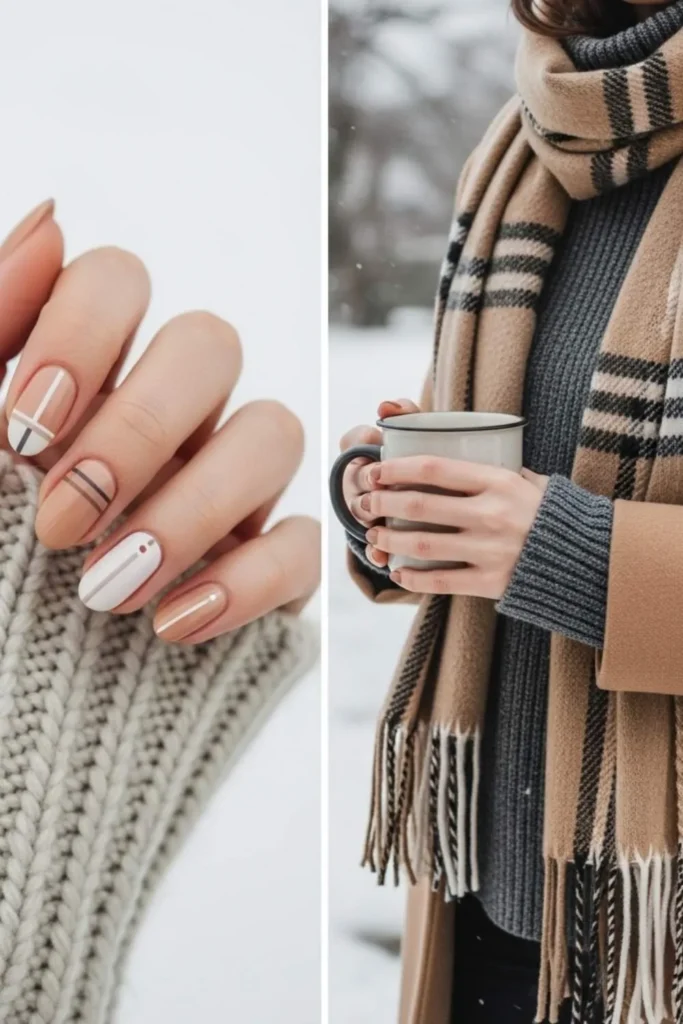
Minimalist line work in tonal shades adds visual interest without sacrificing versatility. A single thin line in a slightly darker shade of your base color, placed vertically or diagonally, creates architectural interest that feels modern and intentional.
This approach works particularly well on one or two accent nails, maintaining overall neutrality while suggesting thoughtfulness.
Negative space designs using geometric shapes feel current and sophisticated when executed in subtle colors. A triangle or half-moon of bare nail combined with a neutral polish creates clean, graphic interest that transitions seamlessly from weekend to workweek. The key is keeping shapes simple and colors muted to maintain everyday appropriateness.
Textural variation through different finishes on the same color offers creativity without color commitment. Alternating matte and glossy nails in the same neutral shade, or using a subtle shimmer on accent nails, provides visual interest that feels intentional without introducing elements that might clash with your wardrobe.
This technique works especially well for people who want slightly more personality in their manicures without abandoning neutral territory.
See More About : Mocha French Tip Nails 2025: The Sophisticated Twist on Classic Elegance
FAQ’s
What nail colors go with all winter outfits?
Neutral winter nail colors like soft taupe, greige, sheer pink, and deep burgundy match almost every outfit. These versatile winter nail shades work well for casual, work, and formal looks in the US.
How long should winter nails be for everyday wear?
Short to medium-length winter nails are best for everyday activities like typing, driving, and wearing gloves. This length is practical, comfortable, and less likely to break in cold, dry weather.
Are matte nails better than glossy for winter?
Glossy winter nails usually last longer because top coats protect against dryness and chipping. Matte nails look stylish but tend to show wear faster during cold months.
What’s the best nail shape for wearing gloves?
Rounded or squoval nail shapes are the best for wearing gloves because they don’t snag fabric. These shapes also help prevent breakage during winter.
How do I match nails to a neutral winter wardrobe?
Choose nail colors that mirror your clothing palette, such as beige, gray, navy, or soft mauve. This creates a coordinated winter nail look that pairs easily with most US winter outfits.
Should winter nails be darker than summer nails?
Winter nail colors are often darker, but they don’t have to be. Deep shades like plum or forest green feel seasonal, while lighter neutrals still look clean and modern.
Key Takeaways
- Winter nails for everyday outfits should complement your wardrobe’s undertones rather than compete with your clothing, with greige, soft taupe, and milky coffee functioning as universal neutrals
- Matte and satin finishes outperform gloss during winter because they disguise imperfections, resist smudging, and align better with the season’s textured fabrics
- Practical shapes like oval, squoval, and rounded prevent snagging on knit fabrics while maintaining a polished appearance at everyday-appropriate lengths of 2-3mm beyond the fingertip
- Successful winter manicures match the temperature of your wardrobe (cool nails with grays and blacks, warm nails with camels and creams) rather than attempting exact color coordination
- Nail longevity during winter requires strengthening base coats, twice-daily cuticle oil application, and top coat refreshing every 2-3 days to combat environmental stress from dry indoor heat and cold outdoor temperatures
Conclusion
Winter nails for everyday outfits succeed when they enhance your existing wardrobe rather than demanding accommodation. The most wearable choices mirror the tones, textures, and sophistication already present in your cold-weather clothing, creating visual continuity from your coat down to your fingertips.
This approach eliminates the disconnect between editorial nail trends and real-life versatility, giving you manicures that feel as intentional on Monday morning as they do on Saturday night.
Practical considerations matter as much as aesthetic ones during winter months. Choosing appropriate lengths, shapes, and finishes that withstand seasonal activities while maintaining their intended appearance extends your manicure’s life and reduces maintenance frustration.
When your nails complement your lifestyle instead of complicating it, they become a genuine enhancement to your overall presentation rather than another decision requiring daily management.