
61 Winter Nails Designs to Instantly Elevate Your Cold-Season Style
Winter manicures fail for reasons most people never consider. Cold air strips moisture from nail beds, indoor lighting distorts color, and gloves turn once-pretty polish into chipped regret. That’s why copying summer nail trends in January almost always ends badly, no matter how careful the application looks.
The usual mistake is treating winter like a color swap instead of an environmental shift. Dark shades exaggerate flaws, dry nails repel polish, and low light hides mistakes until it’s too late. A glossy burgundy that looked flawless at night suddenly shows streaks by morning commute.
Winter nails work when they’re designed for cold, dryness, and wear. With the right finishes, undertones, and techniques, manicures last longer, look intentional, and actually survive real winter days.
What Makes Winter Nails Different from Other Seasonal Styles
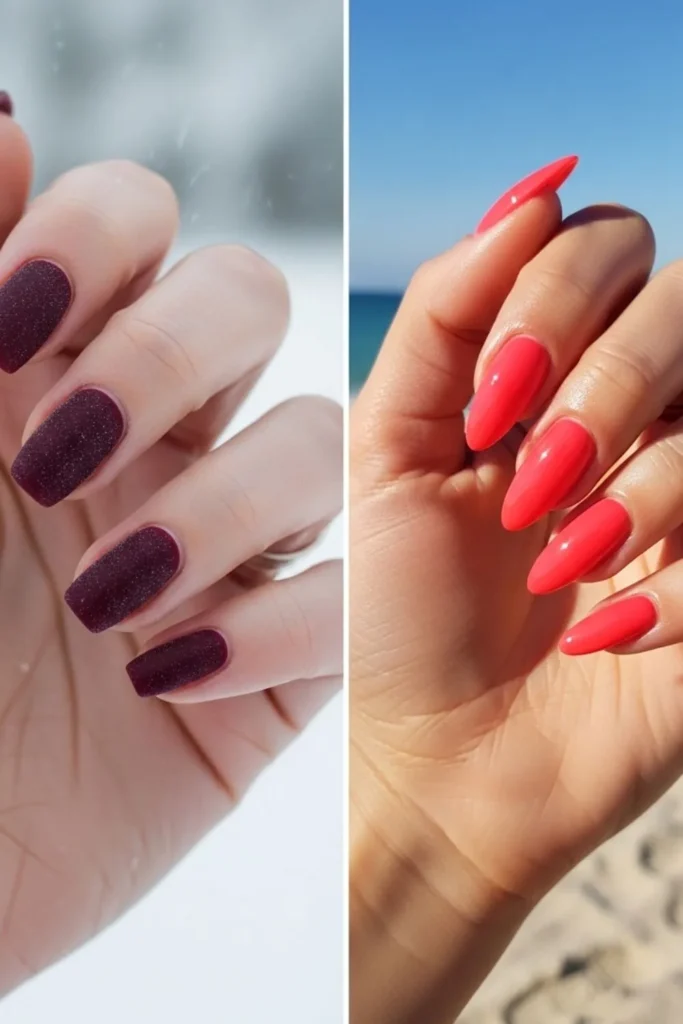
Winter nails require formulas with higher oil content and flexible resins that won’t crack in cold temperatures. Standard summer polishes become brittle below 50°F, causing chips within 2-3 days instead of the usual week.
The key difference is moisture retention. Winter air humidity drops to 10-30% in most heated indoor spaces, compared to 40-60% in summer. This pulls moisture from your nail plate at 3x the normal rate, creating a porous surface where polish can’t properly bond. You’ll also need base coats with penetrating conditioners, not just smoothing silicones, because dry nails flex more and crack topcoats from underneath.
Color physics change too. Winter’s blue-toned natural light (5500-6500K vs summer’s 5000-5500K) makes warm shades appear muddy and cool tones look almost neon. What looked like a soft mauve in July reads as bright purple in January under the same indoor lighting.
Deep Jewel Tones That Work in Low Winter Light
Emerald green, sapphire blue, and ruby red contain enough pigment density to maintain color saturation even in dim winter conditions. Unlike pastel or mid-tone shades that look washed out after sunset (around 5 PM in most northern regions), jewel tones have 40-60% more pigment per coat.
These colors work best on medium to long nails because short nails don’t provide enough surface area for the depth to register properly you lose the “jewel” effect and just get dark fingertips. Apply two thin coats rather than one thick coat; thick application on cold nails creates a plastic-looking finish instead of the glass-like depth you want. The pigment settles unevenly when applied thick, creating dark edges and lighter centers that highlight every brush stroke.
Read More About : Fall Neutral Nails: The Ultimate Guide to 2025’s Most Timeless and Versatile Manicure
Burgundy and Wine Shades for Professional Winter Settings
Burgundy reads as neutral in winter office lighting while still adding visual interest, making it the most versatile winter shade for conservative workplaces. Unlike true red (which fluorescent lights turn orange) or deep purple (which can look black in low light), burgundy maintains its identity across different light sources.
This works best when your undertone matches the polish undertone. Cool-toned burgundies (with blue or purple bases) look corpse-like on warm skin tones, while warm burgundies (with brown or red bases) turn muddy on cool skin. Test by applying one coat on a single nail and checking it in both natural window light and your office’s fluorescent or LED lighting. If it looks good in both, it’ll work. If it only works in one, skip it you’ll hate it half the time.
Metallic Chrome Finishes That Don’t Show Glove Damage
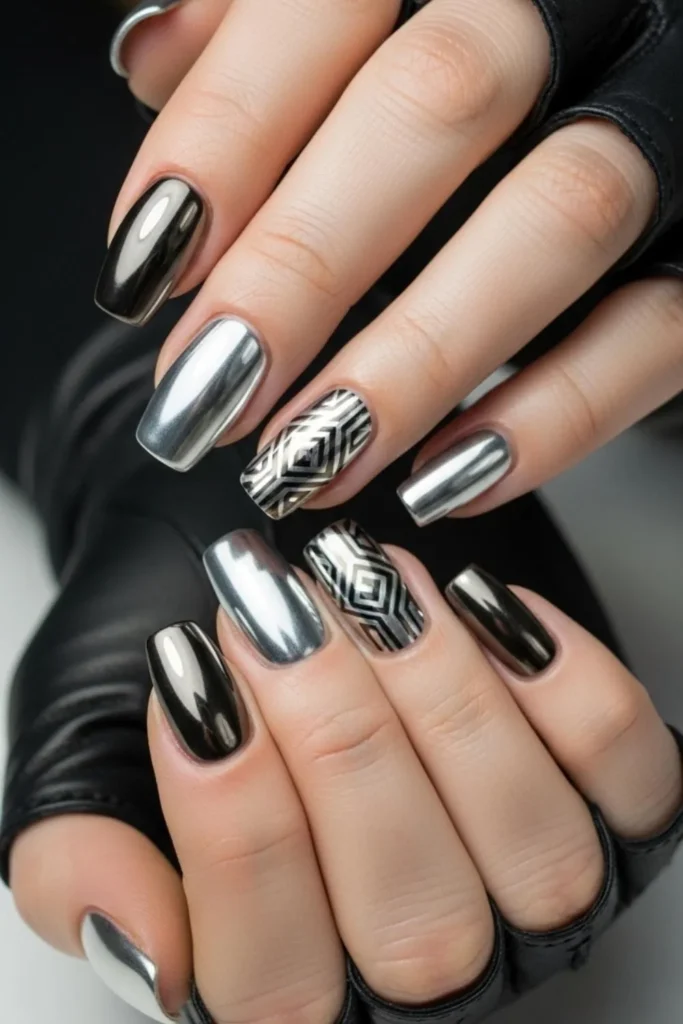
Chrome powders applied over gel create a mirror finish that hides the micro-scratches and scuffs that destroy regular metallics during glove season. Traditional metallic polishes contain suspended metal flakes that shift and separate when compressed repeatedly, creating bald patches where gloves rub.
True chrome (the powder application method, not metallic polish) bonds differently. The powder fuses into a continuous metal layer rather than floating particles, so compression doesn’t disrupt the finish. This costs $15-30 more than metallic polish at salons, but survives 2-3 weeks of daily glove wear versus 3-5 days for standard metallics.
The trade-off: chrome shows every nail surface imperfection because the mirror effect amplifies ridges and dips. You’ll need professional buffing or a ridge-filling base coat before application, adding another $10-15 to the service.
Matte Topcoats for Hiding Winter Dryness Texture
Matte finishes diffuse light instead of reflecting it, which camouflages the rough, dehydrated texture that winter creates on nail surfaces. Glossy topcoats act like magnifying glasses for every dry patch, ridge, and uneven spot they catch light and draw your eye directly to imperfections.
Unlike glossy manicures that look obviously chipped, matte finishes show wear as subtle texture changes rather than obvious gaps. A small chip in matte polish just looks like an intentional texture variation, buying you an extra 2-4 days before you need a fix. This works because human eyes register shine changes faster than color changes, so removing the shine removes the primary way we spot damage.
Apply matte topcoat in thin layers only. Thick matte application creates a chalky, craft-paint appearance instead of the smooth, velvety finish you want. One thin coat over completely dry color gives better results than two thick coats.
Read More About : Vamp Nails: The Ultimate Guide to Dark, Dramatic Manicures That Define 2025
Navy and Deep Teal as Neutral Winter Alternatives
Navy blue and deep teal function as winter neutrals because they provide enough contrast against winter clothing (which skews heavily black, gray, and brown) without the starkness of black nails. Black nails against black sweaters create a visual dead zone where your hands disappear, while navy and teal maintain separation.
These shades work particularly well for video calls, which have become standard in winter work-from-home scenarios. Screen compression technology struggles with true black, often rendering it as patchy dark gray, while navy and teal maintain consistent color even through compressed video feeds. The RGB color space used by most monitors can actually display these colors more accurately than it can display subtle nude shades, which often wash out completely on screen.
Choose teal for warm undertones and navy for cool undertones. The wrong match makes your hands look jaundiced (warm skin with navy) or bruised (cool skin with teal).
Glitter Placement Strategies That Survive Dry Skin
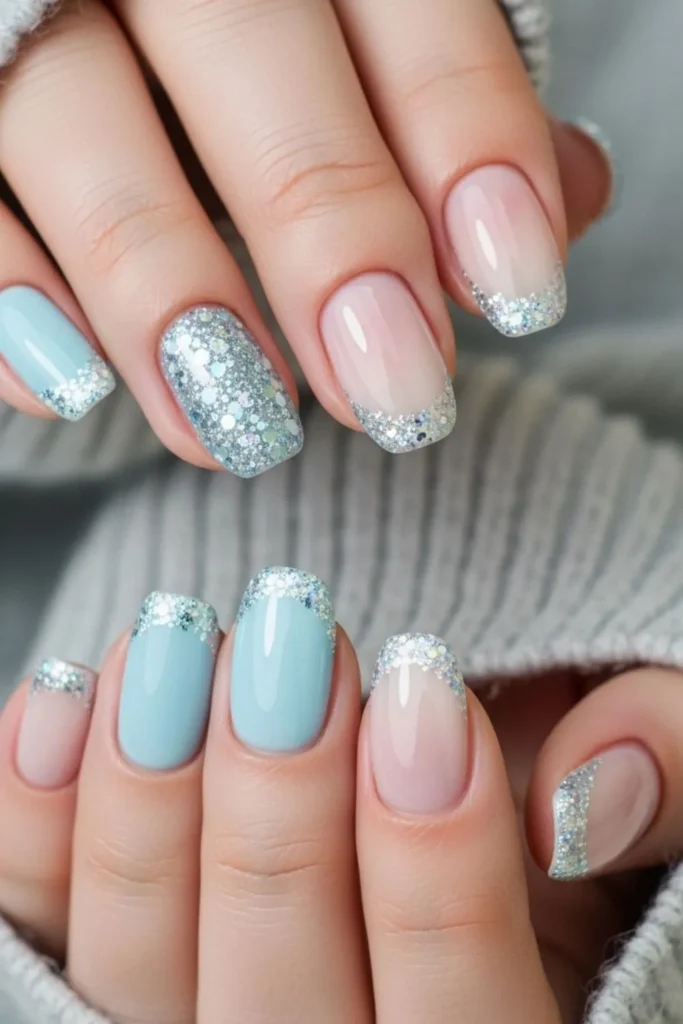
Accent glitter on one or two nails instead of full coverage prevents the sandpaper effect that happens when glitter edges catch on winter-dried skin. Full glitter manicures create hundreds of sharp edges that snag on clothing, hair, and skin throughout the day.
The strategic approach: place dense glitter on your ring fingers only, or use glitter as a French tip rather than full coverage. This concentrates the visual impact while reducing the functional irritation by 60-80%. Apply glitter over a smooth base color and seal with two coats of glossy topcoat, which rounds the glitter edges and prevents snagging.
For removal, soak cotton pads in acetone, place on nails, wrap in foil, and wait 10 minutes. Winter’s dry air makes glitter removal harder because dehydrated polish grips tighter to rough nail surfaces. The foil wrap method works better than soaking because it maintains heat and moisture, which soften the polish matrix so glitter releases cleanly instead of requiring scraping.
Sheer Milky Tones for Short Winter Nails
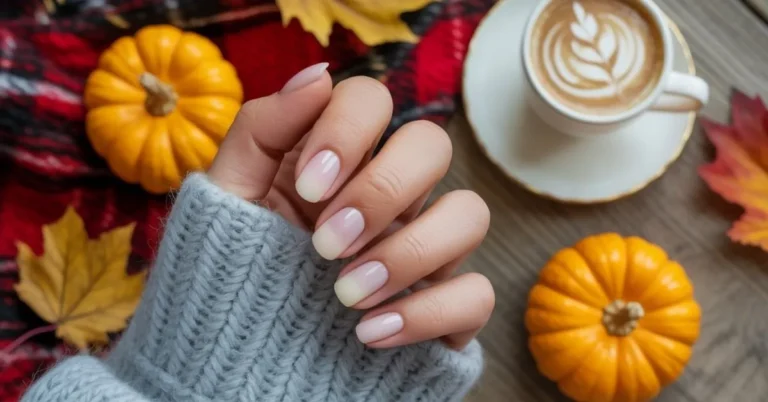
Milky white, soft pink, and sheer beige work on short winter nails because they don’t require length to create impact the understated finish reads as intentionally minimal rather than unfinished. Unlike bold colors that need surface area to register properly, sheer tones create visual interest through subtle texture and light diffusion.
These shades hide the yellowish staining that winter cuticle oils and hand creams create on nail edges. Opaque light colors (like stark white or pale pink) highlight these stains as dark borders, while sheer milky tones blend them into an overall soft glow. Apply three thin coats instead of two thick ones; thick sheer polish looks streaky and uneven, while properly layered thin coats create an airbrushed effect.
The limitation: sheer tones show every nail discoloration and require perfectly healthy nails to look good. If you have any yellowing, white spots, or ridges, these will show through and look worse than on bare nails.
Read More About : Dark Nail Polish: The Ultimate Guide to 60+ Dramatic Shades Trending in 2025
Dark Chocolate Brown for Warm Undertones
Chocolate brown contains red and orange pigments that complement warm skin undertones while remaining office-appropriate and sophisticated. Unlike cool-toned browns (which contain gray and can look muddy), chocolate brown maintains warmth even under fluorescent lighting.
This color requires two specific conditions to work: warm undertones and good application technique. On cool undertones, it looks sickly. With poor application, it shows every brush stroke because brown pigments don’t self-level the way reds and pinks do you’ll see lines and ridges that would be invisible in other shades.
The advantage over black: chocolate brown works with both silver and gold jewelry, while black often clashes with gold. This makes it more versatile for winter accessories when you’re layering rings and bracelets over sweaters.
Ombré Techniques That Work on Cold-Damaged Nails
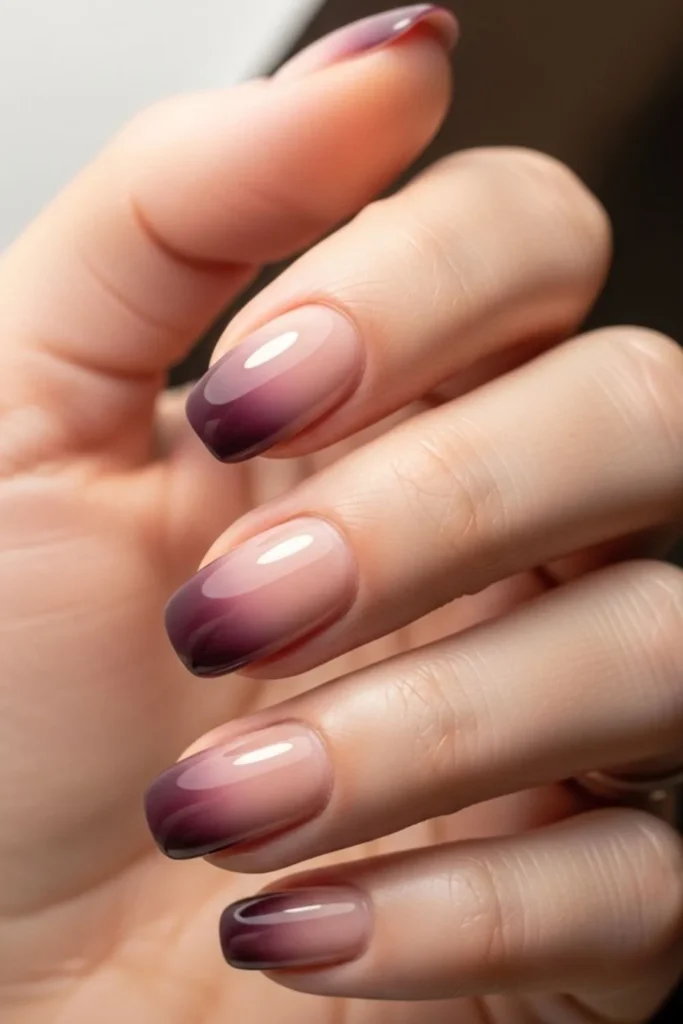
Vertical ombré (light at cuticle, dark at tip) hides regrowth better than horizontal ombré during winter when you’re stretching time between manicures due to budget or schedule constraints. The gradual color shift camouflages the line where new growth meets old polish.
Apply this using a makeup sponge with both colors side by side, dabbing onto the nail in a rocking motion. Winter’s dry air actually helps here the polish dries slightly on the sponge between dabs, creating a more controlled gradient instead of the muddy blend you’d get in humid summer conditions. Seal immediately with topcoat before the sponge-applied layers can fully dry, which would create a rough texture.
The technique fails on very short nails (under 2mm of free edge) because there’s not enough vertical space to show the gradient. You just get a muddy middle tone that looks like poor color matching.
French Tips Adapted for Winter Aesthetics
Colored French tips (using deep red, forest green, or navy instead of white) update the classic style for winter while maintaining the elongating effect of traditional French manicures. White tips in winter often look stark and dated because they’re fighting against the season’s natural color palette of muted, deep tones.
The key modification: make the tip slightly thicker (3-4mm instead of the traditional 2mm). Winter’s shorter days mean less natural light to create the shadow definition that makes thin French tips pop. A slightly thicker tip creates enough contrast to register in lower light conditions.
Use a striping brush for application instead of traditional French tip guides, which often leak polish underneath in winter because cold makes adhesive less sticky. A steady hand with a thin brush gives cleaner lines and doesn’t rely on adhesive that fails in cold conditions.
Read More About : Brown Nails Ideas: Master 2025’s Most Versatile and Universally Flattering Color
Sage Green for Cool-Toned Winter Skin
Sage green (a gray-green with blue undertones) complements cool skin tones during winter when reduced sun exposure makes cool undertones more prominent. This color reads as sophisticated and unexpected without being loud or attention-seeking.
The shade works because it sits in the same color temperature zone as winter skin, creating harmony instead of contrast. Warm greens (olive, moss, army green) fight against cool undertones and make hands look sallow. The difference is subtle but significant: sage contains enough gray to neutralize warmth, while warmer greens contain yellow or brown that clashes.
Apply with a wide, flat brush for best results. Sage’s complex pigment mix (blue + yellow + gray) shows brushstrokes easily, and a flat brush deposits more even coverage than a rounded brush. Two coats with this technique beats three coats with a standard brush.
Plum and Mauve for Transitional Winter Looks
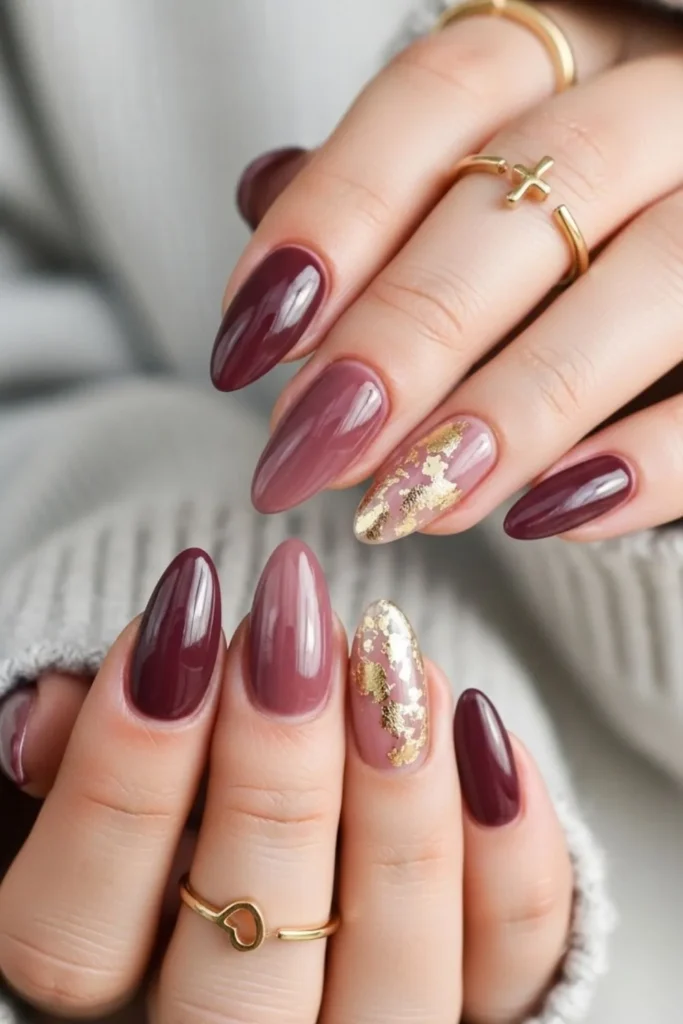
Plum purple and mauve bridge the gap between late fall and early spring, making them ideal for the deep winter months (January-February) when you’re tired of traditional winter darks but not ready for spring pastels. These shades contain both warm and cool pigments, giving them flexibility across different lighting conditions.
The strategic timing: plum works best in early winter (November-December) when your tan is fading, while mauve works better in late winter (February-March) when skin starts showing hints of returning color. Both contain enough depth to handle winter’s low light but enough brightness to feel less heavy than burgundy or navy.
Pair these with gold jewelry and warm-toned clothing for cohesive winter styling. They clash with silver accessories because the warm undertones conflict with silver’s cool temperature.
Read More About : French Tip Nails: Master the Ultimate 2025 Manicure Guide
Negative Space Designs That Manage Regrowth
Intentional negative space (unpainted sections as part of the design) makes regrowth look deliberate instead of neglectful, which matters during winter when salon visits become harder due to weather and holiday schedules. Traditional full-coverage manicures show obvious regrowth lines after 5-7 days.
Geometric negative space like unpainted triangles at the cuticle or vertical stripes of bare nail creates ambiguity about where the polish is supposed to end. As your nails grow, the negative space areas just expand slightly, which reads as part of the design rather than poor maintenance.
This requires perfectly clean natural nails. Any yellowing, staining, or discoloration shows prominently in unpainted areas and ruins the deliberate, designed effect. Use a nail buffer and pH bonder before applying polish to ensure bare sections look pristine.
Thermal Polishes for Indoor-Outdoor Temperature Shifts
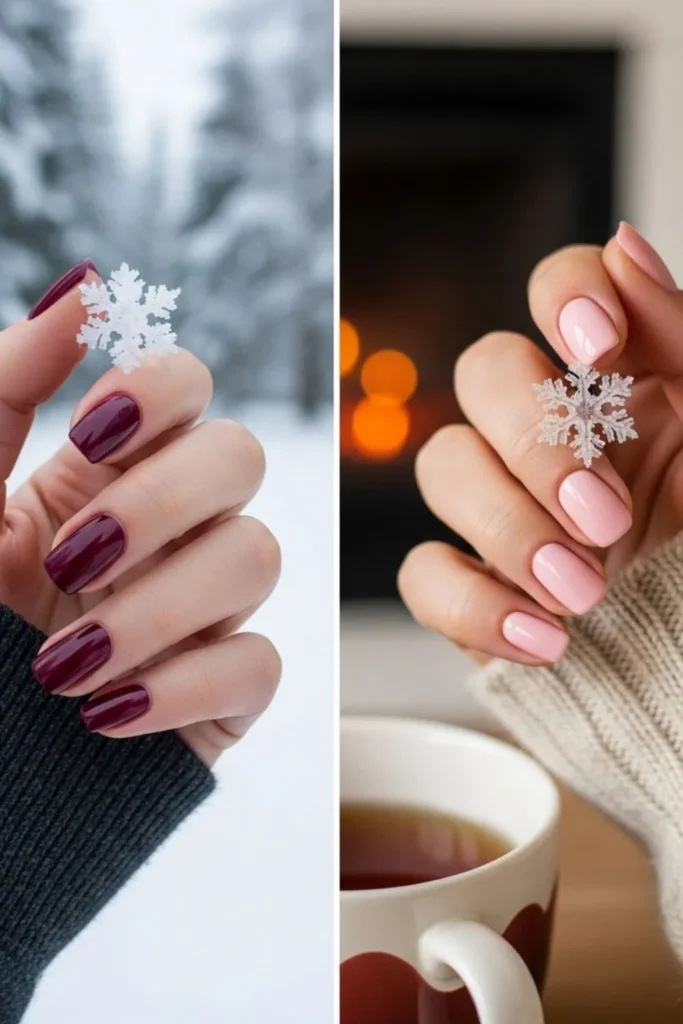
Color-changing thermal polishes shift between two shades based on temperature, creating automatic variety during winter when you move between heated indoor spaces (70-75°F) and outdoor cold (20-40°F). This gives you essentially two manicures in one.
The effect works best with high-contrast color combinations (like burgundy that shifts to pink, or navy that shifts to teal) rather than similar-tone shifts that barely register. The color change happens within 5-10 seconds of temperature change, creating an obvious transformation when you come inside from the cold.
The downside: thermal polishes chip slightly faster than standard polish because the color-changing compounds make the formula less flexible. Expect 4-5 days instead of 6-7 days of wear. They also cost $12-18 per bottle versus $8-10 for standard polish.
Pearl and Shimmer Instead of Glitter
Pearl finishes and fine shimmer provide winter sparkle without glitter’s harsh edges, making them practical for everyday wear during dry skin season. Unlike glitter (which consists of distinct particles with sharp edges), pearl and shimmer use mica or synthetic pearl that creates soft light reflection.
These finishes hide minor application imperfections better than cream finishes because the light-reflecting particles diffuse attention from brushstrokes and uneven coverage. This matters in winter when cold hands can make application shakier than usual. One slightly imperfect coat of pearl looks better than one imperfect coat of cream polish.
Layer pearl topcoats over any base color to create custom shades. Pearl over burgundy creates a different effect than pearl over navy, giving you multiple looks from one bottle of pearl topcoat and several base colors.
Read More About : Fall Patchwork Nails: The Eclectic Autumn Nail Art Trend Taking Over 2025
Coffin and Almond Shapes for Winter Elegance
Coffin and almond nail shapes prevent the sharp corners of square nails from catching and tearing on winter knitwear, which happens frequently with chunky sweaters and scarves. The tapered edges slide along fabric instead of snagging.
These shapes also make hands look more elegant in winter photos (which tend to feature hands more prominently due to holiday gatherings and gift-giving scenarios). The length draws the eye down, creating a slimming effect that’s particularly flattering when hands are slightly puffy from cold weather water retention.
The maintenance requirement: these shapes need length, typically 5-8mm of free edge minimum. On shorter nails, they look stubby instead of elegant. If you can’t grow or maintain this length naturally, gel extensions or press-ons work, but add $40-75 to your monthly nail budget.
Sweater Weather Nail Art With Textured Polish
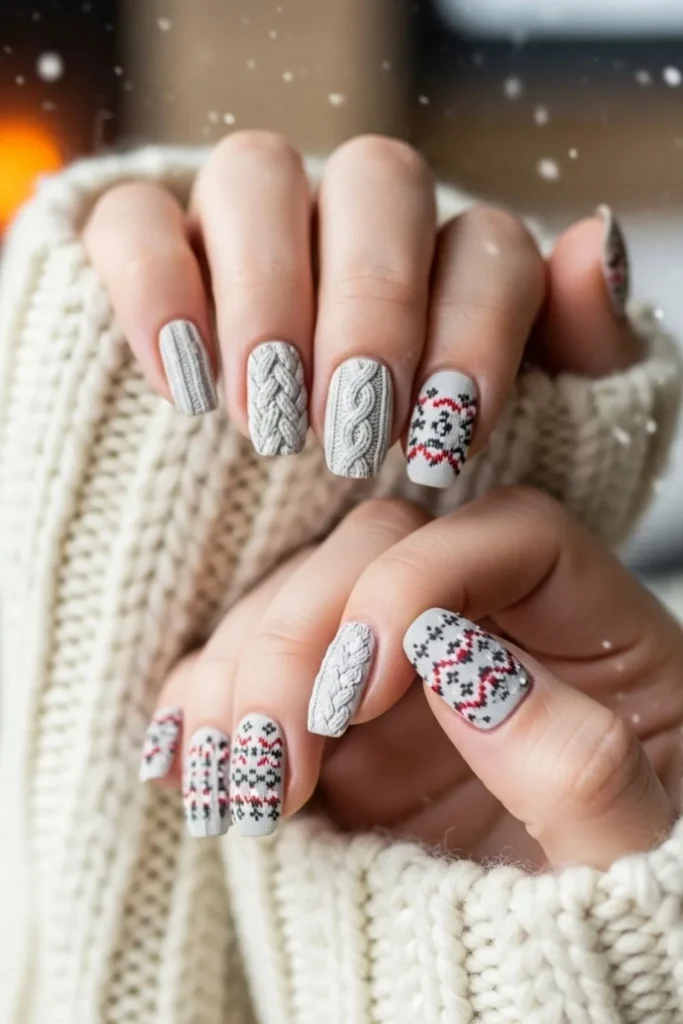
Textured polishes that mimic knit or cable-knit patterns create 3D nail art without requiring artistic skill or salon visits. These polishes contain fibers or texture compounds that self-organize into knit-like patterns as they dry.
Apply one thick coat instead of multiple thin coats the texture needs enough material to form the pattern properly. Thin coats just look bumpy instead of knitted. Let dry completely (15-20 minutes) before doing anything with your hands; the texture sets slowly and disrupts easily when wet.
The impracticality: textured surfaces collect dirt and lint faster than smooth polish. They’re best for special occasions or weekends rather than workweek wear. Daily typing, cleaning, and hand washing turn the texture from “cute sweater effect” to “dirty nail effect” within 2-3 days.
Classic Red Adjusted for Winter Lighting
Winter red needs blue undertones (true red or slightly purple-red) instead of orange undertones (coral-red or tomato-red) because winter’s natural light has cooler color temperature. Orange-based reds look brown and muddy in winter’s blue-toned lighting.
Test this by applying red polish and checking it at different times: morning light (most blue-toned), midday (most neutral), and evening indoor light (warmest). If the red looks consistent across all three, it’s properly formulated for winter. If it looks great in warm indoor light but weird in natural daylight, it’s a summer red.
Apply three thin coats instead of two thick coats with red polish. Red pigments are notoriously sheer and streaky, and thick application shows visible brush strokes that ruin the sophisticated effect. Patience with multiple thin coats creates the opaque, smooth finish that makes red look expensive instead of cheap.
Read More About : Neutral Fall Nail Colors: The Ultimate Guide to 2025’s Most Sophisticated Autumn Manicures
Deep Forest Green for December and January
Forest green works specifically for December and January because it ties into winter holiday aesthetics without being overtly festive. Unlike bright Christmas red or literal glitter snowflakes, deep forest green reads as seasonally appropriate without looking costume-y.
This shade requires two coats minimum because green pigments (especially deep greens) tend toward sheerness. The first coat often looks patchy and weird; the second coat is where the true color appears. Don’t judge or adjust after just one coat you’ll end up with too much polish and a thick, goopy finish.
Pair forest green with gold jewelry and warm metallics in your outfit. It clashes with silver because the green contains warm yellow undertones that conflict with silver’s cool tones. The wrong metal pairing makes the whole look feel mismatched even if you can’t immediately identify why.
Nude Shades That Work With Winter Skin Tone Shifts
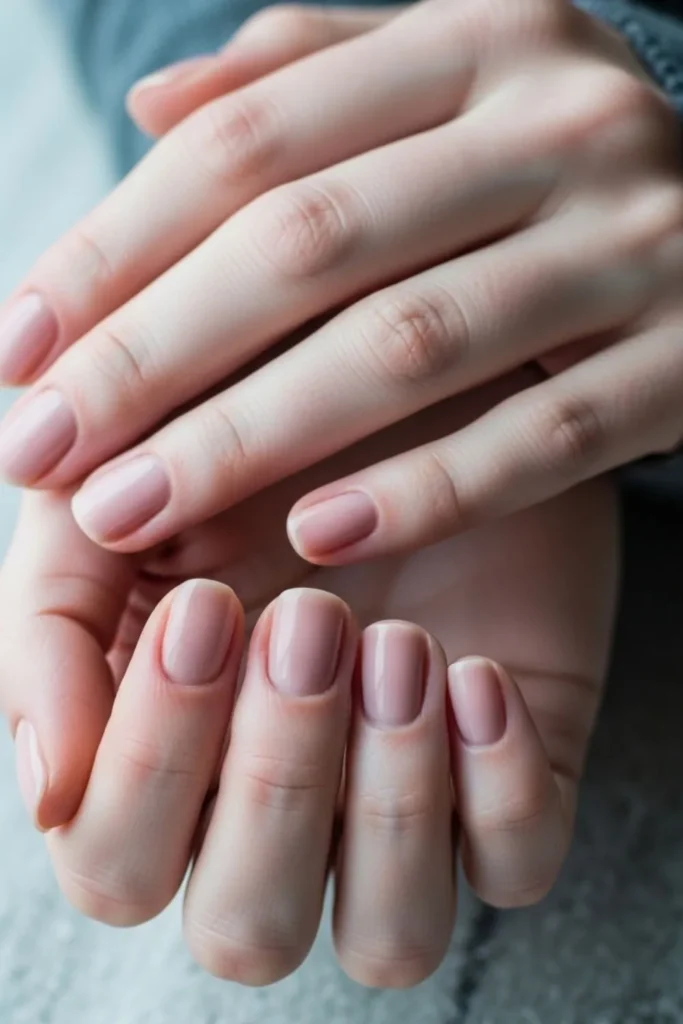
Winter nudes need adjusting from summer nudes because reduced UV exposure shifts most skin tones slightly cooler and lighter. Your perfect nude from July likely looks too dark or too warm by January.
The solution: choose nudes one shade lighter and one shade cooler than your summer nude. This accounts for the typical winter skin tone shift that happens in most people. If your summer nude was a peachy beige, try a pink-toned beige for winter. If you wore warm tan in summer, try cool taupe in winter.
Test by applying polish and photographing your hand in natural window light. If the polish disappears and your nails look naked, it’s a good match. If you can clearly distinguish polish from skin, it’s not working as a nude it’s just a light color.
Holographic Effects for Gray Winter Days
Holographic polishes refract light into rainbow effects, adding visual interest during overcast winter days when natural light is flat and gray. Unlike glitter (which requires direct light to sparkle), holographic effects activate even in diffused cloudy daylight.
Linear holographic (rainbow appears in parallel lines) works better than scattered holographic (rainbow appears as random sparkles) for winter because it shows up in lower light conditions. Scattered holo needs strong, direct light to activate; linear holo creates visible effect even in dim conditions.
Apply over a black or dark base color for maximum effect. Holographic polish alone looks subtle and almost clear in winter’s weak light; over a dark base, the rainbow effect pops dramatically. This adds an extra step (base color coat + holo topcoat) but creates an effect worth the time investment.
Read More About : Wedding Guest Nails Fall: The Ultimate Guide to Perfect Autumn Wedding Manicures 2025
Short Squoval Nails for Winter Practicality
Short squoval (square with rounded corners) nails balance winter practicality with style, providing enough length for polish to look good but not enough length to interfere with winter tasks like buttoning coats or using touchscreens with gloves off.
This shape prevents the breakage that happens when wearing gloves on and off repeatedly throughout the day. Long nails bend and stress when compressed inside gloves, causing breaks at the stress point. Keeping nails at 2-3mm free edge maximum eliminates this pressure point entirely.
The styling challenge: short nails show less surface area for color, so bold shades work better than subtle shades. Soft nudes and sheers can look unfinished on very short nails, while deep jewel tones or dark shades create intentional, complete looks even on minimal length.
Burgundy-to-Black Gradient for Drama
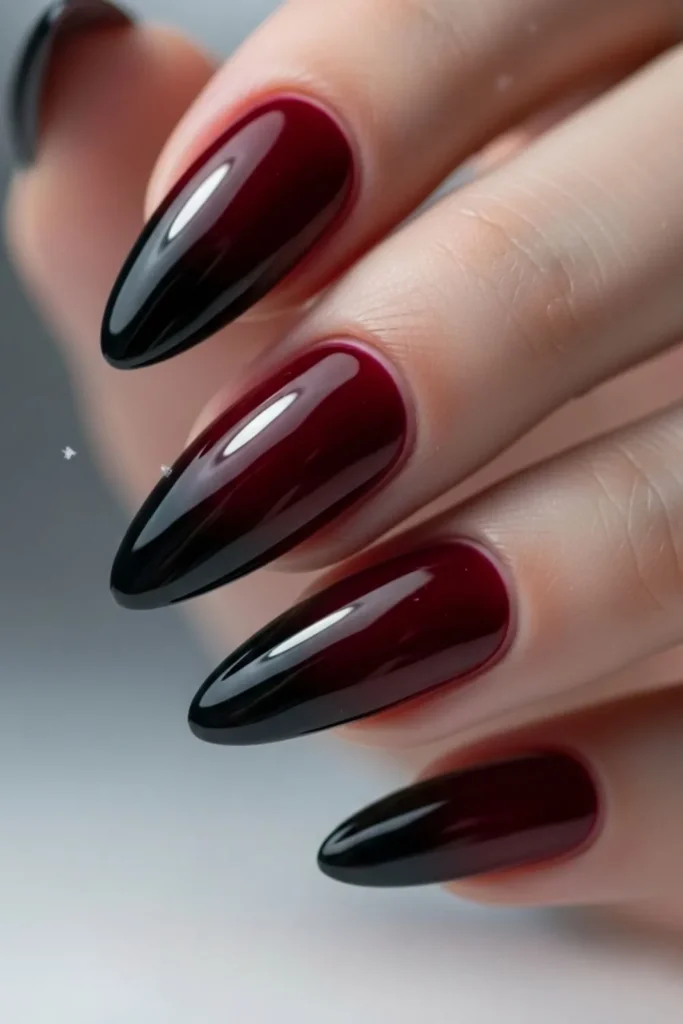
Burgundy at the cuticle fading to black at the tip creates sophisticated drama without the harshness of solid black nails, which can look severe or gothic in winter’s already-dark aesthetic. The gradient softens the effect while maintaining winter-appropriate depth.
This technique works best on medium to long nails (4mm+ free edge) because short nails don’t provide enough space for the gradient to develop properly. On very short nails, you get two distinct color bands instead of a smooth blend, which looks more like poor application than intentional gradient.
Use the sponge technique but work quickly burgundy and black both dry fast, and if the sponge-applied layers dry before you seal with topcoat, you’ll get a rough, pixelated texture instead of smooth gradient. Complete application on all ten nails within 5-7 minutes for best results.
Rose Gold for Warm Winter Elegance
Rose gold (a metallic pink-copper shade) works for winter because it contains enough warmth to complement the yellow tones in indoor lighting while still having enough pink to avoid looking orange. Pure gold metallics often read as orange under standard LED or fluorescent lights.
This shade specifically complements warm undertones. On cool undertones, rose gold can look muddy or bruised. The test: if you look better in gold jewelry than silver, rose gold nails will work. If silver is your metal, skip rose gold and try platinum or champagne metallics instead.
Rose gold shows brush strokes easily, so application technique matters. Use a high-quality brush with dense bristles and apply in one smooth motion from cuticle to tip without lifting the brush. Any stopping and starting creates visible lines in the metallic finish.
Read More About : Rust & Gold Accent Nails 2025: The Complete Guide to Fall’s Most Sophisticated Manicure Trend
Muted Taupe for Professional Winter Settings
Taupe (a gray-brown neutral) functions as the winter equivalent of nude appropriate for conservative workplaces while being less boring than clear polish. Unlike beige nudes (which look washed out in winter light), taupe has enough gray to maintain presence.
Choose taupe with slight mauve or purple undertones rather than yellow or green undertones. Yellow-based taupe looks sickly in winter’s blue-toned natural light, while purple-based taupe maintains a sophisticated, cool elegance. The difference is subtle about 5-10% shift in undertone but creates dramatically different results.
This color is unforgiving of application mistakes. Every streak, bubble, or uneven edge shows clearly because taupe doesn’t have the visual distraction of shimmer or bright pigment. You need perfect technique or professional application for taupe to look good.
Charcoal Gray for Modern Minimalism
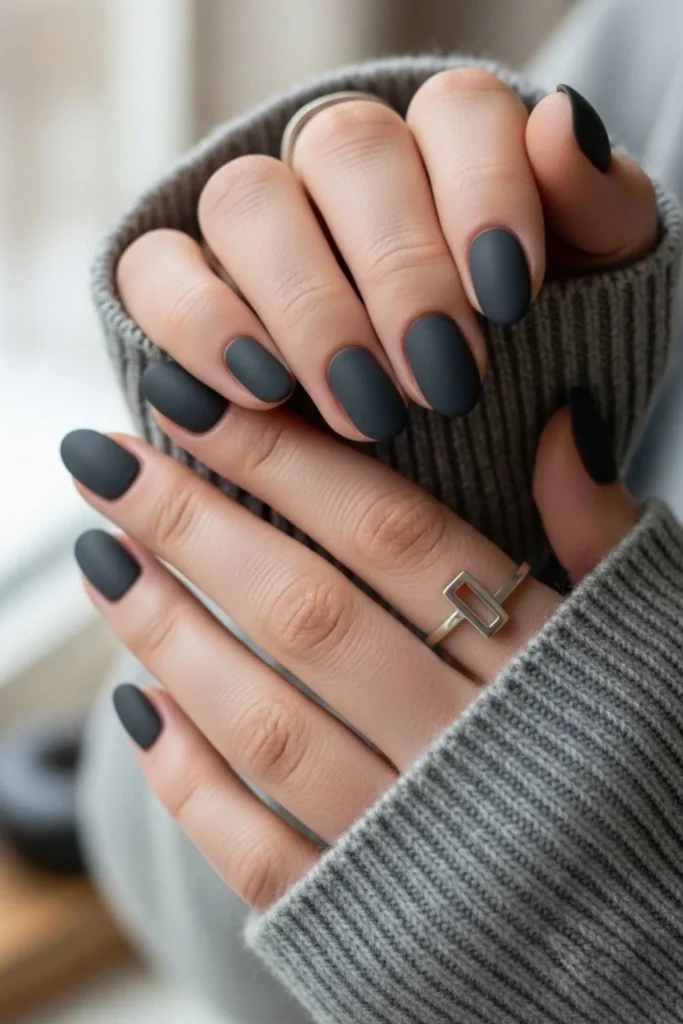
Charcoal gray provides a softer alternative to black while maintaining winter sophistication, working particularly well for people who find true black too harsh against their skin tone. Gray contains enough lightness to avoid the stark contrast that makes some complexions look washed out next to black.
The key is choosing the right gray depth: too light and it looks dusty or unfinished; too dark and it’s essentially black anyway. The sweet spot is 60-70% gray (on a scale where white is 0% and black is 100%). This provides visible color while maintaining the sleek, modern aesthetic you want.
Gray shows every imperfection nicks, chips, and uneven application because it lacks the visual noise that busier colors use to hide flaws. Apply with precision and seal with high-gloss topcoat to minimize these issues.
Cranberry for Late Winter Brightness
Cranberry (a bright, cool-toned red-pink) works for late winter (late January through February) when you’re craving color but aren’t ready for spring pastels. It provides brightness without feeling seasonally inappropriate.
This shade contains more pink than burgundy but more depth than hot pink, positioning it perfectly for the transitional period between deep winter and early spring. It energizes your look without clashing with winter’s still-present darker wardrobe colors.
Cranberry requires careful base coat application because its bright pigments can stain nails. Use a white or ridge-filling base coat to create a barrier between the pigment and your nail plate, or you’ll have pink-stained nails for 2-3 weeks after removal.
Read More About : Autumn Chrome Nails Trend 2025: The Metallic Revolution Defining Fall Style
Snowflake Accent Nails for Festive Subtlety
White or silver snowflakes on one or two accent nails (not all ten) add winter festivity without committing to full holiday nails that become inappropriate after December 25th. The accent approach lets you participate in seasonal aesthetics while maintaining everyday wearability.
Apply snowflakes over dark bases (navy, burgundy, forest green, or black) for maximum visibility. White snowflakes on light bases barely show up and look muddy rather than crisp. The contrast is essential to the effect.
Use nail art pens or decals instead of hand-painting unless you have genuine artistic skill. Winter’s dry air makes hands shakier, and attempting detailed hand-painting usually results in blobs instead of delicate snowflakes. Decals cost $3-6 per sheet and eliminate the frustration of failed DIY attempts.
Silver Chrome for Cool-Toned Skin
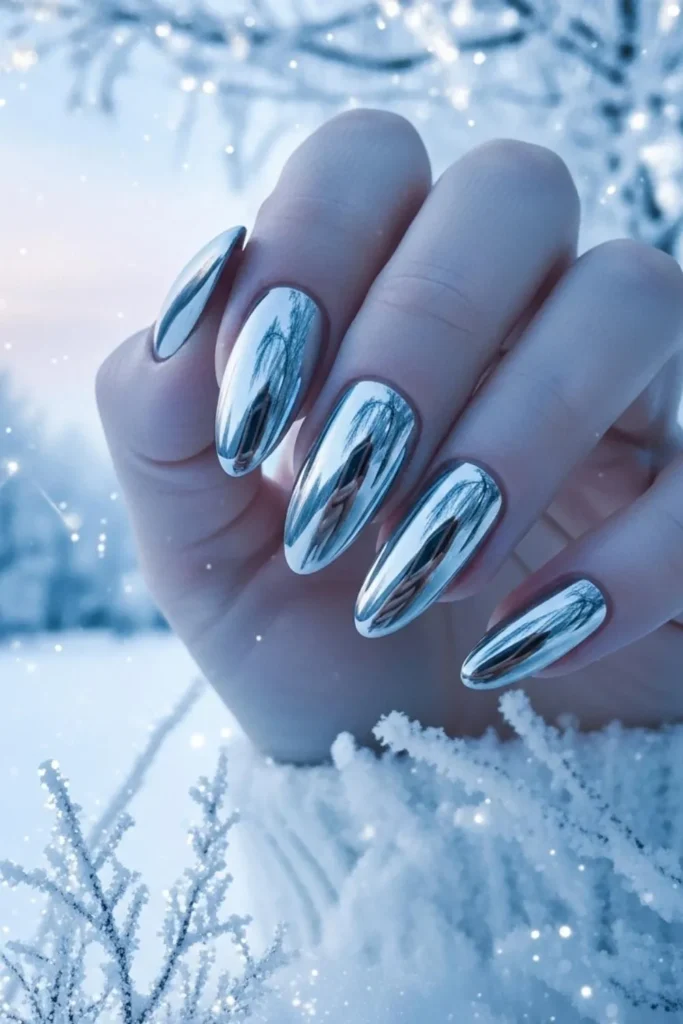
Silver chrome creates a true mirror finish that complements cool undertones during winter when reduced sun exposure makes cool tones more prominent. Unlike silver glitter or metallic polish (which show particles and texture), true chrome creates a liquid metal effect.
This requires gel application and chrome powder, not regular polish. The investment is significant ($30-50 for professional application) but creates an effect impossible to achieve with standard polish. The mirror finish lasts 2-3 weeks with proper care, making the cost comparable to two regular manicures.
Silver chrome shows every nail shape irregularity, so you’ll need well-shaped nails or professional shaping before application. Any unevenness in nail surface or edge creates visible distortion in the mirror effect, ruining the sleek appearance.
Wine Red for Evening Winter Events
Wine red (darker and more sophisticated than standard red) works specifically for winter evening events because it photographs well in low indoor lighting and pairs elegantly with formal winter attire. Standard bright red can look too casual or summery against winter formalwear.
This shade requires three coats for true opacity because wine pigments (which combine red and purple) tend toward sheerness. The first two coats build base color; the third creates the deep, rich finish that makes wine red look expensive. Skipping the third coat leaves you with a thin, cheap-looking result.
Wine red stains cuticles easily during application, so apply cuticle oil or petroleum jelly around nails before polishing. This creates a barrier that lets you wipe away mistakes without leaving pink stains on your skin.
Read More About : Fall Plaid Nails Design: Master the Cozy Autumn Pattern Trend
Iridescent Topcoats Over Winter Darks
Iridescent topcoats (which shift between colors like blue-purple-pink) add dimension to dark winter base colors without the harshness of glitter. Applied over navy, burgundy, black, or forest green, they create subtle color shifts that catch light interestingly.
This works because the iridescent particles are fine enough to create shimmer without texture, maintaining the smooth surface that winter’s dry hands need. Chunky glitter creates snag points; fine iridescence creates visual interest without practical drawbacks.
Apply one coat of iridescent topcoat over any fully dried base color. Two coats of iridescent topcoat creates too much color shift and looks costume-y rather than sophisticated. The effect should be subtle a color shift you notice when you move your hands, not a primary feature visible from across the room.
Deep Purple for Statement Winter Nails
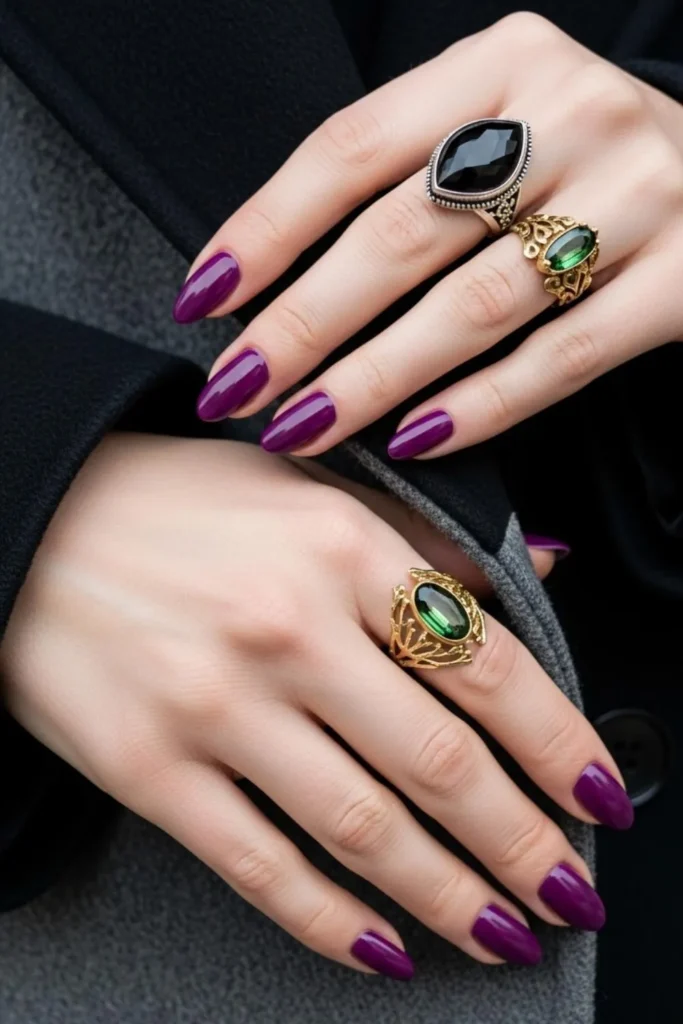
Deep purple (eggplant or grape tones) creates bold impact while remaining appropriate for most professional settings, unlike bright purple which reads as creative or casual. The depth makes it winter-appropriate; the color makes it memorable.
Purple requires specific undertone matching: blue-based purples for cool undertones, red-based purples for warm undertones. The wrong match makes hands look bruised or sickly. Test by applying one coat and checking in multiple lighting conditions if it looks good everywhere, the undertone match is right.
Deep purple shows chips and wear more obviously than neutral colors, so plan for touchups every 4-5 days or use gel formula for extended wear. The dramatic color makes imperfections more visible than they’d be on burgundy or navy.
Read More About : French Tip Nails with Fall Colors: Master 2025’s Chic Autumn Manicure
Black Tips on Nude Base
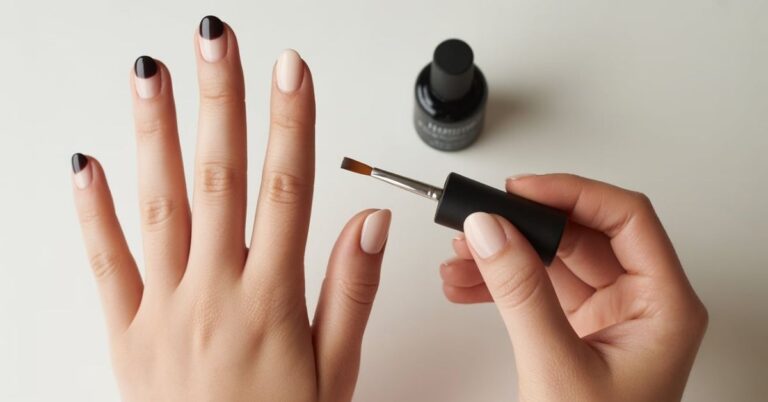
Black French tips over nude or sheer pink bases update the classic French manicure for winter while maintaining the elongating effect. This inverts traditional expectations (dark where it’s usually light) creating visual interest while staying elegant.
The color contrast works for winter because black tips echo winter’s dark aesthetic while the nude base keeps hands from looking too severe. Full black nails can overwhelm smaller hands; this technique provides drama without dominating your entire hand.
Apply black tips slightly thicker (3-4mm) than traditional white French tips. The dark color needs more presence to create impact, and thin black tips look like you’re in mourning rather than making a style statement. Use a striping brush for clean lines since steady hand control matters more with high-contrast combinations.
Champagne Shimmer for Understated Luxury
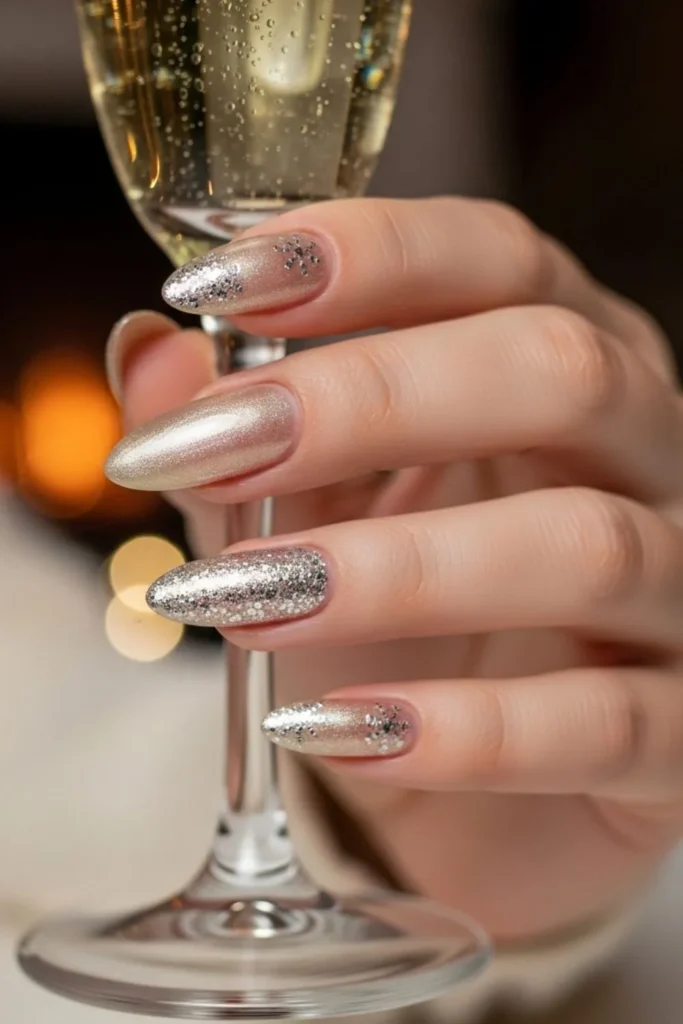
Champagne (a warm, light gold with shimmer) creates understated elegance for winter events without the loudness of yellow gold. The subtle shimmer catches light beautifully in dim winter indoor lighting where cream finishes would look flat.
This shade works across most skin tones because champagne sits in a neutral zone warm enough for warm undertones but light enough for cool undertones. The shimmer also camouflages minor application imperfections by creating visual distraction from brushstrokes.
Apply two coats for best results. One coat looks streaky and incomplete because champagne’s light pigments don’t provide full coverage. Three coats look too thick and lose the delicate, luminous quality that makes champagne elegant. Two coats hit the sweet spot of coverage without heaviness.
Read More About : Halloween Nails Almond: 25+ Spooky-Chic Designs for 2025
Frequently Asked Questions
How long do winter nail designs typically last?
Most winter nail designs last about 2 to 3 weeks with regular polish and up to 3 to 4 weeks with gel. Cold weather and frequent handwashing can shorten wear time, so durability depends on your nail care routine.
Can I wear bright colors during winter months?
Yes, bright nail colors are perfectly fine in winter and can add a fun pop against darker seasonal outfits. Many people in the US choose reds, emeralds, icy blues, or bold pinks to refresh their winter nail look.
What’s the best nail shape for winter weather?
Short rounded or squoval nails are the best nail shapes for winter because they’re less likely to snag or break in dry, cold conditions. These shapes also hold polish better when you’re wearing gloves often.
How do I prevent polish from chipping in cold weather?
Apply a quality base coat and a thick top coat, then reapply the top coat every 5 to 7 days for extra protection. Wearing gloves outdoors and using cuticle oil daily also helps prevent winter nail polish chipping.
Are gel nails better than regular polish for winter?
Gel nails usually last longer and resist chipping better in winter compared to regular polish. However, proper removal and moisturizing are important to avoid dryness and nail damage during colder months.
Key Takeaways
- Winter nails require different formulas and techniques than summer styles due to cold temperatures, low humidity (10-30% vs 40-60%), and reduced natural light affecting color appearance
- Dark jewel tones, burgundy, navy, and chocolate brown work best in winter’s blue-toned lighting (5500-6500K) while maintaining color saturation in dim indoor conditions
- Matte finishes, chrome powders, and pearl effects hide winter dryness texture better than glossy polishes, which amplify surface imperfections
- Short squoval or almond shapes (2-4mm free edge) prevent breakage from glove compression and snagging on knitwear better than square or long nail shapes
- Strategic use of accent nails, negative space designs, and ombré techniques help camouflage regrowth during winter when salon visits are less frequent
Conclusion
Winter nails work best when you match your approach to actual winter conditions rather than just choosing seasonal colors. The formulas you use, the shapes you maintain, and the finishes you select all need adjustment for cold air, low humidity, and reduced natural light.
Deep colors with proper undertone matching last longer and look better than fighting against winter’s environmental realities with summer techniques.
Focus on durability alongside aesthetics choose finishes that hide wear, shapes that resist breakage, and application methods that account for dry nail beds. Winter gives you 3-4 months to experiment with darker, more dramatic colors that summer heat makes impractical, so use the seasonal shift strategically rather than just defaulting to the same neutrals you wore last year.