51 Spring Nail Designs to Refresh Your Look in 2026
Winter’s dark, moody manicures can feel heavy as the weather warms. You’re tired of burgundy and deep plum, ready for something that actually matches the lighter mood of longer days and blooming gardens. The problem is that most spring nail guides recycle the same predictable pastel advice without showing you what actually works for your lifestyle, nail length, or personal style.
Spring nail designs in 2026 aren’t just about slapping on baby pink and calling it done. The season’s best looks balance soft color stories with unexpected textures, minimalist florals with bold geometric patterns, and sheer finishes with metallic accents. Whether you prefer clean, simple nails or eye-catching statement art, this year’s spring manicures offer fresh approaches that feel modern rather than generic.
Here’s exactly what works this season, why certain combinations succeed where others fall flat, and how to choose designs that’ll actually complement your hands rather than overwhelm them.
What Makes Spring Nail Designs Different from Other Seasons?
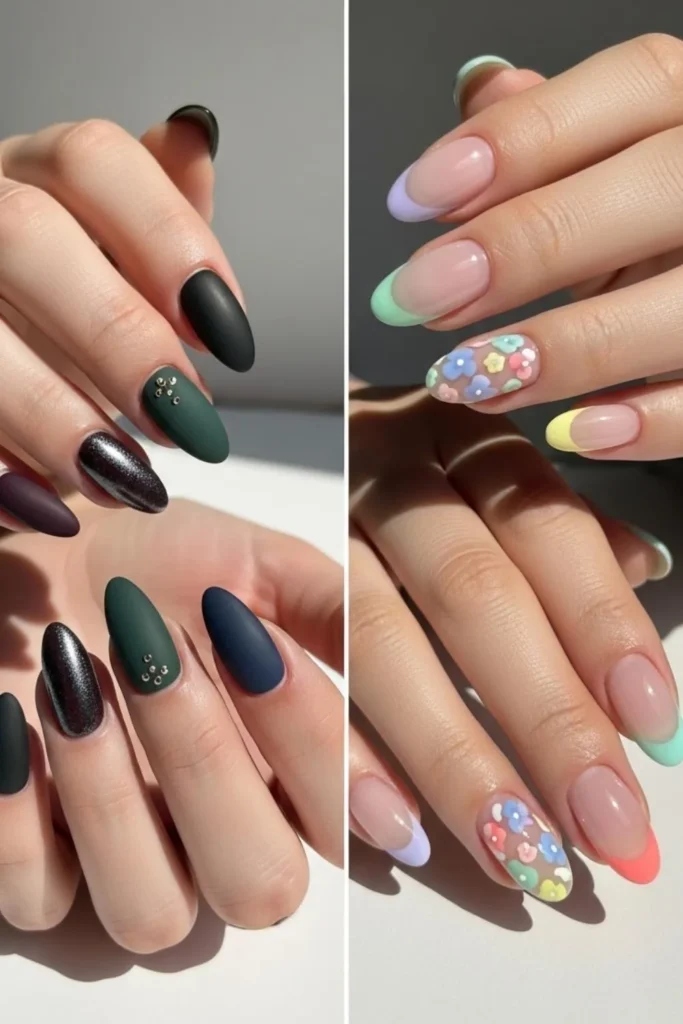
Spring nail designs prioritize lighter textures, translucent finishes, and nature-inspired elements that contrast sharply with winter’s heavy metallics and fall’s rich, opaque tones. The key difference lies in the “lit-from-within” effect manicures that mimic morning mist, blooming petals, and glass-like clarity rather than bold drama.
Unlike summer’s vibrant neons or winter’s deep jewel tones, spring designs use muted pastels with unexpected undertones. Butter yellow replaces bright lemon, dusty lavender outperforms Easter-egg purple, and sheer baby blue beats opaque cobalt.
These subtle shifts create sophistication without sacrificing seasonal freshness. The finishes matter just as much as color: jelly gels, pearl sheens, and soft chrome deliver dimension that flat manicures can’t match.
Spring 2026 specifically emphasizes balance. You’re seeing creamy neutrals paired with tiny pops of neon, earthy terracotta bases topped with white floral details, and square nail shapes that contrast beautifully with soft pastel hues.
This isn’t about following one trend, it’s about mixing elements in ways that feel personal rather than Pinterest-perfect.
Why Are Square Nails the Dominant Shape for Spring 2026?
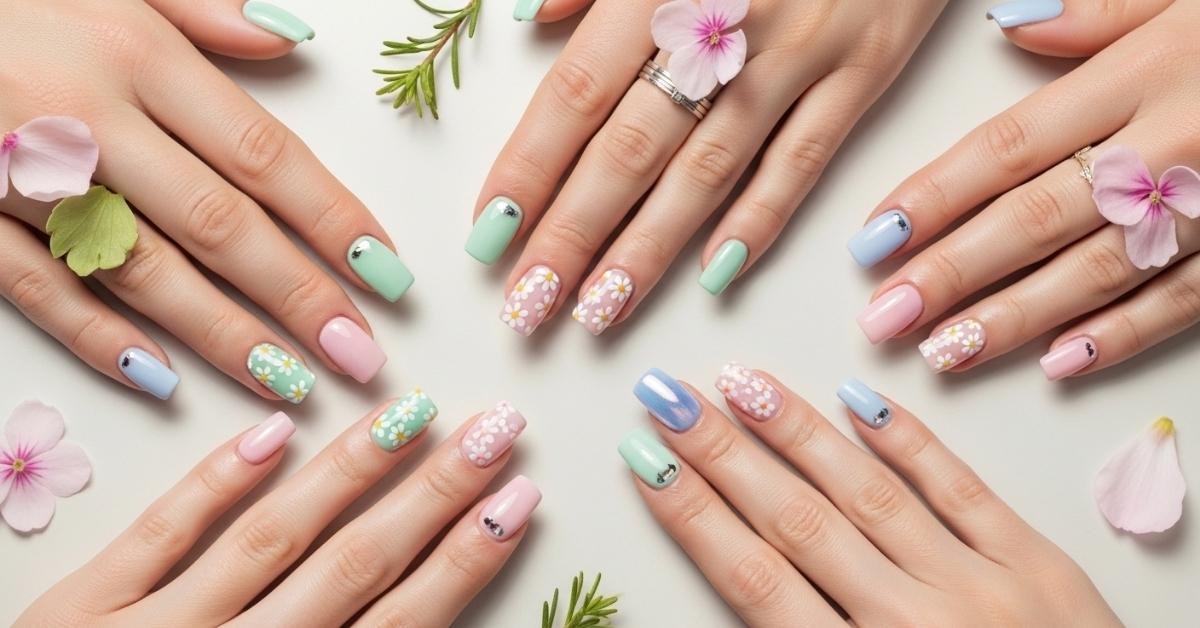
Square nails became spring 2026’s breakout shape because they create striking contrast with the season’s soft color palette, offering an edgy foundation that prevents pastels from looking childish or overly sweet.
Fashion week runways showcased square tips extensively for spring 2026, and the logic is solid. Sharp, geometric edges balance creamy whites and pale lavenders in a way that oval or almond shapes can’t achieve.
When you pair a square tip with sheer pink or milky beige, the shape adds structure while the color delivers softness. This combination works particularly well for short to medium nail lengths where drama needs to come from shape rather than length.
Square nails also pair exceptionally well with the season’s trending finishes. Pearl sheens, 3D embellishments, and glass-blown bubble effects look more intentional on square canvases.
The clean lines prevent busy nail art from appearing chaotic, making squares the ideal choice if you’re experimenting with multiple textures or detailed designs. They’re also more practical than stiletto or coffin shapes for everyday wear, which matters for spring activities like gardening or outdoor events where nails take more abuse.
See More About : Half Moon Nails Neutral Base: The Ultimate Guide to 2025’s Most Elegant Vintage-Inspired Manicure
How Do Sheer Finishes Work Without Looking Incomplete?
Sheer finishes succeed when they’re layered strategically or paired with high-shine top coats that create depth rather than appearing washed-out or unfinished.
The mistake most people make with sheer nails is applying one thin coat and wondering why it looks streaky. Sheer and pearl finishes dominated spring 2026 runways, but they require specific application techniques.
You need two to three coats for even coverage, with each layer building translucency rather than opacity. The goal is seeing your natural nail through the color think stained glass, not solid paint.
What separates good sheer manicures from bad ones is the finish layer. A glossy top coat transforms a flat sheer into something luminous, while matte finishes make sheers look deliberately understated.
For spring specifically, jelly gel formulas work better than traditional polish because they maintain that squishy, glass-like texture. You can also layer sheer colors pale blue over sheer white, or lavender mist over nude to create custom shades that feel uniquely yours rather than straight-from-the-bottle basics.
Which Pastel Colors Actually Look Modern Instead of Dated?
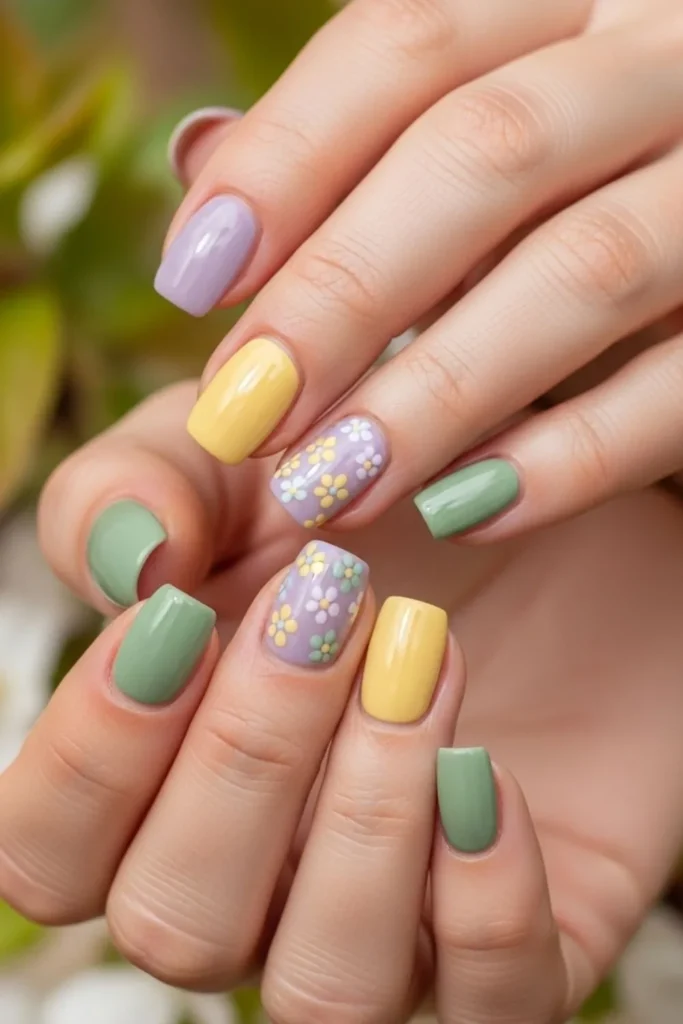
Modern pastels in 2026 feature muted undertones and unexpected color pairings rather than the chalky, Easter-egg shades that feel outdated and overly sweet.
Pale orange and turquoise blue are predicted to dominate spring 2026, specifically milky apricot shades and aquatic glosses that mimic clear water. These aren’t your grandmother’s pastels.
The key is choosing versions with gray or beige undertones dusty lavender instead of bright purple, butter yellow instead of neon lemon, sage green instead of mint. These sophisticated takes prevent pastels from reading juvenile.
Color combinations matter more than individual shades. Baby blue paired with chocolate brown creates retro ’70s energy that feels fresh, while pale peach combined with neon lilac delivers unexpected punch.
Single-color pastel manicures work best when the finish adds interest, think pearl topcoats over soft pink, or chrome powder on butter yellow.
If you’re going for multiple pastel shades in one manicure, use them in ombré gradients or color-blocked sections rather than random placement, which tends to look uncoordinated.
What’s the Difference Between 3D Floral Nails That Work and Those That Fail?
Successful 3D floral designs use minimal raised elements placed strategically at cuticles or tips, while failed versions pack oversized resin flowers across entire nails, creating snagging hazards and visual chaos.
3D floral details in 2026 are toned down and lean toward minimal raised designs, specifically small petal appliqués and beaded flower centers. The difference between elegant and tacky comes down to scale and placement.
Tiny pearl-centered daisies at the base of one accent nail read sophisticated. Giant resin roses covering three fingers looks costume-y. The practical issue matters too oversized 3D elements snag on clothing, catch in hair, and break off within days.
The best approach combines flat and raised elements. Paint delicate flower outlines on most nails, then add subtle 3D petals to one or two fingers for dimension without bulk. Use the same color palette throughout so the raised elements feel integrated rather than stuck-on.
For durability, keep 3D pieces small enough that they sit within the nail’s natural curve rather than extending past it. This prevents damage during normal hand use while maintaining the artisanal, handcrafted look that makes spring florals special.
See More About : Dark Red Almond Nails: 50+ Stunning 2025 Designs & Expert Application Tips
Are Jelly Nails Just a Gimmick or Actually Wearable?
Jelly nails deliver a translucent, glass-like finish that works as an everyday option when executed in subtle shades, but they fail when used with dark or heavily pigmented colors that lose the signature transparency.
Jelly gel nails offer a translucent, glass-like finish that looks juicy and modern, creating depth that regular polish can’t achieve. The texture itself has a squishy, see-through quality that looks like hard candy or stained glass.
This only works with specific colors though. Bright corals, soft purples, and pale blues maintain translucency. Deep burgundy or black jelly formulas lose the effect entirely, looking muddy rather than glassy.
Jelly nails serve as excellent bases for nail art because the transparency creates natural dimension. When you add tiny gold foil flecks to pink jelly gel, they appear to float inside the nail rather than sitting on top.
Pressed flowers or glitter look suspended in the color. For spring wear, jelly finishes feel appropriately lightweight and fresh, especially when paired with shorter nail lengths. They’re also more forgiving as they grow out since the sheer nature blends seamlessly with natural nail showing at the base.
How Do You Make Floral Designs Feel Grown-Up Rather Than Childish?
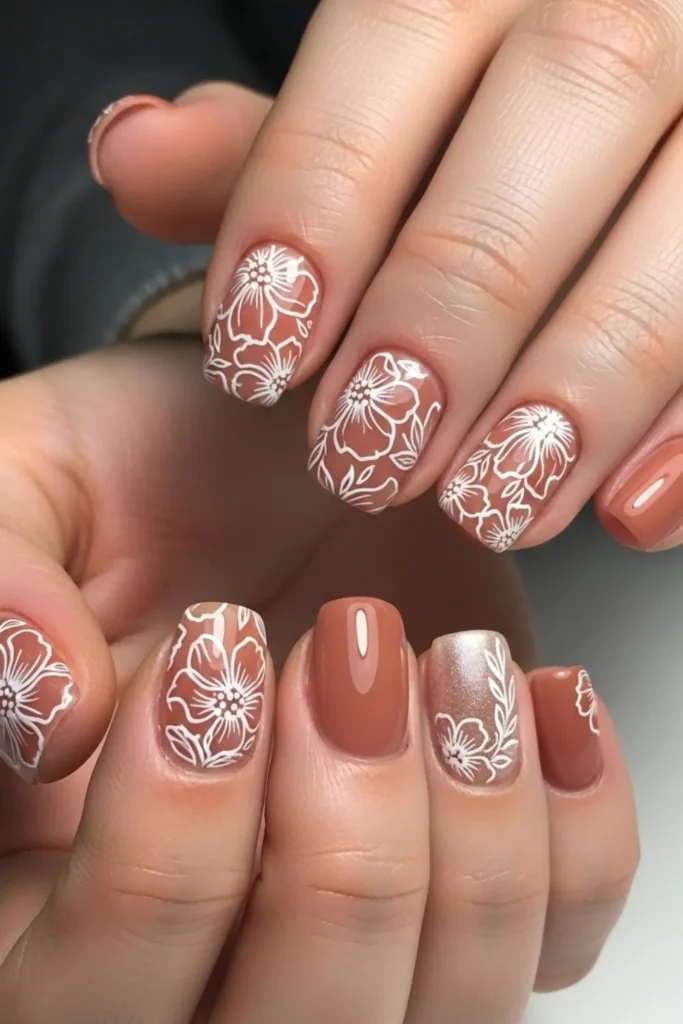
Adult floral nail art uses fine-line techniques, limited color palettes, and strategic placement rather than cartoon-like bold flowers scattered randomly across every nail.
The line between sophisticated and juvenile florals is surprisingly thin. Childish versions use thick outlines, primary colors, and symmetrical flower shapes on every single nail. Floral art in 2026 evolved into lighter, more fragile strokes almost like pressed flowers sealed into gel polish.
Mature approaches use delicate linework, watercolor-style blending, and asymmetrical placement. Think one nail with a single cherry blossom branch rather than ten nails covered in identical daisies.
Color choice dramatically impacts how floral designs read. White flowers on nude bases feel elegant and wedding-appropriate. Hot pink blooms on neon yellow bases feel playful but young. For spring specifically, the most successful combinations use earthy bases (terracotta, clay, muted olive) with white or soft gold floral accents.
This grounds the florals in nature rather than Easter basket energy. Botanical prints that mimic actual plant structures showing stems, leaves, and natural imperfections feel more artistic than perfect, symmetrical flower icons.
What Makes French Manicures Look Fresh Instead of Basic in 2026?
Modern French manicures swap traditional white tips for unexpected colors, textures, and shapes from floral pattern tips to neon-outlined edges that maintain the classic structure while feeling current.
Traditional white-tipped French manis feel dated because they’ve been done identically for decades. The timeless French manicure gets a fresh makeover with creative reinventions that breathe new life into this classic style.
Current versions maintain the concept contrast between nail bed and tip but execute it differently. Floral patterns replace solid tips. Squiggle lines replace straight edges. Pastel colors replace white.
The most wearable updates use subtle tweaks rather than complete overhauls. Micro French tips with barely-there lines feel polished and professional while still looking updated. Diagonal French placements add movement and prevent the stiff, formal feeling of traditional horizontal tips.
For spring specifically, pairing French structures with seasonal elements works well: baby blue tips with tiny daisy accents, or peachy-pink French with gold foil details. These combinations honor the French manicure’s clean sophistication while incorporating spring’s lighter mood and playful details.
See More About : Velvet Nails Design: Complete Guide to Flocking Powder Techniques & 2025 Trends
Why Are Chrome and Metallic Finishes Still Relevant for Spring?
Spring metallics evolved from full-coverage chrome to subtle accent details micro-foils, corner highlights, and soft gold lines that add sparkle without overwhelming the season’s delicate aesthetic.
Heavy metallics belong to fall and winter, but spring 2026 hasn’t abandoned shine entirely. Spring includes refined metallic accents, especially silver and soft gold, shifting toward tiny metallic lines, micro-foils, and corner highlights.
The key difference is application. Instead of coating entire nails in chrome powder, you’re seeing metallic details that complement rather than dominate. A thin gold stripe along the cuticle. Silver foil pressed into just the tip. Soft champagne chrome on one accent nail while the rest stay matte nude.
This approach lets you enjoy the shine without fighting spring’s inherently soft nature. Soft chrome finishes work particularly well, they provide a glazed, donut-like sheen rather than mirror-bright reflection.
When paired with pastel bases, these gentle metallics add just enough interest to prevent manicures from looking flat while maintaining the airy, lightweight feeling that defines spring aesthetics. They’re also more versatile for professional settings where full chrome might feel too costume-y or evening-specific.
How Long Should Your Nails Be for Spring Designs?
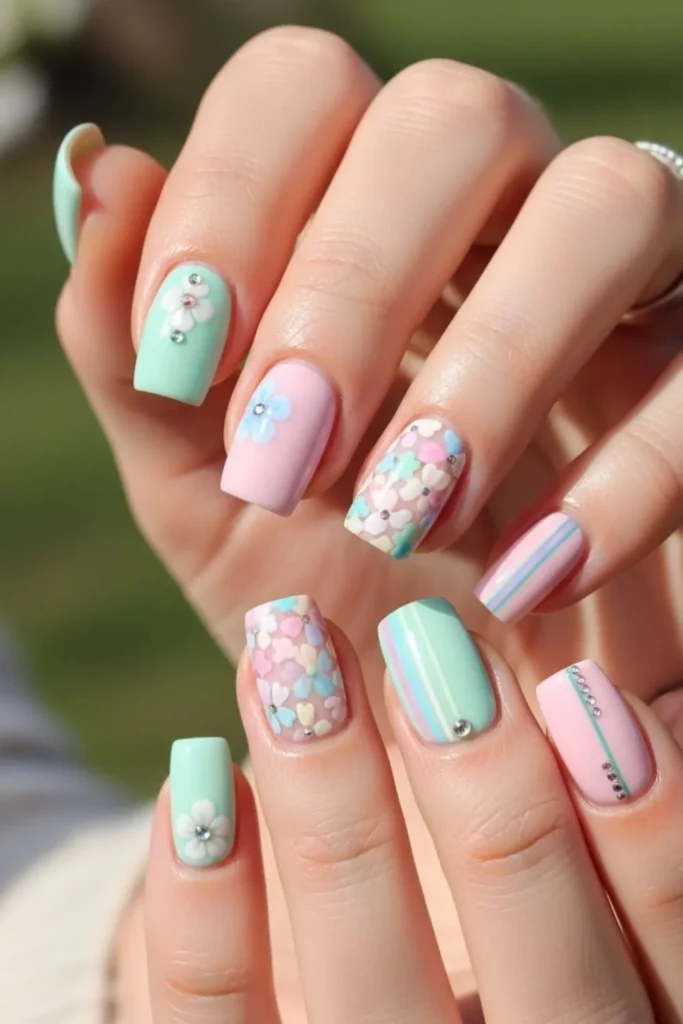
Short to medium lengths (extending just past the fingertip or slightly beyond) work best for spring designs because they provide enough canvas for detail while staying practical for increased outdoor activity.
Citrus tones shine beautifully on short or medium-length nails, and this applies to most spring trends. Extra-long nails limit what you can comfortably do during spring activities gardening, hiking, outdoor sports.
They’re also more prone to breakage when you’re more active. Medium lengths offer the sweet spot: enough space for intricate floral details or ombré gradients, but short enough for practical daily use.
That said, certain designs favor specific lengths. Minimalist looks (sheer nudes, simple French tips, solid pastels) work beautifully on very short nails because they don’t require much canvas.
Complex nail art (3D florals, detailed abstract geometry, multi-color designs) needs medium to long lengths for proper execution. Square shapes handle short lengths better than stiletto or coffin shapes, which look awkward when cut too short.
Consider your lifestyle honestly if you’re typing constantly, cooking frequently, or working with your hands, keep lengths conservative even if you love dramatic designs.
What’s the Best Way to Mix Patterns Without Creating Visual Chaos?
Successful pattern mixing uses a consistent color palette across different designs, with busy patterns on one or two accent nails while keeping the rest simple.
Hodgepodge nail moments mix textures, shades, and designs that somehow look even better together, but this only works with strategy. Random pattern mixing looks messy. Intentional mixing looks editorial. The difference is cohesion through repeated elements. Use the same three colors across different patterns florals on one nail, geometric shapes on another, solid color on the rest but maintain those three shades throughout.
Another approach limits pattern placement. Cover one accent nail with complex floral art, one with abstract geometry, and keep the remaining eight fingers in coordinating solid colors. This gives you visual interest without overwhelming the eye.
The eclectic, mix-and-match vibe works particularly well for spring because it mirrors nature’s own diversity just like gardens combine different flowers, your nails can successfully blend patterns when unified by seasonal colors and intentional placement rather than random everything-everywhere execution.
See More About : Moody Gothic Nail Shades: Unleash Your Dark Beauty with Dramatic Colors
How Do Earthy Tones Fit Into Spring’s Typically Light Palette?
Earthy neutrals terracotta, clay, muted olive, warm beige anchor spring designs by providing grounding contrast when paired with bright floral accents or pastel details.
Earthy tones with a twist embrace rich terracottas, sage greens, warm mustards, and deep burgundies that capture the essence of nature in full bloom. These aren’t typical spring colors, which is exactly why they work.
When everyone else is wearing baby pink and lavender, warm clay bases with white daisy details stand out while still feeling seasonally appropriate. The trick is pairing earthy bases with lighter accents rather than going all-dark.
Terracotta nails with pale yellow tips create beautiful contrast. Sage green bases with soft gold foil details feel naturally elegant. These combinations let you participate in spring trends without abandoning the neutral aesthetic you prefer.
They’re also more wearable for professional environments where bright pastels might feel too casual or young. The earthy-plus-bright approach works across nail lengths and shapes, making it one of spring’s most versatile color strategies for people who find traditional pastels too sweet or childish.
Are Neon Accents Too Bold for Spring or Perfectly Timed?
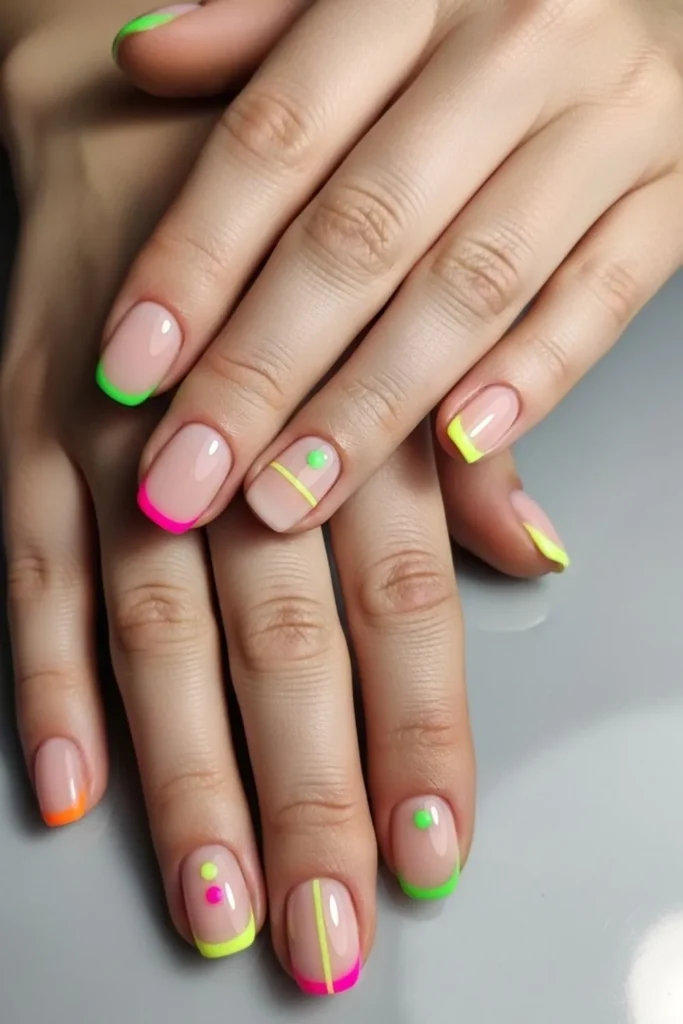
Strategic neon accents work beautifully for spring 2026 when used as small pops against pastel or neutral bases, creating energetic contrast without overwhelming the season’s softer aesthetic.
Pastels with a punch include mint green paired with neon lilac accents, showing how neons fit into spring when thoughtfully applied. Full neon manicures feel more summer-appropriate, but neon as accent details, thin tips, single accent nails, or tiny design elements adds a contemporary edge to spring pastels. This prevents soft colors from looking dated or overly traditional.
The most successful combinations pair soft neutrals with bright neon touches. Cream bases with neon orange French tips. Pale blue nails with one neon pink accent. Sheer grey with neon green squiggle details.
These pairings feel fresh and youthful without screaming “look at me” the way full neon manicures do. They also photograph exceptionally well, which matters if you share nail content on social media.
Keep neon usage to roughly 20% of your total nail real estate enough to create impact, not enough to dominate the overall spring vibe.
What Are Aura Nails and Do They Actually Work for Spring?
Aura nails feature soft, circular color gradients that radiate from the nail center, creating a glowing effect that works perfectly for spring when executed in gentle, nature-inspired shades.
Aura gradients feature a soft, circular blend of colors that radiate from the center of the nail, representing personal energy and serving as a favorite for expressive, creative looks. Unlike traditional ombré that moves vertically from base to tip, aura designs create a halo or sunburst effect.
This requires airbrushing or careful sponging technique not something easily achieved with regular polish at home, but worthwhile for the ethereal result.
For spring specifically, aura nails work best with combinations like pale pink fading to white, or soft lavender radiating into cream. These gentle transitions mimic morning light or flower petals in a way that feels seasonally perfect.
The technique also forgives imperfect application better than crisp French tips or geometric patterns, making it ideal if you’re DIYing spring nails. Pair aura bases with tiny floral accents or leave them plain either approach maintains the dreamy, soft-focus aesthetic that defines this trend.
See More About : Pumpkin Orange Nails Design: 35+ Stunning Fall Nail Art Ideas That Capture Autumn Magic
How Do You Choose Between Matte and Glossy Finishes for Spring?
Glossy finishes suit spring’s “lit-from-within” aesthetic better than matte, but strategic matte usage on specific design elements creates texture contrast that elevates overall nail art.
Modern manicures focus on high-shine surfaces that look healthy and clean, making gloss the default spring choice. High-shine finishes enhance the glass-like, fresh quality that defines the season. They make pastels look more vibrant, sheers appear more translucent, and chromés deliver proper reflection. Matte finishes tend to feel heavier and more fall-appropriate.
That said, combining finishes within one manicure creates a sophisticated dimension. Glossy floral designs over matte nude bases. Matte French tips on glossy pink nail beds. This contrast prevents spring nails from looking one-dimensional while maintaining enough shine to feel seasonally appropriate.
If you strongly prefer matte, choose lighter colors pale nudes, soft whites, barely-there pinks that won’t feel as heavy as dark matte shades. The key is ensuring the overall effect still reads light and fresh rather than dense and opaque.
What Mistakes Make Spring Florals Look Cheap Instead of Chic?
Cheap-looking florals use thick, uneven lines, mismatched colors, and oversized placement, while chic versions feature delicate linework, cohesive palettes, and strategic positioning.
Micro florals feature tiny daisy details that feel minimal, not childish, highlighting how scale determines success. The most common mistake is going too big giant roses covering entire nails, thick outlines, and cartoonish proportions.
Professional-looking florals use fine brushes for delicate petals and stems, creating artwork that appears hand-painted rather than stamped or sticker-like.
Color choices separate high-end from bargain-bin florals. Sophisticated versions stick to two or three coordinating shades rather than using every color available. White flowers on nude, pink blooms on pale blue, gold accents on terracotta these limited palettes feel intentional.
Random rainbow florals with no unifying theme look messy and cheap. Placement also matters: florals concentrated near cuticles or tips feel more designed than random flowers scattered across all ten nails. Strategic asymmetry looks artistic; identical flowers on every nail look lazy.
How Do Cat Eye Nails Work and Are They Spring-Appropriate?
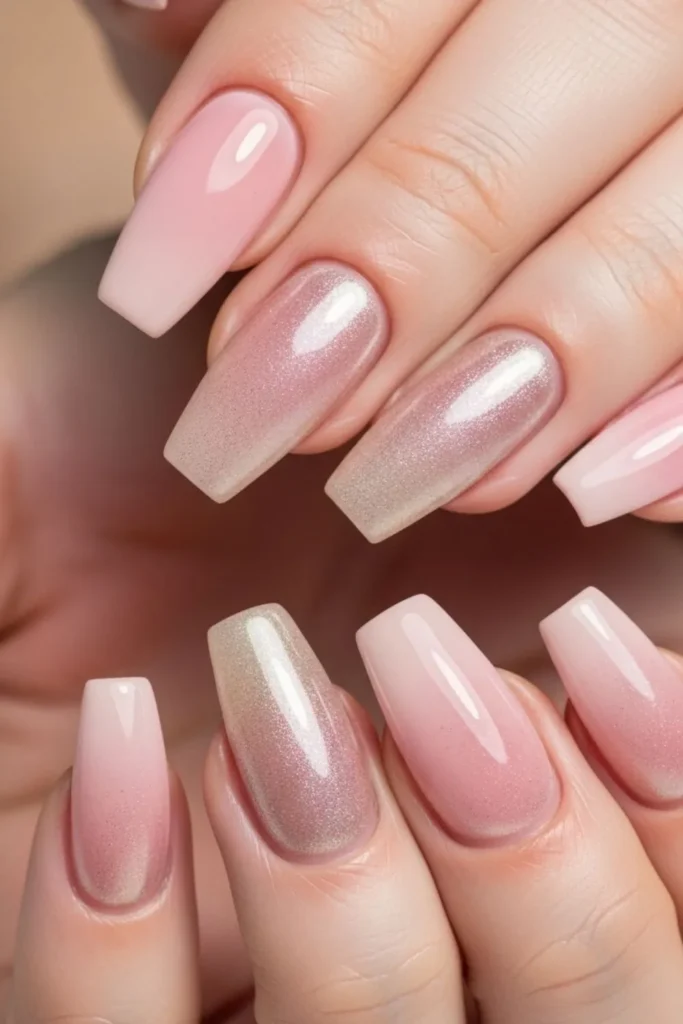
Cat eye nails use magnetic polish to create shifting, iridescent patterns that work for spring when executed in lighter bases like soft pink, pale blue, or champagne rather than dark, heavy colors.
The cat-eye finish is back sharper, glossier, and more magnetic than ever, with shimmering metallics swirling across deep bases. The technique uses special magnetic polish and a magnet held near wet polish to pull metallic particles into patterns.
The result is a liquid-metal effect that shifts as light hits it from different angles. While traditionally done in deep colors, spring versions work better in pale bases with subtle shimmer.
Soft pink cat eye creates dimensional blush tones. Pale blue cat eye mimics water reflections. Champagne cat eye adds subtle luxury without heavy drama. The key is choosing lighter base colors that maintain spring’s airy feeling while still showing the magnetic effect clearly.
Pair cat eye finishes with simple shapes and minimal additional nail art, the shifting pattern provides enough visual interest on its own. This works particularly well as an accent nail technique, with one or two cat eye nails complementing simpler solid colors on the rest.
See More About : Jewel Tone Nails Fall 2025: The Ultimate Guide to This Season’s Most Coveted Manicure Trend
What’s the Deal With Glazed Donut Nails Still Trendy or Over?
Glazed donut nails evolved into built-in iridescent polishes rather than requiring separate chrome layers, making them more accessible and still relevant for spring’s pearl-and-shimmer aesthetic.
Iridescent finishes no longer need chrome powder to achieve the viral manicure, with more polish built into the formula instead of requiring chrome layers or glitter toppers. The original Hailey Bieber trend required multiple steps and professional application.
Current versions come pre-formulated with the pearl shimmer already mixed in, making them DIY-friendly. This matters because the look itself remains popular and that soft, luminous glow fits perfectly with spring’s emphasis on natural-looking, healthy nails.
The glazed effect works especially well for spring because it adds subtle dimension without bold color. It suits professional environments, special occasions, and everyday wear equally well.
Modern iterations expand beyond the original pale pink into soft lavenders, champagne nudes, and baby blues. These variations keep the trend feeling fresh rather than dated. If you loved glazed donuts when they first emerged, spring 2026’s updated formulations let you wear them more easily while maintaining the sophisticated shimmer that made them popular initially.
How Do You Make Abstract Geometric Designs Work Without Art Skills?
Abstract nail art succeeds through tape placement, dotting tools, and negative space techniques that create modern patterns without requiring freehand painting abilities.
Abstract geometry uses bold shapes, sharp angles, and clean lines that create modern and sophisticated aesthetics. The beauty of geometric designs is that imperfection often enhances them slightly wobbly lines read as artistic rather than messy.
Use striping tape to create clean edges for color blocking. Dotting tools (or bobby pins) make perfect circles for polka dots. Negative space leaving portions of your natural nail visible creates patterns without requiring painting skills.
For spring specifically, choose geometric patterns in soft colors rather than high-contrast black and white. Pale pink triangles on cream bases. Soft blue squares on nude nails. Pastel color blocking separated by thin gold lines. These approaches maintain geometric interest while feeling seasonally appropriate.
Start with one or two accent nails rather than attempting patterns on all ten fingers. This limits potential mistakes while still giving you the modern, artistic look that makes abstract geometry appealing.
What Nail Art Tools Actually Make a Difference for Spring DIY?
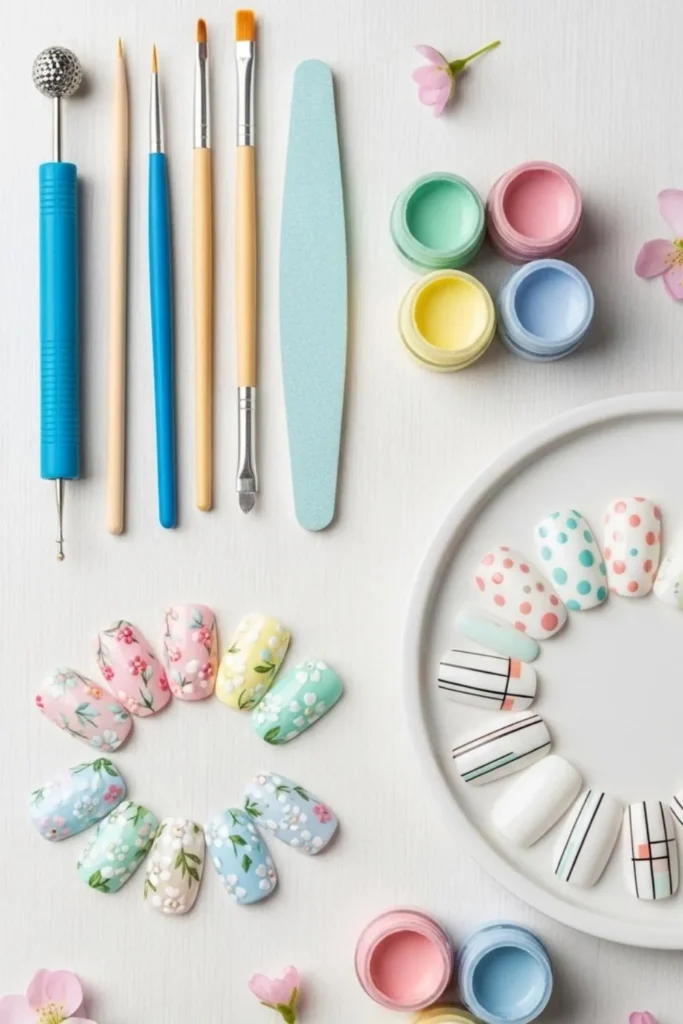
Fine detail brushes, dotting tools in multiple sizes, and quality striping tape dramatically improve DIY spring nail results compared to using just basic polish brushes.
Most nail polish bottles include brushes designed for coverage, not detail. Small petal appliqués placed at the cuticle, beaded flower centers for texture, and combination of flat and 3D art create dimension without bulk. Achieving these effects requires proper tools.
Fine liner brushes (1-2mm) let you paint delicate flower stems and petals. Dotting tools create perfect flower centers, dots, and small circles that regular brushes can’t match. Striping tape ensures clean lines for geometric patterns and French tips.
For spring specifically, a small set of basic tools covers most trends: one fine liner brush, three dotting tool sizes, striping tape, and a detail brush for cleanup. These cost roughly $15-20 total and transform your capability level.
The difference between amateur and polished DIY nails often comes down to tool quality rather than skill. Using proper equipment lets you execute spring’s delicate florals, clean geometric patterns, and precise accent details that define the season’s aesthetic.
Are Press-On Nails a Legitimate Spring Option or Still Seen as Cheap?
Modern press-ons using quality adhesive and professional designs rival salon manicures in appearance and durability, making them a legitimate spring choice for complex nail art.
Press-on technology improved dramatically in recent years. 3D FairyCore flower press-ons deliver intricate designs with light pink and purple colors, flowers, and butterflies that look professionally done.
Current versions use flexible materials that conform to natural nail curves, better adhesive that lasts 1-2 weeks, and design quality that matches salon artwork. The stigma of “fake nails” largely disappeared as execution improved.
For spring specifically, press-ons offer advantages. You can swap designs weekly to match different spring trends without commitment. Complex 3D florals or intricate geometric patterns become accessible without salon prices or time investment. Application takes 15-20 minutes versus 60-90 minutes at salons.
Quality matters though drugstore packs for $6 won’t match $25-30 sets from dedicated brands. Mid-range press-ons deliver professional results at fraction of salon cost, making them smart choices for experimenting with spring’s diverse trend options.
See More About : Halloween Nail Designs Short Nails: 50+ Spooky Ideas That’ll Make Your 2025 Manicure Scream
How Does Nail Care Change for Spring Compared to Winter?
Spring nail care emphasizes hydration recovery from winter dryness and gentler strengthening as increased outdoor activity exposes nails to more damage.
Winter leaves nails and cuticles depleted from dry air and indoor heating. Nail health comes from consistency and simplicity, with good daily habits, gentle maintenance, and high-quality tools being most important.
Spring transition means ramping up cuticle oil application, using hydrating hand creams, and being gentler with filing and shaping as nails recover. Avoid aggressive gel removals or harsh acetone soaks that strip remaining moisture.
Spring’s increased sun exposure also affects nails. UV light can yellow certain polishes, so top coats with UV protection help maintain color integrity. More outdoor time means increased hand washing and exposure to dirt, chlorine, and other elements that weaken nails.
Switching to gentler, more frequent maintenance filing weekly instead of letting nails grow too long and break prevents damage. Strengthening treatments work better in spring than winter because nails aren’t constantly fighting dehydration, allowing proteins and hardeners to actually penetrate and improve nail structure.
What Spring Nail Design Works Best for Professional Settings?
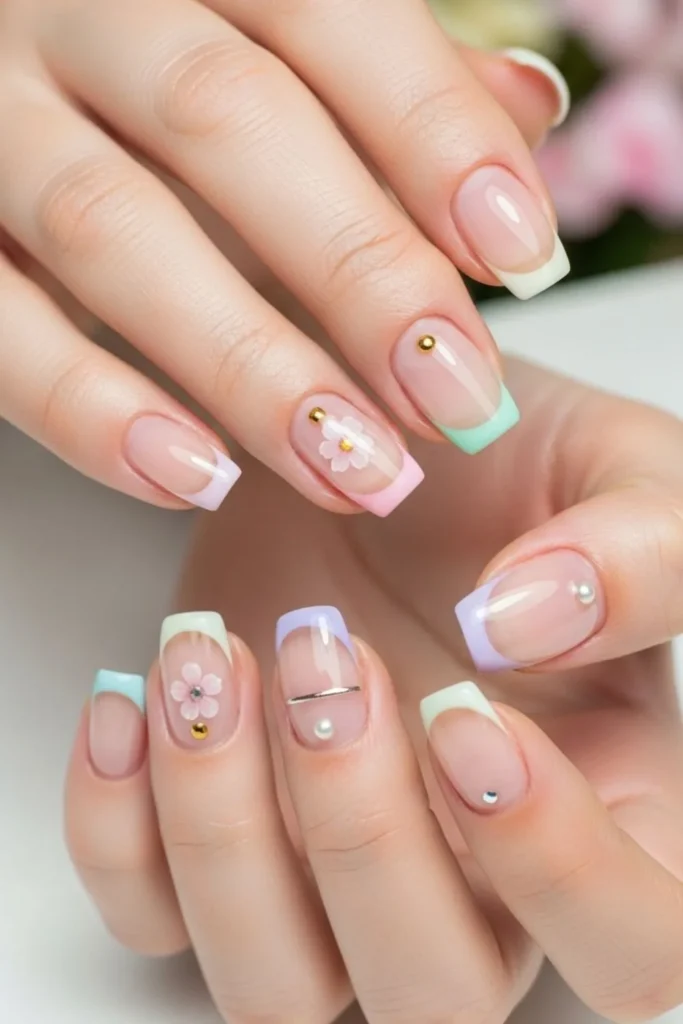
Sheer nudes, soft French variations, and minimalist single-accent designs maintain professionalism while incorporating spring trends through subtle color choices and refined finishes.
Natural-looking nails represent a major trend shift toward wellness-led manicures, making them perfect for professional environments. The most office-appropriate spring approaches use barely-there colors sheer greys, pale pinks, cream nudes with high-gloss finishes that look polished and healthy.
Micro French tips in soft pastels provide subtle spring feeling without bold statements that might conflict with conservative dress codes.
If your workplace allows slightly more expression, one accent nail with minimal floral detail keeps things professional while acknowledging the season. Tiny pressed flower sealed under clear topcoat.
Single delicate daisy on nude base. Soft gold geometric line on pale pink. These details show personality without overwhelming professional presentation. Avoid neon colors, heavy 3D elements, long lengths, and busy patterns that draw excessive attention.
Spring’s emphasis on natural, healthy nails actually aligns well with professional aesthetics let that guide your choices.
See More About : Gold Foil Accent Nails: The Ultimate Guide to Creating Luxurious Manicure Designs in 2025
How Do You Transition Nail Designs from Early Spring to Late Spring?
Early spring favors cooler pastels and delicate florals, while late spring shifts toward warmer tones, bolder patterns, and brighter accents as weather intensifies.
April nails feature mint green, peachy pink, and lavender, while May introduces richer tones like sunny yellow and soft cobalt. This progression mirrors nature’s own transition from tentative blooms to full-on growth.
Early spring (March-April) works best with soft, hesitant colors pale lavenders, dusty pinks, barely-there blues. Late spring (May-June) handles warmer, more confident tones coral, bright yellow, vibrant green.
Design complexity can also increase as spring progresses. Start with minimal looks sheer colors, simple French tips, single accent florals. Build toward more elaborate patterns, bolder color combinations, and complex nail art as you approach summer.
This natural progression keeps your manicures feeling seasonally aligned rather than jumping randomly between styles. It also prevents spring fatigue if you start with the most dramatic trends in March, you’ll be bored by May. Beginning subtle and building intensity sustains interest throughout the season.
Frequently Asked Questions
What nail shapes work best for spring 2026 designs?
Short almond and soft square (squoval) nail shapes are the most popular choices for spring 2026 nail designs in the US. They look clean, modern, and show off pastel colors and minimal nail art without breaking easily.
How do I make pastel nails look sophisticated instead of childish?
Choose muted or milky pastel nail colors and pair them with a glossy or sheer finish. Simple designs like micro-French tips or solid pastel nails also create a more grown-up, elegant spring manicure.
Can I wear floral designs without looking dated?
Yes, modern floral nail designs use tiny patterns, neutral bases, or abstract flowers to stay fresh. These updated spring nail art styles are trending across US salons and social media for 2026.
Are spring nail trends expensive to achieve at home?
Most spring nail trends can be done affordably at home using press-ons, gel kits, or regular polish in trending colors. DIY spring nail designs usually cost far less than salon visits while still looking polished.
How long should I keep spring nail designs before changing them?
Spring nail designs typically last 2 to 3 weeks before visible growth or wear appears. Gel manicures may last closer to 3 weeks, while regular polish often needs refreshing sooner.
Do spring nail colors work for all skin tones?
Yes, spring nail colors like soft pink, lavender, peach, and mint come in multiple shades to flatter every skin tone. Choosing warm or cool undertones helps create a natural, balanced look for US-based users.
Key Takeaways
- Spring 2026 nail designs focus on natural-looking styles with subtle refinement.
- Square shapes add a modern edge to soft pastel colors.
- Sheer finishes need careful layering to achieve depth without losing transparency.
- Trend pastels use muted undertones, especially pale orange and turquoise blue.
- 3D florals are most effective when kept minimal and placed selectively.
- French manicures stay modern by using alternative colors and textures instead of classic white tips.
Conclusion
Spring nail designs in 2026 balance soft aesthetics with modern sophistication through strategic color choices, texture combinations, and placement decisions. Square shapes provide contemporary edge while sheer finishes deliver the season’s signature airy quality.
Success comes from understanding which trends complement your lifestyle, nail length, and personal style rather than following every passing fad.
The season’s diversity means you’ll find approaches that work whether you prefer minimalist elegance or artistic expression. Pastels with muted undertones, delicate florals with fine linework, and French manicures with unexpected twists all offer fresh takes on spring classics.
Your best spring manicure comes from honest assessment of what you’ll actually wear and maintain rather than what looks impressive in photos.