53 Simple Nail Designs That Make Everyday Style Feel Effortless
Minimal nails shouldn’t mean boring nails. You want polish that feels put-together without the salon commitment, but most “simple” nail ideas still look complicated or fall flat after two days. The gap between aspiration and reality leaves you cycling through the same nude shade while secretly envying those perfectly undone manicures on your feed.
Here’s what actually works: simple nail designs thrive on intention, not intricacy. The best minimalist looks use smart color placement, subtle texture, or a single unexpected detail that reads as effortless. Think negative space that feels modern, not unfinished, or a thin accent line that transforms a neutral base into something noticeably chic.
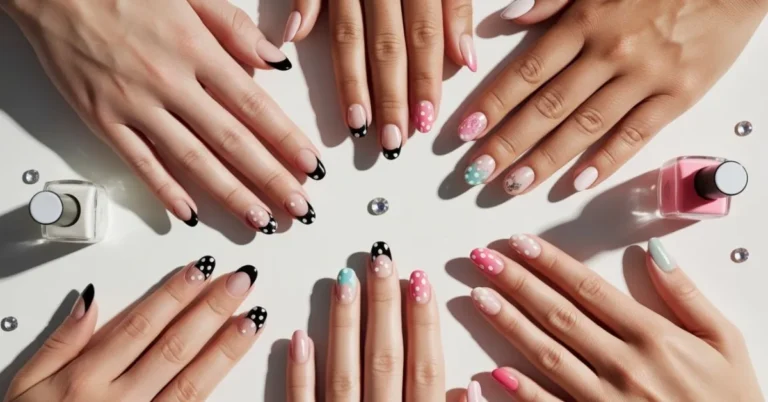
These 53 simple nail designs give you that pulled-together vibe without the fuss. You’ll find wearable ideas that work for short nails, busy schedules, and real life, not just the perfectly lit flatlay version of it.
What Makes a Nail Design Actually Simple?
A truly simple nail design uses minimal steps, common tools, and forgives small mistakes. It’s defined by three core elements: quick application (under 15 minutes), accessible technique (no airbrushing or hand-painting skills required), and visual impact that doesn’t rely on complexity. The design should look intentional even if your lines aren’t Instagram-perfect.
The difference between simple and basic comes down to thoughtful editing. A single metallic stripe down the center of a nude nail requires the same effort as solid color but creates contrast and direction.
Negative space at the cuticle line uses less polish yet feels more current than full coverage. Simple designs leverage strategic restraint, they subtract elements while adding visual interest through placement, proportion, or unexpected color pairings that still feel grounded.
Why Do Simple Nail Designs Work Better for Everyday Wear?
Simple nail designs resist chipping longer because they use fewer layers and less dense coverage at stress points like the tip. When designs avoid heavy embellishment or thick buildup, they flex with your natural nail instead of cracking under pressure.
A minimal manicure also grows out a more gracefully subtle negative space or a thin French tip doesn’t announce regrowth the way a bold geometric pattern does after five days.
They also adapt faster to different contexts. A nude base with one thin black line works equally well in a corporate meeting and a weekend brunch, while a full holographic set telegraphs “event only.”
Simple doesn’t mean safe; it means versatile. You’re not locked into a single aesthetic, and quick touch-ups or adjustments take seconds instead of a full redo. The visual restraint actually increases wearability because the design becomes background texture, not a statement that clashes when your plans shift.
How Long Do Simple Nail Designs Typically Last?
Most simple nail designs last 5 to 7 days with standard polish and 10 to 14 days with gel, assuming proper base and top coat application. Longevity depends more on your prep and lifestyle than design complexity clean, dehydrated nails sealed with quality topcoat outlast fancy art on poorly prepped beds. Designs with minimal tip coverage tend to chip slower because the free edge carries less product weight.
Certain simple styles naturally extend wear time. Negative space designs that leave part of the nail bare show less obvious chipping since there’s less polish to flake. Short, rounded nails with a single accent color resist snagging better than sharp stilettos with full coverage.
If you type frequently or work with your hands, skip designs that place heavy color at the very tip center or mid-nail accents hold up better under friction. Gel formulas always win for durability, but even standard lacquer lasts longer when you cap the free edge with topcoat and avoid soaking your hands in hot water for the first 12 hours.
Sheer Nude Base with Metallic Stripe
A sheer nude base paired with one vertical metallic stripe creates clean contrast without heaviness. The transparency keeps the look soft while the metal adds intentional direction. Use gold for warmth, silver for cool tones, or rose gold when you can’t decide all three read as polished rather than flashy.
Apply two coats of sheer nude, letting each dry completely. Place striping tape vertically down the center of each nail before brushing on metallic polish, or freehand a thin line with a detail brush if you skip the tape.
The stripe works best when it’s genuinely thin, think accent, not highway divider. This design grows out beautifully because the sheer base blends with regrowth instead of highlighting it.
Negative Space Half-Moon
Negative space at the cuticle line mimics a reverse French but feels more modern and forgiving. You’re essentially leaving the base of your nail bare while coloring the rest, which naturally camouflages new growth. It works particularly well on almond or oval shapes where the curve creates a soft, intentional arc.
Apply a base coat, then use reinforcement stickers or tape to mask off the half-moon shape at your cuticle.
Paint the rest of the nail in your chosen color muted terracotta, soft gray, or classic black all work then carefully remove the sticker before the polish fully dries. Seal everything with a clear topcoat to smooth the edge where color meets bare nail. The result looks deliberate and architectural without requiring steady-hand artistry.
Single Accent Nail in Contrasting Shade
One accent nail breaks up monotony without tipping into busy. The key is choosing a contrasting shade that shares the same undertone as your base color pair, a cool-toned nude with slate blue, or warm beige with burnt orange. The contrast should feel cohesive, not random.
Paint four nails in your primary shade and reserve your ring finger or middle finger for the accent. This works best when the accent color has slightly more saturation or depth than the base, creating a visual anchor rather than a distraction.
Avoid glitter or heavy shimmer for the accent unless your base is also textured, mixing finishes can read as mismatched rather than intentional. Keep both shades in the same family (all creams, all mattes, or all metallics) for polish that feels curated.
Thin French Tip with Colored Line
The classic French tip gets a modern update when you replace the thick white edge with a paper-thin line in an unexpected color. Nude base with a dark brown tip, sheer pink with charcoal gray, or even clear with true red all create that “undone but intentional” vibe that defines current minimalism.
Apply your base color and let it dry completely. Use a fine detail brush or the edge of a striping brush to paint a thin line along the very tip of your nail, following the natural curve.
The line should be narrow enough that it reads as an accent rather than a traditional French. This technique is forgiving because imperfect lines look hand-drawn and cool rather than sloppy. Seal with a topcoat and you’ve got a manicure that works for two weeks.
Matte Topcoat Over Neutral Base
A matte finish transforms any neutral shade from standard to statement. The flat texture reads as expensive and editorial, and it hides minor imperfections better than glossy formulas that highlight every streak. Greige, taupe, soft brown, and muted mauve all benefit from matte’s velvety depth.
Apply two coats of your chosen neutral, then finish with a matte topcoat instead of the usual gloss. Make sure your base color is fully dry before adding the matte layer any wetness underneath will cause dragging or patchiness. The matte finish does dull slightly faster than gloss, so carry a small bottle for mid-week touch-ups if you want to maintain that fresh-from-the-salon texture. Pair this with clean cuticles and short-to-medium length for maximum sophistication.
Two-Tone Color Block
Color blocking with two complementary shades creates visual interest through shape rather than detail. Divide the nail horizontally or diagonally, using tape to create a clean line between colors. This works especially well with high-contrast pairings cream and chocolate brown, blush pink and deep plum, or soft gray and black.
Paint your base color first and let it dry. Apply striping tape or painter’s tape at your desired angle, then brush the second color over the exposed section. Remove the tape before the top layer fully dries to avoid peeling. The diagonal version feels more dynamic and modern, while the horizontal split reads as graphic and structured. Both approaches use basic technique but deliver a finished look that feels considered and current.
Bare Nail with Single Dot Accent
A completely bare nail with one small dot of color is minimalism taken to its logical extreme. The single dot placed at the cuticle, center, or tip acts as punctuation rather than decoration. It’s unexpected enough to feel intentional but subtle enough to wear anywhere.
Apply a clear base coat and let it dry. Use a dotting tool or the tip of a bobby pin to place one small, neat dot of color on each nail in the same position. Metallic shades work particularly well here because they catch light without reading as loud. Seal with a clear topcoat. This design requires almost no skill but still signals that you put thought into your nails, which is the entire point of elevated simplicity.
Sheer White with Gold Foil Flakes
Sheer white creates a clean, airy base that makes scattered gold foil flakes look like intentional texture rather than chaotic sparkle. The key is to retain a few small flakes per nail, not full coverage. This combination feels bridal without being costume-y and works year-round.
Apply two coats of sheer white polish. While the second coat is still slightly tacky, use tweezers to place tiny pieces of gold leaf or foil flakes randomly across the nail. Press gently so they adhere, then seal everything with a thick topcoat to smooth the surface. The foil catches light without glitter’s disco-ball effect, creating a subtle dimension that photographs beautifully. This works best on short to medium nails where the texture doesn’t overwhelm the nail bed.
Monochrome Nude Gradient
A monochrome gradient using three shades of the same nude family creates depth without jarring color shifts. Start with the lightest shade at the cuticle and gradually darken toward the tip, or reverse it for a subtly unexpected look. The transition should be soft enough that it reads as natural shadow rather than obvious ombré.
Apply the lightest shade as your base. While it’s still wet, dab a makeup sponge with your medium shade and press it onto the center and tip of the nail, blending upward. Repeat with your darkest shade at just the tip.
The sponge technique diffuses the lines between colors. This requires a bit more patience than single-color application but still uses basic tools and skips the complexity of multi-color ombré. The result looks dimensional and polished without screaming “nail art.”
Glossy Clear with Thin Black Tips
Crystal-clear nails with ultra-thin black tips feel modern and graphic without color commitment. The transparency shows off your natural nail while the black line adds just enough definition to avoid looking unfinished. This works particularly well if you maintain healthy, even nail beds that don’t need coverage.
Start with a clear base coat. Once dry, use a fine detail brush to paint a razor-thin black line along the very edge of your nail tip think illustration, not traditional French. The line should follow your natural nail shape and be narrow enough that it reads as an outline.
Finish with glossy topcoat. This design is ideal for anyone who wants the structure of a manicure without committing to full color, and it suits short nails especially well since the black line creates the illusion of length.
Soft Lavender with White Dot Detail
Soft lavender serves as a gentle base for scattered white dots that feel more playful than polish. The pastel base keeps the look soft while the dots add just enough visual texture to avoid reading as plain. This combination works in spring and summer but translates surprisingly well to fall when paired with neutral outfits.
Apply two coats of soft lavender and let dry completely. Use a dotting tool to place white dots in a random pattern three to five per nail avoiding symmetrical spacing that can look too planned.
The randomness is what makes this feel effortless rather than crafted. Seal with topcoat. The white dots on lavender create a subtle contrast that’s noticeable without being loud, making this appropriate for both casual and professional settings.
Warm Taupe with Copper Accent Nail
Warm taupe is one of the most universally flattering neutrals, and pairing it with a single copper accent nail adds just enough warmth to avoid looking washed out. The metallic catches light without the boldness of gold or the coolness of silver, making it ideal for transitional seasons.
Paint four nails in warm taupe and choose your ring finger for the copper accent. Both shades share warm undertones, so they complement rather than clash. The copper should have a smooth metallic finish rather than glitter for a cohesive look.
This combination works especially well on medium to deep skin tones where the warmth enhances natural richness, but it’s adaptable across the spectrum when you adjust the depth of your taupe base.
Barely-There Pink with Gold Cuticle Line
A barely-there pink base with a thin gold line at the cuticle creates an inverted French that’s softer and more unexpected. The gold line draws the eye upward, making nails look longer while adding a delicate accent that doesn’t compete with rings or bracelets.
Apply two coats of sheer pink and let dry. Use a fine striping brush or the edge of a metallic polish brush to paint a thin gold line directly along your cuticle line, following the natural curve.
This requires a steadier hand than some other designs, but mistakes blend easily into the cuticle area. Seal with topcoat. The gold line is subtle from a distance but adds a polished detail up close, making this ideal for occasions where you want to feel put-together without obvious decoration.
Soft Gray with Matte Finish
Soft gray with a matte topcoat is the design equivalent of a perfectly tailored blazer, it works everywhere and always looks expensive. The muted color keeps it office-appropriate while the matte texture adds just enough edge to avoid looking corporate-boring.
Apply two even coats of soft gray, making sure coverage is smooth since matte finish highlights streaks. Once fully dry, add matte topcoat in thin, even strokes to avoid dragging.
The flat finish makes this shade read as sophisticated concrete rather than dingy, especially in natural light. This combination suits all nail lengths but particularly shines on short, rounded nails where the understated elegance doesn’t need length to make an impact.
Sheer Peach with White French
Sheer peach softens the traditional French manicure, making the white tips feel less stark and more wearable. The warm peach base adds a hint of color that complements most skin tones while keeping the overall look clean and polished.
Apply two coats of sheer peach as your base. Once dry, paint white tips using either freehand technique or French tip guides. Keep the white portion thin covering only the top 2-3mm of your nail to maintain the delicate feel. The sheer base prevents the white from looking too crisp or artificial. This version of the French works particularly well for spring and summer when you want something fresh without straying too far from classic.
Nude Base with Single Vertical Stripe
A nude base with one vertical stripe placed off-center creates asymmetrical interest without chaos. The stripe can be black for graphic contrast, gold for warmth, or even a darker nude for tonal sophistication. The off-center placement is what makes this feel modern rather than predictable.
Apply your nude base and let it dry completely. Use striping tape or a fine brush to paint a single vertical line on each nail, positioning it slightly to the left or right of center rather than dead middle.
This asymmetry creates movement and makes the design feel less rigid. The stripe should run from cuticle to tip in one clean motion. Seal with topcoat, making sure to cap the free edge for longevity.
Terracotta with Cream Accent
Terracotta brings earthy warmth without the intensity of true orange or rust, and pairing it with a cream accent nail keeps the look grounded rather than loud. This combination works particularly well in fall but translates year-round when balanced with neutral clothing.
Paint four nails in terracotta and reserve one for cream. The cream should be a true neutral not stark white, which creates too much contrast, but an off-white or ivory that shares the warmth of the terracotta base. Both shades should have the same finish (cream or matte) to maintain cohesion. This pairing feels sophisticated and earthy, ideal for anyone who wants color without the commitment of full-hand brightness.
Clear Base with Black Half-Moon
A clear base with a black half-moon at the cuticle is graphic minimalism at its finest. The transparency shows off your natural nail while the black shape adds architectural structure. This design works best when your natural nails are healthy and even-toned since they’re on full display.
Apply a clear base coat. Once dry, use a small brush or half-moon nail guides to paint a black arc at the base of each nail, following your cuticle line. The black section should be narrow about 2-3mm to avoid overwhelming the transparency.
Remove any guides before the polish dries and seal with clear topcoat. This high-contrast design feels bold despite its simplicity and suits anyone who wants definition without full color coverage.
Soft Brown with Glossy Finish
Soft brown with a high-gloss finish is understated elegance that works across all seasons and occasions. The warm neutral flatters every skin tone, and the glossy topcoat adds dimension that prevents the color from reading as flat or muddy.
Apply two coats of soft brown, ensuring smooth, even coverage. Finish with a thick, high-shine topcoat to amplify the richness of the brown and add depth. The glossy finish makes this shade look expensive and intentional rather than understated to the point of invisibility.
This combination is particularly effective on almond or oval nails where the shape enhances the sophisticated simplicity of the color.
Sheer Pink with Rose Gold Tips
Sheer pink with rose gold tips is the modern French manicure for anyone who finds traditional white too stark. The rose gold adds warmth and subtle shine while the sheer base keeps the overall look soft and wearable.
Apply two coats of sheer pink and let dry. Use a fine brush to paint thin rose gold tips, keeping the metallic section narrow for a delicate finish. The rose gold should be a true metallic, not glitter, to maintain the clean lines. This combination feels romantic without being overly feminine and works particularly well for events where you want polish without bold color.
Matte Black with Glossy Tips
Matte black with glossy tips creates textural contrast that’s simple to execute but visually striking. The flat black reads as modern and edgy while the glossy tips add dimension without requiring additional color or detail.
Apply two coats of black polish and let dry completely. Add matte topcoat to the entire nail, then carefully apply regular glossy topcoat just to the tips before the matte finish fully sets. The transition between matte and gloss should be subtle rather than a hard line.
This design works best on medium to long nails where there’s enough surface area for the texture change to register clearly.
Bare Nail with Metallic Cuticle Arc
A bare nail with a thin metallic arc at the cuticle is minimalism with a whisper of detail. The metallic line catches light without reading as decoration, making this ideal for anyone who wants the structure of a manicure without color commitment.
Apply a clear base coat. Once dry, use a fine brush to paint a thin metallic arc along your cuticle line gold, silver, or bronze all work depending on your undertone. The line should be delicate, not thick, and follow the natural curve of your cuticle.
Seal with clear topcoat. This design is particularly effective on short nails where bold color or patterns can overwhelm the nail bed.
Ivory with Thin Charcoal French
Ivory with a thin charcoal French tip is the sophisticated alternative to stark white with black tips. The softer base keeps the contrast from feeling too harsh while the charcoal adds definition without the severity of true black.
Apply two coats of ivory as your base. Once dry, use a fine brush to paint thin charcoal tips, keeping the line narrow and following your natural nail shape. The charcoal should be a true gray-brown rather than jet black to maintain the softer aesthetic. This combination feels polished and modern without the high contrast that can read as too bold for everyday wear.
Sheer Mauve with Silver Dot
Sheer mauve serves as a barely-there base for a single silver dot placed at the base of each nail. The subtle color keeps the look feminine while the metallic dot adds a touch of detail that elevates it beyond plain polish.
Apply two coats of sheer mauve and let dry. Use a dotting tool to place one small silver dot at the center base of each nail, just above the cuticle. The placement creates a subtle focal point without overwhelming the delicate base color. Seal with topcoat. This design works year-round and suits both casual and professional settings.
Nude Base with Matte and Glossy Split
A nude base split horizontally between matte and glossy finish creates textural interest without color or pattern. The contrast is subtle but effective, giving you a design that feels considered without requiring any artistic skill.
Apply two coats of nude polish and let dry. Mask off the top half of each nail with tape, then apply matte topcoat to the exposed bottom half. Remove the tape and let dry, then apply a glossy topcoat to the top half. The division can be straight across or slightly diagonal depending on your preference. This technique works with any neutral shade but is particularly effective with true nudes where the texture contrast stands out.
Soft Sage with Cream Accent
Soft sage brings a muted, earthy green that feels fresh without being loud, and pairing it with a cream accent nail keeps the look grounded. This combination works particularly well in spring and summer but translates to fall when balanced with neutral tones.
Paint four nails in soft sage and choose one for cream. The cream should be warm enough to complement the sage’s yellow undertones rather than clashing with stark white. Both shades should have a cream finish to maintain visual cohesion. This pairing feels organic and understated, ideal for anyone who wants subtle color that doesn’t read as trying too hard.
Clear with Gold Foil at Tips
A crystal-clear base with tiny pieces of gold foil concentrated at the tips creates the illusion of a French manicure but with unexpected texture. The transparency shows off your natural nail while the foil adds just enough sparkle to feel special.
Apply a clear base coat. While slightly tacky, use tweezers to place small pieces of gold foil at the tips of your nails, pressing gently to adhere. The foil pieces should be small and scattered rather than solid coverage. Seal with a thick clear topcoat to smooth the surface and lock in the foil. This design photographs beautifully and works for both everyday and events.
Warm Beige with Bronze Stripe
Warm beige with a single bronze stripe down the center creates tonal contrast that’s sophisticated rather than flashy. The bronze adds warmth and dimension without straying too far from the neutral base, making this appropriate for any setting.
Apply two coats of warm beige and let dry. Use a striping brush to paint a thin bronze line vertically down the center of each nail from cuticle to tip. The stripe should be narrow and precise, serving as an accent rather than dominating the design. Seal with topcoat. This combination feels refined and works particularly well on almond or oval nails where the vertical line enhances the natural shape.
Sheer White with Black Cuticle Line
Sheer white with a thin black line at the cuticle creates high contrast that’s modern and architectural. The transparency keeps the look airy while the black adds definition and structure.
Apply two coats of sheer white and let dry. Use a fine brush to paint a thin black line directly along your cuticle line, following the natural curve. The line should be delicate to avoid overwhelming the sheer base. Seal with topcoat. This design works best on healthy, even nail beds since the transparency doesn’t hide imperfections, but the black line draws focus away from the nail itself.
Matte Nude with Single Glossy Nail
A matte nude base with one glossy accent nail creates subtle contrast through texture rather than color. The matte finish feels modern and expensive while the single glossy nail adds just enough variation to keep it interesting.
Apply two coats of nude polish to all nails. Add matte topcoat to four nails and glossy topcoat to your chosen accent nail typically the ring finger. The color stays consistent, but the finish variation creates dimension. This technique is forgiving and works with any neutral shade, making it ideal for anyone who wants a low-maintenance design that still feels intentional.
Soft Blue-Gray with White Dot
Soft blue-gray brings a cool-toned neutral that’s more interesting than standard gray, and scattered white dots add playful texture without childish patterning. This combination feels fresh and modern while remaining appropriate for professional settings.
Apply two coats of soft blue-gray and let dry. Use a dotting tool to place white dots randomly across each nail aim for three to five per nail in asymmetrical spacing. The irregular placement is what keeps this from reading as cutesy. Seal with topcoat. This design works year-round and suits both short and medium nail lengths.
Nude with Thin Gold French
Nude with a thin gold French tip is classic sophistication with a modern metallic twist. The gold adds warmth and subtle shine while the nude base keeps the overall look grounded and wearable.
Apply two coats of nude as your base. Once dry, use a fine brush to paint thin gold tips, keeping the metallic section narrow about 2mm for delicacy. The gold should follow your natural nail shape in a clean line. Seal with topcoat, making sure to cap the tips for longevity. This combination feels polished without being fussy and works for both everyday and special occasions.
Sheer Coral with Matte Finish
Sheer coral with a matte topcoat brings warmth without intensity. The transparency keeps the color soft while the flat finish adds contemporary texture that prevents it from reading as standard pink.
Apply two coats of sheer coral, ensuring even coverage. Once fully dry, add matte topcoat in smooth, even strokes. The matte finish transforms the coral from sweet to sophisticated, making it appropriate for settings where bright color might feel too bold. This works particularly well on short nails where the subtle color and texture feel polished without overwhelming the nail bed.
Clear Base with Thin Black Vertical Lines
A clear base with thin vertical black lines creates graphic interest while maintaining transparency. The lines add structure and direction without the heaviness of full color, making this ideal for anyone who wants definition without coverage.
Apply a clear base coat and let dry. Use a fine striping brush to paint thin vertical lines down the center of each nail, or create two lines positioned symmetrically on either side of center. The lines should be narrow and precise. Seal with a clear topcoat. This design works best on medium to long nails where the lines have enough space to register clearly.
Warm Gray with Rose Gold Accent
Warm gray provides a sophisticated neutral base while a single rose gold accent nail adds subtle warmth and dimension. The combination feels balanced and modern without straying into bold territory.
Paint four nails in warm gray and reserve one for rose gold. The rose gold should be a true metallic with smooth finish rather than glitter. Both shades share warm undertones, creating cohesion despite the contrast. This pairing works across all seasons and suits professional settings while still feeling intentional and polished.
Bare Nail with Gold Half-Moon
A bare nail with a gold half-moon at the cuticle is minimalism with a touch of luxury. The transparency shows off your natural nail while the gold arc adds structure and catches light beautifully.
Apply a clear base coat. Once dry, use half-moon nail guides or freehand a thin gold arc at the base of each nail, following your cuticle line. The gold section should be narrow to maintain delicacy. Remove guides before the polish dries and seal with a clear topcoat. This design requires healthy, even nail beds since they’re on display, but the gold detail creates a focal point that draws attention.
Soft Olive with Cream Tips
Soft olive brings an earthy, muted green that feels grounded and wearable, and cream tips add subtle contrast without stark whiteness. This combination works particularly well in fall and winter but translates year-round with the right styling.
Apply two coats of soft olive as your base. Once dry, paint thin cream tips using a fine brush, keeping the cream section narrow for delicacy. The cream should be a warm off-white that complements the olive’s undertones. This pairing feels organic and sophisticated, ideal for anyone who wants subtle color variation without bold patterns.
Sheer Lilac with Silver Stripe
Sheer lilac provides a soft, feminine base while a thin silver stripe adds cool-toned contrast and definition. The transparency keeps the look light while the metallic accent adds structure.
Apply two coats of sheer lilac and let dry. Use a striping brush to paint a thin silver line vertically down the center of each nail from cuticle to tip. The stripe should be narrow and precise, serving as an accent rather than dominating the design.
Seal with topcoat. This combination feels fresh and modern, working well in spring and summer but translating to cooler months when paired with neutral outfits.
Matte Terracotta with Glossy Accent Nail
Matte terracotta brings earthy warmth with contemporary texture, and a single glossy terracotta accent nail creates subtle variation through finish rather than color. The cohesive color palette keeps the look grounded while the texture contrast adds interest.
Apply two coats of terracotta to all nails. Add matte topcoat to four nails and glossy topcoat to your chosen accent nail. The finish variation is subtle but effective, giving you a design that feels considered without requiring multiple colors or techniques. This works particularly well in fall but translates year-round when balanced with neutral tones.
Clear with Scattered Gold Flakes
A crystal-clear base with scattered gold flakes creates a subtle sparkle that feels intentional rather than glittery. The transparency shows off your natural nail while the gold catches light beautifully without overwhelming.
Apply a clear base coat. While slightly tacky, use tweezers to place small gold flakes randomly across each nail and aim for three to five flakes per nail in asymmetrical spacing. Press gently to adhere.
Seal with thick clear topcoat to smooth the surface and lock in the flakes. This design works for both everyday and special occasions, and the randomness is what keeps it from looking too precious.
Nude Base with Matte Tips
A nude base with matte tips creates textural contrast in a single neutral shade. The glossy base and flat tips create subtle dimensions without requiring different colors or complex technique.
Apply two coats of nude polish to all nails. Once dry, apply matte topcoat only to the tips about the top third of each nail leaving the base glossy. The transition between finishes should be soft rather than a hard line.
This design is forgiving and works with any neutral shade, making it ideal for low-maintenance sophistication.
Soft Pink with Thin Black French
Soft pink with a razor-thin black French tip creates unexpected contrast that feels modern and graphic. The pink keeps the look feminine while the black adds definition without the starkness of a traditional black manicure.
Apply two coats of soft pink as your base. Once dry, use a fine brush to paint thin black tips, keeping the line as narrow as possible, think outline rather than full coverage. The black should follow your natural nail shape in a clean arc.
Seal with topcoat. This high-contrast combination works best on short to medium nails where the delicate black line doesn’t overwhelm the pink base.
Sheer Beige with Copper Foil
Sheer beige provides a barely-there base while small pieces of copper foil add warmth and texture. The transparency keeps the look light while the foil creates a dimension that catches light beautifully.
Apply two coats of sheer beige. While the second coat is slightly tacky, use tweezers to place tiny pieces of copper foil randomly across each nail. The foil pieces should be small and scattered rather than dense coverage.
Seal with a thick topcoat to smooth the surface. This combination feels warm and sophisticated, working particularly well in fall but translating year-round.
Matte Mauve with Gold Cuticle Line
Matte mauve brings soft, dusty color while a thin gold line at the cuticle adds delicate detail. The flat finish feels modern while the gold accent creates a focal point without overwhelming the muted base.
Apply two coats of mauve and let dry. Add matte topcoat, then carefully paint a thin gold line along your cuticle line using a fine brush. The gold should be narrow and follow the natural curve of your cuticle. Seal with another layer of matte topcoat if needed, or leave the gold slightly glossy for contrast. This design feels refined and works for both casual and formal settings.
Clear Base with White Half-Moon
A clear base with a white half-moon at the cuticle creates clean, architectural contrast while showing off your natural nail. The transparency keeps the look airy while the white adds structure.
Apply a clear base coat. Once dry, use half-moon nail guides or carefully freehand a white arc at the base of each nail, following your cuticle line. The white section should be narrow about 2-3mm to maintain delicacy. Remove any guides before the polish dries and seal with a clear topcoat. This design works best on healthy, even nail beds and suits anyone who wants definition without full color coverage.
Warm Nude with Bronze French
Warm nude with bronze French tips brings earthy sophistication that works across all seasons. The bronze adds metallic interest without the coolness of silver or the brightness of gold, making this particularly flattering on warm and deep skin tones.
Apply two coats of warm nude as your base. Once dry, paint thin bronze tips using a fine brush, keeping the metallic section narrow for elegance. The bronze should have a smooth finish rather than glitter. Seal with topcoat, making sure to cap the free edge. This combination feels polished and intentional without being too bold for everyday wear.
Sheer Gray with Black Dot Detail
Sheer gray provides a cool-toned base while scattered black dots add graphic interest without pattern overload. The transparency keeps the look soft while the dots create focal points that feel intentional.
Apply two coats of sheer gray and let dry. Use a dotting tool to place black dots randomly across each nail three to five per nail in asymmetrical spacing. The irregular placement prevents this from reading as juvenile patterning. Seal with topcoat. This combination feels modern and works particularly well on short nails where the subtle detail doesn’t overwhelm.
Nude with Vertical Gold and Silver Stripes
A nude base with one gold stripe and one silver stripe creates mixed-metal sophistication. The neutral base keeps the metallics grounded while the dual stripes add visual interest without chaos.
Apply two coats of nude and let dry. Use a fine striping brush to paint one thin gold line and one thin silver line vertically on each nail, spacing them evenly. The stripes should be narrow and run from cuticle to tip. Seal with topcoat. This design works best on medium to long nails where there’s enough space for both stripes to register clearly without crowding.
Soft Mocha with Matte Finish
Soft mocha with a matte topcoat is an understated luxury that works everywhere. The warm brown flatters all skin tones, and the flat finish adds a contemporary texture that elevates it beyond basic neutral.
Apply two coats of soft mocha, ensuring smooth, even coverage. Once fully dry, add matte topcoat in thin, even strokes. The matte finish gives this shade depth and sophistication, making it appropriate for both professional and casual settings. This combination works particularly well on almond or oval nails where the shape enhances the elegant simplicity.
Clear with Thin Rose Gold French
Crystal-clear nails with thin rose gold tips create delicate definition without color commitment. The transparency shows off your natural nail while the rose gold adds warmth and subtle shine.
Apply a clear base coat and let dry. Use a fine brush to paint razor-thin rose gold tips, keeping the metallic line as narrow as possible. The rose gold should follow your natural nail shape in a clean arc. Seal with a clear topcoat. This design works best on healthy, even nail beds and suits anyone who wants the structure of a French manicure without traditional color.
Sheer Peach with Matte Finish
Sheer peach with a matte topcoat brings warmth without intensity. The transparency keeps the color soft while the flat finish adds modern texture that prevents it from reading as standard peachy-pink.
Apply two coats of sheer peach, ensuring even coverage. Once fully dry, add matte topcoat in smooth strokes. The matte finish transforms the peach from sweet to sophisticated, making it appropriate for settings where color needs to stay subtle. This works across all nail lengths but particularly shines on short nails where the delicate color and texture feel intentional.
Bare Nail with Thin Black Line at Tip
A completely bare nail with a single thin black line at the very tip is minimalism taken to its extreme. The transparency shows off your natural nail while the black line adds definition without coverage.
Apply a clear base coat. Once dry, use a fine brush to paint a thin black line along the very edge of your nail tip, following the natural curve. The line should be as narrow as possible, think illustration rather than color block. Seal with a clear topcoat. This design requires healthy nails since they’re on full display, but the black line creates structure that makes the look feel intentional rather than unfinished.
Ivory with Gold Cuticle and Tip
Ivory with thin gold lines at both the cuticle and tip creates symmetrical framing that feels balanced and elegant. The neutral base keeps the look grounded while the dual gold accents add delicate detail.
Apply two coats of ivory as your base. Once dry, use a fine brush to paint thin gold lines along both your cuticle line and the very tip of each nail. The lines should be narrow and mirror each other in thickness. Seal with topcoat. This design requires a bit more precision but delivers a polished look that works for special occasions while remaining appropriate for everyday wear.
How Do You Make Simple Nail Designs Last Longer?
Proper nail prep extends wear time more than any topcoat alone. Push back cuticles, remove oils with rubbing alcohol or nail dehydrator, and file nails into your desired shape before applying polish. Clean, dry nails allow polish to grip properly instead of sliding off within days. Apply thin coats two thin layers always outlast one thick glob that takes forever to dry and chips faster.
Cap the free edge with every layer, including base coat, color, and topcoat. This seals the tip where most chipping starts. Reapply topcoat every 2-3 days to refresh the protective layer and maintain shine.
Avoid soaking hands in hot water for the first 12 hours after painting, and wear gloves when doing dishes or cleaning. These small habits compound into significantly longer wear, especially with gel formulas that naturally last 10-14 days when properly maintained.
What’s the Difference Between Simple and Minimalist Nail Designs?
Simple nail designs prioritize ease of execution and quick application, while minimalist designs focus on visual restraint and intentional editing. A simple design might use one solid color with no embellishment, requiring minimal skill but potentially reading as basic.
A minimalist design uses strategic negative space, precise placement, or subtle contrast to create visual interest through what’s left out rather than added in.
The two overlap frequently but serve different purposes. Simple designs answer “how easy is this to do?” while minimalist designs answer “how much can I remove while maintaining impact?” A nude nail with a thin gold stripe is both simple (easy technique) and minimalist (restrained aesthetic).
A solid red manicure is simple but not necessarily minimalist if the color itself is bold. Understanding this distinction helps you choose designs that match both your skill level and aesthetic goals.
Can Simple Nail Designs Work for Special Occasions?
Simple nail designs absolutely work for events when you focus on finish quality and subtle details rather than elaborate patterns. A high-gloss nude with perfect cuticle work looks more polished at a wedding than poorly executed nail art with rhinestones. The key is elevation through precision clean lines, smooth application, and thoughtful color choices that complement your outfit without competing with it.
Certain simple techniques photograph particularly well: sheer bases with metallic accents, negative space designs, and single-color manicures in unexpected shades. These read as intentional and sophisticated in photos rather than “I forgot to do my nails.”
For formal events, lean toward glossy finishes and metallic accents. For casual celebrations, matte textures and soft colors work beautifully. The restraint is what makes simple designs versatile enough to elevate for any occasion without feeling costume-y or out of place.
What Tools Do You Actually Need for Simple Nail Designs?
Most simple designs require only five core tools: a base coat, your chosen colors, a topcoat, a fine detail brush, and cleanup brush with acetone. The detail brush lets you paint thin lines, dots, or precise tips without needing specialized equipment.
A cleanup brush fixes mistakes around your cuticles and skin, which is more important for a polished final look than perfect application.
Optional but helpful additions include striping tape for clean lines, nail guides for French tips or half-moons, and a dotting tool for precise circles. These cost under $10 total and expand your design options significantly.
Skip expensive stamp sets, airbrush kits, or intricate decal collections that serve complex nail art, not simple designs. Quality base and topcoat matter more than having 50 color options, since proper foundation and sealing determine longevity regardless of the design itself.
Which Nail Shapes Work Best with Simple Designs?
Oval and almond shapes enhance simple designs by creating natural elegance that doesn’t require embellishment. The soft curves look polished even with a single neutral color, and they provide enough surface area for subtle accents like thin stripes or small dots without overwhelming the nail. These shapes also grow out gracefully, maintaining their appearance longer between manicures.
Square and squoval shapes work particularly well for designs with geometric elements like straight color blocking or precise French tips. The defined edges make clean lines easier to achieve and maintain.
Stiletto and coffin shapes can handle simple designs but require more length to look proportional, and they’re more prone to chipping at the extreme tip. Short round nails are ideal for minimalist designs since they provide a clean canvas without the drama of length perfect for showcasing subtle texture or delicate accent details.
Frequently Asked Questions
How often should you change simple nail designs?
Simple nail designs should be changed every 7 to 10 days to keep your manicure looking clean and prevent lifting or staining. If you use gel polish, you can refresh simple nail designs every 2 to 3 weeks.
Do simple nail designs chip faster than bold ones?
No, simple nail designs do not chip faster than bold designs when the same base coat, polish quality, and top coat are used. Chipping depends more on nail prep and daily hand use than on the design style.
Can you combine multiple simple techniques in one manicure?
Yes, you can combine simple nail techniques like accent nails, thin stripes, French tips, and minimal dots in one manicure. Mixing subtle elements adds interest while keeping the look clean and professional.
Key Takeaways
- Simple nail designs prioritize quick application, minimal tools, and forgiving techniques that work for everyday wear
- True simplicity uses strategic restraint negative space, single accents, or texture contrast to create visual interest through editing rather than addition
- Longevity depends on proper prep (clean, dehydrated nails) and capping the free edge with every layer, not design complexity
- Oval and almond shapes naturally enhance simple designs, while square shapes work best for geometric elements
- Most designs require only five core tools: base coat, colors, topcoat, detail brush, and cleanup brush
Conclusion
Simple nail designs prove that restraint creates more impact than complexity. When you focus on clean application, thoughtful color choices, and one intentional detail, your nails look polished without demanding professional skills or hours of effort. The designs here work because they respect your time while delivering that put-together feeling that carries through your entire day.
Start with techniques you can actually execute a nude base with one metallic stripe, negative space at the cuticle, or matte finish over your favorite neutral. Master the basics before adding complexity, and you’ll build a rotation of simple designs that feel effortless because they genuinely are. Your nails should enhance your style, not complicate it.