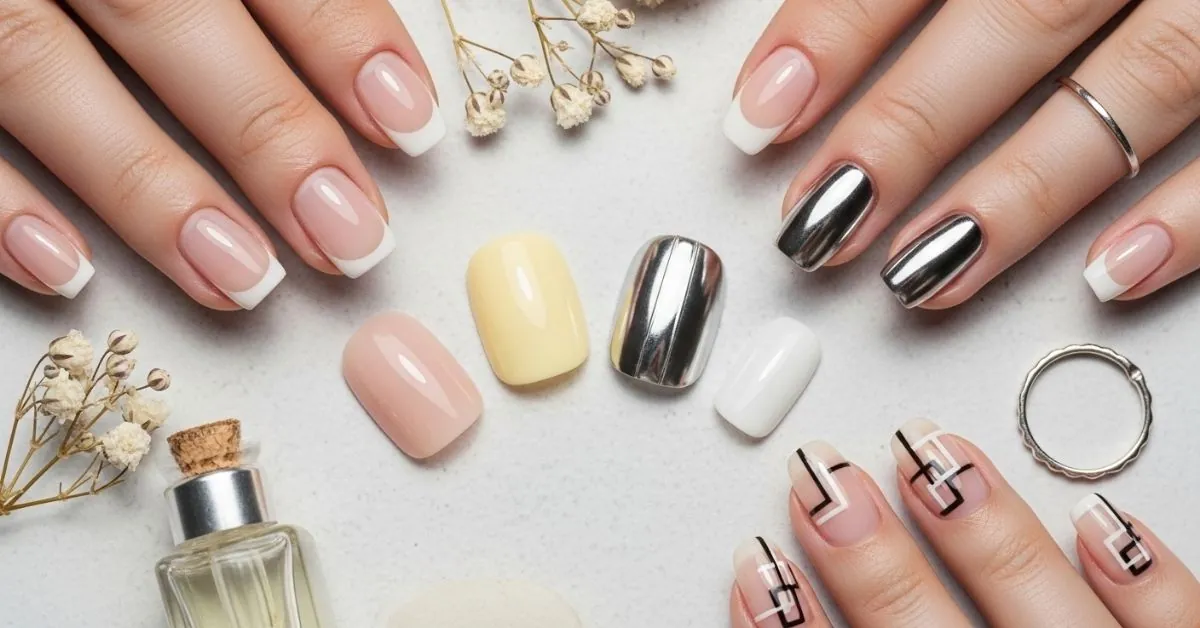
27 Nail Trends for Short Nails to Try in 2026
Short nails are dominating manicures in 2026, but not for the reasons most people expect. The biggest nail trends for short nails aren’t about playing it safe, they’re about precision, proportion, and designs that actually look better on a compact canvas. Clean lines, intentional color placement, and refined finishes are replacing excess length as the marker of style.
The problem is outdated thinking. Many still treat short nails as a fallback, defaulting to plain nudes or skipping nail art altogether. That mistake ignores how heavy designs, thick tips, and oversized patterns actively work against shorter lengths, making nails look wider, cluttered, or unfinished.
The fix is designing for short nails, not around them. Purpose-built trends like micro French tips, butter yellow glazes, and negative-space geometry use visual balance to enhance natural nail beds while staying durable, modern, and effortlessly polished.
Why Are Short Nails Trending in 2026?
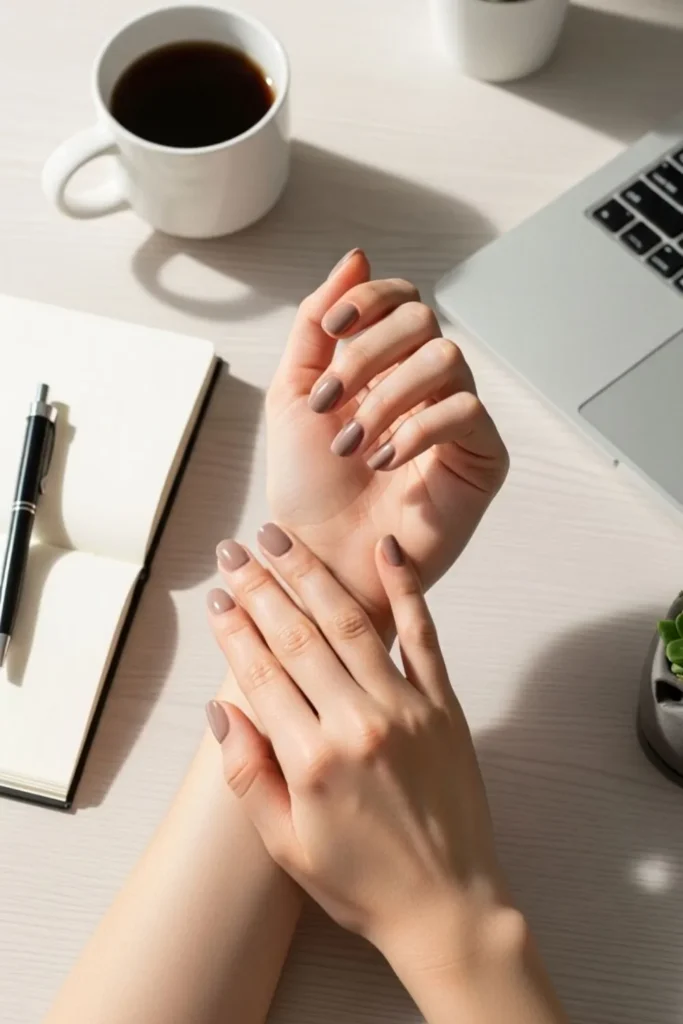
Short nails are trending in 2026 because they align with current priorities around practicality, health-conscious beauty, and understated luxury. The shift reflects a broader move away from maximalist aesthetics toward designs that integrate seamlessly into daily life.
Three factors drive this trend. First, hybrid work environments favor manicures that look polished in video calls but withstand hands-on tasks. Second, nail health awareness has grown and more people recognize that constant extension wear weakens natural nails, making breaks between enhancements necessary.
Third, the “quiet luxury” movement in fashion prioritizes refined details over loud statements, and short nails embody that philosophy perfectly. Unlike the stiletto and coffin shapes that dominated 2020–2023, short nails in 2026 signal confidence without requiring constant maintenance.
What Nail Shapes Work Best for Short Nails in 2026?
The best nail shapes for short nails in 2026 are squoval, rounded almond, and soft square each chosen for how they balance proportion with wearability.
Squoval (square with rounded edges) creates the illusion of length while preventing corner breakage, making it ideal for active lifestyles. Rounded almond elongates the nail bed visually without requiring extra length, working particularly well on wider nail beds. Soft square offers a clean, modern edge that showcases negative-space designs and geometric art better than curved shapes.
Avoid extreme shapes like sharp stilettos or extreme almonds on short nails, they create awkward proportions and break easily. The key is choosing shapes that complement your natural nail bed width rather than fighting against it.
See More About : Burgundy Nails 2025: 25+ Stunning Designs To Try Now For A Chic Look
Which Color Palettes Dominate 2026 Short Nail Trends?
The dominant color palettes for 2026 short nail trends are muted pastels, earthy neutrals, and unexpected brights all applied with strategic finish variation.
Butter yellow, sage green, and dusty lavender lead the pastel category, offering softness without looking juvenile. Earthy tones like terracotta, warm taupe, and olive green ground designs in wearability while maintaining visual interest.
The bright category focuses on single-statement nails rather than full-hand coverage: think one cobalt blue accent nail against nude bases, or a single chrome coral finger in an otherwise neutral set.
This restrained approach to color prevents short nails from looking busy or overwhelming. Finish matters as much as hue glossy pastels read youthful, while matte or satin finishes add sophistication to the same shade.
Glazed Donut Nails: Do They Work on Short Lengths?
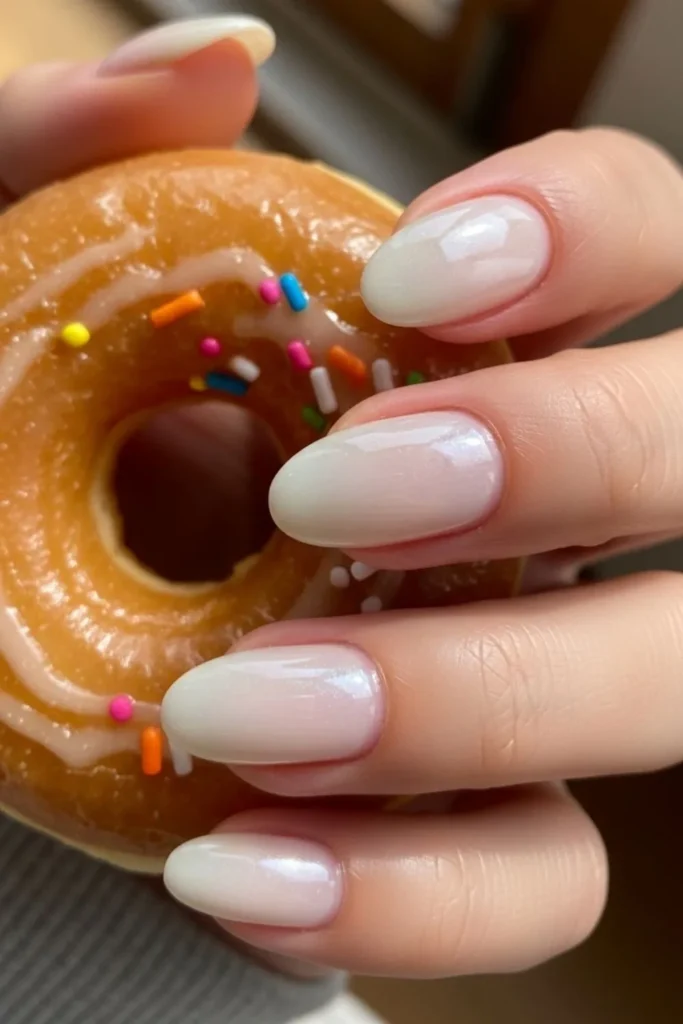
Glazed donut nails work exceptionally well on short lengths when applied with lighter pearl densities and neutral base shades. The effect actually benefits from less surface area, it reads as a subtle sheen rather than a disco ball.
The original glazed donut trend used thick chrome powders that can overwhelm short nails. The 2026 adaptation uses sheer milky bases (ballet pink or soft peach) topped with fine pearl powders that catch light without full opacity. This creates dimension without visual weight.
Application technique matters: blend the pearl powder more heavily at the cuticle and tip, leaving the center slightly less saturated. This gradient effect mimics natural nail reflection patterns and prevents the flat, painted-on look that happens with uniform chrome coverage on short nails.
The finish works particularly well on squoval shapes where curved edges catch light from multiple angles.
How Do You Create Visual Length with Nail Art?
You create visual length with nail art by using vertical elements, strategic negative space, and asymmetric placement that guides the eye upward along the nail bed.
Vertical French tips (thin lines running from cuticle to tip instead of horizontal smile lines) physically elongate the nail in photographs and real life. Negative space designs that leave the center of the nail bare while adding detail at sides or tips prevent the “filled in” look that shortens visual length.
\ Asymmetric placements like a single diagonal stripe or off-center metallic accent create movement that tricks the eye into perceiving more length. Color blocking works when you use lighter shades at the tip and darker tones at the base, mimicking natural shadow patterns.
Avoid horizontal stripes, full-coverage busy patterns, and thick French tips that cut the nail bed in half all of these emphasize width over length.
See More About : Brown French Tips Nails: 40+ Stunning Ideas to Elevate Earthy Elegance
What Makes Micro French Tips Different in 2026?
Micro French tips in 2026 feature ultra-thin lines (1-2mm maximum), unexpected color combinations, and placement variations that break from traditional smile line positioning.
Unlike classic French manicures with thick white tips, 2026 micro French uses barely-there lines in colors like chocolate brown, forest green, or metallic gold. The lines sit closer to the nail edge sometimes just on the very tip rather than following the smile line curve.
Some variations flip the concept entirely: micro half-moons at the cuticle instead of tips, or double micro lines in contrasting colors.
This approach works specifically well on short nails because thin lines don’t compete with limited surface area. The technique requires a steady hand or striping brush, but the payoff is a detail-oriented look that feels custom rather than salon-standard. It’s the difference between “I got my nails done” and “I had my nails designed.”
Negative Space Geometry: What Patterns Work Best?
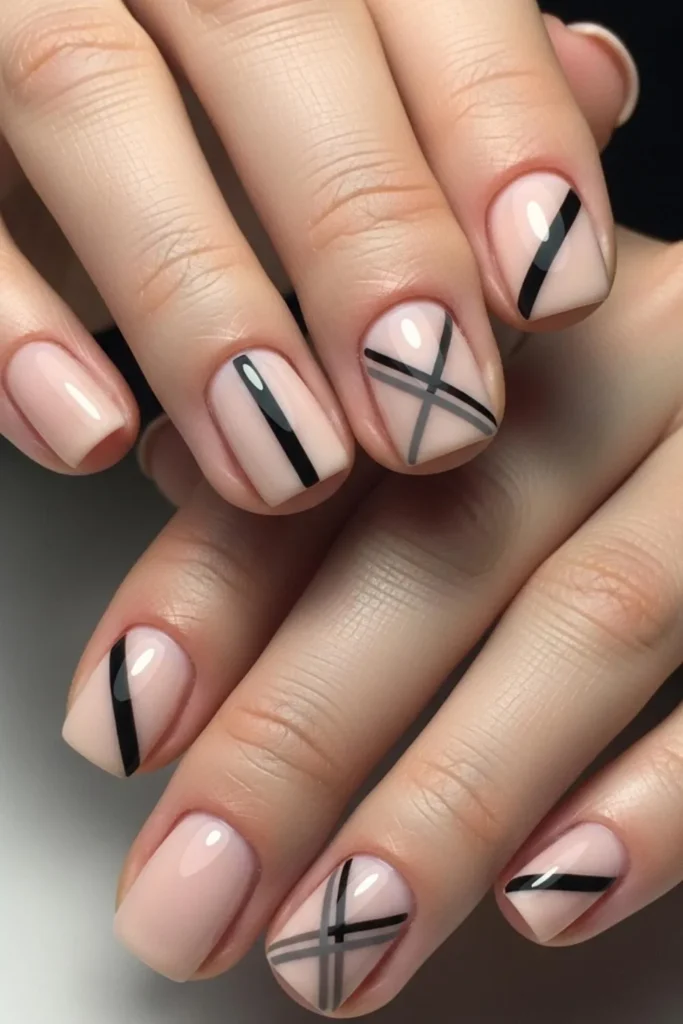
The best negative space geometry patterns for short nails are single diagonal lines, offset circles, and minimalist triangle accents all using the natural nail as part of the design rather than covering it.
Diagonal lines work because they create movement without requiring symmetry across multiple nails. A single thin line in black or metallics running from one corner to the opposite edge looks intentional and modern.
Offset circles (small cutouts or outlined shapes placed off-center) add interest without busy repetition. Minimalist triangles at the cuticle or tip frame the nail without overwhelming it.
The critical rule: one geometric element per nail maximum. Short nails can’t support multiple shapes competing for attention, the design becomes cluttered rather than architectural. Use negative space to create breathing room, allowing the geometry to stand out as an intentional detail rather than pattern filler.
Are Matte Finishes Still Relevant for Short Nails?
Matte finishes are highly relevant for short nails in 2026, particularly when combined with selective glossy accents or applied over saturated jewel tones.
Matte topcoats eliminate the shine that can emphasize surface imperfections or make short nails appear stubbier. The flat finish creates a contemporary, almost textile-like quality that reads as expensive rather than unfinished.
The 2026 evolution adds strategic gloss like matte nails with only the tips in gloss, or a single glossy accent nail in an otherwise matte set. This contrast adds dimension without decoration.
Color choice matters: matte works beautifully on deep burgundies, forest greens, and charcoal grays where it intensifies saturation. It falls flat on pale pastels, which need shine to prevent looking chalky. One practical note matte finishes show fingerprints and smudges more readily, making them better for special occasions than everyday wear.
See More About : Matte Dark Red Nails: 25 Chic & Irresistible Ideas to Elevate Your Burgundy 2025 Manicure
How Do You Style Metallic Accents Without Overwhelming Short Nails?
You style metallic accents on short nails by limiting them to single-finger placements, thin line work, or partial coverage that preserves negative space.
Full metallic nails can make short nails look like foil packets too much shine compresses visual length. Instead, use metallics as punctuation: one chrome accent nail per hand, thin metallic striping tape along cuticles or tips, or small metallic decals placed strategically.
Rose gold and champagne metallics work better than silver or yellow gold on short nails because they blend with natural skin tones rather than contrasting sharply. Brushed or satin metallic finishes (rather than high-polish chrome) offer shine without the mirror effect that can look overwhelming. When combining metallics with other colors, keep the base neutral metallics pop more against nudes, taupes, or soft whites than against competing bold shades.
What Role Do Cuticle Details Play in 2026 Trends?
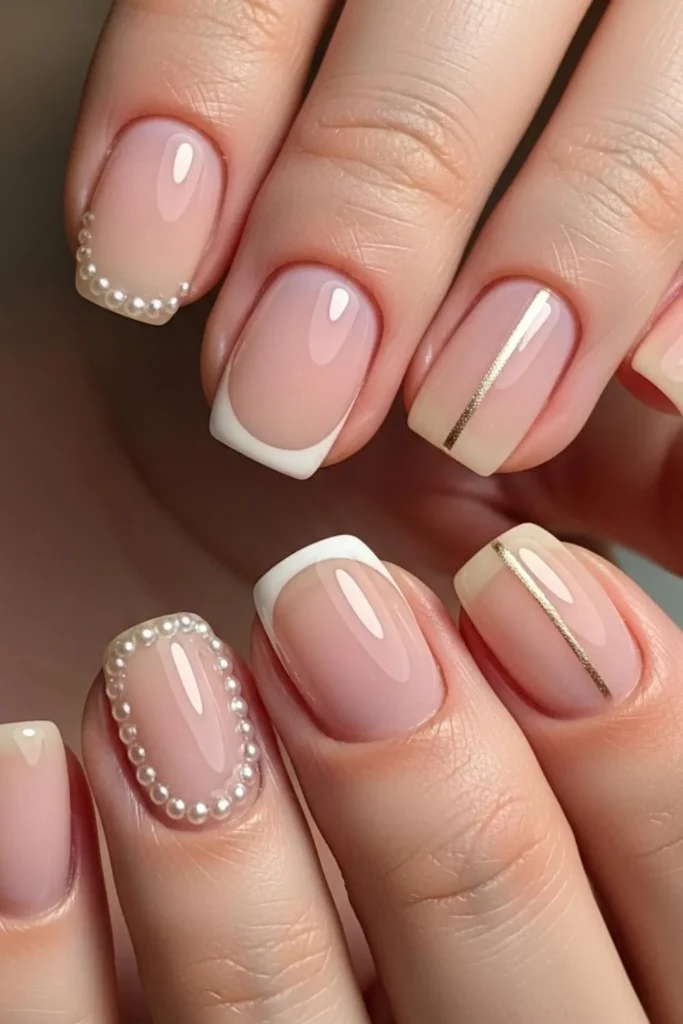
Cuticle details play a structural role in 2026 trends by framing the nail bed, creating defined start points for designs, and adding personalized touches without covering the full nail.
Half-moon designs (color or metallic arcs at the cuticle) have resurged, but thinner and more precise than vintage versions. Micro pearls, tiny rhinestones, or metallic leaf applied just at the cuticle line add luxury without weight.
These details work particularly well on short nails because they don’t compete with the nail tip for attention, they establish a foundation instead. Application requires careful cuticle prep; details look sloppy if skin isn’t properly pushed back and cleaned.
The trend also includes reverse French tips (dark cuticle area with nude tips) that visually extend the nail bed. Cuticle details essentially create bookends for your nail art, giving even minimalist designs a finished, intentional appearance.
Butter Yellow: Why Is It the Breakout Shade for Short Nails?
Butter yellow is the breakout shade for short nails in 2026 because it offers warmth without the intensity of traditional yellows, complementing diverse skin tones while maintaining year-round wearability.
Traditional bright yellows can wash out lighter skin tones or clash with deeper ones, but butter yellow, a softer, cream-based yellow with slight peachy undertones, adapts to multiple complexions. On short nails, it reads as cheerful without looking cartoonish, filling the gap between stark white and bold neon.
The shade works in both matte and glossy finishes, pairs well with metallics, and serves as an unexpected neutral that grounds bolder accent nails. Unlike seasonal colors that feel dated after a few months, butter yellow has the staying power of a classic nude with more personality.
It photographs beautifully in natural light, which matters for social sharing, and feels fresh against the stream of millennial pink and greige that dominated previous years.
See More About : Dark Red Nails: 25+ Stunning Ideas For Your Chic Manicure
How Do Translucent Jelly Finishes Work on Shorter Lengths?
Translucent jelly finishes work on shorter lengths by creating depth through layering while maintaining the natural nail’s visibility, resulting in a dimensional yet understated effect.
Jelly polishes are sheer, slightly transparent formulas that require 2-3 coats to build color intensity. On short nails, this translucency prevents the heavy, opaque look that can make nails appear stubby.
The finish works particularly well in jewel tones emerald, sapphire, ruby where the translucency mimics actual gemstones. Layering technique matters: apply thin coats and allow full drying between layers to avoid bubbling or uneven coverage.
Some applications intentionally leave visible nail lines or embed tiny glitters between jelly layers, creating a “glass candy” effect. This works best on healthy, well-maintained natural nails since imperfections show through. Jelly finishes also pair well with chrome topcoats for a wet-glass appearance that adds dimension without solid color commitment.
What’s the Difference Between Classic and Modern Minimalism?
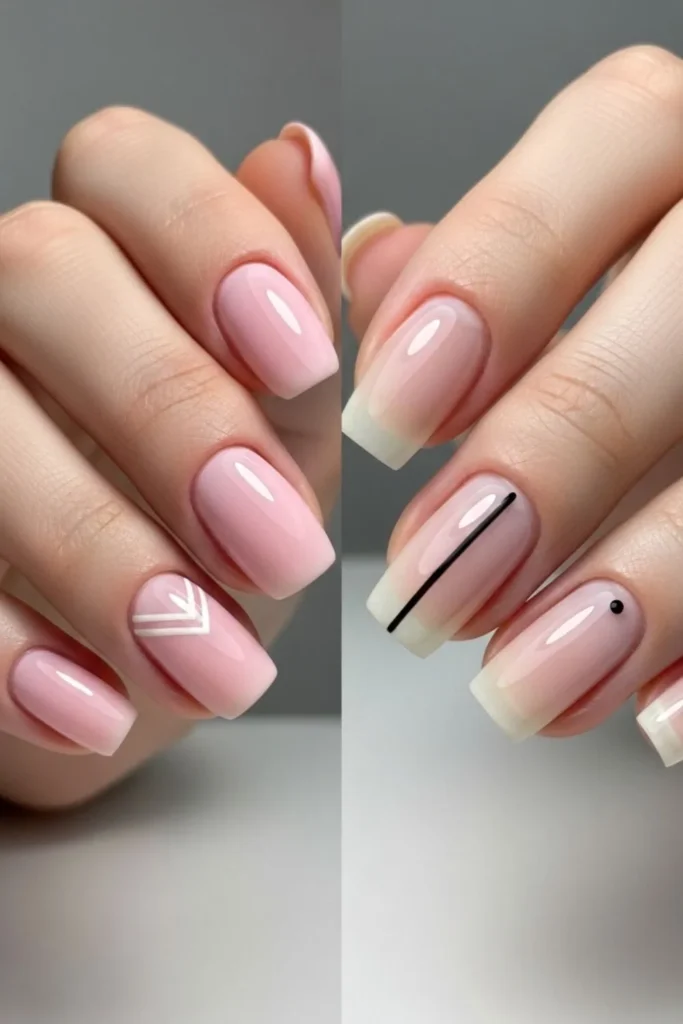
The difference between classic and modern minimalism lies in intentional imperfection and strategic asymmetry; modern minimalism embraces hand-drawn variation rather than salon-perfect uniformity.
Classic minimalism (think 2015-2019) emphasized precision: perfectly centered dots, symmetrical lines, and uniform spacing across all nails. Modern minimalism in 2026 values the “imperfectly perfect” aesthetic where slight variations prove human application.
A thin black line might waver slightly, dots may vary marginally in size, or negative space shapes might be hand-drawn rather than stenciled. This approach actually works better on short nails because it doesn’t require the canvas space needed for complex symmetrical designs.
The color palette remains restrained (blacks, whites, nudes, single accent colors), but the application feels more organic. It’s the difference between architectural precision and artistic expression both minimal, but one feels designed by algorithm while the other feels crafted by hand.
Can You Layer Multiple Trends on Short Nails?
You can layer multiple trends on short nails, but only when applying the “one primary, one accent” rule that prevents visual overcrowding.
Choose one trend as your foundation (like glazed donut finish or butter yellow base), then add a secondary trend as subtle punctuation (micro French tip or single metallic accent). Attempting three or more trends simultaneously, say, jelly finish plus negative space geometry plus cuticle pearls creates competition rather than cohesion on limited surface area.
The exception: trends that naturally complement each other, like matte finish plus metallic accent line, where one affects texture and the other adds detail. Think in terms of layers: base color, finish type, and optional detail. Each layer should enhance rather than obscure the previous one.
This restraint is what separates editorial-quality short nail art from busy, overcomplicated designs that work against the nail’s natural proportions.
See More About : Ombre Nails: 2025 Trends, Techniques & Stunning Designs
How Do Seasonal Transitions Affect Short Nail Color Choices?
Seasonal transitions affect short nail color choices by shifting finish types and undertones rather than requiring complete palette overhauls, allowing for gradual evolution instead of dramatic changes.
Spring-to-summer typically moves from matte to glossy finishes while lightening existing color families burgundy becomes dusty rose, forest green shifts to sage. Summer-to-fall introduces satin finishes and warmer undertones within the same color range butter yellow gains peachy depth, becoming more terracotta.
Fall-to-winter deepens saturation without necessarily changing hues, olive becomes hunter green, taupe becomes chocolate. This gradual approach prevents the jarring seasonal switches that can feel forced.
Short nails particularly benefit from this strategy because rapid color changes are more noticeable on compact surfaces. One practical tip: maintain a core collection of 3-4 year-round neutrals (soft white, greige, dusty pink, warm taupe), then rotate 2-3 seasonal accent shades that shift with trends.
What Makes Chrome Finishes Look Different on Short Versus Long Nails?
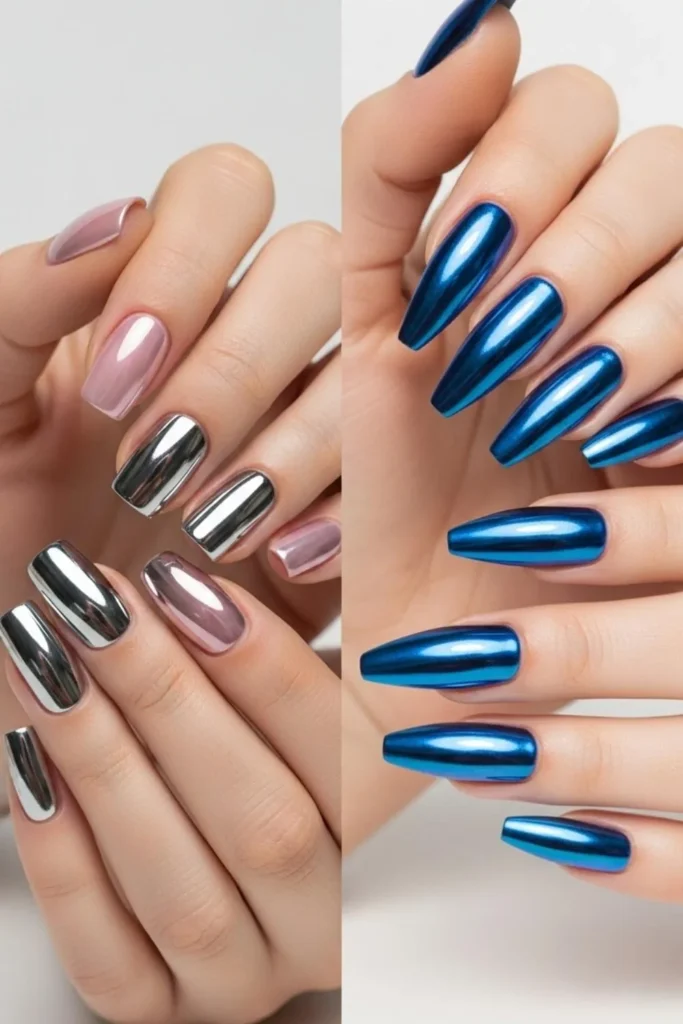
Chrome finishes look different on short nails because reduced surface area concentrates the reflective effect, creating intensity rather than the sweeping shimmer seen on longer lengths.
On long nails, chrome creates gradual light movement as fingers bend and move. On short nails, that same chrome appears more concentrated, almost jewelry-like in its reflectivity. This isn’t necessarily negative; it just requires different application strategies.
Lighter chrome shades (champagne, rose gold, pearl) work better than intense silver or mirror chrome, which can look metallic-paint thick on short nails. Applying chrome over sheer bases instead of opaque colors reduces visual weight. Some nail artists now use chrome selectively just on the tip quarter or as vertical stripes to get the effect without the intensity.
The key is treating chrome as a highlight rather than full coverage, using short nails’ compact shape to create jewelry-like gleam rather than trying to replicate the sheet-metal look that works on longer canvases.
Are Textured Finishes Practical for Everyday Short Nails?
Textured finishes are practical for everyday short nails only when using low-profile textures like sugar effects or micro-glitter, avoiding high-relief 3D elements that snag and break.
Sugar finishes (fine textural grit created by specific topcoats) add dimension without significant height, making them suitable for typing, cooking, and daily tasks. Micro-glitter embedded in gel or polish creates visual texture without physical catch points. These work for everyday wear.
High-relief textures like caviar beads, thick flocking, or 3D gel sculptures are impractical on short nails for daily life; they snag on fabric, feel bulky, and often pop off within days. The sweet spot is velvet matte finishes, which provide subtle tactile interest without functional drawbacks.
Consider lifestyle fit: if you work with your hands extensively, even low-profile textures may feel distracting. Textured finishes work best as special occasion choices or weekend manicures rather than Monday-through-Friday standards.
See More About : Mocha Nails: The Ultimate 2025 Guide to Pantone’s Gorgeous Color of the Year
How Do You Incorporate Nail Art Without Losing Professionalism?
You incorporate nail art while maintaining professionalism by limiting designs to neutral color families, choosing geometric over illustrative patterns, and restricting embellishment to 1-2 accent nails maximum.
Corporate-appropriate nail art uses sophisticated restraint: a thin metallic line on nude nails, subtle negative space geometry in grays and taupes, or micro French tips in unconventional but muted colors like navy or burgundy.
Avoid cartoon characters, excessive rhinestones, neon colors, or any design you’d describe as “fun” save those for personal time. The test: if you need to explain or defend your nail art in a meeting, it’s probably too bold for conservative professional settings. Industry matters too; creative fields tolerate more expression than finance or law.
When in doubt, choose designs that read as intentional details rather than decorative additions. Think architectural minimalism rather than artistic expression.
What’s the Ideal Maintenance Schedule for 2026 Short Nail Trends?
The ideal maintenance schedule for 2026 short nail trends is 7-10 days for polish changes and 2-3 weeks for gel applications, with weekly cuticle care regardless of manicure type.
Traditional advice suggested longer wear times, but 2026 trends prioritize fresh, current designs over extended wear. Polish (even with quality topcoat) shows tip wear around day seven on short nails due to increased finger-to-surface contact during daily tasks.
Gel lasts longer structurally but grows out noticeably by week three, creating visual imbalance on short nails where growth is more apparent proportionally. Weekly cuticle oil application and gentle pushing maintains the clean nail bed that makes these trends work overgrown cuticles ruin even perfect polish.
For budget-conscious maintenance, rotate between DIY polish weeks and professional gel applications, allowing natural nails a weekly break between gel sets to prevent thinning.
Do Accent Nails Still Work in Modern Designs?
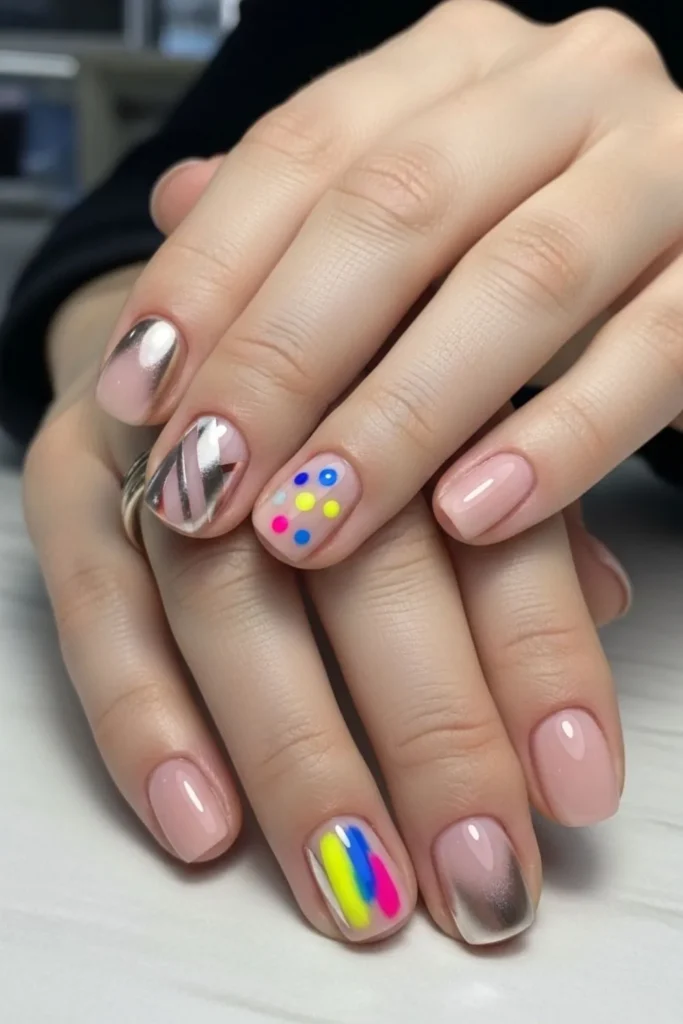
Accent nails still work in modern designs but have evolved from ring-finger-only placement to strategic positioning based on hand dominance and design balance.
The dated approach put accent nails automatically on ring fingers. Modern placement considers which hand is more visible (dominant hand for most people), which finger offers the best canvas (often middle or index due to size), and how accent placement affects overall balance.
Some designs use two accent nails positioned asymmetrically say, the left hand ring finger and right hand index, creating visual interest without symmetry. Others skip traditional accent placement entirely, instead using subtle variation across all nails where each differs slightly but cohesively.
The underlying principle: accent nails should create intentional focal points rather than following arbitrary rules. On short nails, accent placement matters more because there’s less surface area to distribute visual weight.
How Do You Choose Between DIY and Professional Application?
You choose between DIY and professional application based on technique complexity, time availability, and how precision-dependent the design is not just cost considerations.
DIY works well for solid colors, simple gradients, basic negative space, and straightforward metallic accents. These techniques forgive minor application imperfections and require only steady hands plus quality tools.
Professional application becomes worthwhile for intricate geometry requiring precise lines, advanced techniques like chrome powder or gel extensions, detailed cuticle work with embellishments, or any design where unevenness would be obvious.
Time factors in: achieving salon-quality application at home often takes 2-3 times longer than professional work, especially factoring in learning curves. One hybrid approach: get professional base application of complex techniques (like chrome or intricate negative space), then maintain at home with simple solid colors between appointments.
This maximizes budget while ensuring quality on technique-intensive designs.
See More About : Marble Fall Nails: 2025’s Ultimate Autumn Manicure Trend Guide
What Tools Are Essential for At-Home Short Nail Art?
Essential tools for at-home short nail art include fine detail brushes, striping tape, dotting tools in multiple sizes, quality base and topcoats, and a steady hand rest not expensive equipment.
Fine detail brushes (size 00 or 000) enable precise line work and micro detailing impossible with standard polish brushes. Striping tape creates clean geometric lines and negative space boundaries without freehand pressure. Dotting tools make uniform circles and dots, essential for minimalist designs.
Quality base and topcoats matter more than polish brand they affect wear time and finish more than mid-layer color. A simple hand rest (even a folded towel) stabilizes your working hand, dramatically improving precision.
You don’t need UV lamps for regular polish, and most 2026 short nail trends don’t require gel-specific tools. Cuticle pushers and nippers for proper prep affect results more than decorative tools. Start with these basics before investing in specialty items like chrome powders or gel systems.
How Do Short Nail Trends Differ Across Age Demographics?
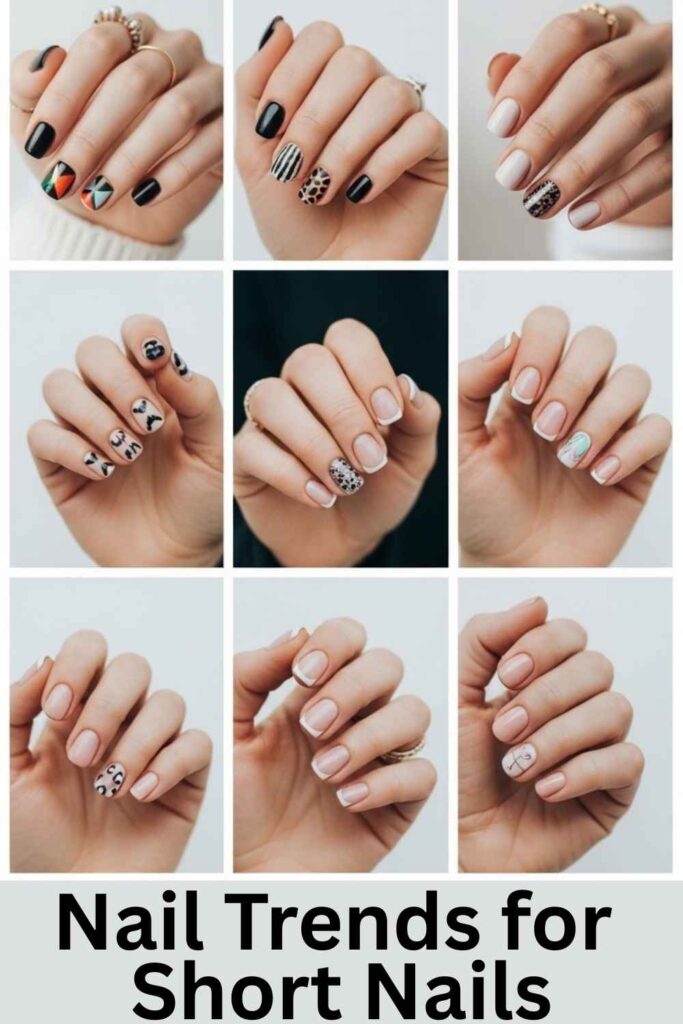
Short nail trends differ across age demographics primarily in color saturation and embellishment density, while shape and finish preferences remain surprisingly consistent.
Younger demographics (Gen Z, younger Millennials) gravitate toward higher saturation colors, more experimental finishes like jelly or chrome, and bolder negative space geometry. Older demographics (Gen X, Boomers) prefer sophisticated neutrals, classic shapes, and subtle metallics or French variations.
However, squoval and rounded shapes dominate across all ages sharp or extreme shapes have fallen out of favor universally. Matte finishes skew slightly younger, while glossy appeals across age ranges.
The biggest differentiator is embellishment: younger nail art incorporates micro pearls, tiny rhinestones, and mixed metallics more freely, while mature preferences lean toward clean, unembellished surfaces or single, tasteful accent details.
These aren’t strict rules; plenty of overlap exists but they reflect broader aesthetic preferences within demographic groups.
Can Short Nails Support Ombré and Gradient Techniques?
Short nails can support ombré and gradient techniques, but only when using vertical gradients or two-color transitions rather than multi-color rainbow effects that require more length.
Vertical gradients (light at cuticle, dark at tip, or vice versa) work beautifully on short nails because they enhance the natural elongation of the nail bed. Two-color ombré like nude-to-pink or gray-to-white creates subtle dimension without busy transitions.
Multi-color gradients (rainbow, sunset, etc.) compress awkwardly on short nails, creating muddy color bands rather than smooth transitions. Application technique matters: use a makeup sponge for blending, work in thin layers, and accept that the gradient zone will be narrower than on long nails.
Some applications intentionally embrace this, creating sharp two-tone effects with minimal blending rather than trying to replicate the graduated look that requires more canvas. Think color blocking with soft edges rather than traditional ombré.
See More About : Taupe Nails: The Ultimate 2025 Guide to Sophisticated Neutral Manicures
What Mistakes Should You Avoid with Short Nail Art?
The biggest mistakes to avoid with short nail art are overworking limited space, choosing designs that fight against natural proportions, and neglecting proper base preparation that makes any design look unfinished.
Overworking happens when you try to fit too many elements, multiple colors, patterns, embellishments onto a compact surface. The result looks cluttered rather than detailed. Proportion mistakes include thick French tips that cut nails in half visually, large decals that overwhelm the nail bed, or horizontal stripes that emphasize width. Poor prep shows immediately on short nails: uneven surfaces, visible ridges, or ragged cuticles distract from even perfect polish application.
Other common errors: using polish too thick (causing bubbles and uneven drying), skipping topcoat (reducing wear time dramatically), and attempting trendy techniques without understanding why they work on specific shapes. The meta-mistake: treating short nails like miniature long nails rather than designing specifically for their unique proportions and advantages.
FAQ’s
What nail length is considered “short” in 2026 trends?
In 2026 nail trends, short nails usually mean the tip extends 1–2 millimeters past the fingertip. This short nail length looks clean, modern, and is popular in US salons for everyday wear.
How long do short nail manicures typically last compared to long nails?
Short nail manicures often last longer than long nails because they’re less likely to bend or break. With proper care, short gel or regular polish manicures commonly stay neat for 2 to 4 weeks.
Can I still get nail extensions if I want the short nail look?
Yes, you can get short nail extensions to create an even shape and smooth base without extra length. Many US nail techs offer short gel or acrylic extensions for clients who want durability with a natural look.
Quick Recap
- Short nails trend in 2026 due to practicality, nail health awareness, and quiet luxury aesthetics that favor refined simplicity
- Best shapes include squoval, rounded almond, and soft square, chosen to balance visual length with durability
- Dominant colors are muted pastels, earthy neutrals, and strategic bright accents with varied finish types
- Effective techniques include vertical elements, negative space, micro French tips, and cuticle details that frame rather than cover
- Avoid thick coverage, horizontal elements, and multiple competing trends that overwhelm compact nail surfaces
Conclusion
Short nails in 2026 represent a fundamental shift in how we think about manicure design not as limitation, but as intentional choice. The trends covered here prove that compact canvases reward precision, restraint, and purpose-built techniques rather than simply scaling down long-nail approaches.
From butter yellow glazes to vertical gradients, each trend leverages what makes short nails unique: their practicality, their ability to showcase fine details, and their inherent modern sophistication.
The most successful short nail art in 2026 follows a clear principle: design with the nail’s proportions rather than against them. Whether you choose micro French tips, negative space geometry, or cuticle-focused details, the goal remains consistent creating visual interest through thoughtful placement, strategic color use, and finish variation.
These aren’t temporary trends but foundational approaches that will continue evolving. Short nails aren’t waiting for their moment anymore; they’ve definitively arrived as the sophisticated standard for nail art that balances beauty with real life.