67 Nail Designs & Inspiration to Try in 2026
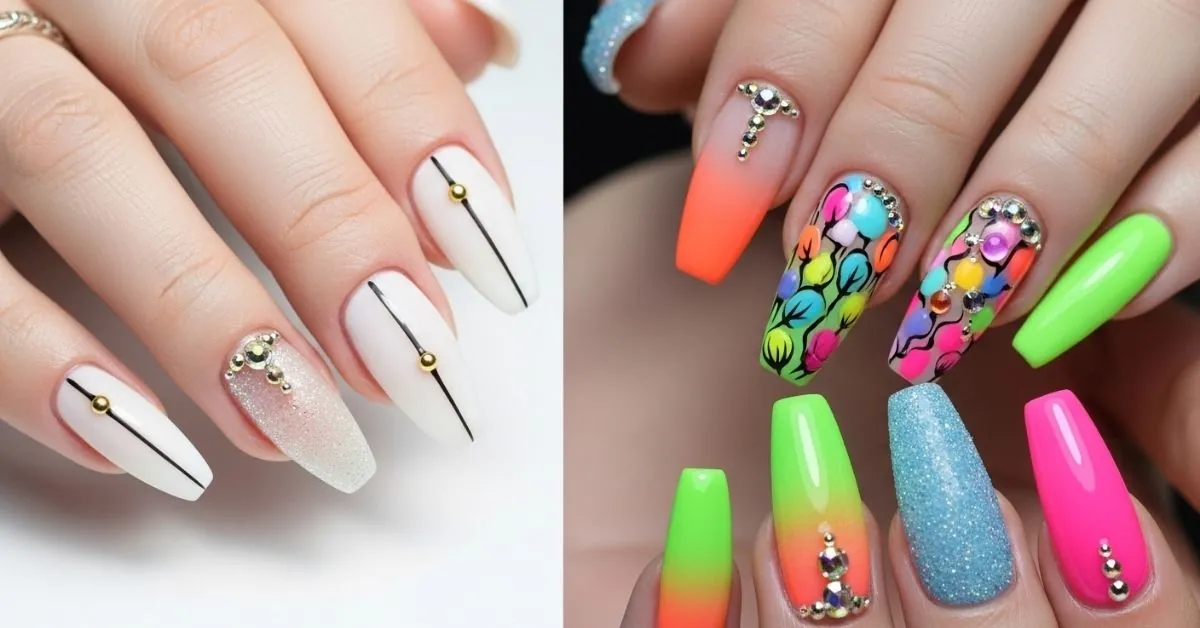
Your nails deserve better than basic polish and repetitive designs. While last year gave us glazed chrome and endless French tips, nail designs & inspiration are pushing boundaries with textured finishes, architectural shapes, and unexpected color combinations that feel fresh without trying too hard. The shift is clear: nails have become wearable micro-sculptures that balance artistic expression with everyday wearability.
What makes this year different is the blend of soft minimalism and bold experimentation. You’re no longer forced to choose between understated elegance and eye-catching artistry. Instead, the best nail designs of 2026 let you navigate both worlds, often in the same manicure. Cloud Dancer whites meet neon gradients, while delicate lace patterns share space with chunky 3D elements.
The real question isn’t whether you should try these trends, but which ones align with your personal style. From gummy textures that catch light like candy to hot-girl goth aesthetics dripping in moody metallics, these 67 nail designs will keep your fingertips conversation-worthy all year long.
What Makes Nail Designs & Inspiration Different from Previous Years?
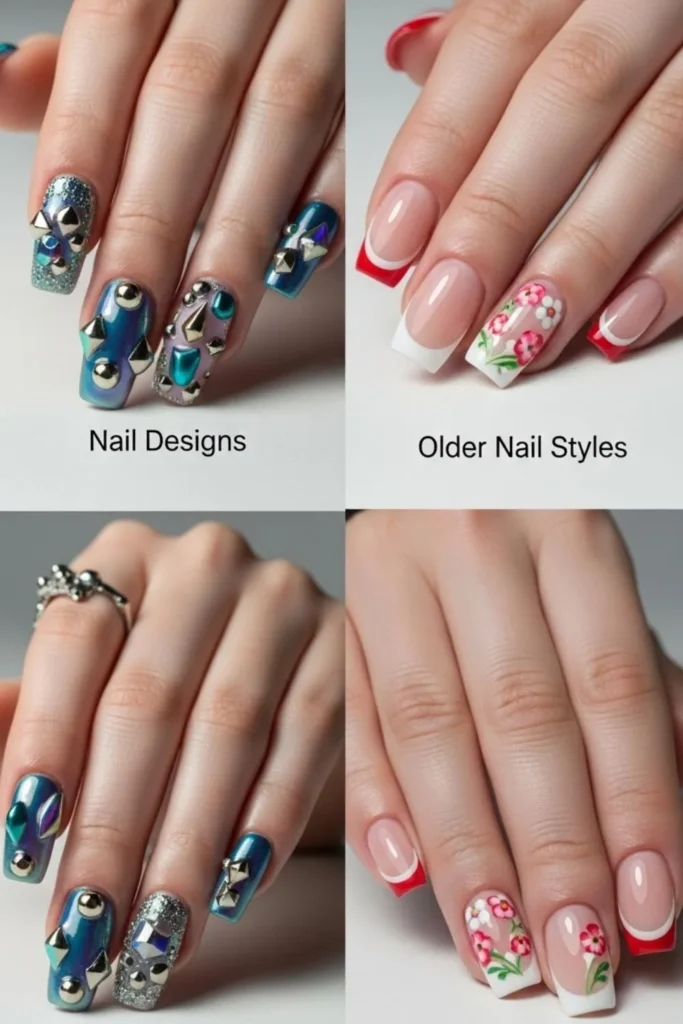
Nail designs & inspiration represent a fundamental shift in how we approach manicures. Unlike 2025’s focus on perfected chrome finishes and hyper-polished looks, this year embraces texture, dimension, and personality-driven artistry. The primary difference lies in the marriage of opposing aesthetics: you’ll find sculptural 3D elements paired with whisper-soft neutrals, and maximalist embellishments balanced against minimalist color palettes.
The technical evolution is equally notable. Gummy gel textures now achieve a rubbery, three-dimensional finish that was impossible just two years ago. Magnetic cat-eye polishes have become sharper and more responsive, creating depth that shifts dramatically under different lighting.
These aren’t incremental improvements; they’re game-changing formulations that allow nail artists to create effects previously reserved for specialty studios.
Consumer behavior has also transformed the landscape. People no longer want cookie-cutter trends that everyone wears identically. Instead, 2026’s most popular designs function as customizable frameworks.
Take celestial nails, for example you might choose subtle silver accents with minimal crystals, while someone else creates a full cosmic scene with layered metallics and hardware charms. Same trend, completely different execution.
See More About : Leopard Print Nails 2025: 25 Fierce Designs & Easy DIY Tutorials That’ll Make You Roar
How Do Gummy Texture Nails Work in Real Life?
Gummy texture nails create a jelly-like, translucent finish that resembles gummy candy. This technique layers sheer gel polishes over a base color, then seals everything with a specialized top coat that maintains the rubbery, slightly raised appearance. The result is a three-dimensional effect that catches and refracts light differently than traditional glossy or matte finishes.
The application process requires patience and precision. Most nail artists start with a neutral or pastel base, then apply multiple thin layers of sheer jelly polish in neon or candy-inspired shades. Each layer must cure completely under UV or LED light before adding the next.
The magic happens in the final step: a thick, textured top coat that preserves the squishy appearance without becoming tacky.
Wear time is surprisingly good, typically lasting two to three weeks with proper care. The key is avoiding oil-based products that can break down the textured top coat. Hot water won’t damage the finish, but prolonged exposure to acetone removers will, so plan your removal carefully.
When done right, gummy nails maintain their dimensional quality throughout their lifespan, though the texture may soften slightly after the first week.
Which Cloud Dancer White Manicures Actually Look Modern?
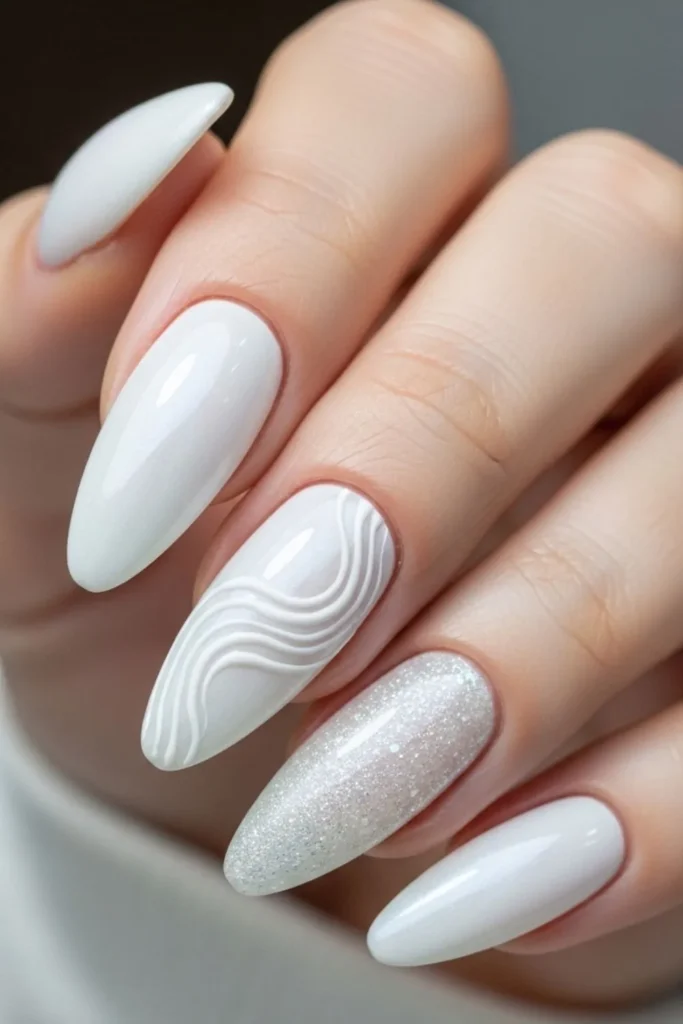
Cloud Dancer white manicures succeed when they incorporate texture, dimension, or unexpected details rather than relying on flat, opaque coverage. Pantone’s 2026 Color of the Year works best as a canvas for other elements: think milky white bases topped with hand-painted lace patterns, or creamy whites paired with tone-on-tone marble effects that create subtle depth without overwhelming the eye.
The most modern interpretations avoid the stark, blank-canvas look that can read as unfinished. Successful designs layer different white formulations mixing glossy, matte, and pearl finishes within the same manicure. You might pair a sheer milk-bath white on most nails with a dense, creamy Cloud Dancer on accent nails, then add dimensional details like raised dots or delicate line work.
Contrast is what separates contemporary white manicures from dated ones. The cloudy French tip trend exemplifies this perfectly: sheer white tips fade into a barely-there nude base, creating an ethereal gradient that looks sophisticated rather than basic. Alternatively, pairing Cloud Dancer with unexpected accents like deep berry tones on a single nail or subtle metallic hardware keeps the overall look fresh and intentional rather than safe.
Why Are Cat-Eye Nails Making a Comeback Now?
Cat-eye nails are resurging because the technology behind magnetic polishes has evolved dramatically. Today’s formulas respond more precisely to magnets, creating sharper, more defined light bands that shift and move as your hands change position.
These aren’t the muddy, inconsistent cat-eyes from five years ago; current versions deliver glossy, liquid-metal finishes with deliberate control over the magnetic pattern.
The timing also aligns with a broader cultural appetite for iridescent, light-reactive effects in fashion and design. Unlike static chrome or simple glitter, cat-eye nails change appearance throughout the day as lighting conditions shift. This dynamic quality appeals to people seeking manicures that feel alive and interactive rather than one-dimensional.
Versatility drives adoption among different style tribes. Minimalists appreciate subtle cat-eye effects in muted tones like deep burgundy or navy, where the magnetic shimmer adds just enough interest without screaming for attention.
Maximalists layer cat-eye bases under other nail art plaid patterns, iced coffee glass effects, or velvet textures creating complexity that traditional chrome can’t match. The trend succeeds precisely because it adapts to individual preferences rather than demanding a single aesthetic.
See More About : Almond-Shaped Fall Nails: The Ultimate Guide to 2025’s Most Coveted Nail Trends
What’s the Difference Between Aura Nails and Regular Gradient Designs?
Aura nails create a diffused, halo-like color transition that appears to glow from within, while regular gradients typically show a more linear blend between two or more colors. The key distinction lies in the application method: aura effects use airbrushing to create soft, cloud-like color dispersions that radiate outward from a central point, whereas traditional ombré designs rely on sponging or brush-blending techniques that move directionally across the nail.
The visual result differs substantially. Aura nails often feature a bright or vibrant center that fades to transparency or a contrasting shade at the edges, mimicking the appearance of light diffusing through fog. Regular gradients show predictable color progression dark to light, or one hue transitioning smoothly into another without the radiant quality that defines aura designs.
Technical execution separates good aura nails from mediocre attempts. Professional results require airbrush equipment and gel formulas specifically designed for this technique. The artist builds layers gradually, controlling spray distance and pressure to achieve that signature soft-focus effect.
Adding 3D charms or metallic accents on top of the aura base creates the multi-toned, personality-packed looks that define 2026’s interpretation of this trend.
How Do You Choose Between Minimalist and Maximalist Nail Art?
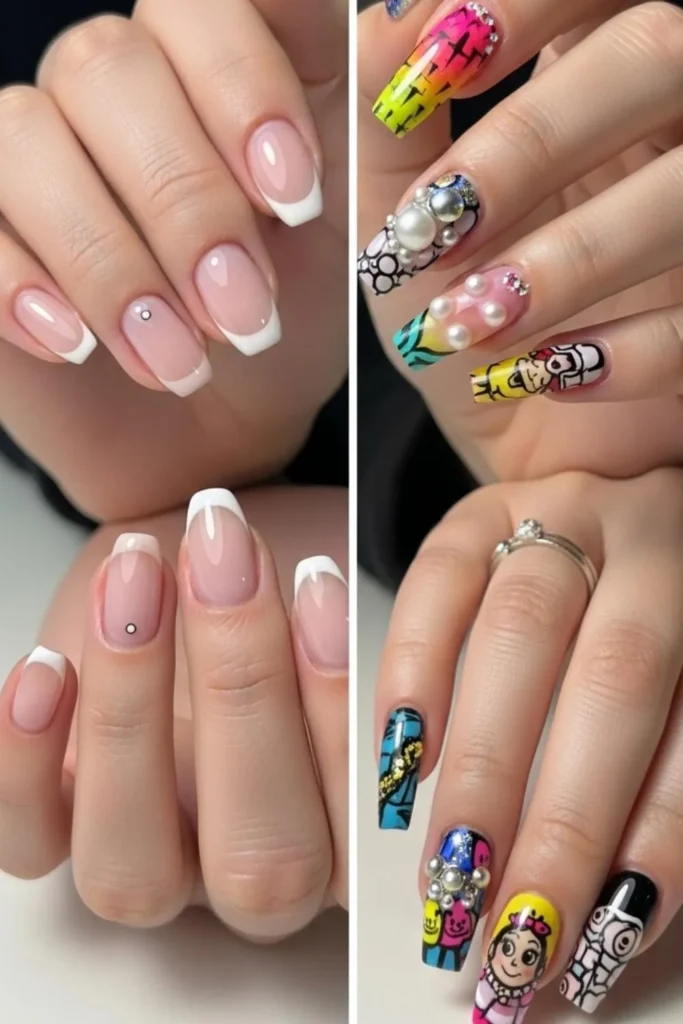
Choose minimalist nail art when you want versatility and longevity in your manicure. These designs subtle French variations, single accent nails, or barely-there geometric patterns work across professional, casual, and formal settings without drawing excessive attention.
Minimalist approaches also tend to age more gracefully as nails grow out, requiring less frequent maintenance.
Maximalist nail art makes sense when self-expression outweighs practicality. If you’re attending a special event, creating content for social media, or simply want your nails to spark conversations, go bold with layered textures, multiple 3D elements, and complex color combinations. The trade-off is maintenance: ornate designs often require more careful handling and may need touch-ups sooner than simpler manicures.
Your lifestyle provides the clearest decision framework. Hands-on work with keyboards, cooking, or childcare favors minimalist designs that won’t snag or interfere with daily tasks. If your hands are visible in client-facing roles but need to project polish rather than personality, subtle elegance wins.
However, creative professionals, influencers, or anyone prioritizing aesthetic expression over durability will find maximalist nail art worth the extra effort.
See More About : Rust Orange Nails: The Ultimate 2025 Fall Trend Guide
Which Nail Shapes Work Best for 2026 Trends?
Almond and coffin shapes dominate nail designs & inspiration because they provide optimal canvas space for intricate nail art while maintaining structural integrity. The tapered point of almond nails naturally draws the eye upward, making them ideal for vertical designs like halo effects, celestial patterns, or elongated French tips.
Coffin nails offer a broader, flatter surface area perfect for complex scenes think abstract art, detailed lace work, or multi-element 3D constructions.
Short square nails are gaining ground among people who need durability without sacrificing style. This shape prevents snagging and breakage while still supporting popular trends like micro nail art, tone-on-tone marble effects, and minimal geometric patterns.
The straight edge works particularly well for modernized French manicures with unexpected tip colors or plaid designs that require precise lines.
Round and oval shapes suit those prioritizing natural aesthetics and low maintenance. These classic silhouettes complement milk-bath whites, sheer glazes, and subtle pearl finishes without the dramatic flair of more architectural shapes.
However, they can also carry bold designs deep goth tones, berry shades, and even textured finishes when you want color impact without extreme length or sharp angles.
Are Neon Ombré Effects Wearable for Everyday Life?
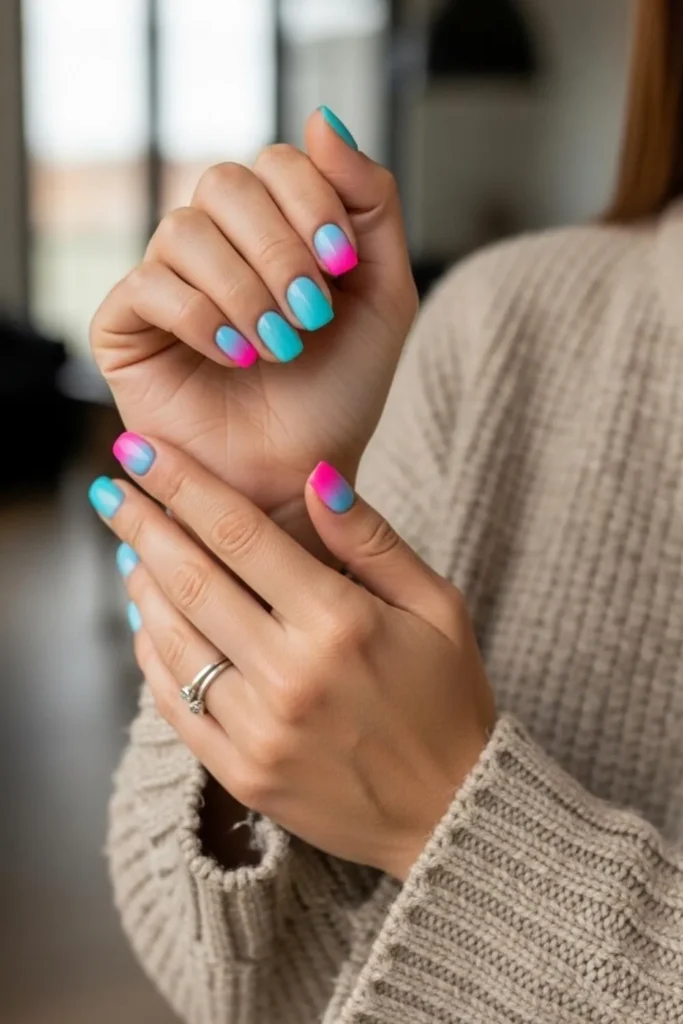
Neon ombré nails become everyday-wearable when you control intensity and color placement. Full-coverage neon gradients that span bright yellow to electric pink might feel too bold for conservative environments, but toned-down versions work surprisingly well.
Try starting with a neutral or pastel base, then adding neon accents only on tips or as subtle halos around the cuticle area. This approach delivers the glowing, color-boom effect without overwhelming your overall look.
The trick is treating neon ombré as a statement piece rather than competing with the rest of your outfit. If your wardrobe trends neutral blacks, whites, grays, denim vibrant nails create a focal point without visual chaos.
The problems arise when you combine neon nails with equally bold clothing, multiple accessories, and dramatic makeup. Pick one hero element and let it shine.
Soft neon shades bridge the gap between wearability and trend relevance. Pastel neons think peachy-orange, muted lime, or gentle coral gradients deliver the glowing aura effect that defines this trend while maintaining sophistication.
These shades photograph beautifully on social media but read as polished rather than party-focused in professional settings. Adding a matte top coat instead of glossy finish further softens the impact for conservative contexts.
What Makes Lace Nail Art Technically Difficult?
Lace nail art demands exceptional brush control and steady hands because the patterns require intricate, delicate lines that often measure less than a millimeter in width. Unlike bold geometric designs where slight imperfections blend into the overall aesthetic, lace work reveals every wobble, uneven thickness, or shaky stroke. The interconnected nature of lace patterns means one mistake can compromise the entire design’s symmetry.
Layering complexity adds another technical hurdle. Authentic lace effects often incorporate multiple layers a base color, the primary lace pattern, highlight details, and sometimes shadowing for dimension.
Each layer must dry or cure completely before adding the next, and timing matters. Apply your detail work too soon, and it smudges; wait too long between layers, and the design loses cohesion.
Pattern memorization and freehand skill separate amateur attempts from professional results. Most nail artists can’t simply copy lace designs stroke-by-stroke; they need to understand the underlying structure of lace patterns, how elements connect, where positive and negative space balance, and how to maintain consistent spacing across a curved nail surface. This requires spatial reasoning and artistic training that goes beyond following tutorials.
See More About : 75+ Creative Nail Ideas to Transform Your Manicure Game in 2026
How Long Does Hot-Girl Goth Nail Art Actually Last?
Hot-girl goth manicures typically last two to three weeks when properly applied and maintained. The longevity depends heavily on the specific elements included: base colors like black cherry or deep burgundy wear as reliably as any gel polish, but layered chrome, matte textures, and 3D charms introduce variables that can reduce durability.
Chrome overlays and metallic accents are the first elements to show wear. Daily friction from typing, washing hands, and general use can create micro-scratches in chrome finishes within five to seven days, though the overall manicure remains intact.
Matte top coats hold up better than expected often lasting the full two weeks but they’re susceptible to becoming glossy in high-contact areas like thumbs and index fingers.
Three-dimensional charms and textured elements require the most careful handling. Raised studs, chains, or sculptural details can catch on clothing, hair, or other surfaces, potentially popping off within the first week if you’re not mindful.
Proper application with strong builder gel and strategic placement away from high-impact zones extends their lifespan significantly. For maximum longevity, ask your nail tech to embed 3D elements slightly into the gel rather than perching them on top.
Which Color Combinations Look Fresh Instead of Trendy?
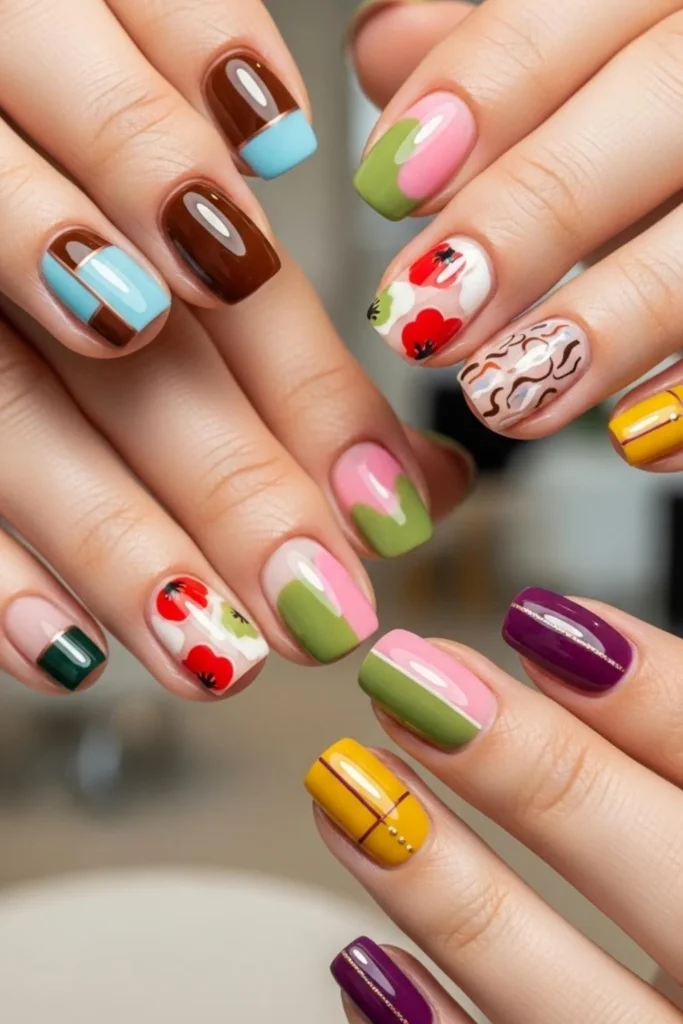
Baby blue and chocolate brown create an unexpectedly sophisticated pairing that transcends typical trend cycles. This combination carries subtle ’70s nostalgia without feeling costume-like, and the contrast between cool and warm tones provides visual interest that works year-round. Unlike matchy-matchy pastels or expected neutrals, this duo feels considered and editorial.
Tomato red with orange undertones paired with creamy white offers a fresh alternative to traditional red-and-white combinations. The warm, slightly muted quality of tomato red prevents it from reading as purely festive or romantic, making it appropriate across seasons. This pairing photographs beautifully and maintains relevance whether you’re using it for French tips, color blocking, or abstract designs.
Pale orange and turquoise blue bring an aquatic, summery vibe that feels current without being overly trendy. These shades reference both milky apricot tones and clear water glosses two color families gaining momentum in 2026. The combination works because neither shade dominates; they’re similar in saturation and intensity, creating balance rather than competition.
What’s the Actual Process for Creating Deer Print Nails?
Deer print nails start with a brushed brown base that mimics deer hide coloring. This isn’t solid brown coverage the technique requires creating subtle variations in tone by applying brown gel in irregular, sweeping strokes rather than smooth, even coats. Some nail artists mix two or three brown shades directly on the nail to achieve a more realistic hide-like appearance.
The white spots come next using a detail brush or dotting tool. Unlike leopard print, which uses irregular organic shapes, deer print requires deliberate, small circular dots applied in a scattered-but-intentional pattern. The dots should vary slightly in size, with most ranging from pinpoint to small pea-sized marks. Concentration matters: too many spots look busy, while too few appear incomplete.
Sealing and finishing determines whether deer print looks polished or unfinished. A glossy top coat can make the design appear too slick and costume-like, while a matte finish often delivers the soft, natural appearance that makes this trend work. Some nail techs split the difference by using a semi-matte or satin top coat that provides durability without excessive shine.
See More About : 45 Stylish Nails to Try This Year
Why Are Plaid Nails Considered Advanced Nail Art?
Plaid nails demand precision because the pattern requires multiple intersecting lines that must align perfectly to create the characteristic checkered effect. Unlike freehand designs where organic shapes disguise small errors, plaid patterns reveal every misaligned stripe or inconsistent spacing. The vertical and horizontal elements need to intersect at exact right angles while maintaining uniform width throughout.
Color layering increases technical difficulty exponentially. Traditional plaid involves at least three colors a base, two contrasting stripes but many 2026 versions incorporate four or five hues to mimic high-fashion tartans. Each color layer must cure completely before applying the next, and painters need to calculate overlap areas where colors blend to create secondary shades. This requires planning and color theory knowledge.
Curved surfaces create spatial challenges that don’t exist in flat textile design. Nails curve in multiple directions, and maintaining straight lines across this three-dimensional canvas requires either exceptional freehand skill or precise striping tape application. Many nail artists struggle with plaid because patterns that look perfect head-on appear distorted from side angles, requiring constant rotation and checking during application.
How Do Celestial Nails Differ from Generic Space Themes?
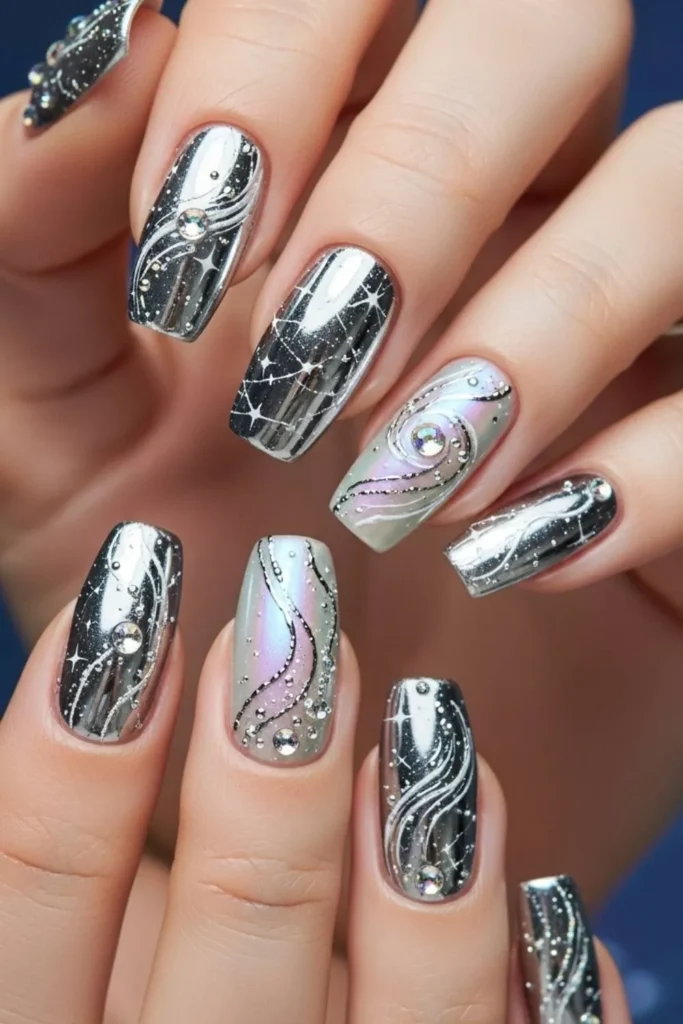
Celestial nails in 2026 emphasize metallic sophistication and architectural elements rather than literal representations of stars, planets, or galaxies. Pinterest identifies this trend as featuring silver metallics paired with sparkling crystals, 3D charms, and hardware accents that suggest outer space through materials and finish rather than explicit imagery. The approach is abstract and elevated.
Generic space themes typically rely on recognizable iconography moon phases, constellation patterns, or gradient nebula effects in purples and blues. These designs tell viewers “this is space-themed” through direct visual references. In contrast, current celestial manicures might incorporate silver chrome with strategic crystal placement that creates a sense of cosmic shimmer without depicting any specific celestial object.
The hardware accent component separates 2026’s celestial aesthetic from previous iterations. Small metal elements chains, studs, or geometric charms get integrated into the design, adding an industrial edge that prevents the look from becoming too ethereal or costume-like. This grounding element makes celestial nails feel more like fashion-forward jewelry and less like science fiction cosplay.
What Makes Halo Nails Different from French Tips?
Halo nails feature a ring of contrasting color around the entire perimeter of the nail, creating a frame effect rather than just highlighting the tip. This circular design draws the eye to the nail’s overall shape and creates a different visual impact than the horizontal line of a French manicure. Dua Lipa’s popularization of this trend showed how versatile the concept can be with different color contrasts.
The technical approach differs substantially. French tips require precise curve creation at a specific point along the nail’s length, while halo designs demand consistent line width that follows the nail’s natural contour all the way around. This means navigating both the free edge and the cuticle area, where most nail artists struggle to maintain steady control.
Design flexibility makes halo nails more adaptable than traditional French tips. You can vary the width of your halo from barely-there thin lines to bold, chunky borders and the color combinations are limitless.
Some versions use tonal colors for subtle dimension, while others employ high contrast like neon on nude or metallics on matte bases. The center area also remains available for additional nail art, unlike French tips where the design is largely predetermined.
See More About : Dark Red French Tips: 2025’s Most Sophisticated Nail Trend Guide
Are Berry Shades Actually Flattering on Everyone?
Berry shades range from soft pinks to deep raspberry tones, and this wide spectrum means most people can find a flattering version within the family. Lighter, pinker berries with cool undertones complement fair skin by providing contrast without overwhelming, while deeper plum-leaning berries enhance medium to deep skin tones by creating rich, sophisticated depth.
The key is matching berry intensity to your natural coloring. If you have low-contrast features similar tone between skin and hair opt for berry shades with similar saturation levels. High-contrast individuals with very light or very dark skin paired with contrasting hair can carry bold, saturated berry tones that would overpower lower-contrast complexions.
Undertone matching matters more than many realize. Cool-toned berries (those leaning toward purple or blue) flatter cool and neutral undertones, while warm-toned berries (those with orange or brown notes) work better on warm and neutral skin.
Testing is crucial: apply a sample near your cuticle line and check it in natural light if it makes your skin look sallow or gray, the undertone is wrong for you.
How Do Milk Bath Nails Compare to Traditional Nude Manicures?
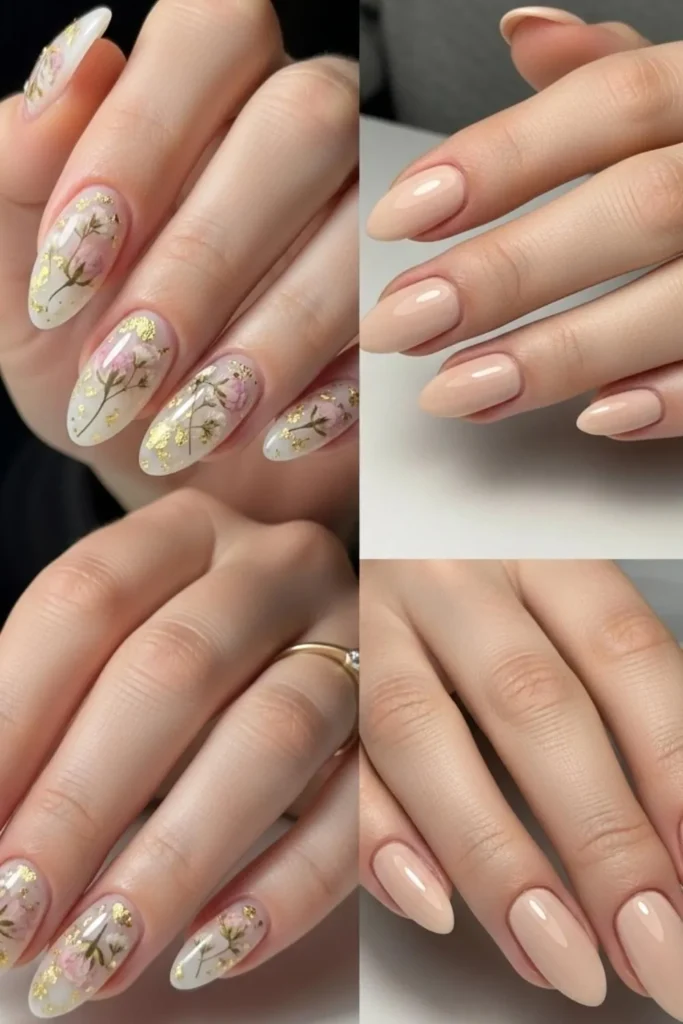
Milk bath nails deliver an oat or almond milk appearance slightly opaque white with barely-there warmth that differs from traditional nude shades designed to match skin tone. This trend aims for a universally flattering cloudy effect rather than the “your nails but better” philosophy that guides nude polish selection. The result feels intentional and styled rather than neutral.
Application techniques separate the two approaches. Traditional nudes typically require two to three coats of a single shade for even coverage. Milk bath effects often layer sheer formulations over different bases or mix polish with top coat to achieve that translucent, milky quality. Some nail artists even thin out opaque polishes to create custom milk bath shades that maintain streak-free application.
Versatility in nail art applications gives milk bath finishes an edge over standard nudes. The semi-transparent quality works beautifully as a base for other trends lace patterns, tone-on-tone marble, or minimal line work all pop against milky whites without competing for attention. Traditional nudes, being closer to skin color, don’t provide enough contrast for many overlay designs to show effectively.
What’s the Real Durability of 3D Gummy Elements?
Three-dimensional gummy elements typically last seven to ten days before showing significant wear, which is shorter than flat gel manicures but longer than most people expect.
The rubbery texture actually provides some flexibility that prevents immediate cracking or peeling. However, the raised nature of these elements makes them more susceptible to snagging and impact damage.
Daily activities determine longevity more than application quality. People who type extensively, work with their hands, or frequently reach into bags and pockets will see faster deterioration. The gummy texture can flatten slightly from repeated pressure, losing some of that distinctive three-dimensional quality even when the color remains intact.
Proper sealing technique extends wear time significantly. Nail technicians who encapsulate gummy elements completely covering tops and sides, not just the base create more durable results.
The thick textured top coat used in gummy manicures provides a protective shield, but only if applied generously enough to fully surround each dimensional element. Skimping on this final step is the primary reason gummy nails fail prematurely.
See More About : Glitter Fall Nails: The Sparkling 2025 Trend That’s Redefining Autumn Beauty
Which Abstract Nail Art Actually Looks Intentional?
Intentional abstract nail art maintains visual balance and cohesive color stories across all nails. Random paint splatters or chaotic color mixing often reads as messy rather than artistic.
Successful abstract designs typically limit the palette to two or three colors, use deliberate negative space, and show evidence of composition planning even when the individual elements appear spontaneous.
Repetition with variation creates coherence in abstract manicures. You might use the same brushstroke technique on each nail but vary the colors, or keep colors consistent while changing the abstract pattern. This approach signals intentionality the design looks cohesive across your hand rather than like ten separate, unrelated experiments.
Professional abstract nail art often incorporates recognizable design principles: color blocking, geometric shapes within organic forms, or strategic placement of metallic accents that create focal points.
The abstraction comes from how these elements combine and intersect, not from abandoning structure entirely. When viewers can identify some underlying logic or rhythm to your design, even if it defies literal interpretation, the manicure reads as intentional artistry.
How Do You Maintain Pearlescent Finishes?
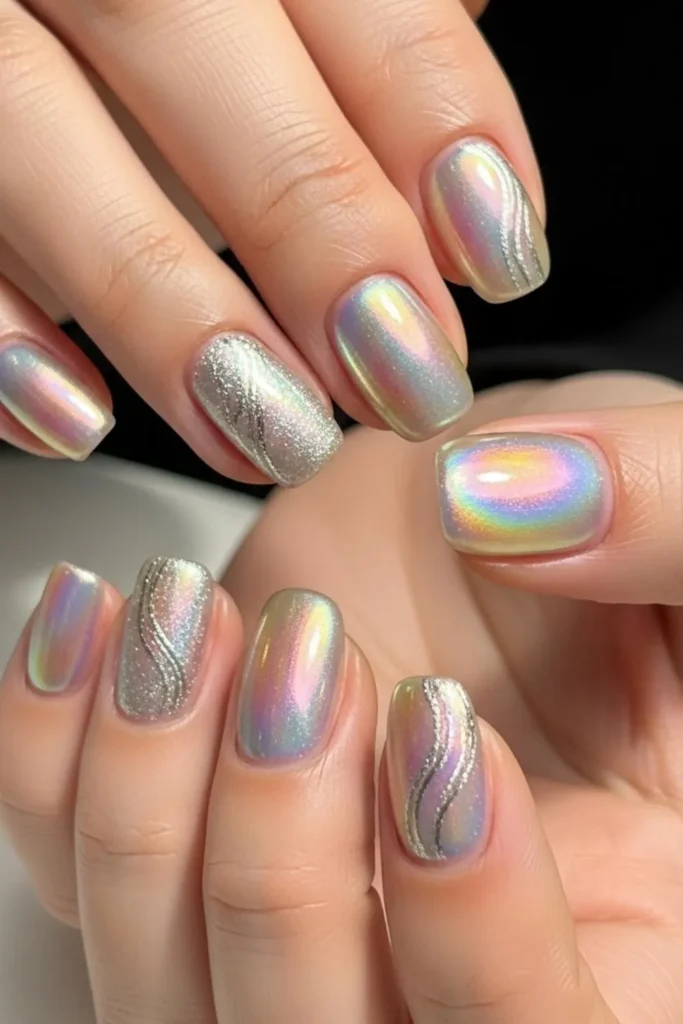
Pearlescent nail finishes require gentle handling because the iridescent particles sit near or on the surface, making them vulnerable to scratching and dulling. Avoid abrasive activities like scrubbing dishes without gloves or using your nails as tools for tasks like opening cans. Even minor surface damage that wouldn’t affect regular polish can disrupt the light-refracting quality that makes pearl finishes special.
Oil-free products protect pearl manicures better than oil-based alternatives. Hand lotions, cuticle oils, and removers containing oils can break down the specialized top coats used to seal pearl effects, causing premature dulling. Look for water-based moisturizers and avoid excessive cuticle oil application directly on the nail surface.
Reapplication of top coat every three to four days restores shine and protects the pearl finish. A thin layer of high-quality top coat refreshes the manicure and provides a new protective barrier without requiring a complete redo. This maintenance step takes two minutes but can extend your pearlescent manicure’s lifespan by a full week.
What’s the Difference Between Frosted and Milky Nail Finishes?
Frosted nail finishes contain fine shimmer or microglitter that creates a sparkling, slightly textured appearance reminiscent of frosted glass or ice. This Y2K-inspired look typically appears more opaque than milky finishes and has a subtle crystalline quality that catches light at multiple angles. Think frosted lip gloss but for nails.
Milky finishes prioritize translucency and smoothness without shimmer particles. These create a cloudy, diffused appearance similar to milk in water or opalescent glass. The effect is softer and more subdued than frosted finishes, with color appearing muted and gentle. Cloud Dancer-inspired milk bath nails exemplify this aesthetic perfectly.
Application products differ between the two effects. Frosted looks require polishes or gels with actual shimmer particles, while milky finishes can be achieved by thinning opaque polishes with clear top coat or using specifically formulated sheer jellies. The textural difference is subtle to touch frosted nails may have slight texture from shimmer particles, while milky finishes remain completely smooth.
See More About : Mocha Chrome Nails: The Ultimate Luxurious Mirror Manicure Trend for 2025
Why Are Velvet Textures Trending for Plaid Designs?
Velvet textures add depth and luxury to plaid nail designs by creating a three-dimensional, tactile quality that flat polish can’t match. When layered over cat-eye bases, the velvet effect enhances the light-shifting properties of magnetic polish while the plaid pattern provides structure. This combination delivers visual complexity that feels sophisticated rather than busy.
The technical innovation makes this trend possible now rather than years ago. New formulations allow nail artists to create genuine velvet textures that maintain flexibility and durability. Earlier attempts at textured finishes often cracked or peeled within days, but current velvet top coats cure properly under LED lights and adhere strongly to gel bases.
Sensory appeal plays an underappreciated role in this trend’s success. Velvet plaid nails offer a unique tactile experience that creates another layer of luxury beyond visual impact.
Running your fingers across the soft, fuzzy texture provides a small, satisfying interaction throughout the day. This multi-sensory quality makes the manicure more memorable and engaging than purely visual designs.
How Do Jewelry-Inspired Nails Differ from Regular 3D Nail Art?
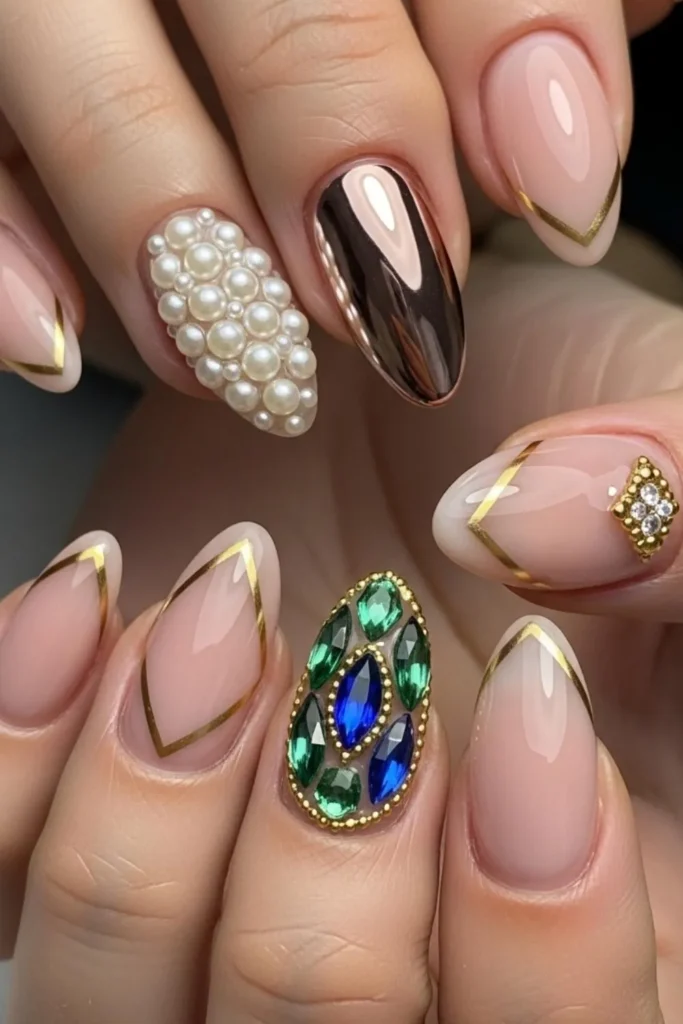
Jewelry-inspired nails specifically mimic fine jewelry elements pearls delicately placed along cuticles, metallic hardware that resembles precious metals, and gemstones positioned like settings in rings. These designs aim for the elegance and refinement of actual jewelry rather than the playful or whimsical quality common in standard 3D nail art.
Material quality and placement follow jewelry design principles. Elements are positioned with intention and restraint, often concentrated at specific points like the cuticle line or free edge rather than scattered randomly across the nail. This creates the deliberate composition seen in well-designed jewelry pieces rather than the “more is more” approach of typical 3D applications.
The color palette reflects precious materials golds, silvers, rose golds, clear crystals, and pearls dominate rather than bright plastics or novelty charms. When color appears, it comes from gemstone-toned elements in emerald, sapphire, or ruby shades rather than rainbow varieties. This restraint in color choice maintains the luxury aesthetic that defines jewelry-inspired designs.
What Makes Iced Coffee Glass Nails Technically Complex?
Iced coffee glass nails require mastering multiple techniques in precise sequence: creating a bronze cat-eye base, manipulating it with magnets for a glassy finish, applying a matte top coat, then hand-painting fine glossy lines on top. Each step demands different skills, and mistakes in early layers can’t be corrected without starting over completely.
The contrast between matte and glossy finishes creates the signature iced coffee effect, but achieving clean lines on a matte surface is notoriously difficult. Polish beads up differently on matte textures than on glossy bases, requiring brush pressure adjustments and slower application to prevent dragging or skipping.
Color matching adds another layer of complexity. The bronze cat-eye base must be deep and rich enough to suggest actual coffee, while the glossy line work needs to be substantially lighter to create visible contrast. Too little difference and the design disappears; too much and it looks disjointed rather than like realistic condensation on glass.
See More About : Rust Nails: 2025’s Ultimate Burnt Orange Manicure Trend Guide
Are Neon Aura Designs Appropriate for Professional Settings?
Neon aura designs can work in professional settings when you control size, placement, and intensity. Full-nail neon auras that glow bright pink or electric green may not suit conservative industries, but subtle versions like a small neon aura accent on a single nail over neutral bases provide personality without overwhelming professional presentation.
Industry and role matter significantly. Creative professionals, designers, marketers, and anyone in fashion-adjacent fields often have more flexibility with bold nail choices. Client-facing roles in finance, law, or corporate environments typically require more restraint. Consider your specific workplace culture rather than making assumptions based on industry alone.
Muted neon palettes bridge professional requirements and trend participation. Soft coral auras, peachy-orange gradients, or gentle lime effects deliver the glowing color transition that defines this trend while maintaining sophistication. These shades photograph well for social media but read as polished rather than party-focused during video calls and in-person meetings.
How Do Natural Element Designs Stay Relevant Long-Term?
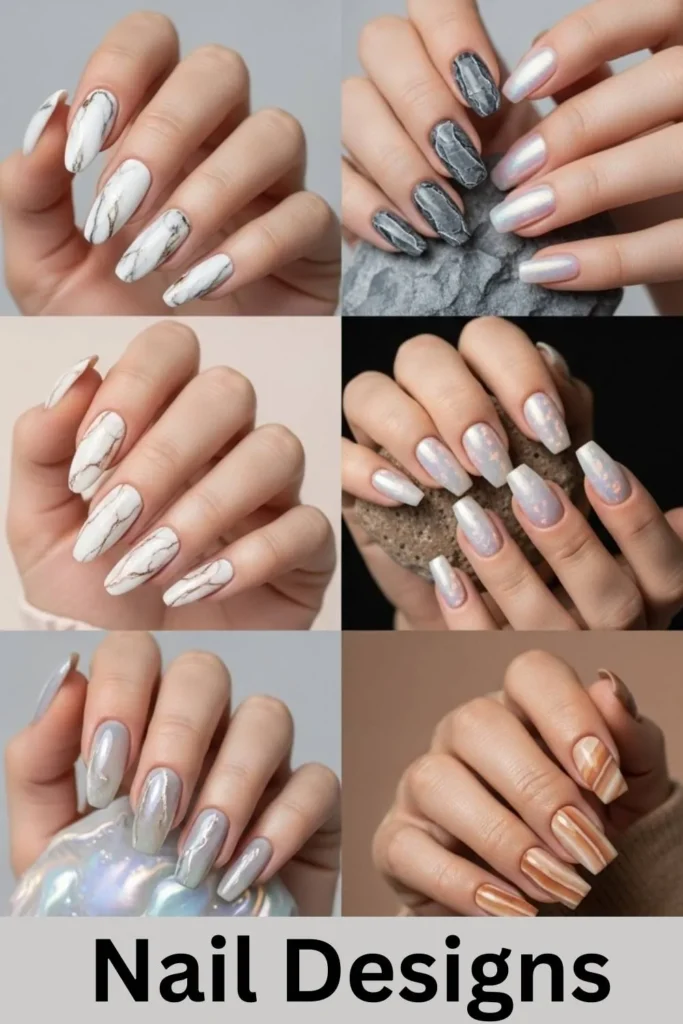
Natural element designs marble, opal, geode, wood grain draw from timeless materials that have aesthetic value beyond trend cycles. These patterns appear in architecture, fashion, and interior design across decades, providing built-in longevity that purely trend-driven designs can’t match. The specific interpretation changes, but the core appeal of natural textures remains constant.
Adaptability to different color palettes extends relevance significantly. Marble effects work equally well in cool grays, warm beiges, or unexpected tones like black-and-gold or white-on-white. This flexibility allows natural element designs to align with seasonal color trends while maintaining their fundamental character.
The quiet luxury association keeps natural element nails feeling current rather than dated. These designs signal refined taste and quality without shouting for attention an aesthetic philosophy that transcends trend cycles. As fashion moves away from logo-heavy maximalism and toward subtle wealth indicators, natural textures perfectly embody this understated elegance.
What’s the Learning Curve for DIY Nail Art in 2026?
Basic designs like solid colors, simple French tips, and minimal geometric patterns remain achievable for beginners with steady hands and patience. These fundamental techniques haven’t changed significantly, and tutorial availability through social media makes learning easier than ever. Expect two to three weeks of regular practice to achieve clean, consistent results.
Intermediate designs involving gradients, basic marble effects, and simple stamping require approximately one to two months of consistent practice. These techniques demand better brush control and understanding of gel curing times, but they’re still within reach for dedicated hobbyists. Investing in quality tools makes a substantial difference at this skill level.
Advanced trends like lace work, velvet plaid over cat-eye, or precise aura effects typically require professional training or extensive self-teaching spanning three to six months minimum. These designs involve multiple specialized techniques, expensive equipment like airbrush systems, and troubleshooting skills that only develop through repeated failure and adjustment. For most people, these remain best left to professional nail technicians.
See More About : Short Coffin Fall Nails: 2025’s Ultimate Guide to Autumn’s Chicest Nail Shape
Which Spring Nail Colors Will Transition Well Year-Round?
Pale orange and turquoise blue both possess year-round versatility despite being identified as spring shades. Pale orange reads as modern neutral sophisticated enough for fall, warm enough for winter, and obviously perfect for spring and summer. Turquoise blue works as a fresh alternative to navy in cooler months while feeling appropriately aquatic in warm weather.
Milky apricot tones bridge seasons by functioning as enhanced neutrals rather than true colors. These shades are pale enough to pair with any outfit color palette, warm enough to feel cozy in winter, and light enough to feel appropriate in summer. The barely-there quality prevents them from reading as seasonally specific.
Berry shades especially deeper raspberry pinks transition seamlessly from spring through fall. The pink undertones feel fresh and floral in spring, while the depth and saturation carry enough weight for autumn styling. Only the lightest, most pastel berries struggle in winter months, where they can appear washed out against heavy fabrics and low light.
How Do Flip-Flop-Friendly Pedicures Differ from Hand Manicures?
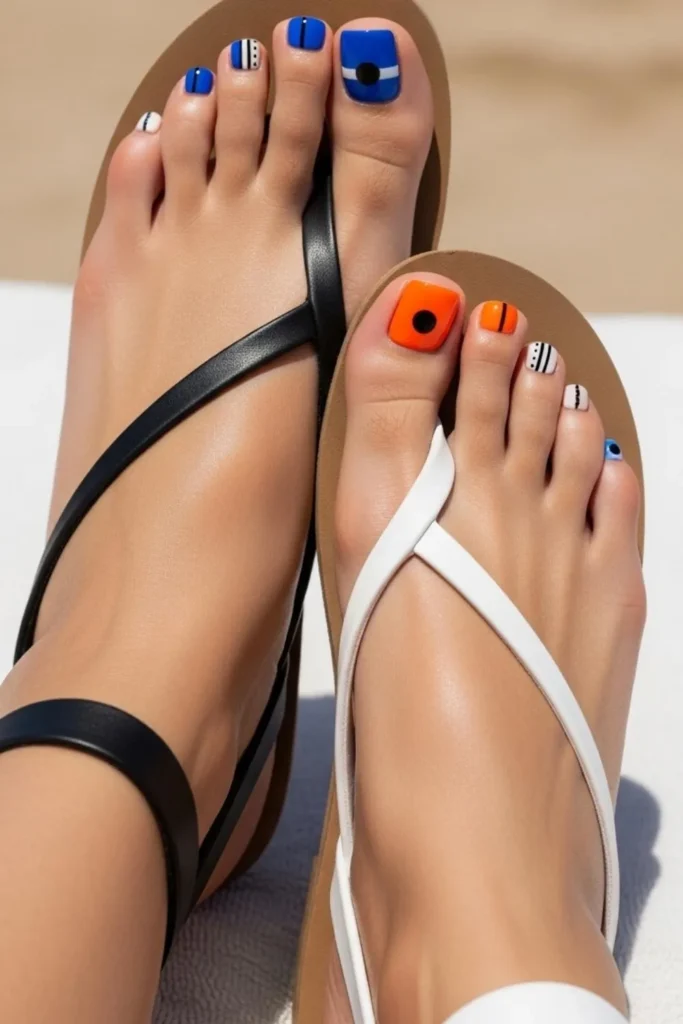
Flip-flop-friendly pedicures prioritize durability and bold visibility since toes endure more wear and are viewed from greater distances. Designs that work beautifully on hands delicate line work, subtle tone-on-tone effects, minimal nail art often disappear or look unfinished on toes. Successful pedis use bolder colors, larger patterns, and higher contrast.
Shape considerations differ dramatically between fingers and toes. Toenails are naturally wider and shorter proportionally than fingernails, which affects how designs scale. A French tip that looks elegant on almond-shaped fingernails might appear chunky on square toenails. Most pedicure designs work better with simpler compositions that complement rather than fight the shorter canvas.
Color intensity typically increases for pedicures versus manicures. Shades that seem too bold on hands often look perfectly proportioned on toes. Neon ombré, bright berry shades, and high-contrast color blocking translate better to pedis than hands because feet occupy peripheral vision rather than being constantly in your direct line of sight.
See More About : Short Almond Nails: The Complete 2025 Guide to Stylish, Practical Manicures
What Makes Marble Effects Look High-End vs Cheap?
High-end marble effects feature subtle color variations, realistic veining patterns, and thoughtful negative space that mimics actual marble stone. Cheap versions overload the nail with too many vein lines, use colors that don’t exist in natural marble, or apply veining so thick and opaque it looks painted on rather than integrated into the surface.
Color choice separates luxury from amateur marble designs. Premium versions typically use two to three colors maximum often variations within the same family like three shades of gray, or cream with taupe and brown. Introducing too many contrasting colors or overly saturated hues immediately cheapens the effect.
Veining technique reveals skill level instantly. Professional marble effects use very thin brushes or specialized tools to create wispy, irregular lines that vary in thickness and opacity just like real marble.
The veins should appear to sit within the nail’s surface, not on top. When veining looks too perfect, too regular, or too opaque, the design reads as artificial.
Why Are Customizable Tones Replacing Standard Colors?
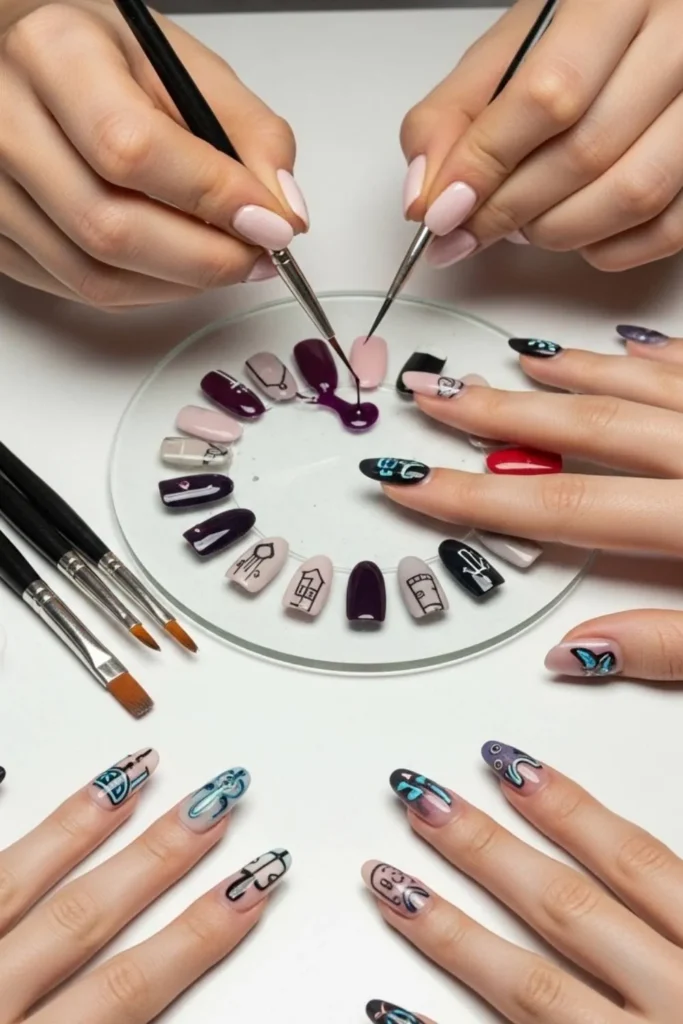
Customizable tones give people control over intensity, undertone, and finish in ways pre-mixed polishes never could. This shift reflects a broader move away from one-size-fits-all beauty products toward personalized solutions that actually complement individual skin tones, style preferences, and specific occasions.
Instead of choosing between a brand’s predetermined shade options, you’re mixing formulations to create your perfect version.
The technical capability drives adoption as much as consumer demand. Nail brands now offer mixing systems, sheer bases, color concentrates, and various top coats that allow endless combinations without requiring professional color theory knowledge. These systems take the guesswork out of customization while still delivering genuinely unique results.
Social media influence accelerates this trend significantly. When someone sees a specific nail shade online, they want that exact tone, not the closest match from a standard collection.
Customizable systems let nail artists recreate viral looks precisely or develop signature shades that become part of their personal brand. This level of specificity simply wasn’t possible when everyone worked from the same limited palette.
See More About : Milky White Nails Fall 2025: The Ultimate Guide to This Season’s Most Coveted Manicure Trend
Frequently Asked Questions
Do gummy texture nails feel different to touch?
Yes, gummy texture nails feel slightly soft and rubbery instead of smooth like regular polish. This 3D nail trend is popular in the US for its grippy feel and candy-like finish.
Can you do nail art over Cloud Dancer white bases?
Yes, Cloud Dancer white is an ideal base for nail art because it’s opaque, neutral, and makes colors pop. It works especially well for floral designs, chrome accents, and minimalist line art.
How much do professional 3D Nail Designs cost?
Professional 3D nail designs in the US usually cost between $70 and $150, depending on detail and salon location. Complex charms, sculpted gel, and long extensions can raise the price.
Are berry nail shades suitable for summer?
Yes, berry nail shades like raspberry and strawberry red work well in summer, especially on short nails or glossy finishes. They offer a bold alternative to neon while still looking seasonal.
What’s the easiest 2026 trend for beginners?
Milky nude nails with a glossy top coat are the easiest 2026 nail trend for beginners to try at home. This style hides mistakes, grows out naturally, and looks clean and modern.
Key Takeaways
- Nail designs & Inspiration combine new techniques with styles suitable for everyday wear.
- Gummy textures create raised, glossy finishes that can last two to three weeks with proper care.
- Cloud Dancer white works as a flexible base for both simple and detailed designs.
- Cat-eye nails now use stronger magnets for sharper lines and cleaner effects.
- Minimalist and maximalist styles coexist, allowing choices based on lifestyle needs.
- Natural themes and customizable colors help designs stay relevant beyond one season.
Conclusion
Your fingertips deserve designs that reflect your personality without sacrificing practicality. The 67 nail designs & inspiration showcased here represent 2026’s most compelling trends from gummy textures that catch light like candy to hot-girl goth aesthetics dripping in moody metallics. Each offers different benefits: some prioritize durability, others demand attention, and many successfully balance both.
The beauty of this year’s nail landscape is a genuine choice. You’re not forced into a single aesthetic or locked into trends that don’t suit your lifestyle. Whether you’re drawn to whisper-soft milk bath whites, bold neon aura effects, or sculptural 3D elements, there’s a design that aligns with your needs.
Choose based on your daily reality, experiment when inspiration strikes, and remember that the best nail design is always the one that makes you happy when you look down at your hands.