
57 Minimalist Nails Ideas to Try in 2026
Minimalist nails ideas dominate 2026 because excess has finally worn people out. Loud designs age fast, clash with wardrobes, and demand salon visits that never fit real schedules. Clean lines, soft neutrals, and barely-there finishes now signal taste, not boredom.
The real frustration isn’t style, it’s maintenance. Bold nails chip louder, date quicker, and force outfit compromises. Many assume minimal means plain, but that mistake leads to flat, lifeless manicures that still look unfinished after a week.
Refined minimalism fixes this through intention. Micro-French tips, milky bases, pearl sheen, and negative space create polish that lasts, adapts, and elevates everyday life. Precision replaces decoration, delivering quiet luxury without constant upkeep.
Why Minimalist Nails Work Better Than Bold Designs
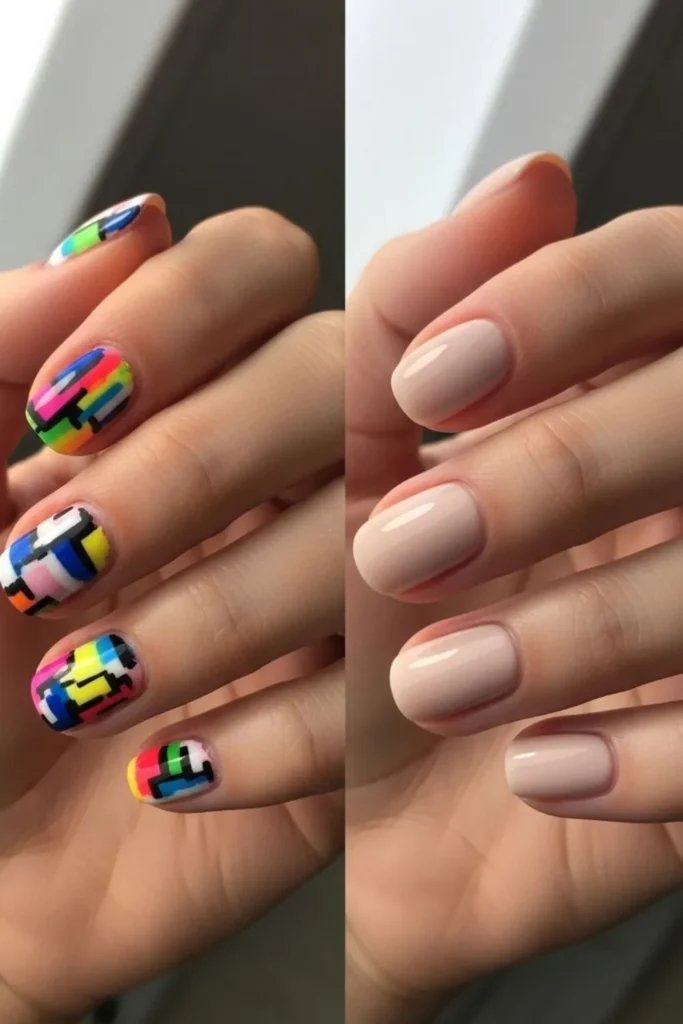
Minimalist nails dominate because they eliminate the anxiety of matching your manicure to specific outfits or occasions. Bold designs fail when your wardrobe changes or trends shift after a week.
Expert manicurist Ami Streets emphasizes that nail trends for 2026 lean heavily into clean, understated luxury with a focus on soft, natural-looking beauty. The shift toward minimal aesthetics reflects broader design movements where quality trumps quantity.
These manicures prioritize well-groomed nails, neutral tones, and flawless finishes. Unlike statement nails that demand attention, minimalist designs create sophisticated polish through restraint. The approach works because it focuses on nail health and precise execution rather than covering imperfections with elaborate patterns.
Milky White Nails vs Traditional French Tips
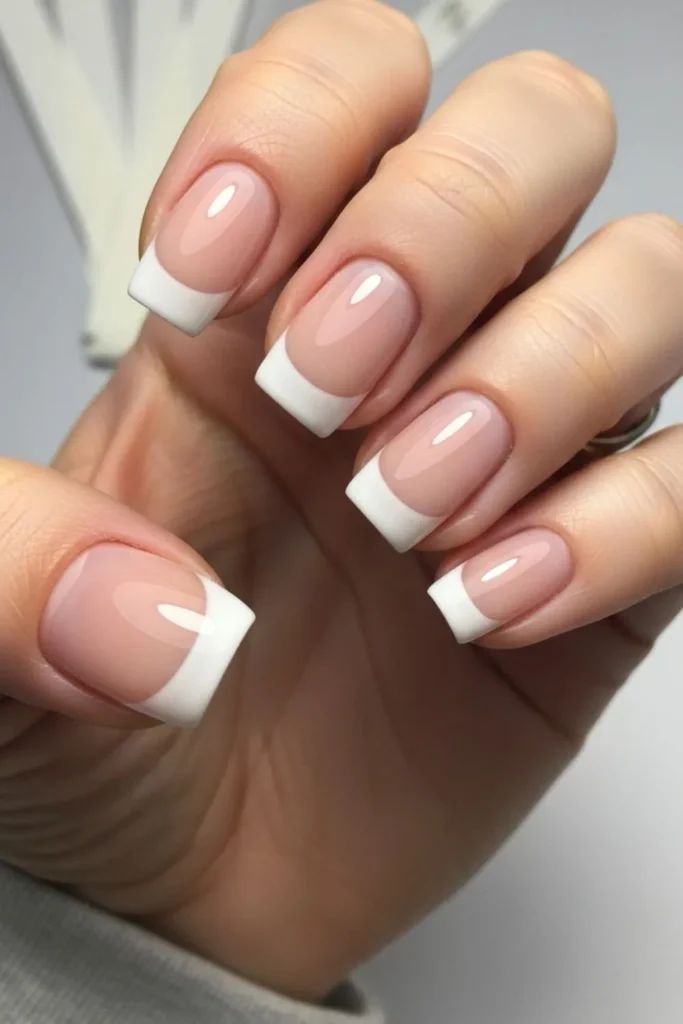
Milky white nails use sheer, buildable polish that enhances your natural nail bed instead of covering it completely. Traditional French tips create stark contrast with opaque white tips and nude bases.
The milky approach appears more sophisticated because it maintains your nail’s natural translucency while adding a soft, cloudy finish. French tips can look dated when executed with harsh lines, whereas milky whites blend seamlessly regardless of nail length or shape.
Celebrity manicurist Tom Lien notes that the main features of 2026 nails are neutral colors with a light shimmer or pearly coat layered over them, calling it a refreshing change after darker fall tones. This technique works best when you want professional polish without the commitment of fully opaque colors.
See Also : Light Blue Winter Nails: The Ultimate Guide to Icy Winter Manicures
How Negative Space Elevates Simple Manicures
Negative space means intentionally leaving portions of your natural nail bare as part of the design. This technique works by creating visual interest through absence rather than addition.
The strategy succeeds because it highlights nail health while adding geometric precision. Clean lines separating polished areas from bare nail create modern, architectural looks that feel deliberate. Unlike filled designs, negative space manicures appear lighter and allow your natural nail to breathe.
You achieve this by using tape to section off areas before applying polish, then removing the tape once dry. The key difference between success and failure lies in clean edges, blurred lines destroy the minimalist aesthetic. This approach fails when your natural nails show discoloration or damage, as negative space draws attention to the bare nail.
When Pearlescent Finishes Beat Chrome
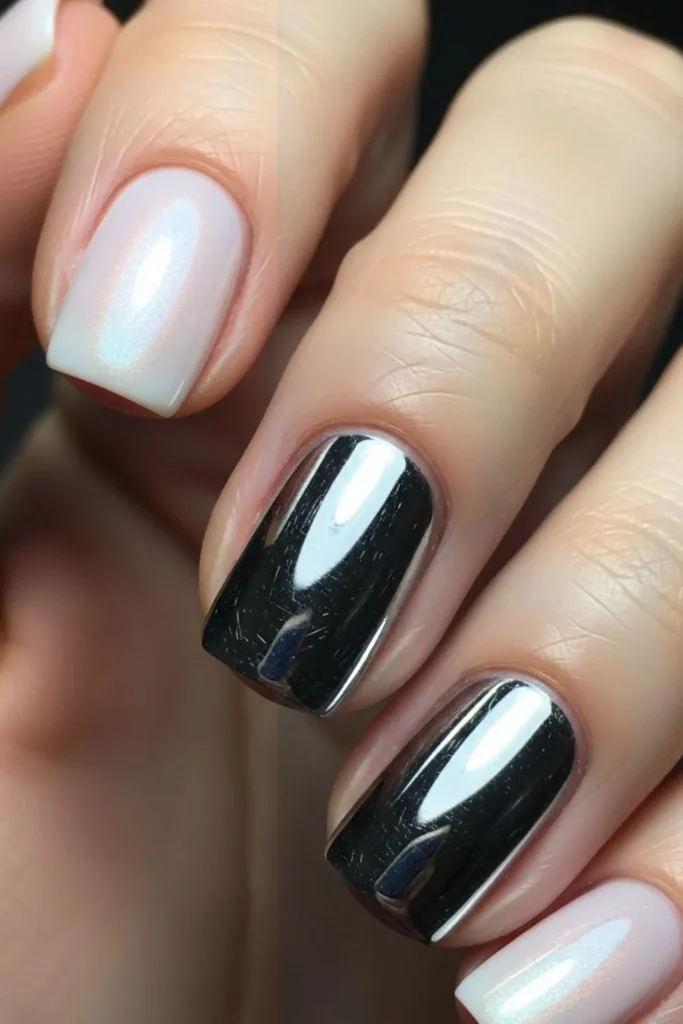
Pearlescent finishes create soft, dimensional glow through micro-shimmer particles that reflect light subtly. Chrome delivers high-impact, mirror-like shine through metallic pigments.
Streets explains that soft pearlescent gels or micro-sheen finishes give nails a gentle glow without being flashy, ideal for a minimalist but luxe vibe. Pearl works better for everyday wear because it maintains sophistication under office lighting and doesn’t clash with casual outfits.
Chrome fails in professional settings where excessive shine reads as inappropriate. Pearlescent finishes also wear more gracefully, chrome shows scratches and chips more obviously because the reflective surface highlights imperfections. Choose pearl when you need versatility across contexts, and save chrome for evenings when dramatic shine serves the occasion.
The Micro-French Manicure Technique
Micro-French tips feature ultra-thin white lines painted just along the free edge instead of the traditional thick white tip. This creates a barely-there accent that elongates the nail.
This minimal take on the popular nail art looks impossibly chic and perfectly fits that quiet luxury aesthetic. The technique requires a precision brush and steady hand because mistakes are immediately visible on such delicate lines.
Start by painting your base color completely to the tip, let it dry fully, then use a thin liner brush with white polish to trace the very edge of your nail. The line should be 1-2mm thick maximum. This fails when you rush, wet base coat will pull when you add the tip, creating blurred edges that ruin the effect.
See Also : New Years Eve Nails: Stunning Manicure Ideas to Sparkle Into 2026
Neutral Color Psychology in Nail Design
Neutral shades like beige, soft pink, and creamy white reduce decision fatigue because they coordinate with any outfit. Bold colors create mental load by requiring outfit matching.
These tones work psychologically because they signal refinement and attention to detail without demanding attention. Our brains process neutral manicures as “put together” without consciously registering the nails, which allows your overall appearance to feel cohesive.
Beige tones with pink undertones flatter warm skin tones, while cooler beiges suit olive or cool-toned skin. Milky whites work universally because their sheerness adapts to your natural nail bed color. This approach fails when you choose undertones that clash with your skin, cool beiges on warm skin look gray and sickly.
Single Dot Placement Strategies
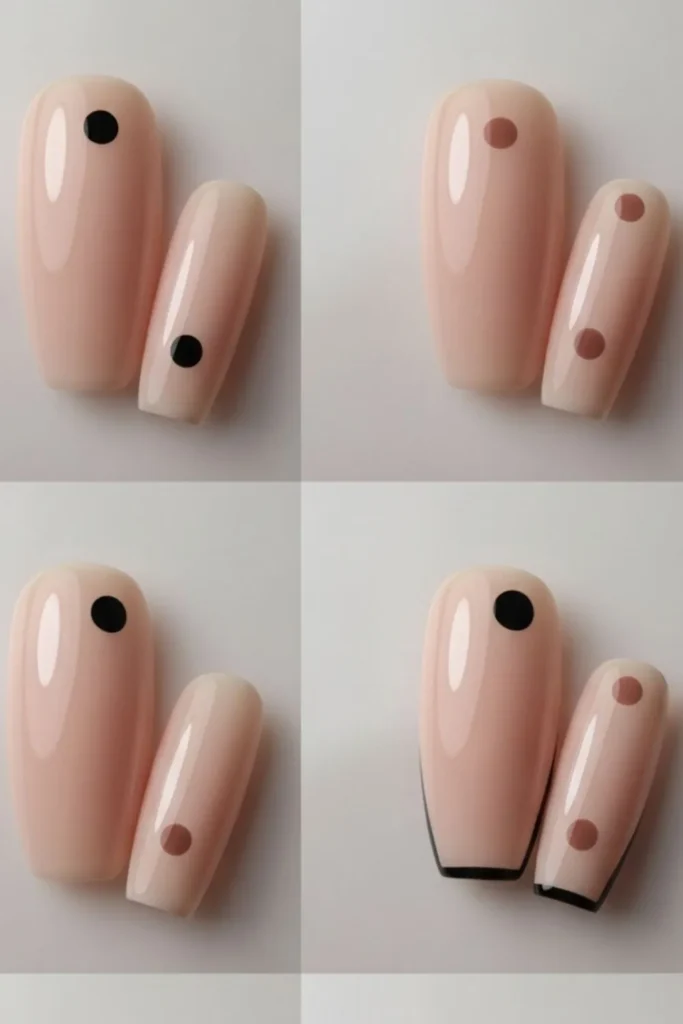
Single dot accents work by creating a focal point without overwhelming the design. Place one small dot near the cuticle, off-center, or toward the tip of one or two nails per hand.
This technique succeeds because restraint makes each dot meaningful. Covering nails with multiple dots shifts from minimalist to busy. The placement matters, dots near the cuticle draw eyes to the nail bed and make fingers appear longer, while tip placement emphasizes nail length.
Use a dotting tool or toothpick with contrasting polish. Black dots on nude bases create graphic impact, while tonal dots (light pink on white) offer subtle texture. This fails when dots vary in size across nails, as inconsistency breaks the intentional aesthetic minimalism requires.
Sheer Pink Glazed Nail Construction
Glazed nails layer sheer pink polish with reflective powder to create a glassy, dimensional finish that shifts in different lighting. The technique mimics the look of sugar-coated glass.
Apply a sheer pink base in 2-3 thin coats, then while the final coat remains slightly tacky, dust chrome or aurora powder using an applicator sponge. Seal with glossy top coat. The powder adheres to the tacky layer and creates that wet, reflective quality when sealed.
This works best on healthy, smooth nails because the glossy finish magnifies any surface irregularities. It fails when applied over damaged nails with ridges, as the reflective powder highlights texture you want to hide. The look also requires regular top coat refresh every few days to maintain the glass-like shine.
See Also : Classy New Years Nails: Elegant Designs to Ring In 2026 with Style
Comparing Almond Milk vs Strawberry Milk Nails
Almond milk nails use off-white polish with warm, creamy undertones that appear natural and wearable. Strawberry milk nails feature sheer peachy-pink tones that create a flushed, healthy glow.
Almond milk works better for cooler weather and professional environments because the warm white reads as sophisticated neutrality. Strawberry milk excels in spring and summer when the peachy flush complements sun-kissed skin and lighter clothing.
The key difference lies in undertones, almond skews yellow-white while strawberry leans pink-peach. Choose almond when your wardrobe features blacks, grays, and earth tones. Pick strawberry when wearing pastels, whites, and warm brights. Both fail when applied too opaquely, as the appeal depends on that translucent, milky quality.
Why Short Nails Suit Minimalism Better
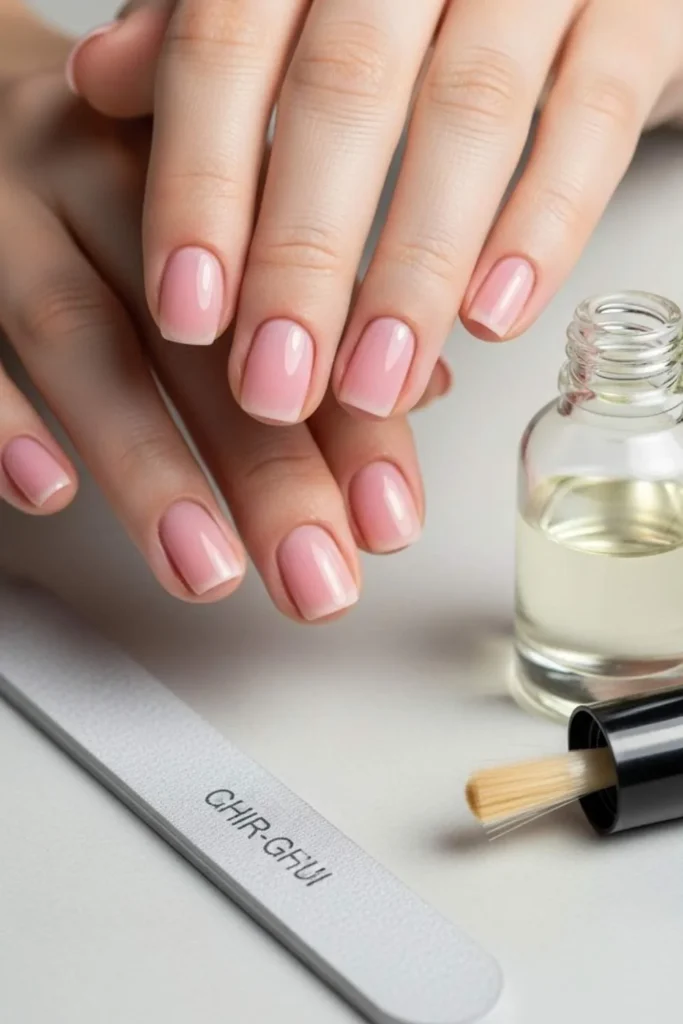
Short nails provide more canvas control and create cleaner lines because there’s less surface area to manage. Long nails amplify mistakes and require more precision.
Minimalist designs depend on perfect execution, a slightly wobbly line on a short nail barely registers, but the same wobble on a stiletto nail becomes glaringly obvious. Short, filed nails also emphasize the health and grooming aspect that minimalism celebrates.
The square or rounded square shape works best because sharp points or extreme almonds contradict the understated aesthetic. Keep length at or just beyond the fingertip. This approach fails when nails are bitten or damaged, as short length emphasizes poor nail health rather than intentional style.
See Also : Valentines Day Nails Designs: 2026 Trends & Ideas That’ll Make Hearts Skip a Beat
Geometric Line Patterns That Work
Single vertical lines down the center of each nail create modern elegance without complexity. Multiple parallel lines offer graphic interest while maintaining simplicity.
These patterns succeed because straight lines suggest precision and intentionality. Wavy or curved lines soften the look but require steadier hands to execute cleanly. The thickness matters, ultra-thin lines (using a 000 liner brush) feel delicate, while medium lines (using a 00 brush) make bolder statements.
Apply lines over completely dry base color using a long liner brush dipped in contrasting gel or polish. Work from cuticle to tip in one smooth motion. This fails when you hesitate mid-stroke, creating visible stops and starts that break the line’s flow. Always use a brush rest or steady your working hand against your opposite hand.
Cloud Dancer White’s Rising Dominance
Cloud Dancer, Pantone’s 2026 Color of the Year, represents airy, luminous white that feels cleaner and calmer than previous year’s buttery yellows. This shade anchors the soft minimalism movement.
Milky and creamy white gels create smooth, cloud-like finishes that feel fresh, modern. The color works because it provides a neutral backdrop that enhances rather than competes with skin tones and clothing.
Unlike stark white that can look harsh or clinical, Cloud Dancer’s slight warmth makes it wearable across seasons. It serves equally well as a full nail color or as the base for subtle nail art. This shade fails on very pale skin where it can wash out, choose a slightly deeper cream if you have porcelain complexions.
The Barely-There Shimmer Application
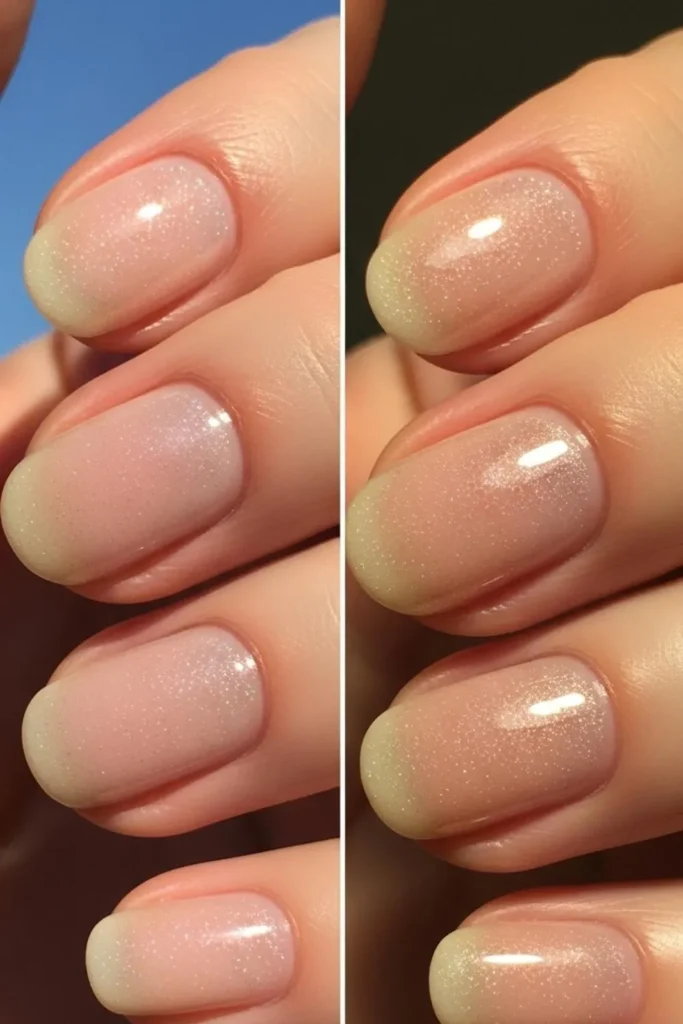
Barely-there shimmer uses transparent bases with ultra-fine shimmer particles that catch light without appearing sparkly. This creates subtle dimension rather than glitter.
Apply sheer shimmer polish in thin coats over your base color or natural nails. The particles should be so fine they’re barely visible in the bottle. Two to three coats build the subtle glow without turning glittery. Top with matte top coat for a soft-focus effect, or glossy top coat for enhanced luminosity.
This technique works because it adds interest that only reveals itself in certain lighting, under fluorescent lights, nails appear simply polished, but in natural light, they glow softly. It fails when you use chunky shimmer particles that read as glitter, destroying the minimalist restraint.
Tortoiseshell Accent Nail Strategy
Tortoiseshell patterns work as minimalist accents when confined to one or two nails maximum, using transparent browns and ambers over nude bases. The pattern creates organic visual interest without bold colors.
Create this by applying a sheer nude base, then dabbing small spots of transparent brown, amber, and black polish with a small brush while wet. Use a thin brush to drag colors slightly, creating the marbled tortoiseshell effect. Seal when dry.
This succeeds as minimalism when you maintain restraint, full tortoiseshell hands become maximalist. Use it on ring fingers or thumbs only, keeping remaining nails in coordinating solids. The pattern fails when colors are too opaque or vibrant, as true tortoiseshell relies on transparency and muted earth tones.
See Also : New Years Eve Nails Ideas: Stunning Designs to Ring in 2026
Metallic Band Precision Techniques
Thin metallic bands placed horizontally across the nail create sleek sophistication through strategic shine placement. Gold, silver, or rose gold bands work as accent lines.
Apply these using nail striping tape, thin liner brushes with metallic polish, or adhesive metallic strip decals. Place bands near the cuticle, across the center, or at the tip, never more than two bands per nail. The key is perfect straightness and even spacing.
This works because metallics add luxury without color, maintaining the neutral palette while introducing texture through shine. It fails when bands are crooked or inconsistent in thickness across nails. Always use a ruler or tape guide for precision, and let each band dry completely before removing guides.
When Matte Finishes Enhance Minimalism
Matte top coats eliminate shine, creating velvety surfaces that emphasize color purity over glossy reflection. This finish works when you want understated sophistication.
Apply matte top coat over fully cured base and color coats. The transformation from glossy to matte is immediate. Matte finishes make light colors appear more substantial and dark colors more dramatic. They also hide minor surface imperfections better than glossy finishes that reflect every ridge.
This approach succeeds in professional settings where shine might read as too polished or trying too hard. Matte fails in very dry climates where it can look chalky, and it shows fingerprints more obviously than glossy finishes. Reapply matte top coat every three days to maintain the finish.
Micro Rhinestone Placement Rules
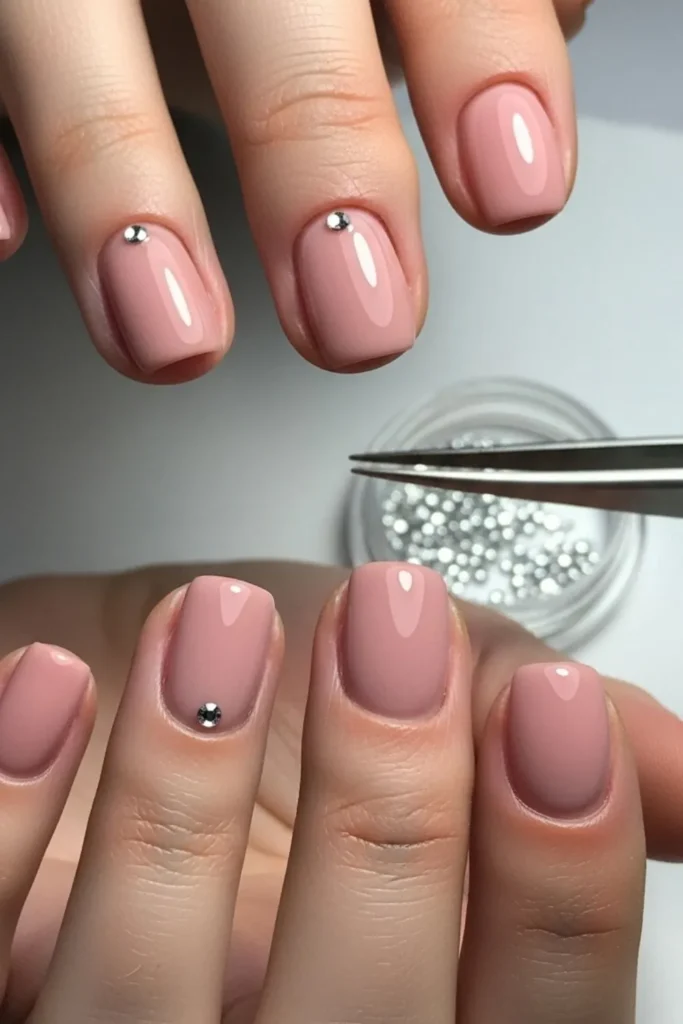
Micro rhinestones (2mm or smaller) placed sparingly add luxury without breaking minimalist principles. Place one to three stones maximum per hand, typically on ring fingers or near cuticles.
Apply rhinestones using a small dab of gel top coat as adhesive, placing them with a dotting tool or tweezers. Position near the cuticle bed or along the side of one nail. Seal the entire nail with top coat, ensuring the stone edges are covered for durability.
This works because restraint makes each stone feel intentional rather than decorative. It fails when you use larger stones or multiple stones per nail, which shifts the design toward embellished rather than minimal. Clear or AB (aurora borealis) stones work best as they catch light without adding color.
Comparing Gel vs Regular Polish for Minimalist Looks
Gel polish lasts two to three weeks and maintains glossy shine throughout, making it ideal for minimalist manicures where longevity matters. Regular polish offers color flexibility and easier removal but chips within days.
For minimalist designs, gel’s durability justifies the investment because these looks depend on pristine execution. Chipped minimalist nails look neglected rather than artfully worn. Gel also provides the smooth, glass-like finish that defines the luxury minimalist aesthetic.
Regular polish works better when you change colors frequently or want to avoid UV exposure and removal chemicals. It fails for designs with intricate lines or negative space because chips ruin the precision. Choose gel for anything involving tape work, thin lines, or dots that need to stay perfect for weeks.
See Also : Nude Nails: The Complete Guide to Timeless Manicure Elegance
The Five-Tone Neutral Nail Wardrobe
Build your minimalist collection around five versatile neutrals: sheer pink, milky white, soft beige, greige (gray-beige), and clear with shimmer. This palette covers all minimalist design possibilities.
Sheer pink works for traditionally feminine looks and complements warm-toned skin. Milky white provides clean neutrality. Beige offers warmth for fall and winter. Greige adds modern edge while remaining neutral. Clear shimmer serves as a topper or standalone for natural enhancement.
These five eliminate decision fatigue while allowing variation. You can rotate through them weekly without needing new polish constantly. This system fails if you choose undertones that don’t suit your skin, test each shade against your skin tone in natural light before committing.
Abstract Single-Line Art Design
Abstract line art uses one continuous curved or angular line per nail to create modern artistic touches. The line can swirl, zigzag, or curve organically without representing specific shapes.
Draw these freehand using a thin liner brush after your base color dries completely. The line should start at one edge and flow across the nail to another edge, creating movement. Black lines on white bases create graphic contrast, while tonal lines (beige on white) offer subtlety.
This succeeds because the random, organic nature means mistakes look intentional. Unlike geometric patterns that demand precision, abstract curves allow artistic freedom. It fails when lines are too thick or when you try to replicate the exact same pattern on each nail, embrace variation for authentic abstraction.
Cuticle Care Impact on Minimalist Aesthetics
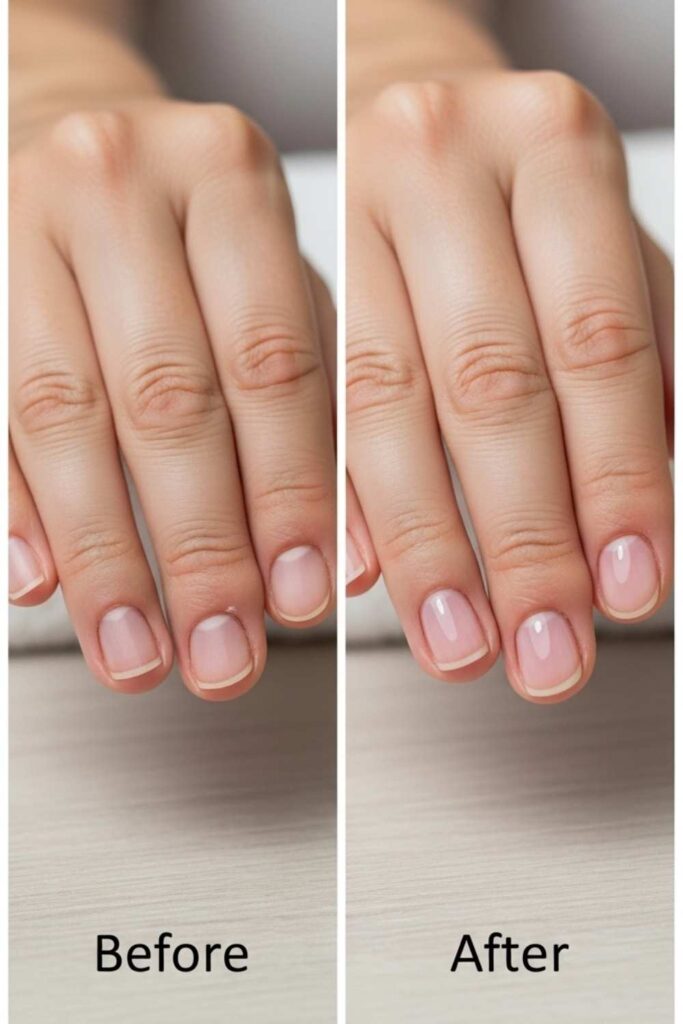
Well-maintained cuticles elevate minimalist nails because clean nail beds become the focal point. Pushed-back cuticles create the illusion of longer nail beds and make polish application appear more professional.
Apply cuticle oil daily, push cuticles back gently after showering when they’re soft, and trim only dead skin, never cut living cuticle. This creates the clean canvas minimalist designs require. Ragged cuticles destroy the polished effect no matter how perfect your polish application.
This works because minimalism reveals everything, there’s no bold color or pattern to distract from poor nail health. It fails when you over-trim, causing bleeding or infection that makes nails look worse than before maintenance. Gentle, consistent care beats aggressive treatment.
Seasonal Minimalist Color Transitions
Winter minimalism uses deeper creams (latte, mushroom, greige), spring favors soft pastels (blush pink, lilac, mint), summer embraces sheer whites and pinks, and fall returns to warm beiges and taupes.
These transitions work because they align with seasonal wardrobes while maintaining the neutral palette. Cool-weather clothing pairs with deeper, warmer tones, while light summer fabrics coordinate with airy sheers. The transitions feel natural rather than forced trend-chasing.
Shift colors gradually, move from winter’s deep beige to spring’s blush through transitional rose-beige. This fails when you jump between drastically different undertones (cool gray to warm peach) without considering your consistent skin undertones. Your skin doesn’t change seasonally, so maintain your undertone family while varying depth.
See Also : Red Winter Nails: 2025 Guide to Stunning Burgundy & Cherry Manicures
Why Professional Settings Favor Minimalism
Corporate environments reward minimalist nails because they signal competence without distraction. Bold designs can read as unprofessional or attention-seeking in conservative industries.
Minimalist manicures communicate attention to personal grooming while maintaining focus on work. They’re remembered for polish rather than specific design, which means they don’t date quickly or clash with professional attire. The neutral palette eliminates concerns about appropriateness.
This works particularly well in fields like law, finance, and medicine where personal presentation matters but shouldn’t overshadow professional expertise. It fails only in creative industries where bolder choices might actually demonstrate design sensibility, know your context before committing to minimalism everywhere.
The No-Polish Polish Look
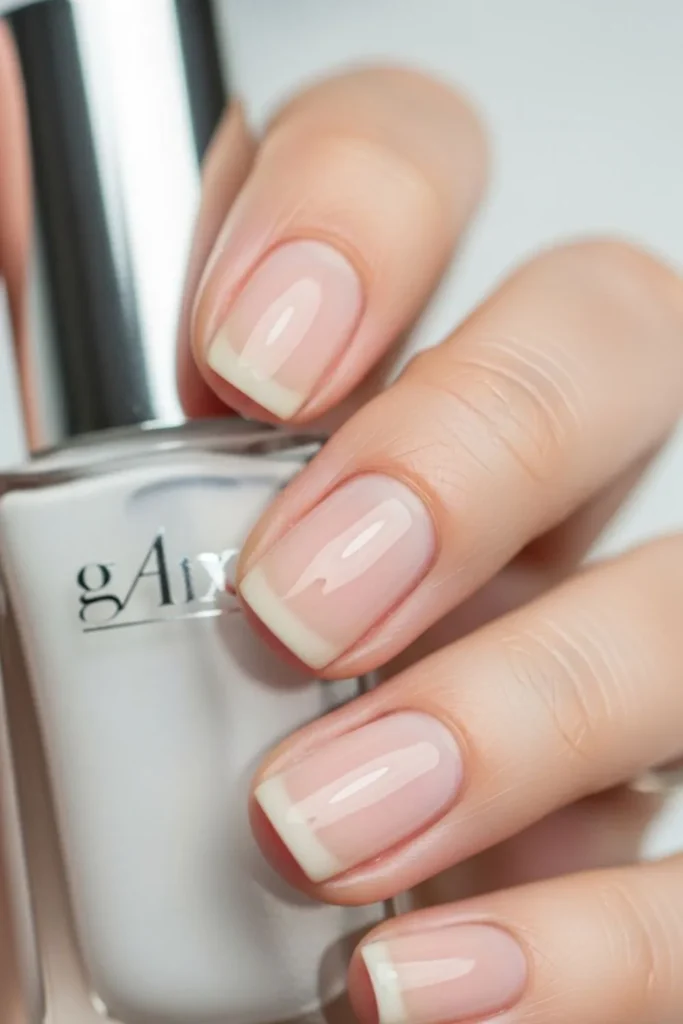
No-polish looks use clear base coat, buffing, and top coat to create shine without color. This emphasizes natural nail health and creates the ultimate minimalist aesthetic.
Buff nails gently to smooth the surface, apply a nourishing base coat, then seal with high-shine top coat. Reapply top coat every two days to maintain glass-like shine. This requires perfectly healthy nails, ridges, stains, or discoloration become focal points.
This approach works when your natural nails are strong and evenly colored. It fails on damaged nails that need coverage. The advantage is zero maintenance beyond top coat refresh and complete outfit versatility since there’s literally no color to coordinate.
Micro Glitter Placement Techniques
Micro glitter applied only at the nail base or in a thin line creates sparkle without full glitter coverage. This maintains minimalism while adding subtle glamour.
Apply your base color completely, then while the tip is still slightly tacky, use a small brush to place fine glitter only in the desired area. Seal with top coat. The glitter should be barely-there, visible in certain lights but not dominating the nail.
This succeeds because it adds dimension without color commitment. It fails when glitter particles are too large or when coverage extends beyond a small accent area. The moment glitter becomes the main feature, you’ve left minimalist territory.
See Also : Candy Cane Nails: Festive Holiday Nail Art That Sweetens Your Style
Ombre Fade Execution for Beginners
Minimalist ombre uses two tones within the same color family (light to dark pink, white to beige) rather than contrasting colors. This creates subtle gradient rather than bold rainbow effects.
Apply the lighter color as your base, let dry completely, then use a makeup sponge to dab the darker color starting at the tip and fading toward the center. Blend where colors meet by bouncing the sponge. Seal with top coat.
This works because tonal ombre maintains the neutral palette while adding visual interest. It fails when you use a regular sponge instead of a fine-pore makeup sponge, which creates visible texture. The fade should be so gradual that it’s almost imperceptible, dramatic gradients aren’t minimalist.
Press-On Minimalist Nail Selection
Quality press-ons in minimalist styles work when they feature natural shapes, neutral tones, and simple designs. Look for sets in milky whites, nudes, and soft pinks with minimal embellishment.
Choose press-ons with thin tips that don’t create obvious seams at the cuticle. The shape should match your natural nail bed width closely. Apply using nail glue rather than adhesive tabs for better longevity and seamless appearance.
This succeeds because modern press-ons offer salon quality at home convenience. They fail when sizes don’t match your nail beds, creating gaps or overhang that looks artificial. Always test fit before gluing, and file to customize if needed. Press-ons also fail on oily nail beds without proper prep, cleanse with alcohol before application.
Square vs Almond Shape for Minimalism
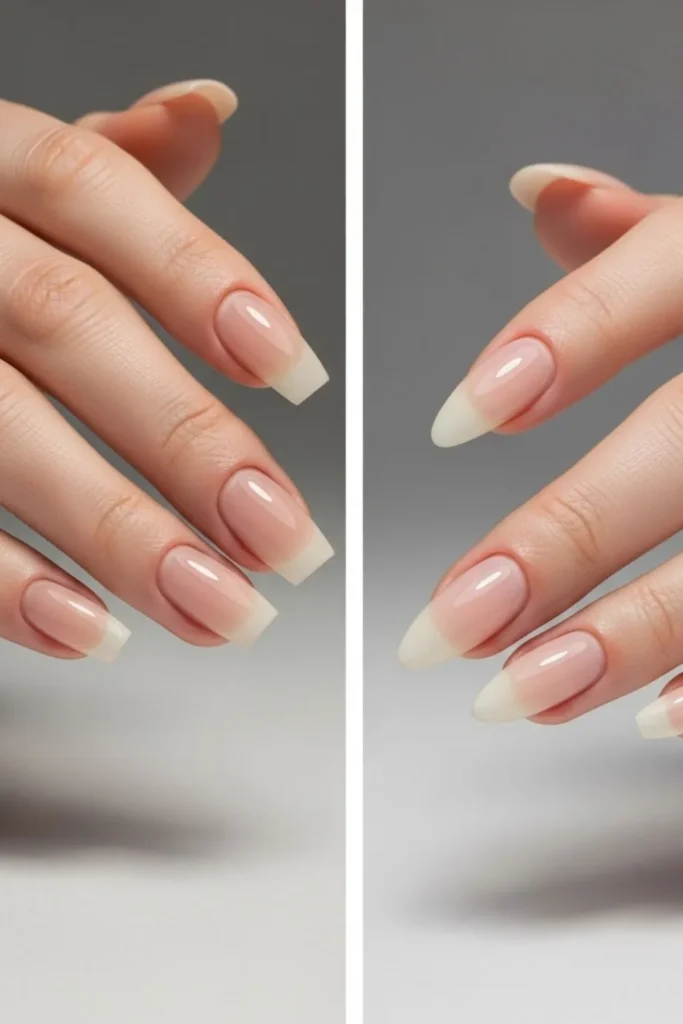
Square nails with slightly rounded corners create modern, clean lines that emphasize the geometric aspect of minimalism. Almond shapes offer elongated elegance with softer appeal.
Square works better for shorter nails and those with wider nail beds, as it makes fingers appear longer through horizontal emphasis. Almond suits longer nails and narrower beds, creating feminine length. Both work for minimalism, choose based on your natural nail shape.
This fails when you fight your natural nail shape. Forcing almond on very wide, short nails creates an unbalanced look. Similarly, square on naturally curved, narrow nails looks forced. File to enhance your natural shape rather than completely reshape it, which weakens nails and looks less authentic.
See Also : Pink Winter Nails: 30+ Stunning Designs & Ideas for 2026
Three-Color Maximum Rule
Minimalist manicures should never exceed three colors total, including base, accent, and topcoat shimmer. This prevents visual chaos while allowing variation.
Use one dominant neutral (nude, white, pink) for most nails, one accent color for lines or dots (black, metallics), and optionally a shimmer top coat. More colors compete for attention and destroy the cohesive minimalism creates.
This works because color restraint forces design creativity through placement and technique rather than addition. It fails when you interpret “three colors” as permission to use all three prominently, the dominant color should cover 80% or more of the design, with accents used sparingly.
Negative Space French Variations
Negative space French tips leave the tip area bare instead of painting it white, creating modern inversions of the classic manicure. This elongates nails while maintaining minimalism.
Paint your nail bed with neutral color, stopping before the tip, and seal the entire nail including the bare tip with clear top coat. The unpainted tip mimics the French aesthetic through absence. Use tape to create perfect curves where color stops.
This succeeds because it’s unexpected yet familiar, our brains recognize the French structure while appreciating the modern twist. It fails on stained or discolored nail tips that should be covered rather than highlighted. Only attempt this with healthy, even-toned natural nails.
See Also : Dark Winter Nails: The Ultimate Guide to Moody, Elegant Manicures
FAQ’s
What makes nails minimalist versus simple?
Minimalist nails focus on intentional design details like thin lines, negative space, or subtle accents, while simple nails usually mean one solid color with no added elements. In short, minimalist nail designs are about clean, artistic restraint, not just basic polish.
How long do minimalist nail designs typically last?
Minimalist nail designs usually last 10 to 14 days with regular polish and up to 3 weeks with gel. Their neutral colors and low-detail patterns also make chips and regrowth less noticeable, which helps them look fresh longer.
Can minimalist nails work for special occasions?
Yes, minimalist nails work beautifully for weddings, parties, and formal events because they look elegant without overpowering your outfit. Styles like nude bases with fine gold lines or tiny accents are popular minimalist nail ideas for special occasions in the USA.
Quick Recap
- Minimalist nails in 2026 focus on refined simplicity and controlled design choices.
- Sheer finishes such as milky white and pearl create a polished look without strong contrast.
- Details like micro-French tips, single dots, and negative space add interest through precision.
- Short nails in neutral shades (Cloud Dancer white, almond milk, soft beige) work with most outfits.
- Results depend on clean technique, healthy nails, and using effects like chrome or ombré only when they suit the design.
Conclusion
Minimalist nails eliminate the exhausting cycle of trend-chasing while delivering consistent elegance that works everywhere. The techniques we’ve covered, from pearlescent finishes to micro-line patterns, share one principle: restraint creates impact through precision rather than decoration. Your nail beds become canvases where health and grooming matter more than coverage.
The shift toward understated luxury in 2026 rewards those who master neutral palettes and clean execution. Whether you choose milky whites for professional polish or single-dot accents for subtle personality, these approaches deliver wearable sophistication that lasts beyond trend cycles. Start with your five neutral base colors and build from there.