
25 Minimal Nail Designs for Clean, Elegant Looks That Last in 2026
Scrolling through nail inspiration feeds can feel exhausting when minimal nail designs promise simplicity but still look unfinished on real hands. The mistake isn’t choosing less, it’s choosing elements that don’t respect nail shape, length, or daily wear. Restraint only works when it’s intentional.
That disconnect shows up fast. A single line placed without proportion looks accidental. A micro French on the wrong nail shape chips by day three. Even neutral shades fail when placement fights natural growth or stress points, turning “clean” into careless.
Minimal designs last when geometry, spacing, and finish do the heavy lifting. Thoughtful placement, subtle contrast, and shape-aware choices create nails that look polished, survive daily life, and age gracefully instead of falling apart.
What Makes a Nail Design Truly Minimal
A minimal nail design uses one to three intentional elements that create visual interest through placement, negative space, or subtle contrast rather than complexity. The design should be immediately readable from conversation distance and work with the natural nail shape instead of requiring specific length or canvas size to succeed.
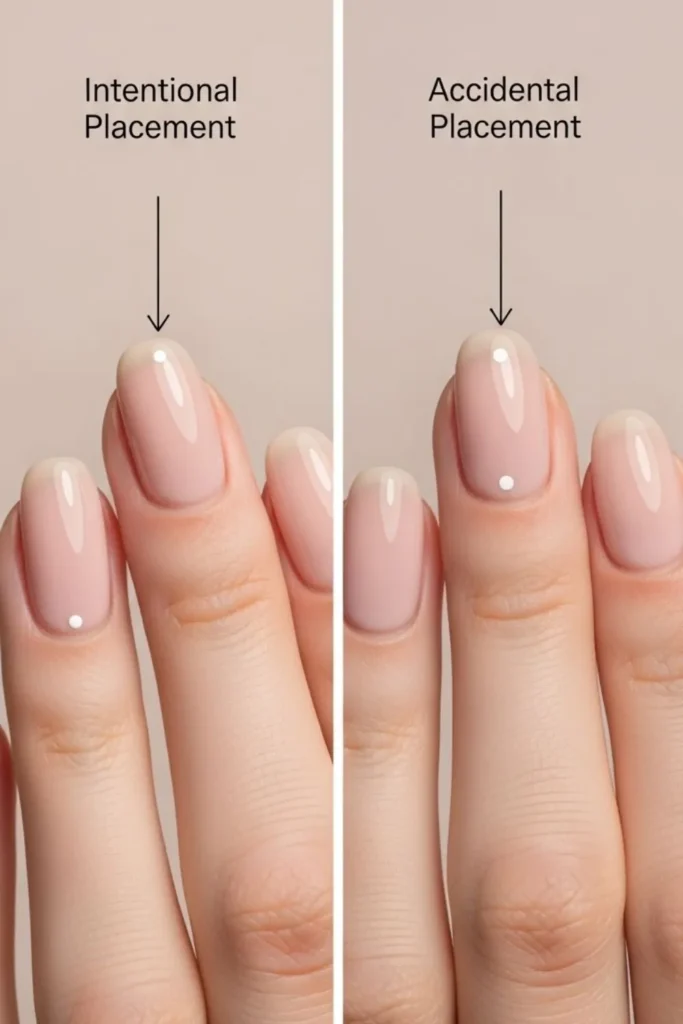
The key distinction separates minimal from incomplete. A single dot placed at the cuticle line creates intention. That same dot randomly centered looks accidental. Minimal designs depend on deliberate geometry, whether that’s symmetry, asymmetric balance, or strategic repetition across fingers. The restraint must feel like a choice, not a limitation.
Read More About : Winter Gel Nails: Ultimate 2026 Guide to Stunning Cold-Weather Manicures
Why Minimal Designs Fail on Almond Nails But Succeed on Squoval
Nail shape dramatically affects how minimal elements read visually. Almond and stiletto nails have a pronounced taper that naturally draws the eye toward the tip. Placing a single accent line or dot on these shapes often gets lost because the nail itself already creates a strong vertical pull. The minimal element competes with the shape’s inherent direction rather than complementing it.
Squoval and square nails provide stable horizontal real estate. A thin French tip or single stripe across these shapes creates clear contrast against the geometric edge. Round and oval nails sit between these extremes, they work with minimal designs that follow their curve rather than fight it. A half-moon accent at the base or side-swept line that mirrors the nail’s arc will succeed where straight geometric elements appear disconnected.
The Two-Tone Illusion That Actually Elongates Short Nails
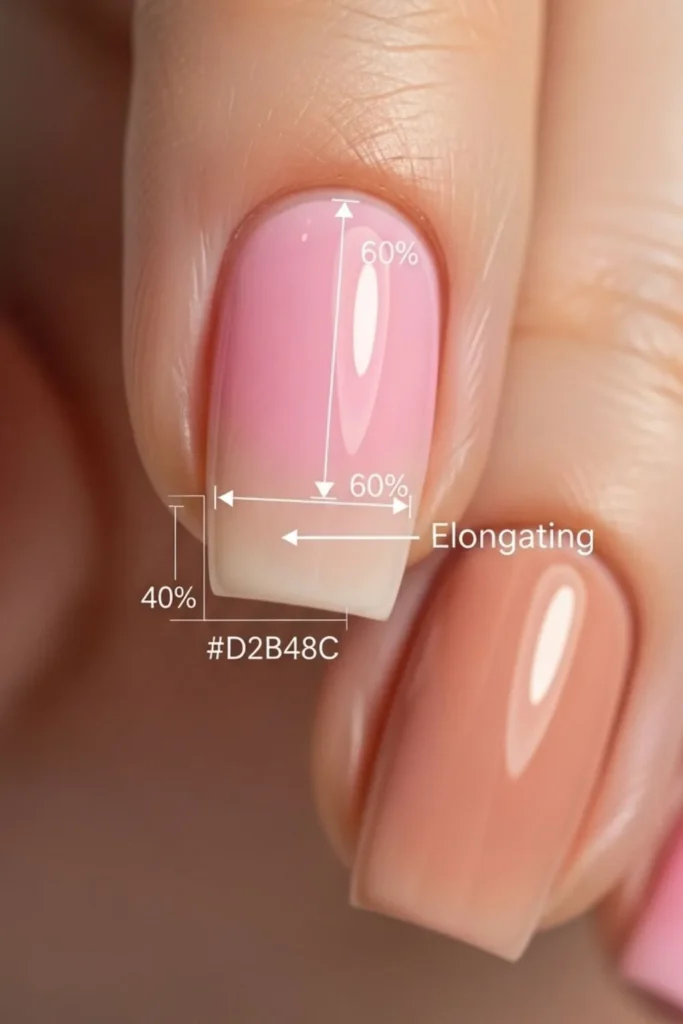
Vertical color blocking makes short nails appear longer, but only when the division point sits at a specific ratio. Placing the color split at roughly 60-40 from base to tip creates the optical extension. A 50-50 split cuts the nail in half visually, making it appear even shorter.
The technique works because eyes follow continuous lines. When a lighter shade occupies more space toward the tip and a slightly deeper tone anchors the base, the gradient effect pulls attention upward. This differs from French tips, which create a hard stop line. The subtle blend in two-tone designs maintains unbroken flow while adding dimension. Avoid high-contrast pairings on short nails, they create segmentation rather than extension.
French Tips vs. Reverse French: When Each Actually Works
Traditional French tips work best on medium to long nails with at least 3mm of free edge. Shorter nails lack sufficient white space to make the tip distinct, resulting in a stripe effect rather than the classic smile line. The design also requires relatively uniform nail beds, uneven free edges make the white tips appear crooked even when perfectly applied.
Reverse French tips anchor color at the cuticline instead, making them more forgiving on short nails and irregular shapes. The base placement doesn’t depend on free edge length and actually makes nail beds appear longer by drawing attention to the starting point. This works particularly well for people with wide nail beds or those who bite nails, since the design creates definition without requiring extension. Reverse French also chips less noticeably because the accent sits away from the high-impact tip area.
Read More About : Chinese New Year Nails: 2026 Design Ideas & Symbolism Guide
Single Line Placement: The 3mm Rule That Separates Intentional From Accidental
A single accent line reads as deliberate design when placed at least 3mm from any nail edge or existing element. Lines closer than this distance appear like mistakes or near-miss French tips. The spacing creates necessary negative space that lets the line register as its own feature.
Vertical lines work best offset from center, either aligned with the natural nail bed curve on one side or placed in the outer third of the nail. Centered vertical lines require near-perfect application to avoid looking crooked, and even slight asymmetry becomes obvious. Horizontal lines should sit either very close to the cuticle (within 2mm) to create a reverse accent, or at the two-thirds point moving toward the tip. The middle position creates visual confusion about whether it’s meant to be a French tip or base accent.
What Causes Minimal Designs to Chip Faster Than Full Coverage
Minimal designs fail prematurely when accent elements sit at stress points without proper edge sealing. A single stripe that extends fully to the nail’s free edge will chip within days because that edge receives constant micro-impacts from typing, opening cans, and general hand use. The same line stopped 1-2mm short of the edge and capped with clear top coat lasts twice as long.
Thin lines and small details also chip faster because they have less surface adhesion than full coverage color. A delicate line is essentially a raised ridge of polish that can catch and peel. Applying thin elements over a base color provides better grip than placing them directly on the bare nail. The base layer creates tooth for the accent to bond with, while top coat needs to fully encapsulate the detail, not just skim over it, to prevent edges from lifting.
Negative Space Designs That Survive Nail Growth
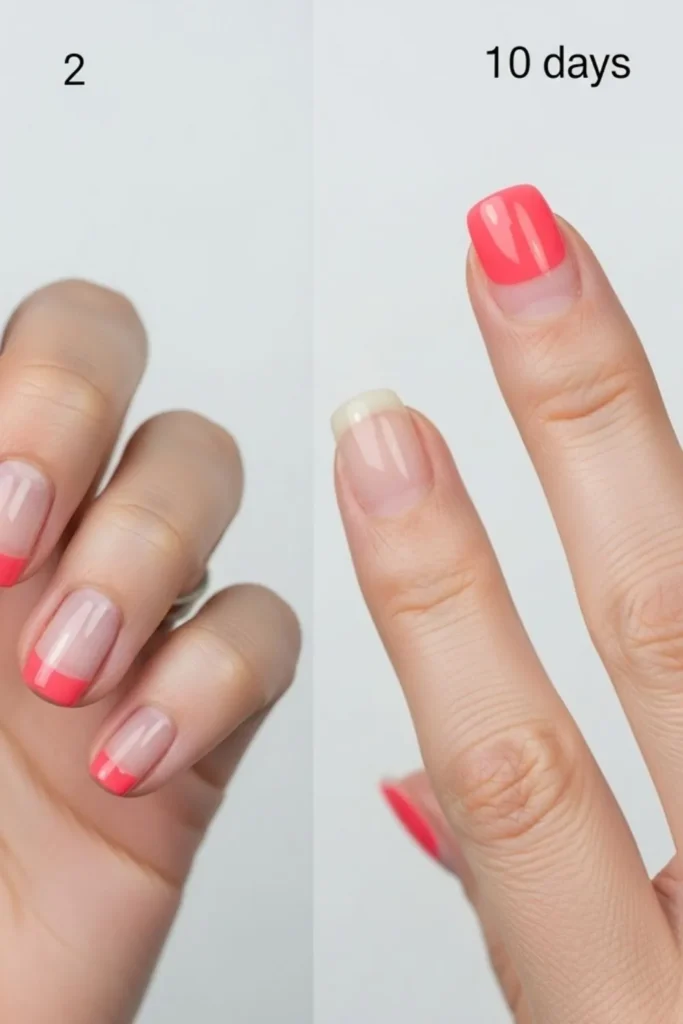
Negative space designs show regrowth less obviously when the bare nail element sits at the tip rather than the base. As nails grow, new bare nail emerges at the cuticle line. If your design already features exposed nail there, the fresh growth blends in. Designs with negative space at the tip maintain their composition longer because the colored base grows out uniformly.
Half-moon designs, where bare nail shows at the cuticle, require touch-ups within 5-7 days as the moon shifts downward and new nail emerges above it. Reverse this by placing color at the cuticle and leaving the tip bare or minimally accented. The design grows out with you rather than away from you. Geometric cutouts positioned in the nail’s center also show growth more than edge-based negative space because the shape’s relationship to the nail bed changes as length increases.
Matte vs. Glossy Minimal Polish: The Texture Decision That Changes Everything
Matte finish makes minimal designs appear more sophisticated but shows fingerprints and loses uniformity faster than gloss. The flat texture catches oils from skin contact, creating shiny patches within 24-48 hours that make the manicure look uneven. Matte works best for special occasions or photo shoots rather than week-long wear.
Glossy finish provides practical advantages for minimal designs, scratches and minor wear blend into the shine rather than showing as obvious damage. The reflective quality also enhances subtle details like thin lines or small dots by catching light, making delicate elements more visible. For two-tone minimal designs, mixing matte and gloss finishes on the same nail creates dimension without adding visual complexity. A matte base with glossy accent line gives texture contrast that reads as intentional design detail.
Read More About : New Years Nails Square: 2026 Design Ideas & Party-Ready Manicures
The Dot Placement Formula for Balanced Asymmetry
Single dot accents create balanced asymmetry when placed using the rule of thirds, divide the nail into a 3×3 grid and position the dot at any grid intersection point except dead center. The outer or inner third positions work best, with dots placed slightly toward the cuticle or tip rather than at the nail’s midpoint.
Multiple dots require odd numbers (3, 5, or 7) to maintain visual interest. Even numbers create symmetry that reads as pattern rather than minimal design. When using three dots, cluster them in a triangle formation rather than a straight line. The triangle can be tight or spread across the nail, but the three-point arrangement prevents the dots from looking like a failed stripe. Five dots work in an asymmetric scatter, avoid making them too evenly spaced or they become polka dots instead of minimal accents.
Why Thin Metallic Lines Chip at the Edges First
Metallic polish particles are larger than regular polish pigments, creating a slightly textured surface even when the line appears smooth. These particles at the line’s edges have less surrounding polish to anchor them, making edge areas the first failure point. Metallic lines last longer when applied slightly thicker than expected, a thin, sheer metallic line will chip within 2-3 days.
Gel metallic lines outlast regular polish metallics by about 5-7 days because the curing process fuses particles into the gel matrix rather than suspending them in liquid that dries. For regular polish metallic accents, apply the line in two thin coats rather than one thick coat, letting each fully dry. The layering improves particle distribution and adhesion. Seal metallic elements with two layers of top coat, allowing the first to dry completely before adding the second.
Color Psychology in Minimal Nail Design: What Actually Influences Perception
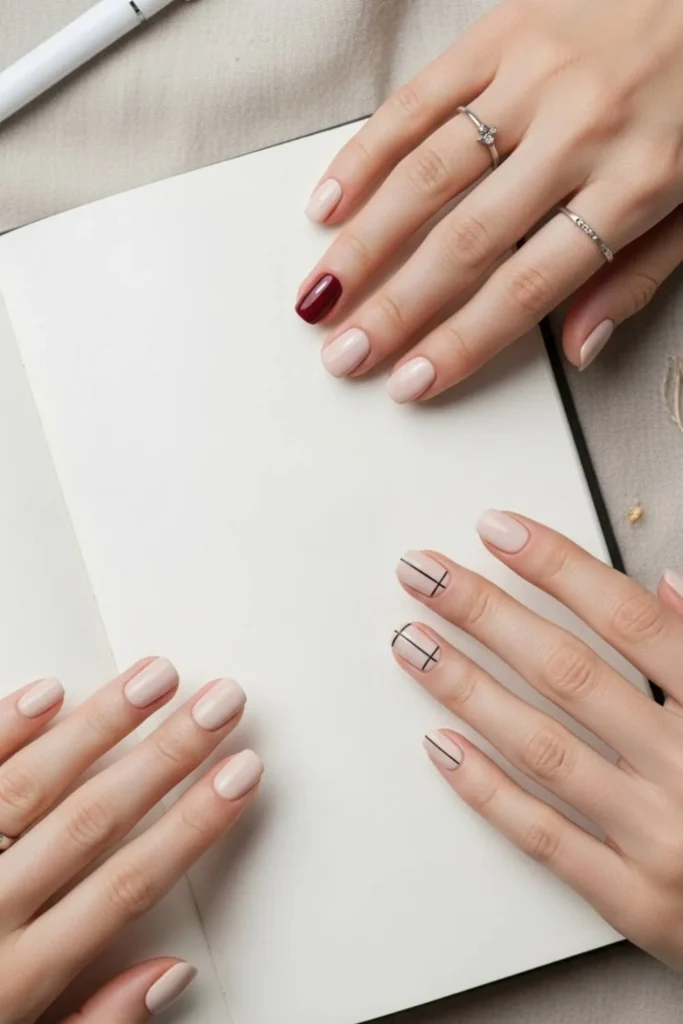
Soft neutrals like beige, cream, and light gray make hands appear more refined in professional settings because they don’t compete with hand gestures or pull focus during conversations. These colors work with skin tone rather than against it, they’re noticed as groomed rather than decorated.
Deep colors in minimal designs create stronger statements with less effort. A single burgundy accent nail or thin black line reads as more intentional than the same elements in pastels. Dark colors have inherent contrast against most skin tones, so minimal elements in these shades require less complexity to register visually. Unexpected colors like rust, olive, or charcoal in minimal applications feel more sophisticated than traditional reds or pinks because they signal awareness of current color trends without following them obviously.
Read More About : Christmas and New Years Nail Ideas: Festive Designs for 2026
The Accent Nail Mistake That Makes Hands Look Unfinished
Accenting only the ring finger became standard because wedding culture emphasized that finger, but it often creates imbalance in minimal designs. The ring finger sits slightly behind the middle finger when hands are at rest, making the accent less visible than expected. For people with shorter fingers, this placement can make hands look asymmetric.
The middle finger or thumb provides better accent placement for minimal designs because they’re the most visible fingers during natural hand movement and gestures. Accenting the thumb works particularly well for people who use their hands expressively, the thumb appears in almost every hand position and gesture. If you prefer ring finger accents, balance them by adding a subtle variation to the thumb or middle finger on the opposite hand rather than keeping all other nails identical.
How Nail Bed Shape Determines Which Minimal Patterns Work
Wide nail beds (where width exceeds length even on grown-out nails) look best with horizontal elements that embrace the width rather than fight it. Thin horizontal stripes, side-by-side color blocking, or small clustered details in one corner work with the nail’s proportions. Vertical elements on wide nails make them appear even wider by creating obvious contrast with the nail’s natural direction.
Narrow nail beds suit vertical elements, single vertical lines, elongated dots placed tip-to-base, or vertical color splits. These designs enhance the nail’s existing elegant proportion. Very narrow nail beds should avoid thick vertical lines or wide vertical color blocks, as these consume too much of the limited horizontal space and make nails appear crowded rather than minimal.
The Clear Top Coat Application That Actually Prevents Tip Wear
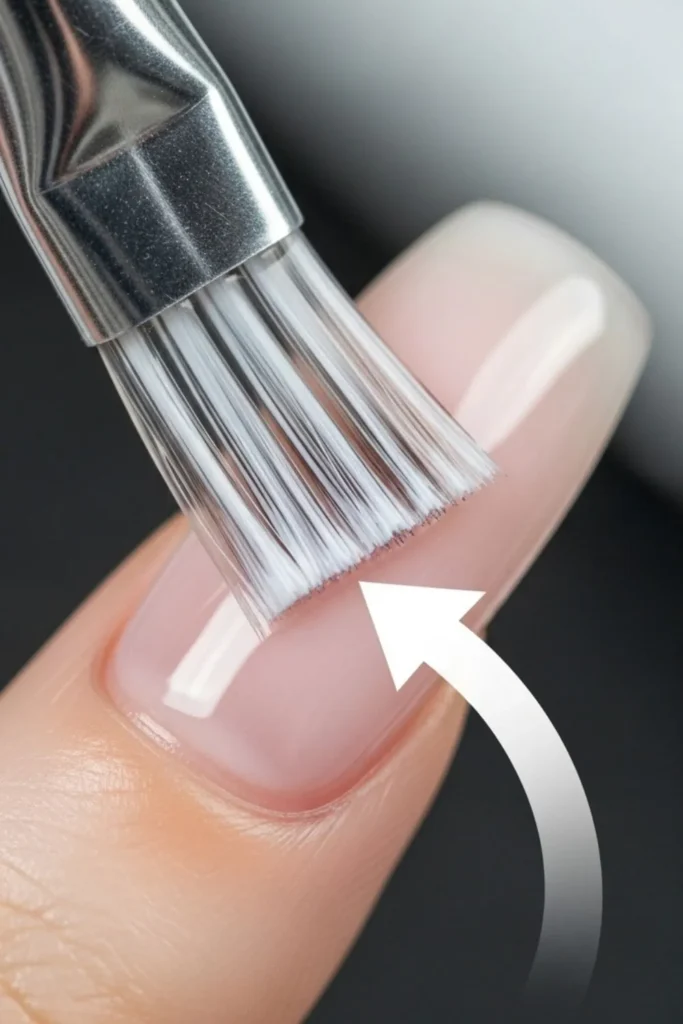
Most tip wear happens because top coat application thins out as it approaches the free edge, leaving the most vulnerable area with the least protection. Proper application requires wrapping the edge, brushing top coat over and slightly under the nail’s free edge in a scooping motion.
For minimal designs with accent lines or details near the tip, apply a first layer of top coat normally, then add a second layer focused specifically on the tip area and edge. The build-up compensates for natural thinning that occurs during application. Reapply top coat to just the tips every 2-3 days to maintain protection at the highest-wear zone without redoing the entire manicure. This spot-maintenance extends minimal designs by 4-6 days on average.
Read More About : New Year Short Nails: 2026 Trends & Designs for the Perfect NYE Manicure
When Minimal Designs Need More Elements to Look Complete
Single-element minimal designs work on longer nails (5mm+ free edge) but often look unfinished on very short nails because there’s insufficient canvas to appreciate the restraint. Short nails benefit from two coordinating minimal elements, perhaps a thin line and a single dot, or negative space at the tip with a subtle accent at the base.
The completeness threshold also depends on nail condition. Perfectly shaped, evenly filed nails with healthy cuticles can carry single-element designs because the nails themselves look polished. Uneven nail lengths, visible ridges, or dry cuticles make minimal designs appear like incomplete attempts rather than intentional choices. In these cases, adding a second subtle element or choosing full coverage in a neutral shade creates a more finished appearance than trying to execute minimal designs that highlight nail imperfections.
Gradient Minimal: The Ombré Technique That Stays Subtle
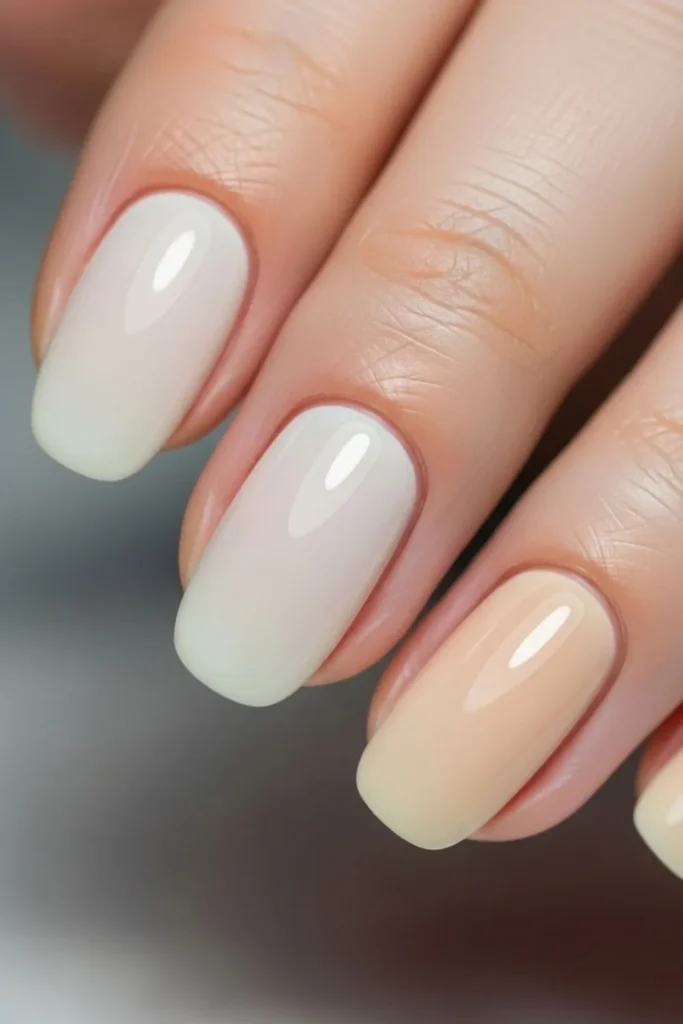
Subtle gradients in minimal design use colors within the same family that differ by only 1-2 shades, think cream to light beige, or soft gray to slightly darker gray. High-contrast ombré reads as nail art rather than minimal design. The transition should be barely perceptible at conversation distance but add dimension when examined closely.
The most wearable minimal gradient runs vertically from cuticle to tip rather than across the nail horizontally. Vertical gradients enhance nail length perception and look intentional during natural hand movements.
Apply the lighter shade as a full base, then sponge the slightly darker shade onto the tip in light dabbing motions, blending at the midpoint. Two or three sheer layers create smoother transitions than one opaque application. Finish with top coat to blur any remaining demarcation lines.
Read More About : Dark Red Winter Nails: The Ultimate Guide to Achieving Timeless Elegance This Season
Frequently Asked Questions
How long do minimal nail designs typically last?
Minimal nail designs usually last 7–10 days with regular polish and up to 2–3 weeks with gel or dip powder. Because the colors are neutral and the details are subtle, small chips are less noticeable, which helps them look fresh longer.
Can minimal designs work on very short nails?
Yes, minimal nail designs look especially good on very short nails because clean lines and neutral shades make nails appear longer and neater. Styles like sheer nude polish, micro French tips, or a single dot accent are popular minimal looks in the USA.
What’s the easiest minimal nail design for beginners?
The easiest minimal nail design is a sheer nude or soft pink base with no added art or just one tiny dot on each nail. It’s beginner-friendly, fast to apply, and matches almost any outfit or occasion.
Key Takeaways
- Minimal nail designs rely on intentional placement of 1-3 elements rather than complexity, using negative space and geometry to create impact
- Nail shape determines which minimal patterns work, squoval suits geometric elements while almond needs curved designs that complement the taper
- Proper edge sealing and strategic element placement away from stress points prevents premature chipping in minimal designs
- Two-tone vertical blocking at 60-40 ratio elongates short nails more effectively than French tips or centered splits
- Metallic accents require thicker application and double top coat layering due to larger pigment particles that chip at edges first
Conclusion
Minimal nail designs succeed when restraint feels intentional rather than incomplete. The difference lies in understanding how nail shape, length, and wear patterns affect design longevity and visual impact. A single well-placed line on nails suited to linear elements will outlast and outperform three competing details on the wrong nail shape.
The practical advantage extends beyond aesthetics into maintenance and versatility. Minimal designs adapt across professional and casual settings without requiring removal or modification, and their strategic simplicity means growth and minor wear remain less obvious than with complex patterns.
Choose elements that work with your natural nail proportions and daily hand use patterns rather than forcing trends that require constant maintenance or specific nail conditions you don’t have.