
21 Everyday Nails That Look Put Together in 2026
You rush through mornings, sprint between meetings, and rarely have time for elaborate beauty routines. Yet your nails somehow manage to broadcast whether you’re holding it all together or barely hanging on. The difference between looking polished and looking frazzled often comes down to one thing: your hands.
Everyday nails that look put together aren’t about spending hours at the salon or mastering complex nail art. They’re about strategic simplicity that works with your schedule, not against it. When your nails look intentional, the rest of you appears more composed even when you’re running on coffee and willpower.
This matters because well-maintained nails signal attention to detail in professional settings, create confidence in social situations, and honestly just make you feel more like yourself. Let’s break down exactly how to achieve that effortlessly polished look without adding another demanding task to your already packed life.
What Makes Everyday Nails Actually Look Put Together?
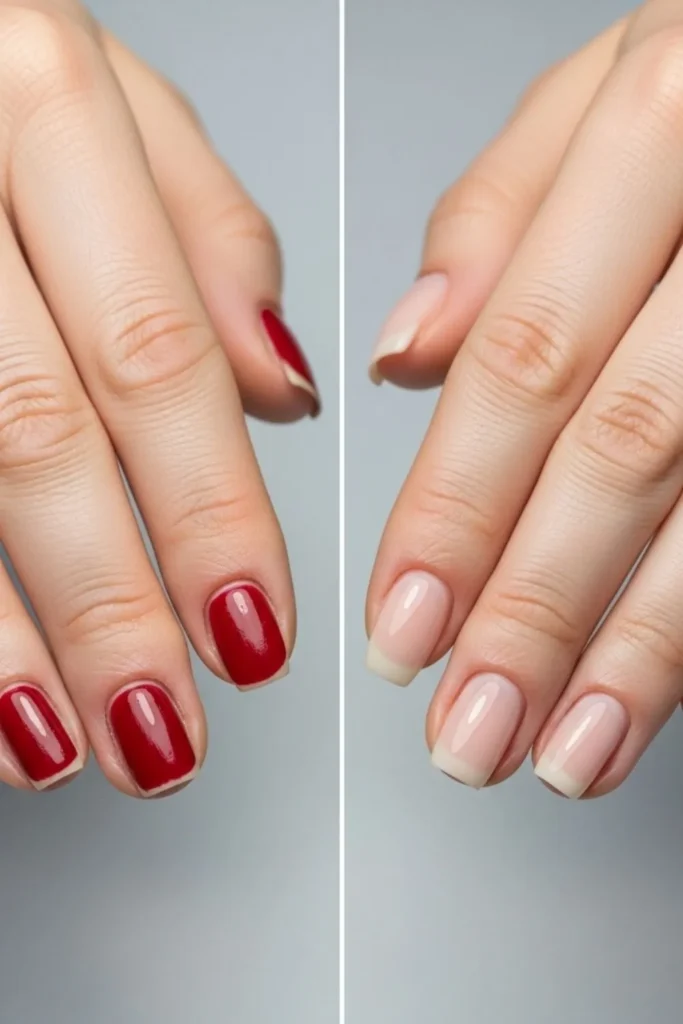
Everyday nails that look put together combine three non-negotiable elements: consistent length, intentional color, and visible care. When all three align, your hands communicate polish without screaming for attention.
The length issue trips up most people. Nails that vary wildly from finger to finger create visual chaos, while nails that extend beyond practical typing range become a liability. The sweet spot sits at short to medium length roughly 2-3 millimeters past your fingertip. This length avoids breakage during daily tasks while maintaining a finished appearance. Unlike long stiletto nails that require constant maintenance, this practical length survives keyboard work, dishwashing, and the general chaos of everyday life.
Color choice separates intentional style from accidental neglect. Chipped neon polish or half-grown-out designs telegraph “I started something I couldn’t finish.” Neutral tones, sheer finishes, and classic reds maintain their appearance between touch-ups because imperfections blend rather than contrast. Your nail color should complement your wardrobe, not compete with it think supporting actor, not lead role.
How Do You Choose Colors That Work With Everything?
The right everyday nail color matches your undertones first and your outfits second. This approach eliminates the daily “do my nails match” question that wastes precious morning minutes.
Warm undertones (where veins appear greenish) pair beautifully with peachy nudes, warm beiges, terracotta browns, and brick reds. Cool undertones (blue-tinted veins) come alive with pink-based nudes, mauve, soft grays, and true reds with blue undertones. Neutral undertones enjoy the flexibility of both camps classic Ballet Slippers pink, greige, and most nude variations work seamlessly.
The 2026 minimalist movement favors peach milk nails, milky taupes, and sheer latte shades that create a “your nails but better” effect. These shades disguise minor chips and growth because they mirror natural nail tones. When you choose colors within two shades of your natural nail bed, maintenance becomes nearly invisible. The best everyday nails require touch-ups every 7-10 days rather than every 3-4 days simply because the base color doesn’t dramatically contrast with regrowth.
See Also : Pink French Tip Nails: The Ultimate Guide to This Timeless Manicure Trend
Why Do Professional Settings Demand Different Nail Approaches?
Professional environments judge competence partially through appearance, making everyday nails that look put together a subtle career tool. The standards shift dramatically between industries.
Traditional corporate offices expect neutral palettes nudes, soft pinks, classic French tips, or subtle mauves that signal professionalism without distraction. These shades work because they enhance rather than demand attention during handshakes, presentations, and client meetings. Dark colors like burgundy or navy can work in conservative settings, but only when paired with shorter lengths and matte finishes that soften their impact.
Creative industries allow more flexibility. Advertising agencies, design firms, and tech companies generally accept bolder colors, subtle nail art, and slightly longer lengths. The key difference: even creative professionals benefit from consistent maintenance. Chipped coral sends a worse message than simple, well-maintained neutrals.
Length matters more than color in professional contexts. Nails extending beyond 4-5 millimeters raise questions about practicality can you actually type, button clothing, or handle detailed work? Short to medium lengths in professional colors create an impression of capability and attention to detail. They suggest you care about presentation without letting it consume productive time.
What’s the Fastest Way to Maintain Polished Nails at Home?
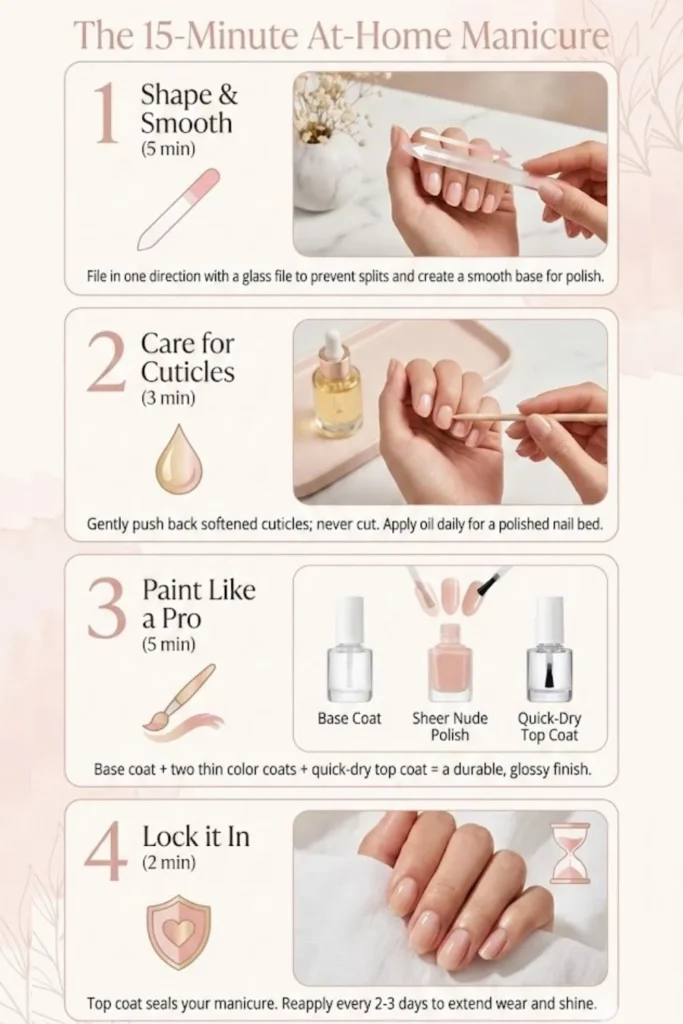
Home nail maintenance becomes realistic when you abandon perfectionism and embrace consistency. The entire routine takes 15 minutes weekly, not daily salon visits.
Start with shape consistency. File nails in one direction using a glass file, which creates smoother edges than traditional emery boards. The direction matters sawing back and forth creates micro-tears that lead to splitting.
Choose one shape (rounded, square, or squoval) and maintain it across all fingers. This weekly 5-minute investment prevents the ragged, uneven appearance that screams neglect.
Cuticle care separates amateur from polished looks. After showering, when cuticles are soft, gently push them back with your fingernail or an orangewood stick never cut them, which invites infection and ragged edges.
Apply cuticle oil nightly; this 10-second habit prevents hangnails and creates the smooth nail bed that makes any color application look professional. Dry, neglected cuticles make even expensive manicures look cheap.
Polish application follows a simple rule: less is more. One coat of sheer polish beats three coats of opaque color that chips within days. If you choose darker shades, apply a base coat to prevent staining, two thin color coats rather than one thick layer, and a quick-dry top coat to seal everything.
Refresh the top coat every 2-3 days to extend wear time and maintain shine. This approach keeps everyday nails looking fresh without complete removal and reapplication.
See Also : Red French Tip Nails: 2025 Guide to Styles, Designs & DIY Tips
When Should You Skip Polish Entirely?
Bare nails outperform poorly maintained polish every single time. The naked manicure trend of 2026 proves that well-groomed natural nails communicate just as much polish as color.
Polish-free nails work best when you buff them to a natural shine weekly, apply a clear strengthening base, and maintain consistent cuticle care. This approach suits people who type constantly, work with their hands, or simply hate the maintenance cycle of traditional polish. The result looks intentional rather than neglected when nails are uniformly shaped, edges are smooth, and nail beds appear clean and healthy.
Some situations demand bare nails: job interviews in ultra-conservative fields, medical professions with strict hygiene protocols, and periods when your nails need recovery from gel or acrylics.
During recovery phases, skip color entirely and focus on strengthening treatments with biotin, vitamin E, or keratin formulas. Damaged nails under polish look worse than healthy bare nails, the color only highlights splitting, peeling, or yellowing.
The shift from polish to bare requires mental adjustment. People accustomed to color often feel exposed without it initially. Push through this discomfort for two weeks while maintaining shape and cuticle care.
You’ll likely discover that bare nails save 30 minutes weekly while looking equally polished. If total bare feels too stark, try a sheer pink or milky white that enhances without announcing itself.
How Do Busy Schedules Impact Nail Choices?
Time scarcity demands nail solutions that work with your life rhythm, not against it. The busiest people benefit most from strategic approaches that maximize appearance while minimizing upkeep.
Gel manicures solve the time problem for some, they last 2-3 weeks without chipping and dry instantly under UV light. The tradeoff involves removal difficulty and potential nail damage if done incorrectly.
Regular gel users should take month-long breaks every few months to let nails recover. Between gel appointments, use strengthening treatments to counteract the drying effects of repeated UV exposure and acetone soaking.
Press-on nails now rival salon quality when properly applied. Modern adhesive tabs allow 5-7 day wear without damage, making them ideal for events or weeks when you can’t schedule salon time.
The key lies in matching press-ons to your natural nail bed width and filing them to your preferred length before application. Remove them gently with warm soapy water rather than force, which can tear natural nails.
The lowest-maintenance approach combines neutral gel or durable polish in your natural nail tone. Peach milk, soft beige, or sheer pink virtually disappears as it grows out, extending time between appointments to 3-4 weeks.
You’ll touch up chips with a thin layer of matching color rather than removing everything and starting fresh. This method works brilliantly for people who can’t predict their schedules week to week.
Why Does Nail Shape Matter More Than You Think?
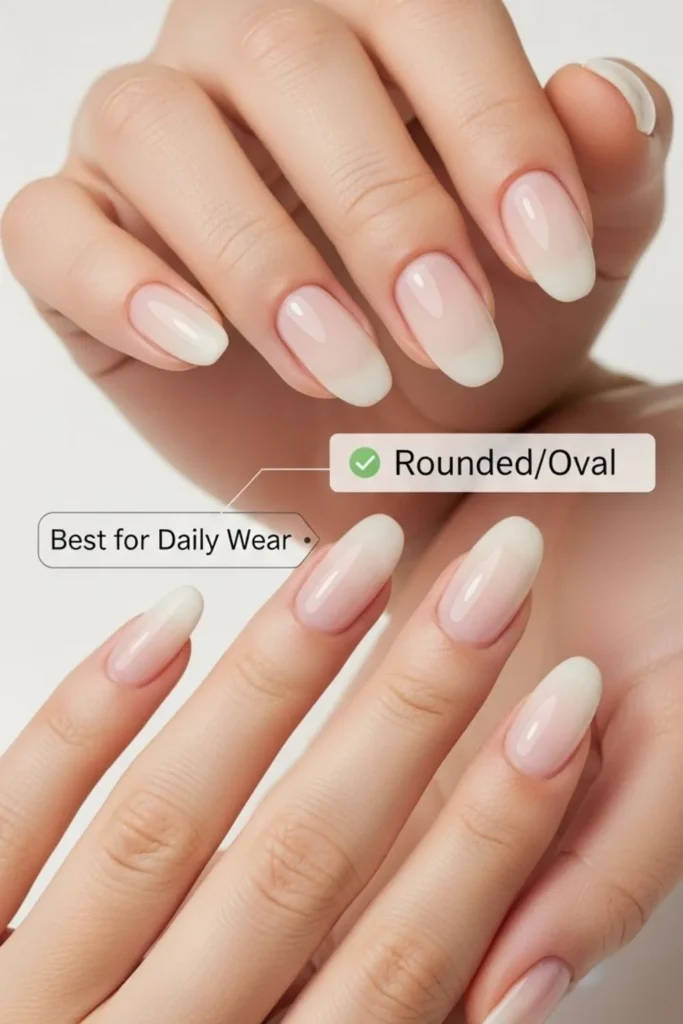
Shape determines whether your manicure survives daily life or crumbles within days. The wrong shape for your lifestyle guarantees frustration regardless of how well you maintain it.
Rounded and oval shapes resist breakage better than sharp edges, making them ideal for people who type frequently or use their hands constantly. The curved edge distributes pressure evenly when you press down, unlike square tips that concentrate stress at corners. This explains why rounded nails last significantly longer between salon visits, they work with your hand movements rather than against them.
Square and squoval shapes suit those wanting a modern, strong appearance without excessive length. Square nails with slightly rounded corners (squoval) prevent the snagging issues of pure square shapes while maintaining clean lines.
These shapes require precise filing to prevent uneven edges that catch on fabric and hair. The maintenance commitment is slightly higher, but the payoff is a polished, contemporary look that photographs beautifully.
Almond and stiletto shapes belong to special occasions or people with minimal hand use. These elegant shapes look stunning but demand constant monitoring catching them on anything can cause painful breaks.
If you love these shapes, keep the length moderate. A short almond shape maintains the feminine aesthetic while surviving actual life. Long stilettos should be reserved for people who truly don’t need to button pants, open car doors, or type extensively.
See Also : Chrome Nails: The Ultimate Guide to Mirror-Finish Manicures That Shine
What Products Actually Make a Difference?
Product quality determines whether your at-home maintenance rivals salon results or wastes time and money. The difference between drugstore basics and professional-grade tools often comes down to longevity and ease of use.
Glass nail files outperform every alternative. Unlike traditional emery boards that create rough edges through their grit, glass files seal the nail edge as they shape, preventing splitting and peeling. A single glass file lasts indefinitely with proper care (wash with soap and water), making the higher initial cost irrelevant. The sealed edge they create makes polish adhere better and last longer.
Cuticle oil ranks as the single most impactful product for everyday nails that look put together. Jojoba-based oils absorb quickly without leaving greasy residue, making them practical for daily use. Apply before bed and after washing dishes or hands repeatedly. Dry cuticles create ragged nail beds that ruin even expensive polish jobs. This $10-15 product transforms nail appearance more dramatically than any color.
Quick-dry top coats solve the “I don’t have time to let polish dry” problem that leads to smudges and early chips. Professional formulas dry to touch in 60 seconds and fully harden within 5 minutes. Reapplying the top coat every 2-3 days extends manicure life dramatically, it takes 30 seconds but adds 3-5 days of fresh appearance. Skip this step and watch your polish chip within 48 hours.
Base coats prevent staining from dark polishes and create better adhesion for color. Strengthening base coats containing keratin or calcium add a fortifying layer that helps brittle nails resist breakage.
If you frequently experience peeling polish, the issue likely stems from skipping base coat rather than the color quality itself. This seemingly minor step determines whether polish lasts 3 days or 10.
How Often Should You Actually Get Manicures?
Manicure frequency depends on your nail growth rate, chosen polish type, and tolerance for imperfection. The culturally expected “weekly mani” wastes money for most people.
Gel manicures last 2-3 weeks before requiring replacement due to growth, not wear. The visible gap at your cuticle line determines timing when it bothers you aesthetically or professionally, it’s time for a fill or removal. Pushing gel appointments beyond 3 weeks risks lifting and damage as the gap widens. People with slower growth can stretch to 4 weeks, while fast growers need 2-week appointments.
Regular polish requires touch-ups rather than complete removal. Refresh your top coat every 2-3 days and spot-fix chips as they occur. Complete removal and reapplication becomes necessary when growth becomes visible (typically 7-14 days) or when too many chips accumulate. This maintenance approach costs nothing and takes 5 minutes versus $30-50 and 45 minutes for professional work.
Professional manicures serve different purposes depending on your skill level and time availability. People who struggle with self-application benefit from monthly professional shaping and color application, then maintain between appointments.
Those comfortable with DIY work might visit salons quarterly for deep cuticle care and professional shaping, handling color themselves. The “right” frequency aligns with your budget, skill level, and appearance standards.
What Mistakes Destroy Otherwise Good Nails?
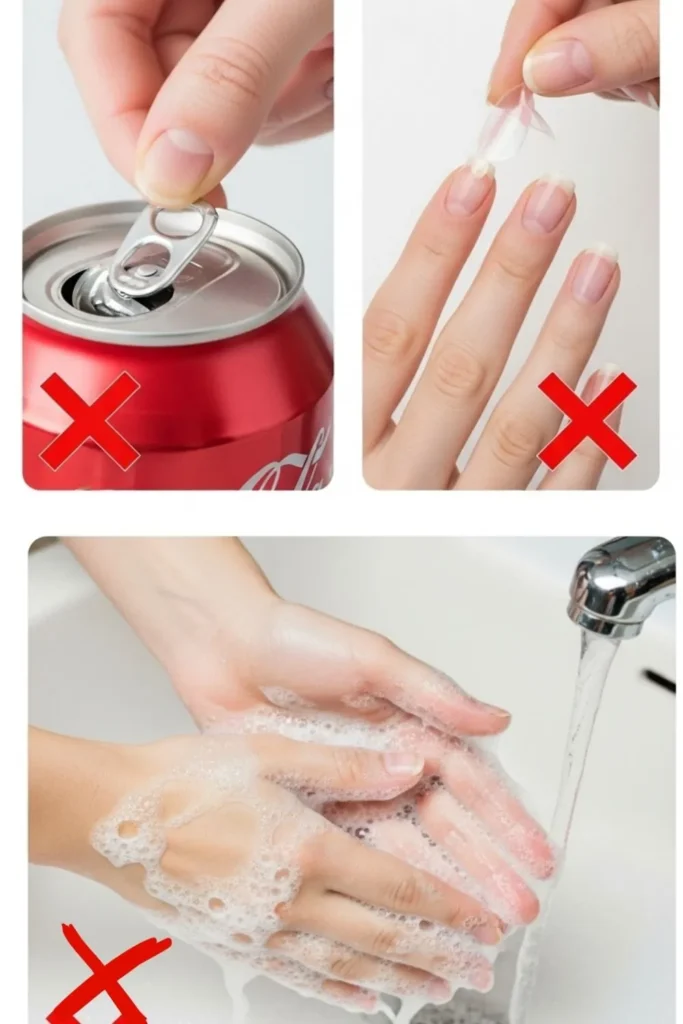
Common habits sabotage even well-maintained nails, often without people realizing the connection between behavior and appearance. These mistakes create a cycle of damage that makes everyday nails impossible to maintain.
Using nails as tools opening cans, scraping labels, prying things apart causes immediate damage that polish can’t hide. Each instance creates micro-trauma that weakens the nail structure. The resulting splits, chips, and breaks compound over time. Keep actual tools (keys, letter openers, scissors) accessible to break this habit. Your nails will stop breaking randomly once you stop breaking them deliberately.
Skipping gloves during household chores exposes nails to harsh chemicals and prolonged water contact. Dishwashing liquid strips natural oils, water causes swelling and shrinking that loosens polish, and cleaning products actively damage the nail plate. Wearing gloves feels inconvenient initially but saves hours of repair work later. This single change can double the life of any manicure.
Over-buffing creates thin, weak nails that break easily and lose their natural shine. Buffing once weekly maximum provides smoothness without removing too much nail plate. More frequent buffing literally files away your nail structure. If your nails have become papery thin, stop buffing entirely for 2-3 months while they regrow. The temporary roughness beats permanently damaged nails.
Peeling off gel or polish instead of proper removal tears layers of your natural nail along with the coating. This creates rough, uneven surfaces that take weeks to grow out and smooth over. Invest 10 minutes in proper removal with acetone or gel remover rather than destroying months of nail growth through impatience. The damage from peeling exceeds the time saved by roughly 10:1.
See Also : Gold Chrome Nails: The Ultimate Guide to Mirror-Finish Manicures in 2025
When Do Nails Signal Bigger Health Issues?
Nail changes sometimes indicate underlying health conditions requiring attention beyond cosmetic fixes. Understanding the difference between aesthetic concerns and health warnings matters.
Sudden brittleness, splitting, or peeling that appears across all nails simultaneously suggests nutritional deficiencies (iron, biotin, protein) or thyroid issues. Gradual changes over years reflect natural aging and environmental exposure. If your nails abruptly change character within weeks, consult a healthcare provider before assuming it’s purely cosmetic.
Yellow discoloration without polish use can indicate fungal infections, especially when accompanied by thickness or separation from the nail bed. White spots typically result from minor trauma (hitting your nail weeks earlier) rather than calcium deficiency as commonly believed. Dark stripes, particularly new ones or ones that widen, warrant immediate medical evaluation to rule out melanoma.
Spoon-shaped nails (concave rather than convex), clubbing (fingertips becoming rounded and enlarged), or separation of the nail from its bed all signal conditions requiring professional medical assessment. These changes don’t respond to polish or care routines because they stem from systemic rather than local issues. When in doubt, photograph concerning changes and show your doctor.
FAQ’s
How can I make my everyday nails look expensive on a budget?
To make everyday nails look expensive on a budget, keep them short, evenly shaped, and painted in neutral shades like nude, soft pink, or milky white. A glossy top coat and clean cuticles instantly create a salon-quality look without spending much.
What’s the easiest low-maintenance nail color for busy professionals?
The easiest low-maintenance nail color is a sheer nude or soft blush because it hides chips and regrowth better than bold shades. These neutral nail colors are popular with busy professionals across the USA for everyday work wear.
How do I stop my nails from breaking constantly?
To stop nails from breaking, moisturize your cuticles daily and wear gloves when cleaning or washing dishes. Using a nail strengthener and limiting acetone remover also helps improve nail durability over time.
Are gel manicures worth it for everyday wear?
Yes, gel manicures are worth it for everyday wear if you want long-lasting polish that resists chipping for up to two weeks. They cost more upfront but save time on frequent touch-ups.
What nail shape lasts longest without chipping?
Rounded and oval nail shapes last the longest without chipping because they don’t catch easily on clothes or surfaces. These shapes are ideal for everyday nails and active lifestyles in the USA.
How can I fix a broken nail quickly without removing all my polish?
You can fix a broken nail quickly by using a tea bag or silk wrap with clear glue to reinforce the crack, then sealing it with a top coat. This temporary repair blends in with your polish and lasts several days.
Quick Recap
- Everyday nails that look put together combine consistent length (2-3mm past fingertip), intentional neutral colors, and visible daily care without requiring excessive time investment
- Choosing colors that match your skin undertones (warm, cool, or neutral) creates a polished appearance that hides chips and regrowth, extending manicures from 3-4 days to 10-14 days between touch-ups
- Professional settings demand shorter lengths and neutral palettes (nudes, soft pinks, mauves) that signal attention to detail without distraction, while creative industries allow more flexibility with color and subtle art
- Weekly 15-minute home maintenance focused on consistent filing in one direction, gentle cuticle pushing, and nightly oil application maintains salon-quality appearance between professional appointments
- Common mistakes like using nails as tools, skipping gloves during chores, and over-buffing cause more damage than daily wear, making prevention far more effective than correction
Conclusion
Looking polished doesn’t require perfection; it requires consistency in three specific areas. Shape, color, and care work together to create everyday nails that communicate intention rather than neglect. When you maintain short to medium length, choose colors within your undertone family, and commit to 10 minutes of weekly maintenance, your hands project competence without consuming your schedule.
The transformation happens gradually rather than overnight. Damaged nails need 8-12 weeks to completely grow out and replace themselves with healthy tissue. During this recovery period, focus on protection and consistent care rather than elaborate designs.
Simple, well-maintained nails always outperform complex, poorly maintained ones in professional and personal contexts. Your hands are constantly visible to you and everyone you interact with makes them worth looking at through strategic simplicity rather than elaborate complexity.