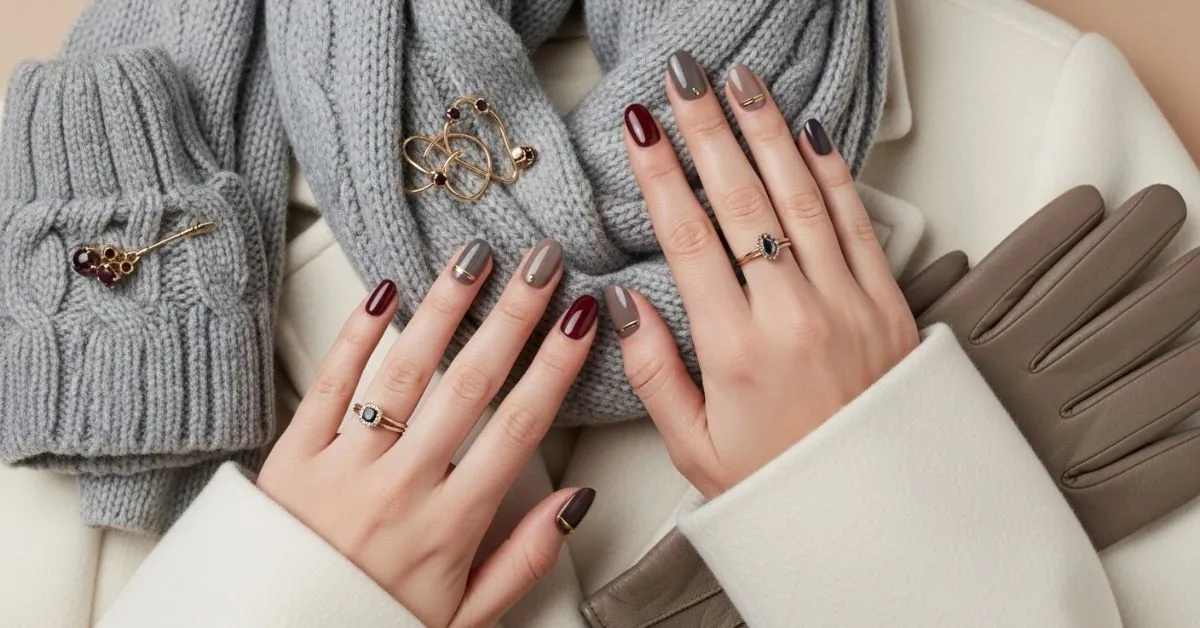
49 Elegant Classy Winter Nails to Elevate Your Cold-Weather Style
Winter doesn’t mean sacrificing sophistication at your fingertips. While bold holiday designs dominate feeds, truly elegant winter nails strike a different chord; they whisper luxury through refined textures, muted palettes, and timeless shapes that work from boardroom to après-ski. The challenge isn’t finding inspiration; it’s identifying which combinations of color, finish, and detail actually translate to wearable elegance rather than overdone excess.
Most winter nail trends lean heavily festive or aggressively trendy, leaving a gap for those seeking understated polish. The difference between classy and costume often comes down to restraint knowing when a single accent nail outperforms five, or why a glossy charcoal reads more sophisticated than glitter overload.
Here’s exactly how to achieve elegant classy winter nails that feel expensive, intentional, and effortlessly chic without relying on seasonal clichés or temporary trends.
What Makes Winter Nails Actually Look Elegant Instead of Overdone
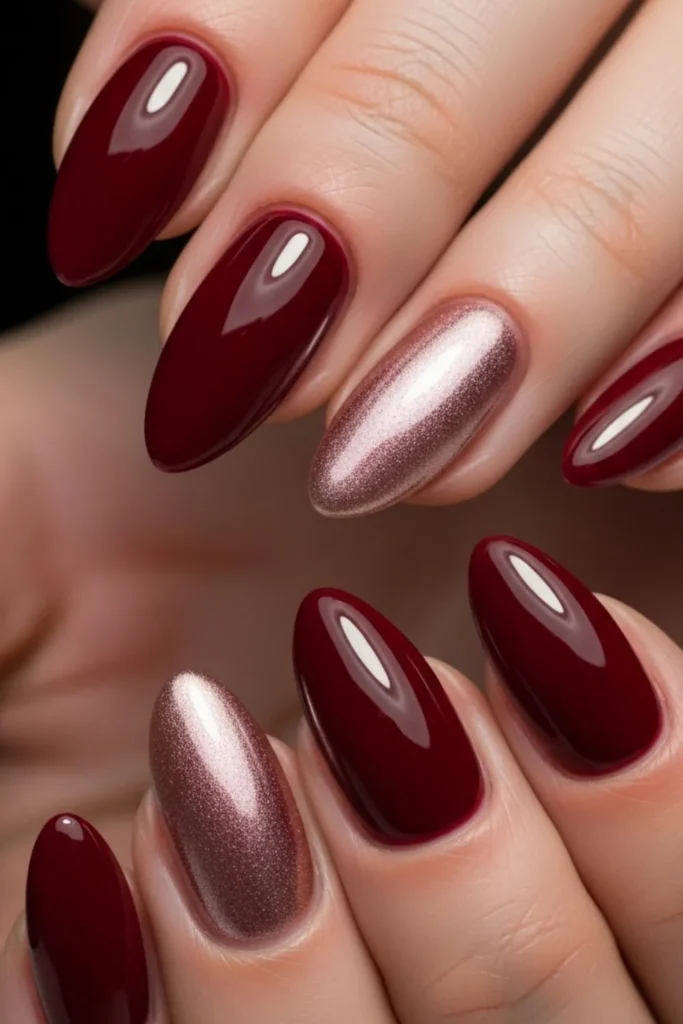
Elegant winter nails balance visual interest with restraint, using no more than two complementary techniques per manicure. The foundation lies in sophisticated color choices deep wines, soft taupes, cool grays, and creamy off-whites that reference winter’s natural palette without screaming “holiday.” Unlike summer’s bright optimism, winter elegance comes from depth and texture rather than saturation.
The finish matters as much as the color. High-gloss topcoats create a polished, professional look, while carefully placed matte finishes add modern edge without appearing unfinished.
Metallic accents work best when used sparingly a single gold foil stripe or chrome French tip rather than covering entire nails. The key distinction is intentionality: elegant designs look curated, not cluttered.
Shape selection dramatically impacts perceived sophistication. Almond and oval shapes naturally elongate fingers and provide a canvas that feels refined, while square and coffin shapes can read elegant when kept at moderate length.
Extreme stilettos or overly long extensions typically undermine the understated luxury that defines true elegance, regardless of design quality.
Why Deep Burgundy and Wine Tones Dominate Classy Winter Palettes
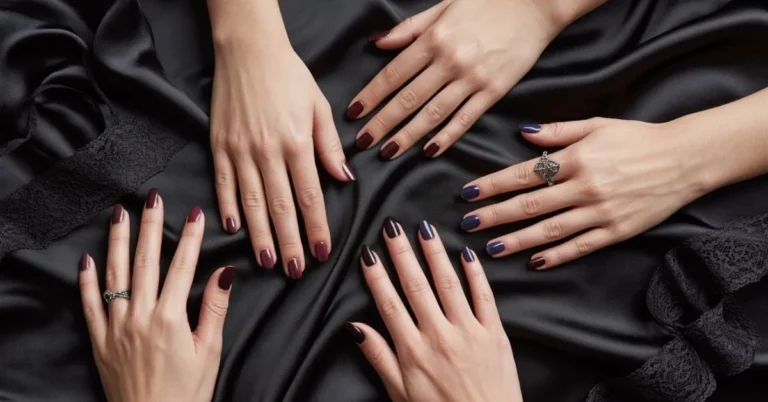
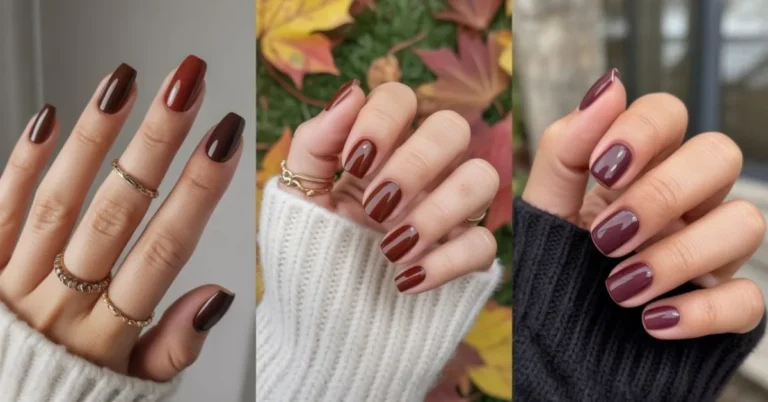
Deep burgundy and wine shades work because they reference luxury materials aged Merlot, velvet upholstery, winter berries without the aggressive boldness of true red. These colors contain enough warmth to avoid appearing harsh against winter skin tones while maintaining the depth that prevents them from reading juvenile or overly sweet.
Unlike bright reds that demand attention, wine tones integrate seamlessly into professional and formal settings. They pair effortlessly with winter’s neutral wardrobe staples camel coats, charcoal knits, black leather and transition from day to evening without clashing. A glossy oxblood manicure communicates polish in business meetings yet still feels appropriate for evening events.
The versatility extends to accent compatibility. Wine shades accept gold foil details, subtle shimmer, or matte topcoats equally well, making them reliable base colors for those wanting options without commitment. They also forgive minor wear better than lighter shades, maintaining their sophisticated appearance between salon visits.
See More About : Nature Inspired Nail Art Autumn: Transform Your Nails with Seasonal Beauty
How Creamy Neutrals Create Effortless Winter Sophistication
Creamy neutrals mushroom taupe, warm beige, soft greige provide the ultimate canvas for understated elegance because they enhance rather than compete with your overall aesthetic.
These shades work on the same principle as luxury minimalism: apparent simplicity that’s actually deeply considered. They elongate fingers visually while maintaining a clean, expensive appearance that never feels dated.
The distinction between cheap-looking nude and elegant neutral lies in undertone selection. Cool-toned grays and beiges can wash out winter skin, while overly pink nudes read casual.
The sweet spot is warm, muted tones with slight gray or taupe depth colors that complement rather than match your skin exactly. Think latte, not ballet pink.
Texture transforms neutral manicures from basic to intentional. A high-shine greige becomes boardroom-ready, while the same shade in matte finish gains modern edge.
Adding a single chrome accent nail or delicate gold striping tape elevates the look without abandoning the neutral foundation. This approach works particularly well for those who want elegant winter nails that won’t clash with constantly changing outfit colors.
The Difference Between Elegant Metallic Accents and Cheap-Looking Glitter
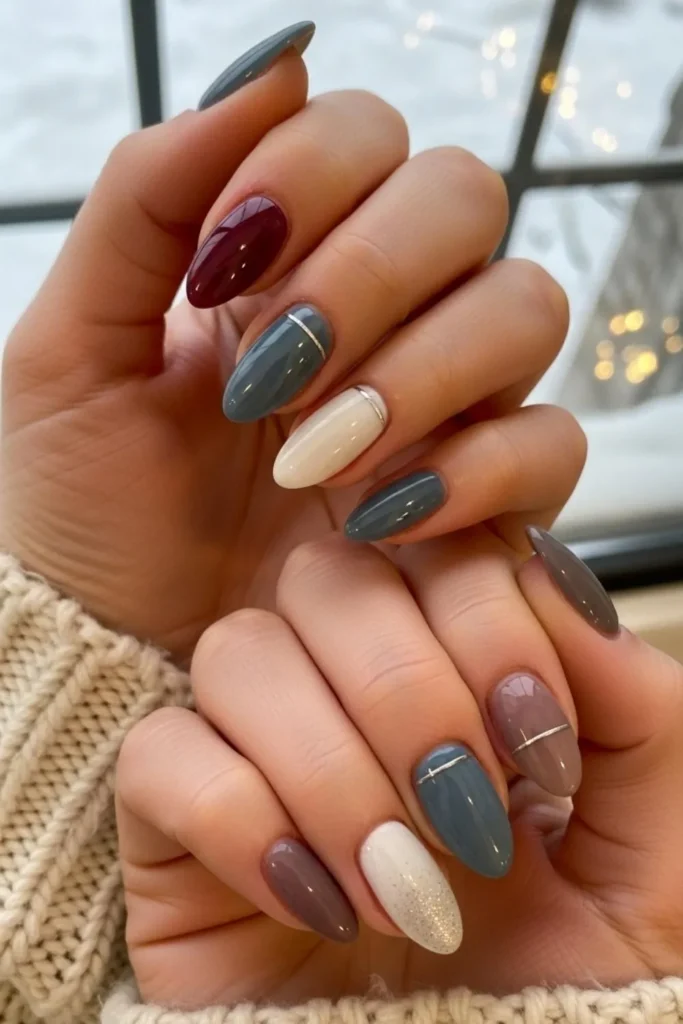
Elegant metallic application uses precious metal tones rose gold, champagne, brushed silver as accents rather than primary colors, typically covering 20% or less of the total manicure.
Think thin striping tape along a cuticle line, a single chrome reverse French tip, or delicate gold leaf fragments pressed into one accent nail. This restraint allows the metallic element to catch light without overwhelming the overall design.
Cheap-looking glitter fails because it lacks intentionality. Chunky, multi-colored glitter scattered across all nails reads craft project rather than curated design. The particles reflect light chaotically rather than cohesively, creating visual noise instead of sophisticated sparkle.
Additionally, low-quality glitter often requires multiple coats for opacity, resulting in bumpy texture that undermines the smooth finish essential to elegance.
The test is simple: if removing the metallic element would make the manicure feel incomplete, it’s integral to the design. If removing it reveals a still-cohesive look, it’s functioning as intended an enhancement rather than a crutch. Elegant metallics always serve the overall composition rather than dominating it.
Why Short to Medium Length Works Better for Classy Winter Designs
Shorter nail lengths (just past the fingertip to 3-4mm extension) photograph and function more elegantly because they maintain proportion with the hand rather than overwhelming it.
This length range allows sophisticated design elements fine line work, subtle ombre, delicate foils to remain visible and intentional rather than getting lost on excessive real estate or appearing cramped on insufficient space.
Practical elegance matters in winter when hands interact constantly with gloves, scarves, coats, and warming beverages. Moderate lengths prevent the snagging and breakage that makes even the most beautiful manicure look unkempt within days.
They also align with the professional contexts where elegant winter nails often need to perform business meetings, formal events, and everyday interactions where extreme length reads costume rather than polished.
The exception proves the rule: coffin or almond shapes can extend slightly longer while maintaining elegance, but only when the design remains proportionally restrained.
A 6mm almond nail with a single color and minimal accent still reads sophisticated; the same length covered in complex nail art typically doesn’t.
See More About : Short Square Fall Nails: The Ultimate Guide to 2025’s Most Sophisticated Autumn Manicure Trend
How Velvet and Suede Finishes Add Luxury Without Sparkle
Velvet and suede nail finishes create tactile luxury through light-absorbing matte textures that reference expensive winter fabrics. Unlike standard matte topcoats that can appear flat or chalky, true velvet finishes contain micro-fine particles that create subtle depth variation, the nail equivalent of crushed velvet upholstery. Applied over deep jewel tones like emerald, sapphire, or ruby, they produce richness without shine.
These finishes work particularly well for winter because they align with seasonal textures in fashion and interiors. They pair beautifully with wool coats, cashmere sweaters, and suede accessories, creating cohesive styling that feels intentional. The matte surface also provides practical advantages fewer visible fingerprints and smudges than high-gloss alternatives, maintaining a fresh appearance longer.
The sophistication ceiling is real: velvet finishes elevate deep, saturated colors but can make pale shades appear unfinished or chalky. Stick to jewel tones, chocolate browns, or charcoal grays for maximum impact. Combining velvet with high-gloss say, four matte nails with one glossy accent creates compelling contrast that feels modern and deliberate.
What French Manicure Variations Actually Look Modern and Elegant
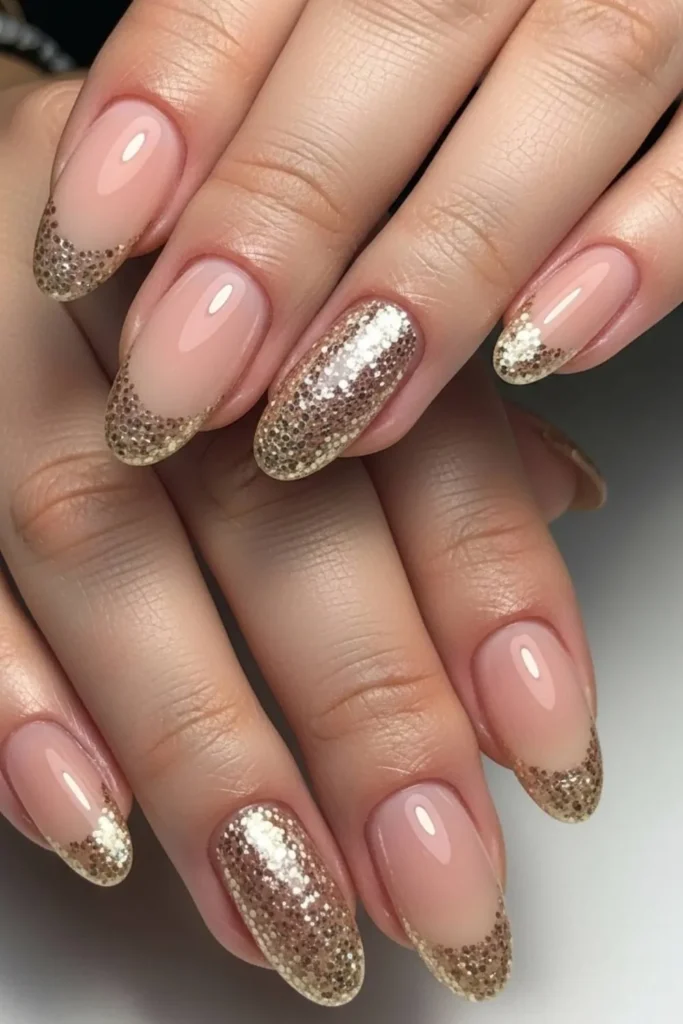
Modern French manicures abandon stark white tips for softer alternatives that feel less 2005 and more 2026. Elegant variations include barely-there nude bases with champagne or rose gold tips, reverse French using a thin metallic line at the cuticle, or micro-French where the tip is only 1-2mm of a tonal shade slightly deeper than the base. These updates maintain the French manicure’s lengthening effect while avoiding the dated, obvious contrast of traditional versions.
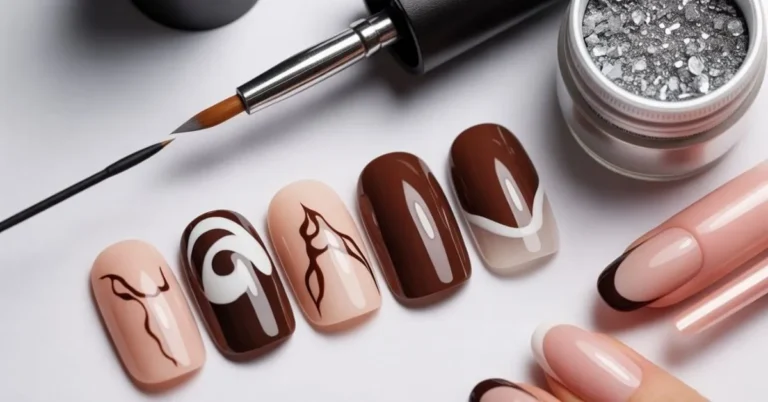
Color inversions create sophisticated interest: a deep charcoal base with soft taupe tips, or mushroom beige with burgundy tips. The key is maintaining tonal harmony colors should be related enough to feel intentional rather than random.
The tip width also matters; ultra-thin tips (2mm or less) read more refined than chunky 5-6mm bands that can appear costume-like.
Asymmetrical French techniques tips on only the ring and middle fingers, or varying tip widths across nails add contemporary edge while maintaining the essential elegance of the French structure.
This works best when executed with precision; sloppy application undermines the entire concept regardless of how trendy the variation might be.
Why Monochromatic Schemes Feel More Expensive Than Multi-Color Designs
Monochromatic winter nail designs using varying shades and finishes of a single color family create cohesion that reads as intentional luxury rather than experimental playfulness.
A manicure using charcoal, slate, and soft gray across different nails with varied matte and gloss finishes demonstrates sophistication through restraint. This approach mimics high-end fashion’s tonal dressing strategy, where depth comes from texture and subtle variation rather than color contrast.
The psychology is straightforward: limiting the color palette signals confidence and editing ability, both associated with refined taste. Multi-color designs require significantly more skill to execute elegantly; when done poorly, they read chaotic or juvenile.
Monochromatic schemes forgive minor imperfections better because the eye isn’t drawn to jarring transitions between incompatible shades.
Texture variation becomes essential in monochromatic designs to prevent boredom. Combine gloss and matte finishes, add subtle shimmer to one accent nail, or incorporate tone-on-tone nail art like darker gray geometric lines on a lighter gray base.
These variations provide visual interest while maintaining the cohesive elegance that defines the approach.
See More About : Almond Fall Nails Ideas: 30+ Stunning Autumn 2025 Nail Designs
How Negative Space Designs Work for Winter Without Looking Unfinished
Elegant negative space winter nails use bare nail strategically as a design element rather than a shortcut. The key is precision: clean geometric shapes, perfectly aligned crescents, or delicate line work that clearly delineates painted sections from natural nail.
This requires meticulous application shaky lines or uneven edges immediately undermine the intentional minimalism and make the design appear incomplete rather than curated.
Winter-appropriate negative space leans toward structured designs: vertical panels of deep burgundy separated by bare nail stripes, half-moon manicures with the lunula left clear, or windowpane grids using metallic tape over natural nail.
These geometric approaches feel more polished and season-appropriate than the organic, abstract negative space that works better in warmer months.
The finish of painted sections matters enormously. High-gloss polish creates deliberate contrast with natural nail, making the negative space read as intentional design rather than missing polish.
Conversely, matte finishes can make negative space appear unfinished unless the geometric shapes are extremely precise and clearly architectural in nature.
What Nail Art Details Enhance Rather Than Overwhelm Elegant Designs
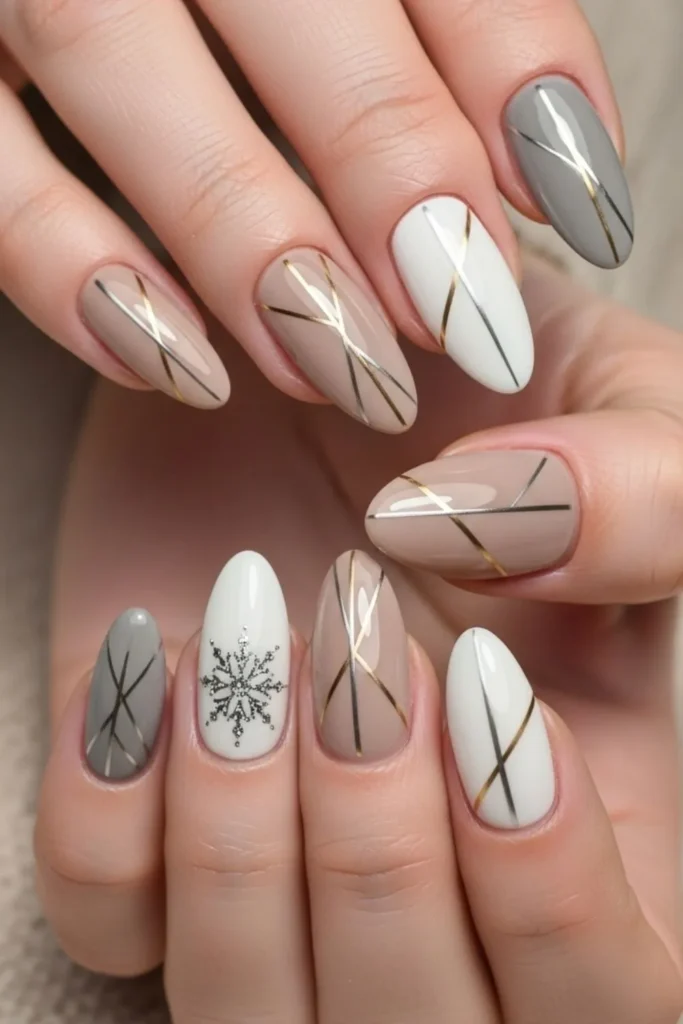
Refined nail art uses no more than one technique per manicure: either delicate line work, or subtle foiling, or minimal studs never all three. A single gold stripe along the cuticle edge of each nail creates elegance; adding additional stripes, dots, and rhinestones creates clutter.
The detail should enhance the base color and shape rather than competing with them for attention.
Scale matters critically. Tiny details micro-dots, thin lines, small geometric shapes maintain sophistication because they require closer inspection to fully appreciate. Oversized elements or dense patterns read bold rather than refined, which may be desirable in some contexts but contradicts the elegant aesthetic.
Think delicate gold constellation dots on charcoal nails, not full-coverage geometric patterns.
Placement strategy separates amateur from professional-looking nail art. Limiting detailed elements to one or two accent nails (typically ring fingers) creates focal points without overwhelming the hand.
Alternatively, uniform minimal detail across all nails like a single metallic stripe at the same position on each creates rhythm and cohesion. Random placement or unbalanced distribution undermines elegance regardless of execution quality.
Why Cool-Toned Grays and Charcoals Outperform Warm Browns for Modern Elegance
Cool-toned grays and charcoals align with contemporary minimalist aesthetics that dominate modern luxury markets think Scandinavian design, architectural concrete, winter cityscapes.
These shades photograph beautifully against winter’s neutral palette and complement both silver and gold jewelry equally well. They create a sophisticated, slightly edgy aesthetic that feels current without being trendy.
Warm browns, while classic, can skew dated or overly cozy depending on execution. Chocolate and espresso shades work elegantly when kept very deep and saturated, but medium browns often read casual or earthy rather than refined.
The exception is greige gray-beige hybrids that split the difference and can be stunning when carefully selected for undertone compatibility with your skin.
The versatility factor favors cool grays for those building an elegant winter nail wardrobe. Charcoal pairs seamlessly with every winter coat color, from camel to black to jewel tones, while browns can clash with certain outfit combinations.
For maximum wearability and modern sophistication, cool-toned neutrals consistently outperform their warm counterparts.
See More About : Marble French Fall Nails: The Ultimate 2025 Autumn Nail Trend Guide
How Ombré Techniques Create Depth Without Looking Dated
Modern elegant ombré uses subtle, tonal gradations rather than the stark color transitions that dominated 2015. Think slate gray fading imperceptibly to charcoal, or burgundy deepening gradually to near-black at the tips.
These barely-there transitions create dimensional depth while maintaining the cohesive, monochromatic sophistication that defines elegant winter nails.
The execution determines whether ombré feels fresh or tired. Airbrushed or sponged gradients with perfectly smooth transitions read current and refined. Harsh, visible color bands or glitter-heavy ombré immediately dates the look and undermines elegance.
The gradient should be so subtle that it registers as depth rather than obvious color change your eye should perceive richness before consciously identifying the technique.
Vertical versus horizontal orientation impacts the overall effect. Traditional horizontal ombré (light to dark from cuticle to tip) can appear dated, while vertical gradients or diagonal transitions feel more modern.
Alternatively, creating an ombré effect across the hand lightest shade on the pinky, gradually darkening to the thumb provides the depth benefits without the dated association.
What Makes Almond and Oval Shapes Ideal for Elegant Winter Nails
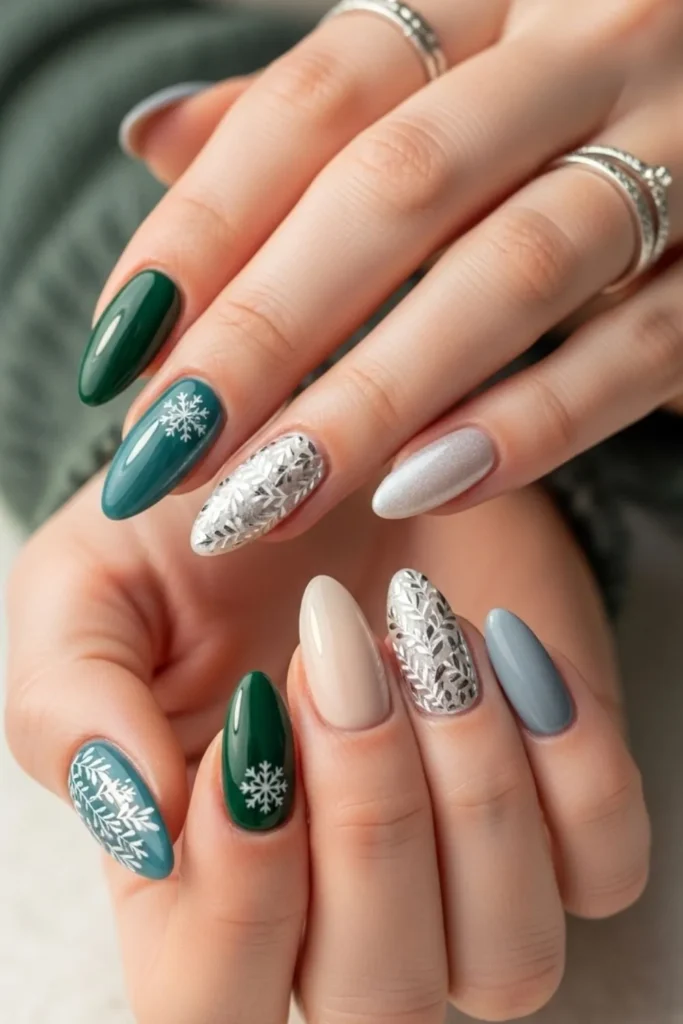
Almond and oval shapes naturally elongate fingers through their tapered, rounded profiles, creating a flattering silhouette that appears refined and feminine without being overtly dramatic.
These shapes provide sufficient surface area for subtle design elements while avoiding the aggressive geometry of stiletto or the blocky presence of square shapes. They’re the nail equivalent of the little black dress universally flattering and appropriate for virtually any context.
Structural integrity favors these shapes for winter practicality. The lack of sharp corners reduces breakage risk from constant glove wearing and cold-weather activities, maintaining the polished appearance essential to elegance.
Unlike square or coffin shapes that can chip or snag easily at corners, the curved edges of almond and oval nails withstand daily winter wear more gracefully.
The shapes also complement the sophisticated color palettes and minimal design approaches that define elegant winter nails. A deep burgundy almond nail looks intentionally chic; the same color on an extreme stiletto can read costume-like.
The moderate, balanced proportions of these shapes ensure that color and subtle details remain the focal points rather than the shape itself.
Why Single Accent Nails Work Better Than Complex Multi-Nail Designs
Single accent nails typically the ring finger create a focal point that draws the eye without overwhelming the hand’s visual balance. This approach allows for slightly more elaborate detail or contrasting elements (chrome finish, delicate foiling, subtle rhinestones) while maintaining overall restraint.
The surrounding nails in a solid, complementary shade provide visual rest that makes the accent feel intentional rather than excessive.
Multiple accent nails or complex designs across all fingers create competing focal points that fragment visual attention and undermine cohesion. The eye doesn’t know where to land, resulting in a cluttered appearance regardless of individual nail quality.
This problem intensifies in professional or formal settings where hands are highly visible busy designs read as trying too hard rather than effortlessly polished.
The accent nail strategy also provides practical benefits. If you want to experiment with trendier elements, geometric shapes, bold metallics, textural details limiting them to one or two nails allows for expression without full commitment.
If the trend ages poorly or you tire of it, you’re not locked into an entire manicure that feels dated. This flexibility aligns perfectly with the timeless quality that defines true elegance.
See More About : Short Burnt Orange Nails: The Ultimate 2025 Fall Style Guide That’s Taking Over Social Media
How Pearl and Shimmer Finishes Differ From Obvious Glitter
Pearl and shimmer finishes contain ultra-fine reflective particles that create subtle, sophisticated glow rather than obvious sparkle. These finishes shift gently in light, adding dimension and richness without the chaotic light reflection of glitter. Applied over deep winter shades like navy, forest green, or burgundy, they create depth similar to natural pearl’s luster present but never garish.
The particle size makes all the difference. Pearl finishes use particles typically under 10 microns that lie flat against the nail, creating a smooth surface with luminous undertones.
Glitter uses particles ranging from 50 microns to several millimeters that sit on the surface, creating texture and obvious, chunky sparkle. This textural difference is why pearl finishes feel refined while glitter often reads craft-project casual.
Application technique affects the final sophistication level. Pearl finishes work best in thin, even layers that allow the base color to show through, creating translucent luminosity.
Thick application or using pearl topcoats over already shimmery base colors creates overload that undermines elegance. The goal is enhancement, not transformation the nail should look richer, not bedazzled.
What Seasonal Elements to Include Versus Avoid for Timeless Elegance
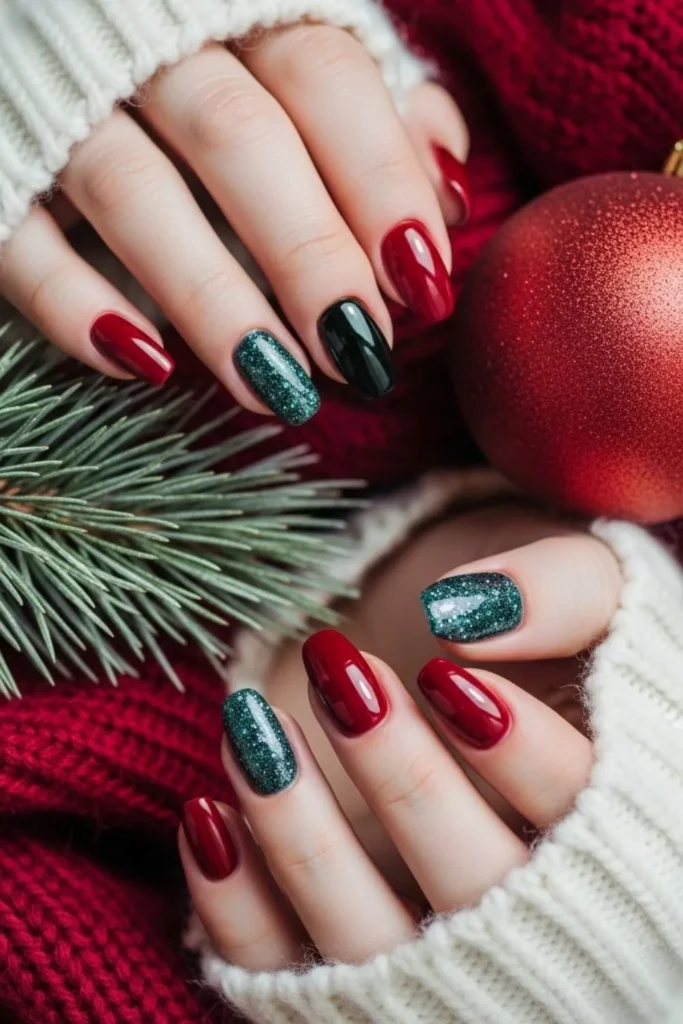
Include subtle textural references to winter velvet finishes, deep jewel tones, metallic accents reminiscent of frost that enhance sophistication without announcing the season literally. These elements work because they align with winter’s aesthetic mood while remaining wearable across contexts. A matte emerald manicure feels winter-appropriate through its richness and finish, not because it features painted snowflakes.
Avoid literal seasonal imagery: snowflakes, snowmen, Christmas trees, or any holiday-specific graphics. These immediately date the manicure to a specific few weeks and read costume rather than elegant.
Similarly, avoid overly themed color combinations like red-and-green or blue-and-silver that register as holiday decorations rather than sophisticated nail design. The goal is nails that feel appropriately seasonal through mood and quality, not through obvious symbolism.
The timelessness test is simple: would this manicure look equally appropriate in a winter business meeting and a holiday party? If yes, it’s likely elegant and versatile.
If it only works in one context, it’s probably too themed or specific. Truly elegant winter nails transcend individual events to become a polished baseline that works everywhere.
How to Combine Matte and Glossy Finishes Without Looking Confused
Successful matte-gloss combinations follow a clear pattern: either four matte nails with one glossy accent, or the inverse. This creates intentional contrast rather than appearing indecisive.
The accent nail(s) should typically be the ring finger or both ring fingers, following established focal point principles. Random distribution two matte here, three glossy there undermines the sophisticated contrast and reads as accidental rather than designed.
Color choice amplifies or undermines the finish contrast. Using the same color in both finishes (matte burgundy on four nails, glossy burgundy on the accent) creates sleek, modern contrast that feels very intentional.
Using different colors and different finishes typically creates too much contrast, becoming visually busy rather than elegantly dynamic. Reserve color variation for when all nails share the same finish.
The texture transition itself should be clean and deliberate. If incorporating both finishes on a single nail say, a matte base with glossy French tip, the division line must be razor-sharp.
Blurred or uneven transitions between finishes appear sloppy and eliminate the sophisticated contrast that makes the technique work. This is where professional application significantly outperforms DIY attempts.
See More About : Neutral Marble Fall Nails: The Ultimate 2025 Guide to Effortless Autumn Elegance
Why Jewel Tones Command More Luxury Than Pastels in Winter
Jewel tones emerald, sapphire, ruby, amethyst inherently reference precious materials, creating luxury associations that pastels simply can’t match. Their depth and saturation read as rich and substantial rather than sweet or casual, aligning with winter’s aesthetic gravity.
These colors also perform better in winter light conditions, maintaining their presence and vibrancy rather than appearing washed out or faded.
Pastels in winter face practical challenges beyond aesthetic ones. Light colors show chips, wear, and imperfections more readily than dark shades, making them harder to maintain with the polished appearance elegance requires.
They also clash with winter’s typical color palette of deep neutrals and dark outerwear, creating disconnection rather than cohesion with your overall presentation.
The exception worth noting: very pale, cool-toned neutrals icy lavender, soft gray-blue, barely-there champagne can work elegantly when executed with absolute precision in high-gloss finish.
These succeed by reading as intentional minimalism rather than attempting sweetness. They require perfect application and immaculate maintenance to avoid appearing washed out or childish, making them higher-risk choices than their jewel-toned counterparts.
What Professional Application Brings That DIY Often Misses
Professional application delivers precision that fundamentally impacts perceived elegance perfectly clean cuticle lines, uniform polish thickness, completely smooth surfaces without bubbles or streaking.
These technical foundations are invisible when done correctly but glaringly obvious when executed poorly. Even the most sophisticated color and design choices appear cheap when application quality fails, while simple designs look expensive when applied flawlessly.
Advanced techniques like proper nail prep, strategic buffing, and expert topcoat application create durability that DIY often can’t match. Professional manicures typically last 7-10 days looking fresh, while home applications often show wear within 3-4 days.
For elegant winter nails, longevity matters a chipped, grown-out manicure undermines sophistication regardless of the initial design quality.
The expertise factor extends to color and design consultation. Experienced nail technicians can assess your skin tone, hand shape, and lifestyle to recommend options that will actually photograph and wear well on you specifically, rather than simply replicating trending designs that may not be flattering.
This customization is the difference between elegant nails and nails that simply follow trends without strategy.
How Minimalist Geometric Patterns Create Modern Sophistication
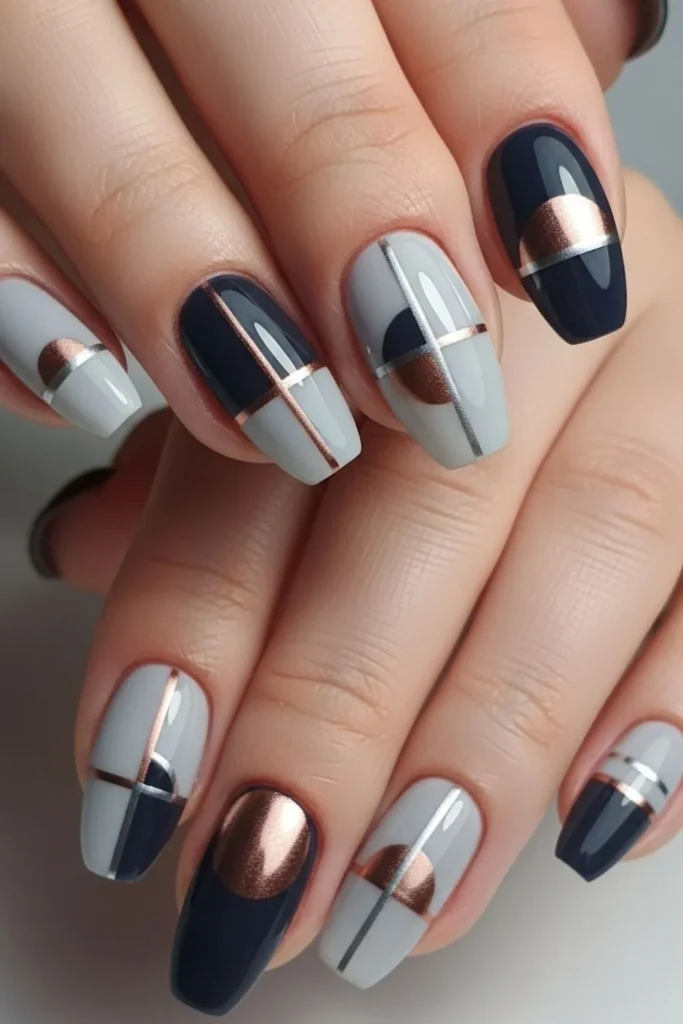
Minimalist geometric patterns, single lines, thin triangles, negative space grids create visual interest through precision and restraint rather than complexity. These designs work elegantly because they require skill to execute cleanly, signaling intentionality and care.
A perfectly straight gold line bisecting a charcoal nail demonstrates control and consideration; a wobbly line undermines the entire concept regardless of the design’s theoretical elegance.
The key is editing: one geometric element per nail maximum, and often limiting the pattern to accent nails only. A single vertical stripe creates sleek modernity; multiple intersecting lines risk appearing busy.
Similarly, varying the geometric pattern across nails (triangles here, circles there) typically fragments cohesion, while repeating the same minimal element creates rhythm and sophistication.
Color relationships within geometric patterns determine elegance levels. Tone-on-tone patterns (dark gray lines on medium gray base) maintain subtlety while adding dimension.
High-contrast patterns (white on black) can work but require exceptional precision to avoid looking graphic rather than refined. Metallic geometric elements split the difference effectively, they create contrast through finish rather than color, maintaining sophistication while providing visual interest.
See More About : Matte Burnt Orange Nails 2025: The Complete Guide to Fall’s Hottest Manicure Trend
Why Classic Colors Outlast Trendy Shades for Elegant Winter Wardrobes
Classic colors burgundy, charcoal, navy, taupe, soft gray remain elegant across years because they’re rooted in timeless associations: luxury materials, sophisticated neutrality, and universal flattery.
These shades don’t date themselves to specific seasons or trends, allowing you to wear them confidently knowing they’ll photograph and present well in any context, from business meetings to formal events.
Trendy colors face built-in obsolescence. The specific sage green or terracotta that dominates one winter looks dated by the next, creating a narrow window of relevance.
For those seeking elegant winter nails as a baseline aesthetic rather than constant experimentation, classics provide reliability and versatility. They also build a cohesive collection of classic shades coordinated with each other, while trending colors often clash.
The investment perspective matters too. Quality nail products and professional applications represent meaningful expenses; classic colors ensure you’ll actually wear and enjoy that investment repeatedly rather than abandoning it when the trend shifts. This practical elegance, beautiful, versatile, and repeatedly wearable defines true sophistication better than any temporary trending shade.
How Proper Nail Care Creates the Foundation for Any Elegant Design
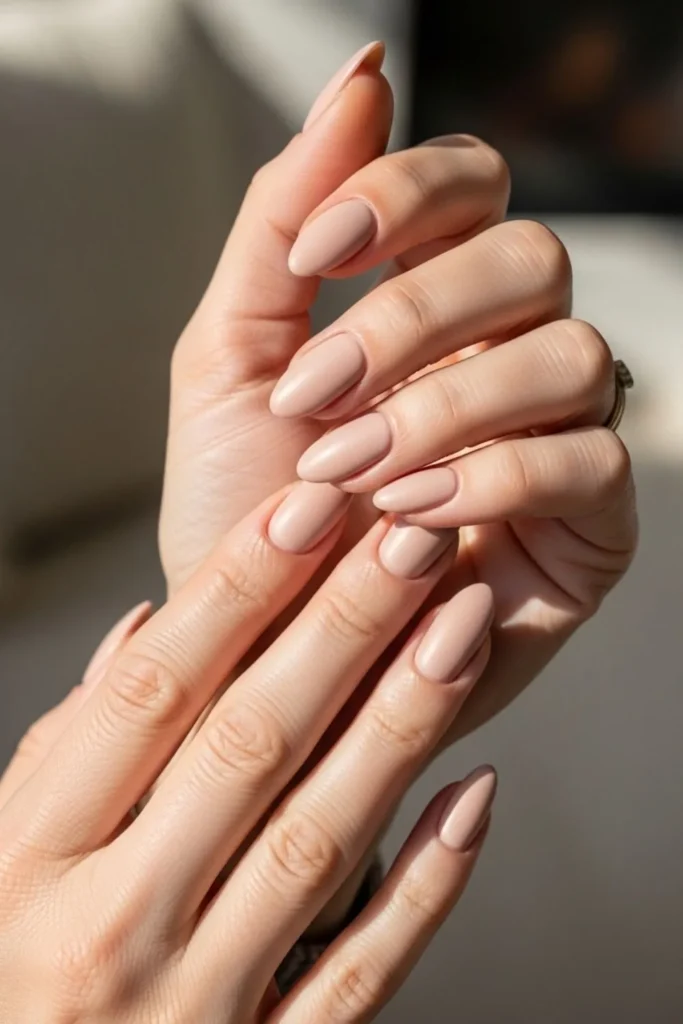
Elegant nail designs require healthy nails as their foundation no amount of polish sophistication compensates for damaged nail beds, raggedy cuticles, or uneven nail surfaces.
Regular moisturizing, proper filing technique, and cuticle care create the smooth canvas that allows polish to apply evenly and wear gracefully. Neglecting nail health creates texture issues that read through even the most expensive polish.
The shape maintenance between manicures impacts elegance significantly. Allowing nails to grow unevenly or break inconsistently creates imbalance that undermines the curated appearance elegance requires.
Regular filing to maintain consistent length and shape even without full manicures preserves the polished baseline. This discipline is what separates occasionally elegant nails from consistently sophisticated ones.
Investment in nail health pays compounding returns. Strong, healthy nails hold polish longer, resist chipping better, and require less intensive correction, making each manicure more effective and longer-lasting.
Treatments like cuticle oil, strengthening base coats, and periodic professional interventions aren’t indulgences; they’re the structural foundation that makes elegant winter nails sustainable rather than occasional.
See More About : Black Cherry Fall Nails 2025: The Ultimate Guide to This Season’s Most Coveted Autumn Manicure
Frequently Asked Questions
How long should elegant winter nails be for professional settings?
For office and business environments in the US, elegant winter nails should be short to medium length, just past the fingertip. This length looks polished, types easily, and fits most professional dress codes.
Can you wear red nails elegantly in winter without looking too festive?
Yes, choosing deep shades like burgundy, wine, or muted cherry keeps red nails elegant instead of holiday-themed. Pairing them with a glossy or satin finish also creates a refined winter nail look.
What’s the most versatile elegant winter nail color?
Soft taupe, greige, or sheer blush are the most versatile elegant winter nail colors for work and everyday wear. These neutral shades match nearly any outfit and look appropriate in professional US settings.
How often should you change elegant winter nail designs?
Most elegant winter nail designs should be refreshed every 2 to 3 weeks to maintain a clean, professional appearance. Gel manicures may last closer to 3 weeks, while regular polish often needs updates sooner.
Do elegant winter nails require gel or regular polish?
Elegant winter nails can be done with either gel or regular polish, depending on your lifestyle and upkeep preference. Gel lasts longer with fewer chips, while regular polish is easier to remove and change at home.
Key Takeaways
- Elegant winter nails balance sophistication through restrained color palettes deep wines, cool grays, creamy neutrals and limit design elements to prevent visual clutter
- Texture variation using matte, velvet, and high-gloss finishes creates luxury without sparkle, while subtle metallics serve as accents rather than primary features
- Almond and oval shapes at moderate lengths provide refined silhouettes that complement sophisticated designs and withstand winter wear better than extreme shapes
- Modern elegance favors monochromatic schemes, minimal geometric patterns, and single accent nails over complex multi-color designs that fragment visual cohesion
- Professional application quality and consistent nail health maintenance create the foundation that allows even simple designs to appear expensive and intentional
Conclusion
Elegant winter nails succeed through intentional restraint rather than maximalist decoration. The sophisticated approach combines timeless color palettes, quality finishes, and minimal design elements that enhance rather than overwhelm your hands.
Deep jewel tones, cool-toned neutrals, and carefully placed metallic accents create luxury that translates across professional and social settings without seasonal limitations.
The foundation matters as much as the polish itself. Healthy nails, precise application, and appropriate shape selection ensure that even simple monochromatic designs appear expensive and curated.
Elegant winter nails aren’t about following every trend but about identifying the classic elements that align with your personal aesthetic and executing them with consistency and care.