
54 Easy Nail Ideas at Home to Try in 2026
Creating polished manicures at home feels harder than it should, especially when easy nail ideas at home seem to demand salon tools, perfect hands, and endless time. What actually trips people up isn’t creativity, it’s believing good nail art has to be complicated to look modern.
That misconception leads to rushed prep, thick polish layers, and designs that chip within a day. A simple dot pattern done cleanly lasts longer than an overworked design that never fully dries. Trends for 2026 quietly favor restraint, balance, and techniques that work with real life, not against it.
Smart DIY nail art succeeds by using repeatable methods and everyday tools to create intentional results. When prep is right and techniques stay simple, even minimalist designs look elevated, wearable, and unmistakably current.
Why Most DIY Nail Art Attempts Fail
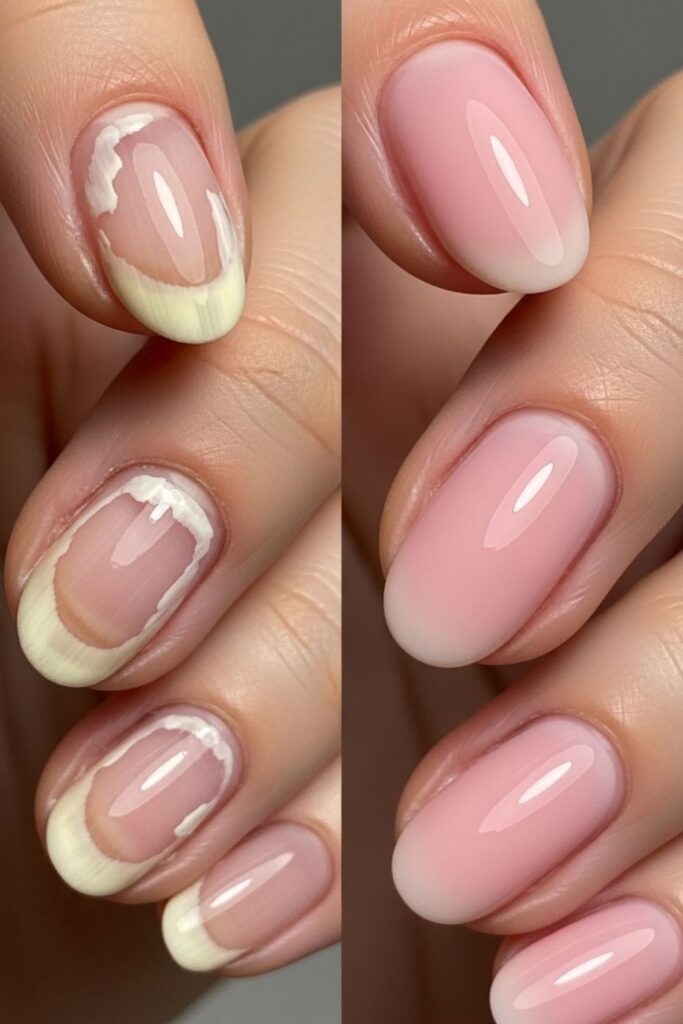
The primary reason easy nail ideas at home don’t work out is poor preparation combined with unrealistic expectations. Unlike tutorial videos that speed through the messy parts, real nail art requires complete drying time between layers and acceptance that your first attempt won’t match the reference photo.
Beginners typically skip the base coat to save time, which causes polish to peel within 24 hours regardless of design quality. Another common failure point is applying thick coats of polish instead of building color gradually. Thick layers take exponentially longer to dry and create bubbled, uneven finishes that ruin even the simplest designs. When you rush through these foundational steps, the actual nail art becomes impossible to execute cleanly.
Bobby Pin Dots: The Foundation of Beginner Nail Art
Bobby pin dots represent the single most versatile technique for easy nail ideas at home because they eliminate the need for artistic skill entirely. The rounded tip of an unfolded bobby pin creates perfectly consistent dots when dipped in polish and pressed onto dry nail surfaces.
This method works because it removes human error from the equation. Unlike freehand painting, which requires steady hands and spatial awareness, dotting simply demands that you press the tool straight down.
The key is redipping the bobby pin for each dot to maintain size consistency, and spacing dots evenly creates patterns from simple polka designs to complex floral arrangements. You can substitute toothpicks for smaller dots or pencil erasers for larger ones, building an entire toolkit from desk drawer supplies.
See Also : Soft Taupe Nails Fall: The Ultimate Guide to This Season’s Most Sophisticated Neutral Manicure
What Makes Gradient Nails Work Without an Airbrush
Gradient nails appear professionally airbrushed when created with a makeup sponge, but success depends entirely on color selection and blending technique. The sponge method works because porous material holds multiple polish colors that transfer onto nails through repeated dabbing motions, naturally blending where shades overlap.
Unlike traditional brush application, sponges deposit polish unevenly, which creates the soft transitions characteristic of ombré effects. The critical mistake beginners make is choosing colors too far apart on the color wheel, which produces muddy middle tones instead of smooth gradients.
Stick to analogous colors like pink-to-purple or blue-to-teal for seamless blends. Apply a white base coat first so gradient colors appear vibrant rather than sheer, and expect to dab the sponge 4-6 times per nail for full coverage.
Modern French Tips vs. Traditional Methods
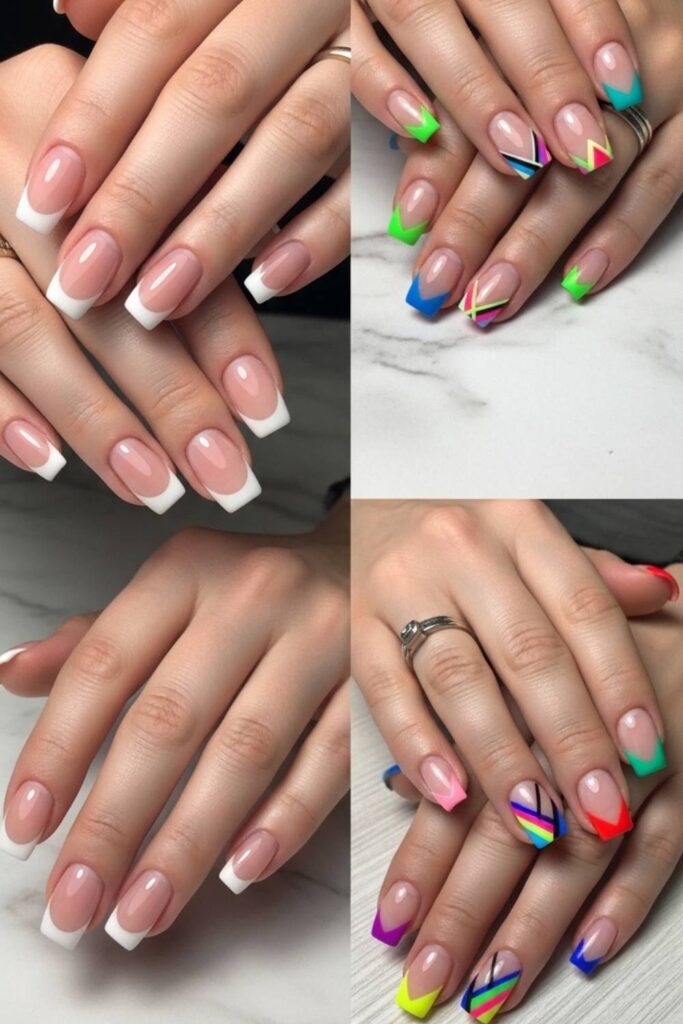
Modern French manicures abandon the rigid white-tip formula in favor of colored edges, negative space, and geometric variations that better suit casual styling. Traditional French tips require meticulous brush control along the curved tip edge, while contemporary versions use striping tape to create crisp lines without artistic ability.
The updated approach typically involves applying tape across the nail horizontally or at angles, painting over the exposed section, then removing tape while polish remains wet. This produces sharp color blocks rather than curved tips, which looks intentionally graphic instead of attempting natural nail mimicry.
Micro French tips, featuring barely-there colored edges, currently dominate 2026 trends because they maintain polish through everyday tasks better than full-tip coverage. The thin line of color chips less noticeably than wide painted sections.
Why Striping Tape Eliminates Design Mistakes
Striping tape functions as a physical barrier that prevents polish from bleeding into unwanted areas, transforming shaky brushwork into professional-looking geometric patterns. This thin adhesive tape comes in metallic finishes or basic black, allowing it to either become part of the final design or serve as a temporary guide that gets removed.
The difference between successful tape application and messy results comes down to base coat preparation and removal timing. Press tape firmly onto completely dry base polish to prevent lifting when you paint over it.
Remove tape immediately after applying the second color but before it begins drying, waiting too long causes dried polish to peel away with the tape, while removing too early allows colors to bleed together. Horizontal stripes work better for beginners than diagonal patterns because they require less precise tape placement.
See Also : Matte Taupe Nails Autumn: The Ultimate Guide to Fall’s Most Sophisticated Neutral Manicure
How Nail Stickers Changed At-Home Manicures
Nail stickers eliminated the artistic skill barrier entirely by offering pre-designed patterns you simply press onto painted nails and seal with top coat. Unlike traditional water decals that require soaking and careful positioning, modern vinyl stickers adhere instantly and conform to natural nail curves without wrinkling.
The quality difference between cheap and premium stickers shows immediately in edge adhesion and design opacity. Better stickers feature thin edges that disappear under top coat rather than creating raised ridges you can feel.
Apply stickers to completely dry base color, position them while you still have adjustment time, then press firmly from center outward to eliminate air bubbles. Two coats of top coat over stickers prevents premature peeling and integrates them into the overall finish rather than looking like decorations stuck on afterward.
Matte vs. Glossy Top Coat Strategy
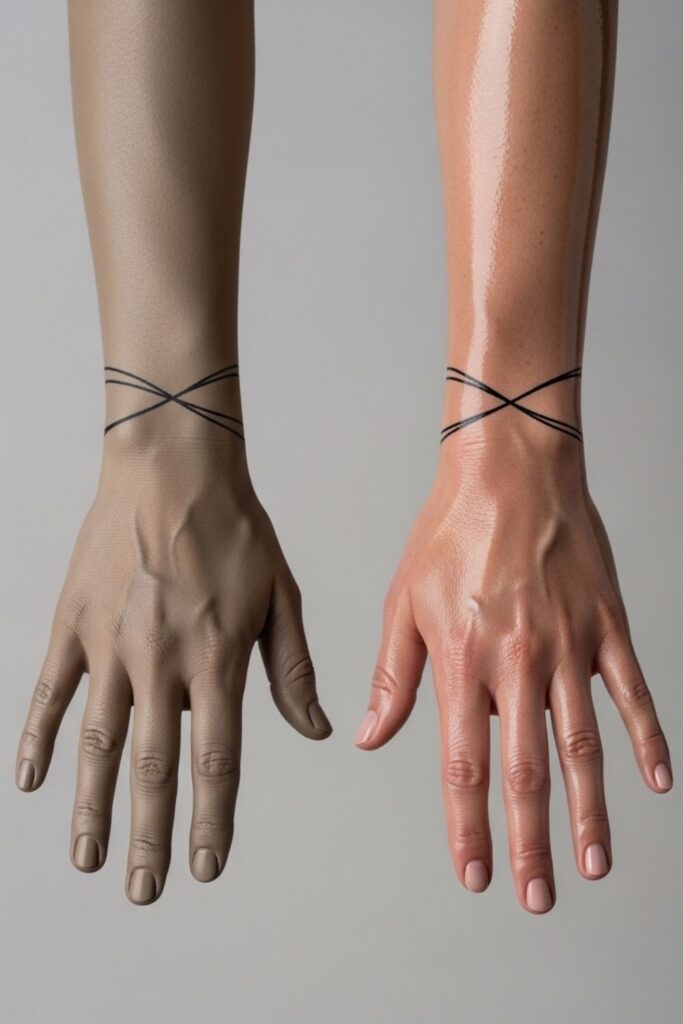
Matte and glossy top coats create entirely different visual effects from identical base designs, making finish selection more impactful than most color choices. Matte top coat transforms simple single-color manicures into sophisticated statements while hiding minor application imperfections that glossy finishes emphasize.
The strategic approach combines both finishes on different nails or different sections of the same nail for dimensional contrast. Apply matte top coat to four fingers and glossy to the accent nail, or reverse
French tips using matte base color with glossy tips. This dual-finish technique requires no additional artistic ability but produces designer-level visual interest. The key limitation is that matte top coat shows fingerprints and dulls more quickly than glossy formulas, requiring more frequent reapplication for maintained appearance.
See Also : Leopard Print Accent Nails: Master 2025’s Chicest Animal Print Trend
When Negative Space Designs Actually Make Sense
Negative space nail art intentionally leaves portions of the natural nail unpainted, creating modern minimalist designs that appear complex while requiring less precision than full-coverage patterns. These designs work particularly well for beginners because mistakes or uneven edges read as intentional artistic choices rather than errors.
The practical advantage of negative space extends beyond aesthetics less painted surface means faster drying time and reduced chipping potential. Design approaches range from simple geometric blocks created with tape to delicate line work that frames bare nail sections.
The most wearable negative space designs place color at the tips or along one edge rather than scattering it randomly across the nail. This creates visual cohesion while maintaining the airy, modern aesthetic that makes these designs Instagram-worthy.
Color Blocking Without Artistic Ability
Color blocking uses tape to create sharp divisions between solid color sections, producing graphic manicures that look hand-painted by professionals despite requiring zero freehand work. This technique relies on geometric precision rather than artistic skill, making it particularly accessible for beginners who can measure and position tape accurately.
The design approach typically involves painting a base color, allowing complete drying, then applying tape to mark off sections for secondary colors. Unlike gradient techniques that blend colors, blocking maintains hard edges between shades for bold contrast.
Complementary colors like navy and coral or analogous combinations like purple and pink both work effectively depending on desired impact. The critical success factor is tape removal timing peel away barriers while the top color remains slightly tacky for the cleanest possible lines.
Simple Floral Designs Using Dots
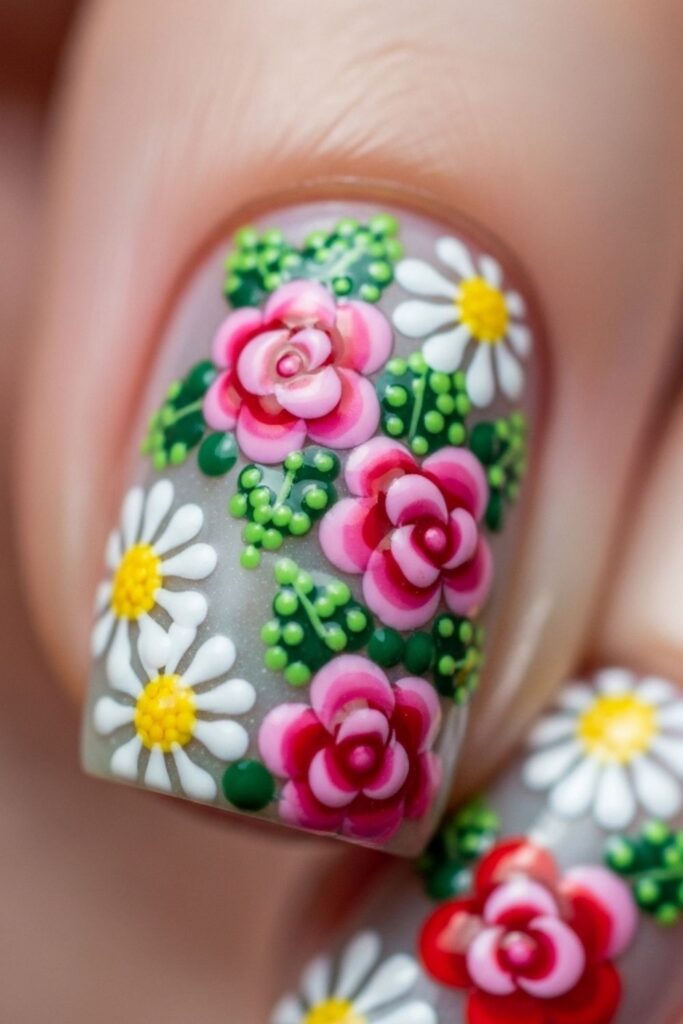
Floral nail art sounds intimidating until you realize flowers reduce to dots arranged in specific patterns. A single centered dot surrounded by five or six equally-spaced dots creates daisies, while overlapping dots in gradient sizes produce roses or peonies without requiring brush control.
This approach works because human brains recognize simplified flower shapes even when rendered abstractly. Start with a contrasting center dot, let it dry completely, then add petal dots touching the edges of the center.
The key to natural-looking florals is slight size variation in petals and avoiding perfectly symmetrical placement. Real flowers grow asymmetrically, so imperfect spacing reads as organic rather than sloppy. Add tiny dots between petals in a third color for dimensional depth, or place a single flower on each accent nail rather than attempting full coverage.
Glitter Gradient Strategy
Glitter gradients concentrate sparkle at nail tips while fading to clear at the base, creating dimensional manicures without requiring precise application. Unlike full-coverage glitter that obscures base color completely, gradients allow underlying shades to show through progressively from cuticle to tip.
The sponge application method works identically to color gradients but substitutes glitter polish for opaque shades. Start with dried base color, load a makeup sponge with glitter polish, then dab concentrating density toward the tips.
Multiple light passes build intensity better than heavy single application, which deposits glitter unevenly and creates lumpy texture. Finish with two coats of glossy top coat to smooth glitter texture and lock particles in place glitter without adequate top coat looks incomplete and sheds constantly.
See Also : Neutral Leopard Nails: Master the Perfect Balance of Wild and Sophisticated
Watercolor Effect Without Special Tools
Watercolor nails mimic paint-on-canvas aesthetics through polish thinning techniques that create translucent color washes. This effect requires nail polish remover or acetone applied strategically to wet polish, breaking surface tension and allowing colors to blend organically.
Begin with white base coat and one or two topcoats for a smooth application surface. While the base remains slightly tacky, add small dots of colored polish, then immediately dip a clean brush in the remover and touch the polish dots.
The remover causes pigment to spread and thin, creating soft watercolor washes. Work quickly before polish begins setting, and layer multiple thin washes rather than attempting full coverage in one application. The unpredictable nature of color spread makes this technique forgiving for beginners since there’s no “correct” outcome to match.
Stamping vs. Freehand: Which Actually Saves Time
Nail stamping plates offer pre-designed patterns you transfer to nails using silicone stampers, theoretically saving time compared to freehand painting. Reality depends on design complexity and your natural artistic ability simple dots and stripes are faster freehand, while intricate lace patterns or detailed florals benefit from stamping efficiency.
The stamping process involves applying polish to an etched plate design, scraping away excess, then pressing a stamper onto the design to lift it before rolling it onto your nail. This works beautifully for repeating patterns across all nails but creates a learning curve around pressure application and timing.
Budget stamping sets often frustrate beginners with unclear transfers and smudging issues, while quality equipment produces crisp results immediately. Consider stamping worthwhile for repeated designs you’ll use frequently, but skip it for one-off experiments.
How Cuticle Cleanup Changes Everything
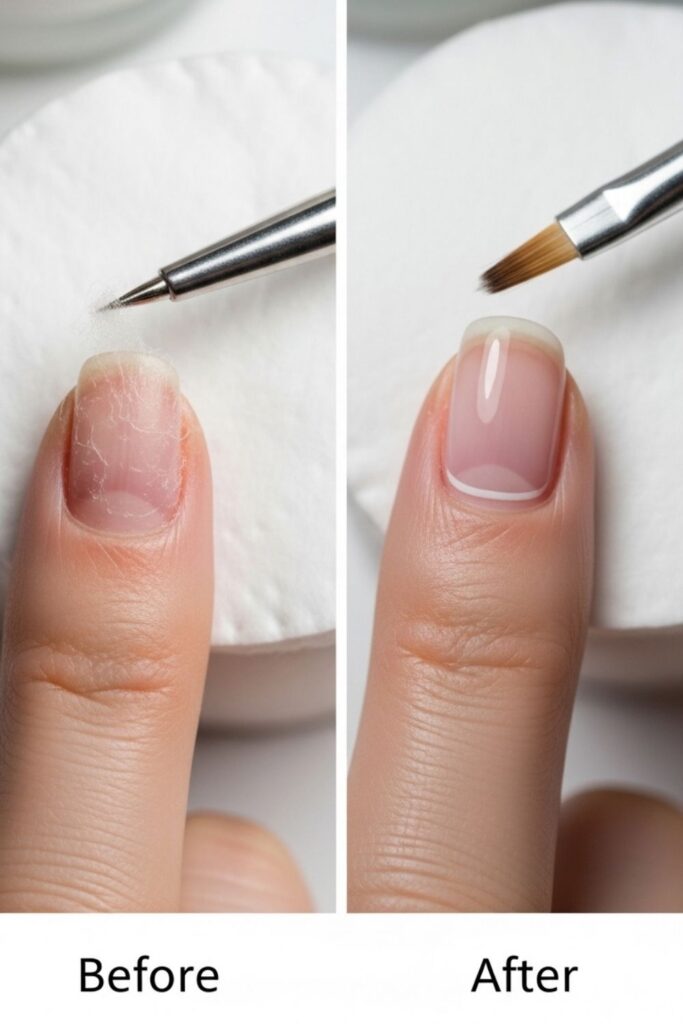
Professional-looking manicures distinguish themselves primarily through clean cuticle lines rather than design complexity. Sloppy polish application around nail edges immediately signals amateur work, while crisp borders elevate even simple single colors to salon quality.
The cleanup process uses a small flat brush dipped in acetone or nail polish remover to trace along cuticles and sidewalls, erasing excess polish without disturbing the main application.
This corrective step happens after polish fully dries, preventing smudging that occurs when you attempt cleanup on wet nails. Alternatively, apply petroleum jelly or liquid latex barrier around nails before polishing it catches overflow polish that wipes away cleanly without remover. This proactive approach works better for messy techniques like sponge gradients that inherently deposit polish beyond nail edges.
Top Coat Reapplication Schedule
Fresh top coat every 2-3 days extends manicure lifespan dramatically by resealing edges where chipping begins and restoring surface shine dulled by daily wear. Most people skip reapplication assuming once is sufficient, then wonder why their carefully created designs chip within days.
The top coat degradation process starts at nail tips where repeated impact and friction break down the protective layer first. These vulnerable edges allow water penetration under polish, which causes the lifting that progresses into chips.
Reapplying the top coat specifically to tips reinforces the barrier before damage occurs. This maintenance approach requires maybe 60 seconds every few days but doubles or triples total manicure wear time. Use quick-dry top coat formulas for reapplication to avoid disrupting your routine traditional formulas take too long to dry for casual touch-ups.
See Also : Short Pumpkin Spice Nails: 45+ Cozy Fall Designs That Define Autumn 2025
Common Mistakes That Ruin Simple Designs
Polish application too thick causes the majority of preventable nail art failures because wet polish takes exponentially longer to dry and develops a bubbled, uneven texture. Beginners load brushes heavily thinking more coverage equals better results, when the opposite proves true.
Build color gradually through 2-3 thin coats rather than one thick application. Each layer should barely tint the nail, with full opacity achieved through accumulation. This approach dries faster overall despite multiple coats and produces smoother, more professional finishes.
The second critical mistake involves starting designs before base color dries completely wet polish beneath detailed work causes smudging and color bleeding that destroys precision. Wait a minimum of 5 minutes between coats, or 10+ minutes before attempting nail art on top. Quick-dry drops accelerate this timeline without compromising finish quality.
Base Coat Science: Why It Actually Matters
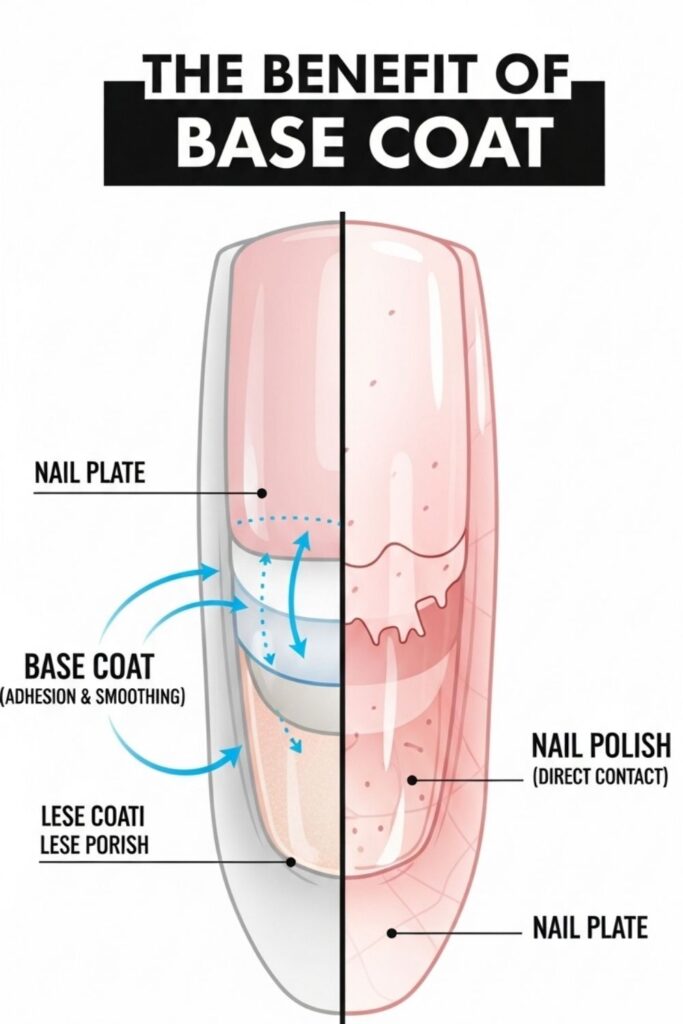
Base coat chemically bonds to your nail plate while providing an ideal surface for colored polish adhesion, functioning as the foundation that determines overall manicure longevity. Skipping base coat might save 30 seconds initially but guarantees premature peeling and potential nail staining from darker pigments.
Quality base coats contain ingredients that fill microscopic ridges on nail surfaces, creating perfectly smooth canvases that prevent bubbling and uneven color application. They also block pigment molecules in dark or bright polishes from penetrating nail keratin, which causes stubborn yellow staining.
Ridge-filling base coats work particularly well for mature nails or those damaged from previous enhancements, while strengthening formulas help brittle nails resist breaking during extended wear. One thin, even coat suffices that excess base coat extends drying time without improving performance.
When to Choose Gel vs. Regular Polish at Home
Home gel systems offer extended wear time (2-3 weeks vs. 5-7 days for traditional polish) but require UV/LED lamp investment and more involved removal process. The decision hinges on your lifestyle and willingness to commit to specific designs for weeks rather than days.
Gel polish makes sense for those who rarely change their mind about colors, travel frequently, or work with their hands extensively. The cured finish resists chipping and maintains glossy appearance throughout its lifespan with minimal maintenance.
However, gel removal requires soaking and scraping that damages nail surface when performed incorrectly, and design changes involve the same lengthy removal process. Regular polish offers flexibility to experiment with trends, change designs weekly, and skip the health concerns some people have about UV exposure. Quick-dry formulas now deliver gel-like shine and wear without curing equipment.
See Also : Cinnamon Brown Nails: The Ultimate Guide to 2025’s Most Coveted Warm-Toned Manicure
Minimalist Accent Nail Theory
Accent nails where 4 fingers wear simple solid color while the ring finger features detailed design dominate 2026 trends because they balance visual interest against wearability. This approach concentrates effort on one nail rather than attempting intricate designs across all ten fingers.
The strategic advantage extends beyond time savings. Complex designs on every nail compete for attention and often read as busy rather than sophisticated, while a single focal point creates intentional styling that looks curated.
Choose your dominant hand’s ring finger for accent work since it’s most visible in photos and daily activities. Coordinate accent designs with base color metallic accents pair with jewel tones, floral designs complement pastels, and graphic patterns work with bold primaries. The contrast between simple and complex creates more impact than uniformly detailed nails.
Seasonal Color Strategy for Year-Round Relevance
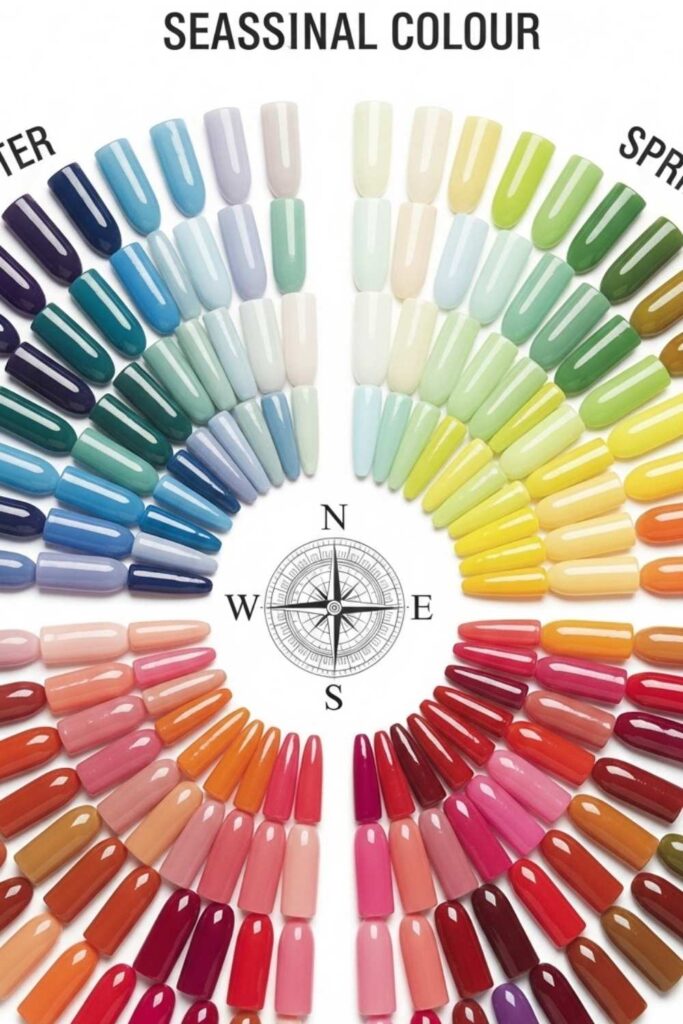
Seasonal nail color rotation keeps manicures feeling current without requiring trend research, as certain shade families naturally align with specific times of year. This built-in relevance makes color selection effortless while ensuring designs photograph well for seasonal social media sharing.
Winter calls for deep jewel tones like emerald and sapphire, rich burgundies, and icy metallics that complement cold-weather wardrobes. Spring transitions to soft pastels, barely-there nudes, and fresh mint or lavender shades that echo blooming flowers. Summer embraces bright corals, sunny yellows, and vibrant blues that pop against tanned skin. Fall returns to earth tones like terracotta, olive, and deep plum that coordinate with autumn fashion. Following these natural progressions eliminates decision paralysis while keeping your manicures seasonally appropriate.
Quick-Dry Drops vs. Spray: What Actually Works
Quick-dry products promise to accelerate polish curing but vary dramatically in effectiveness based on formulation and application method. Drops that you apply directly onto wet polish work through oil-based formulas that create a barrier preventing oxygen exposure, which slows the drying process.
These drops actually work as advertised, cutting dry time by approximately half and creating a harder final finish less prone to denting from premature contact. Spray quick-dry products often disappoint because they sit on polish surface without penetrating, providing minimal actual acceleration.
The air-drying effect from spray feels convincing but doesn’t compare to drops’ chemical action. Apply 1-2 drops per nail immediately after your final top coat, allowing drops to spread across the surface naturally. Wait 3-5 minutes before touching anything this is significantly faster than the 10-15 minutes traditional formulas require.
See Also : Cinnamon Nails Fall 2025: The Spice-Inspired Trend That’s Taking Over Autumn
Practice Surface Strategy Before Real Nails
Practicing designs on nail tips, old business cards, or plastic sheets prevents the frustration of ruining an entire manicure while learning new techniques. This approach allows unlimited attempts without polish removal and real nail damage.
Purchase cheap plastic nail tips in bulk or use thick paper as practice canvases where you can test color combinations, brush strokes, and pattern spacing without pressure. The muscle memory you develop transfers directly to your real nails, but mistakes on practice surfaces cost nothing.
Pay particular attention to dotting tool pressure, tape placement precision, and brush loading amounts these tactile elements determine success more than visual planning. Practice also reveals how different polish formulas behave, as some spread more than others or require additional coats for opacity.
How Nail Shape Affects Design Difficulty
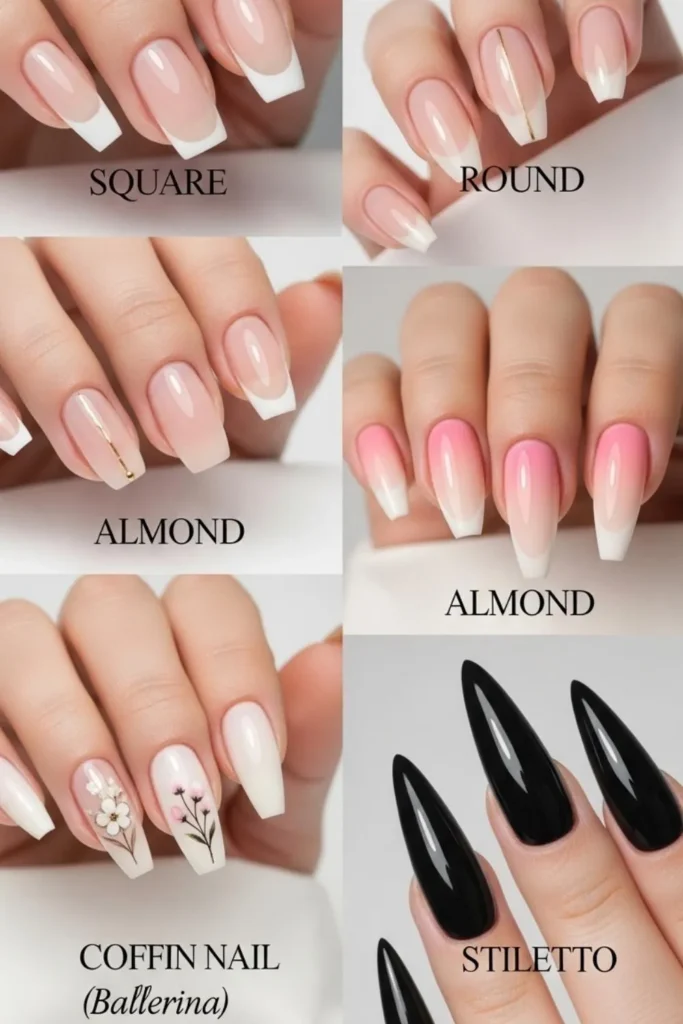
Nail shape dramatically impacts design visibility and application ease, with some shapes naturally showcasing patterns better while others hide intricate work. Short, squoval nails (square with slightly rounded corners) provide the most versatile canvas for beginners.
This shape offers enough surface area for simple designs without requiring the length maintenance of almonds or stilettos. Square tips create clean lines that work well with geometric patterns and French variations, while slightly rounded corners prevent snagging and breaking.
Almond-shaped nails elongate fingers beautifully but concentrate design work on narrow tips that challenge precision. Round shapes suit minimalist looks and solid colors better than detailed patterns, as the curved surface distorts straight lines.
Match your natural nail shape preference to your most-worn designs rather than forcing detailed patterns onto incompatible shapes.
See Also : Pumpkin Orange Fall Nails: Your Complete Guide to 2025’s Coziest Autumn Manicure Trend
Mix-and-Match Nail Strategy for 2026
Mix-and-match manicures intentionally use different colors or patterns on each nail within a coordinated palette, embracing asymmetry that feels curated rather than unfinished. This 2026 trend liberates you from achieving identical results on every finger while looking intentionally stylish.
The key to successful mixing is maintaining a cohesive color story choose 3-4 shades from the same family or complementary palette, then distribute them across fingers in an uneven but balanced way. Alternate patterns like stripes on some nails, dots on others, and solid color on remaining fingers.
The asymmetry should feel deliberate, so plan your distribution before you start painting. This approach particularly suits beginners because slight variations in execution across nails read as intentional variety rather than inconsistent skill.
Cleanup Brush Selection and Technique
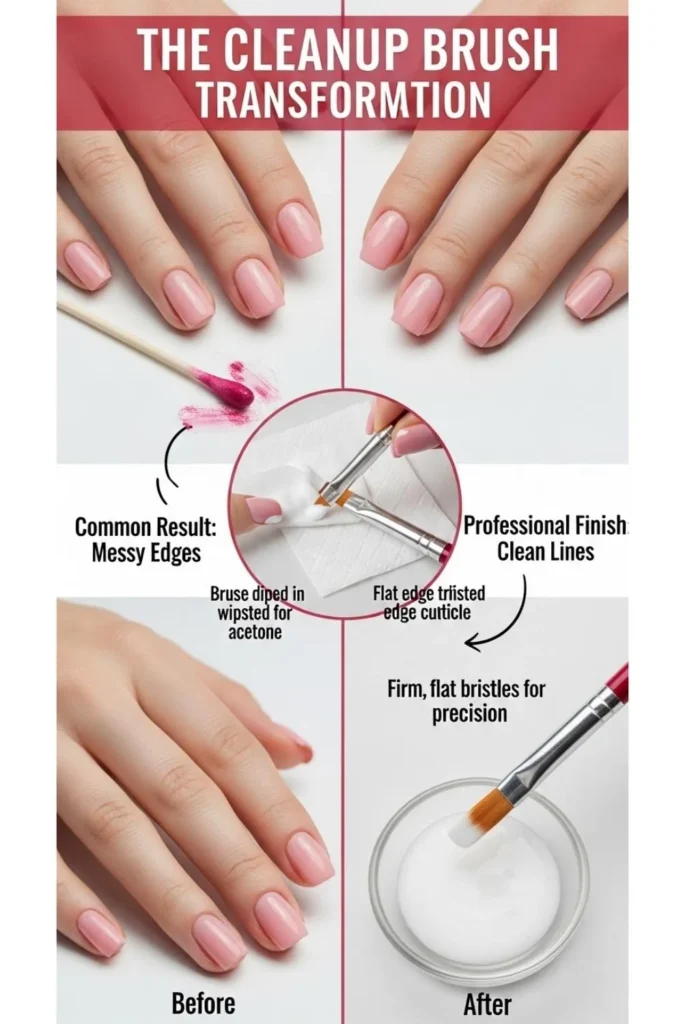
Detail cleanup brushes with firm, flat bristles allow precise acetone application along cuticles without disturbing main polish application. These specialized brushes cost under $3 but transform cleanup from frustrating to effortless.
Dip the flat brush in pure acetone (not nail polish remover, which works more slowly), wipe excess on a paper towel so it’s damp rather than dripping, then trace along cuticle lines and sidewalls using the flat edge.
The firm bristles provide control that cotton swabs can’t match, allowing you to remove unwanted polish within millimeters of where you want it to remain. This technique works best on completely dry polish attempting cleanup on wet applications smears rather than removes. Keep a dedicated cleanup brush separate from design brushes to prevent contamination.
Understanding Drying Time Variables
Polish drying time depends on coat thickness, formula composition, humidity levels, and base color darkness, making universal timing guidelines unreliable. Learning to recognize actual dry-to-touch readiness prevents the frustration of designs ruined by premature contact.
The surface-dry test involves lightly touching nails together if they stick or feel tacky, wait longer. Even surface-dry polish remains soft underneath for 10-15 minutes after application, so denting and smudging remain possible despite feeling dry to light touch.
Fast-drying formulas reach a handling-safe stage in 3-5 minutes but still benefit from 10-minute caution before resuming normal activities. Cold air accelerates surface drying while making underlying layers cure more slowly, creating deceptively dry-feeling nails that dent easily. Room temperature drying produces more reliable results than forced air or ice water methods.
See Also : Dark Chrome Fall Nails: Master the Moody Metallic Trend Taking Over 2025
Polish Consistency and Revival Techniques
Polish consistency directly determines application ease, with formulas thickened from age or air exposure creating streaky, goopy coats that never fully smooth. Most people discard thickened polish unnecessarily when simple thinning restores it to usable condition.
Nail polish thinner (not remover) uses a solvent formula identical to polish base, allowing you to restore original consistency by adding a few drops and mixing thoroughly. This costs approximately $5 for a bottle that revives dozens of polishes, versus replacing each thickened bottle at $8-15.
Add 2-3 drops, roll the bottle between your palms for 2 minutes (don’t shake this creates bubbles), then test on a nail tip. Repeat if necessary until polish flows smoothly off the brush. Avoid acetone or remover as thinners since they break down polish binders and prevent proper drying.
Color Theory Basics for Nail Coordination
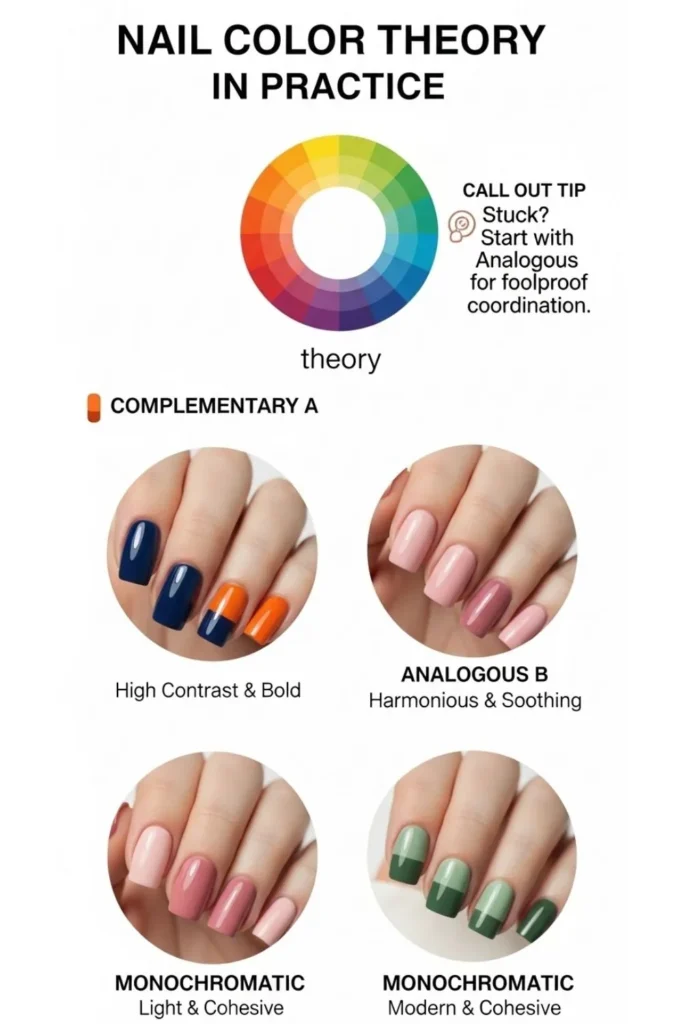
Color wheel understanding prevents clashing combinations that look muddy or visually uncomfortable, while highlighting pairings that create intentional contrast or harmony. Beginners often choose favorite colors regardless of relationship, resulting in designs that technically succeed but aesthetically disappoint.
Complementary colors (opposite on the color wheel) like purple/yellow or blue/orange create maximum contrast and visual pop. Analogous colors (adjacent on the wheel) like blue/green or red/orange produce harmonious, sophisticated combinations.
Monochromatic schemes use different shades of a single color for subtle variation, while triadic combinations use three equally-spaced colors for balanced variety. Test color pairings on paper or practice tips before committing to full manicures, as digital screens render shades differently than physical polish appears on nails.
Storage Impact on Polish Longevity
Polish storage location and orientation affect formula stability and shelf life, with improper storage causing separation, thickening, or complete formula breakdown. Most people store bottles upright in bathrooms where temperature fluctuations and humidity accelerate degradation.
Ideal storage keeps polish in cool, dark, stable environments; bedroom drawers or closets work better than bathroom cabinets. Store bottles upright to prevent formula contact with bottle necks and caps where it dries and prevents proper sealing.
Extreme temperature changes cause formula separation that simple shaking won’t fix, while direct sunlight fades pigments and breaks down binders. Polish stored properly lasts 2+ years, while bathroom-stored polish deteriorates within months. Group polish by color family in storage for easy selection, and annually purge dried-out or separated formulas that no longer apply smoothly.
See Also : Short Autumn Nails Ideas: 60+ Chic Designs That Define Fall 2025 Style
When Design Complexity Stops Being Worth It
Intricate nail art designs requiring 60+ minutes of focused application make sense for special occasions but prove impractical for daily wear that chips within days. The time investment should match expected wear duration and visibility; detailed designs for photography make sense, while complex patterns for daily desk work don’t.
Evaluate whether design detail shows at normal viewing distance or only in close-up photos. Micro details invisible beyond 12 inches waste effort that could go toward simpler, bolder elements visible from across a room.
Consider your actual hand usage typing, cleaning, cooking, and childcare all accelerate chip potential regardless of design quality. Reserve complex patterns for protected times (weekends, vacations) when you can both showcase them and preserve them. Daily manicures should prioritize quick execution and easy touch-ups over impressive but fragile artistry.
FAQ’s
How long do DIY manicures typically last compared to salon services?
DIY manicures usually last 3 to 7 days with regular polish, while professional salon gel manicures last about 2 to 3 weeks without major chipping. The longer wear from salon services comes from expert nail prep, gel formulas, and UV or LED curing.
Can you create nail art without buying specialized tools?
Yes, you can create simple nail art at home using everyday items like toothpicks, bobby pins, tape, or makeup sponges. These DIY nail art methods work well for dots, stripes, gradients, and basic designs.
What causes nail polish to chip faster on some people than others?
Nail polish chips faster due to oily nail beds, frequent hand washing, manual work, or skipping base and top coats. Nail length, application technique, and exposure to cleaning chemicals also affect how long polish lasts.
Key Takeaways
- Match simple techniques with the time you realistically have available.
- Use basic tools: bobby pins for dots, makeup sponges for gradients, striping tape for clean geometric lines.
- Apply base coat to reduce peeling and use thin polish layers for faster drying.
- Clean edges with a small brush for a more professional finish.
- Limit designs to one accent nail instead of all fingers.
- Practice new techniques on nail tips before using them on your own nails.
Conclusion
Easy nail ideas at home rely on preparation, patience, and smart techniques rather than talent or expensive tools. When you use thin layers, allow proper drying time, and work with simple methods like dots, tape, and sponges, your results improve immediately.
These approaches deliver clean, modern designs that suit everyday life and current 2026 trends. With consistent practice, even basic supplies produce polished, professional-looking manicures.
Now take the next step and apply these techniques with confidence. Start with one design, follow the steps carefully, and refine your process with each manicure. Commit to proper prep, regular top coat maintenance, and realistic design choices. Use these principles today to achieve reliable, salon-quality nails at home.