
55 Easy DIY Nail Ideas to Elevate Your Everyday Style in 2026
Salon-worthy nails shouldn’t require a standing appointment or professional-level skill. Easy DIY nail ideas have become a practical style upgrade in 2026, especially as everyday looks shift toward clean, wearable polish that fits real schedules. The real appeal isn’t creativity, it’s control over time, cost, and consistency.
Most at-home manicures fail for one reason: designs are chosen for how they look online, not how they behave on real hands. Thick layers, bold colors, and intricate details magnify every small mistake, turning a quick refresh into a frustrating redo.
The smarter approach focuses on forgiving finishes, intentional simplicity, and designs that work with your skill level. When technique beats complexity, polished nails become fast, repeatable, and genuinely easy to maintain.
What Makes a Nail Design Actually Easy to Do at Home?
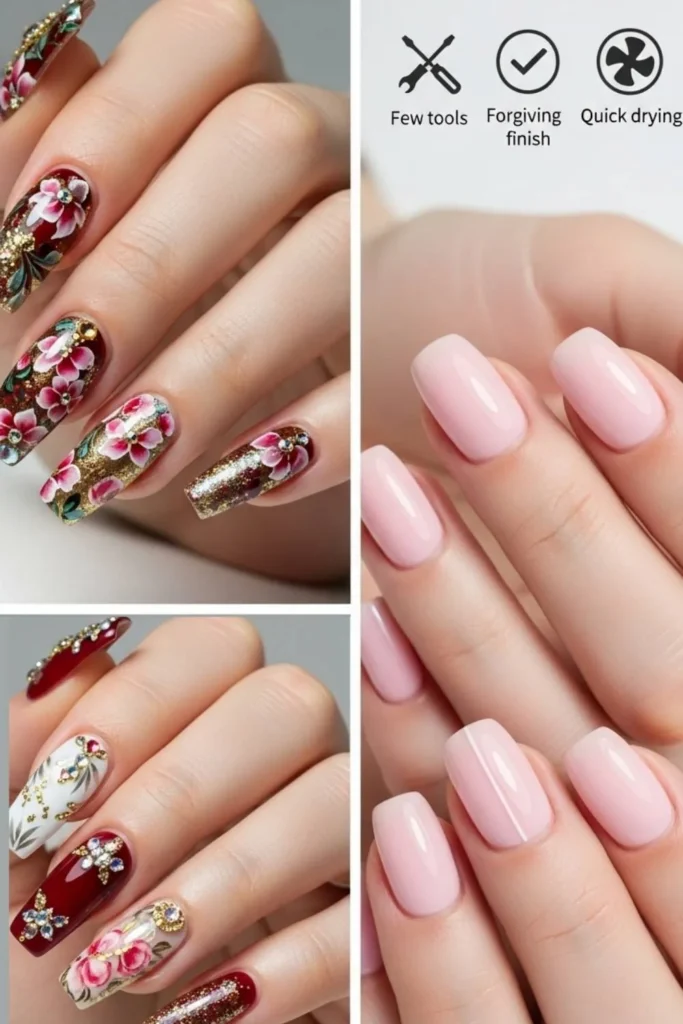
An Easy DIY nail ideas requires minimal tools, forgives shaky hands, and looks intentional even when imperfect. The best beginner-friendly designs rely on strategic placement rather than precision, think accent nails, negative space, or textured finishes that naturally disguise brush strokes.
True ease comes from design choices that eliminate common pain points. Matte topcoats hide streaky polish application. Single-stroke techniques remove the need for steady outlining.
Stick-on elements like foil or stickers deliver complex looks without freehand painting. The difference between frustrating and effortless often comes down to choosing designs that complement your natural skill level rather than fighting it.
How Do Minimalist Nail Designs Simplify the DIY Process?
Minimalist nail designs simplify DIY by reducing steps, eliminating intricate details, and using negative space as a design feature rather than a mistake. Clean lines, single dots, or thin strips require only one careful movement instead of multiple layered techniques.
These designs succeed because they’re built on restraint. A single gold stripe down the center of a nude nail takes 10 seconds and looks deliberately modern. Bare nails with only the tips painted (reverse French) cut application time in half while maintaining polish.
When a design includes fewer elements, each one matters more but execution becomes exponentially easier. Minimalism also ages better; chips are less noticeable, and touch-ups take minutes instead of requiring full removal.
Read More About : Sepia Fall Nails Ideas: The Ultimate Guide to Vintage-Inspired Autumn Manicures 2025
Which Finish Types Are Most Forgiving for Beginners?
Matte, metallic, and glitter finishes are the most forgiving for beginners because they mask application flaws that glossy polish exposes. Matte topcoats eliminate streaks, bubbles, and minor surface imperfections instantly.
Glossy finishes magnify every mistake uneven layers, dust particles, or shaky edges become glaringly obvious under light. Matte transforms those same imperfections into barely noticeable texture.
Metallics and glitters work similarly by reflecting light in multiple directions, disguising uneven coverage or rushed application. Chrome powders offer professional-looking results with zero painting skill required; you simply buff pigment onto tacky gel polish. Textured finishes like sand or velvet add dimension while concealing poor brush control entirely.
What Role Does Color Choice Play in DIY Nail Success?
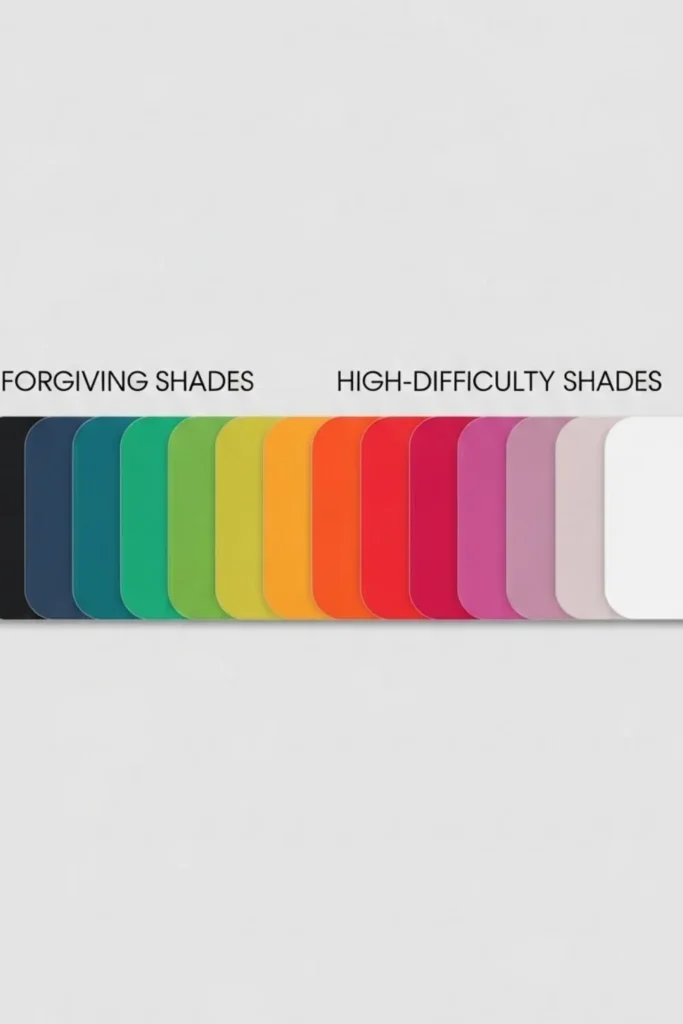
Neutral and sheer colors dramatically increase DIY success rates by hiding visible nail lines, uneven application, and growth lines better than bold, opaque shades. Nudes, soft pinks, and sheer tints blend with your natural nail, making mistakes nearly invisible.
Dark, saturated colors show every flaw. Black polish reveals streaks after one coat; red demands perfect cuticle lines and even edges. Light neutrals forgive flooded cuticles and shaky hands because they don’t create harsh contrast against skin.
Sheer formulas are even more forgiving they build coverage gradually, so thin spots or overlapping strokes blend seamlessly. This doesn’t mean avoiding bold color entirely; it means starting with nude bases and adding bold accents strategically on one or two nails where you can take extra time.
How Does Nail Shape Impact Design Difficulty?
Short, rounded, or squoval nail shapes make DIY designs significantly easier than long stilettos or extreme shapes because they provide more stable surfaces and reduce the risk of smudging. Shorter nails also dry faster and require less precision during application.
Long, pointed nails demand perfect symmetry and increase the chance of accidental bumps while polish dries. Squoval (square with rounded edges) offers the largest, flattest canvas for designs while maintaining structural stability.
Round shapes naturally guide the brush along the nail’s curve, reducing the need for controlled, straight lines. Extreme shapes like coffin or almond require advanced filing skills before you even start painting each nail must match perfectly or the asymmetry becomes obvious. Keep nails under 3mm past the fingertip for maximum DIY control.
Read More About : Halloween Nails Coffin Shape 2025: The Ultimate Guide to Spooky Season’s Most Dramatic Manicure
What Tools Actually Matter for Home Nail Art?
A thin detail brush, matte topcoat, and nail tape are the three tools that genuinely expand your DIY capabilities without adding complexity. Everything else is optional or replaceable with household items.
Most nail art kits include 15+ tools you’ll never use. A thin striping brush (under $3) enables clean lines, dots, and detailed accents with regular polish no special skills required. Matte topcoat transforms any design instantly and fixes flawed application.
Nail tape creates geometric patterns, French tips, and negative space designs by acting as a stencil; just apply, paint, and peel. Dotting tools are helpful but replaceable with bobby pins or toothpicks.
Avoid: expensive stamping plates (steep learning curve), tiny brushes that dry out quickly, and multi-step systems marketed as “beginner-friendly.”
Which Nail Looks Work Best for Professional Settings?
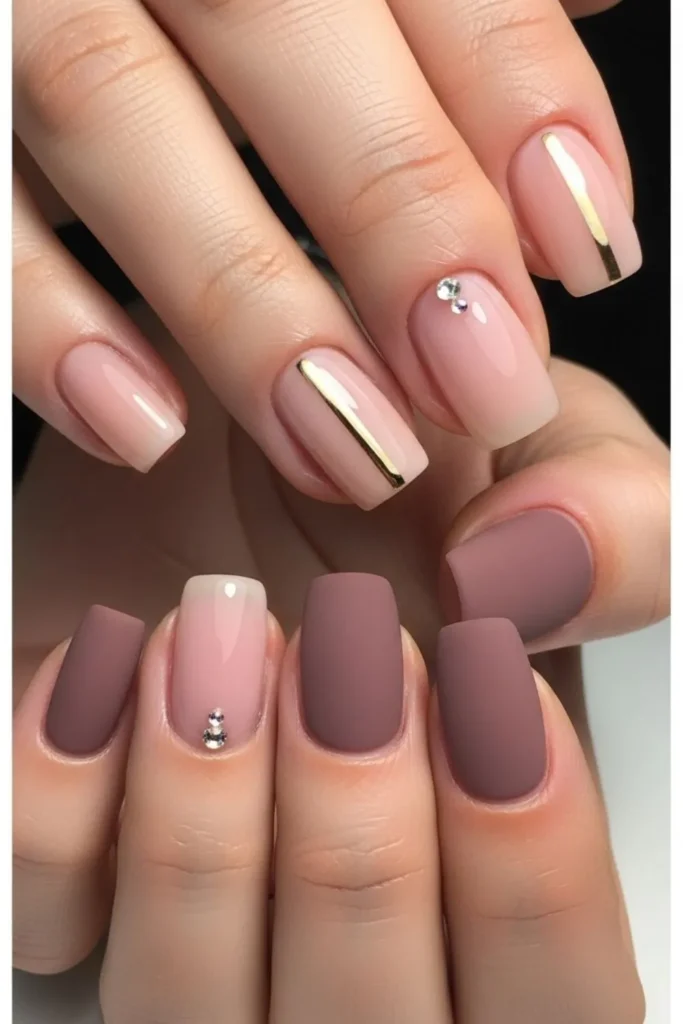
Neutral tones with subtle accent details work best professionally because they signal polish and intention without drawing attention or appearing high-maintenance. Nude bases with thin metallic stripes, sheer pinks with single rhinestones, or soft mauves with matte finishes communicate competence.
Professional environments reward restraint. Bold neons or complex patterns risk reading as unserious or distracting, particularly in conservative industries. The goal is groomed, not decorated.
Monochromatic looks in taupe, greige, or soft brown feel modern and expensive without effort. If you want dimension, add it through finish variation (glossy base with matte tips) rather than color contrast. One accent nail per hand is the maximum before a design shifts from polished to playful.
How Do You Create Depth Without Advanced Techniques?
Layering sheer colors, using contrasting finishes, or adding single metallic elements creates depth without requiring blending skills or airbrushing. Depth comes from variation, not complexity.
Apply a sheer pink base, then add a slightly deeper sheer pink on the top half of each nail instant gradient with zero blending. Pair glossy and matte finishes on the same nail (glossy base, matte tips) for dimensional contrast that requires no extra skill.
Press a single gold foil piece onto the accent nail while the topcoat is tacky; it adheres instantly and adds luxury. Unlike ombre or true gradients that demand sponge work and cleanup, these layering techniques build dimension through strategic placement. The eye perceives variation as complexity, even when execution is simple.
Read More About : French Tip Nails with Fall Colors: Master 2025’s Chic Autumn Manicure
What Mistakes Do Most DIY Beginners Make?
Most beginners over-apply polish thickness, skip base coats, or attempt complex designs before mastering single-color application. Thick coats cause bubbling, long dry times, and inevitable smudging.
The instinct is to achieve opacity in one coat this backfires. Two thin coats always outperform one thick coat; they dry faster, self-level better, and chip less. Skipping base coat seems like a time-saver but causes staining, uneven topcoat adhesion, and early peeling.
Many beginners also jump straight to nail art without perfecting their regular polish technique first. If you can’t paint a clean single color with minimal cleanup, adding designs will only amplify those mistakes. Master thin, even coats and cuticle precision before attempting dots or stripes.
How Long Should Each Design Actually Take?
Simple single-color or minimalist designs should take 15-20 minutes total including dry time with quick-dry products. Moderate designs with accents or patterns require 25-30 minutes. Anything exceeding 40 minutes is too complex for practical DIY.
Realistic timing includes prep (filing, cuticle care), base coat, two thin color coats, design elements, and topcoat. Quick-dry drops or spray reduce wait time from 15 minutes to 3-5 minutes between coats. If a design requires longer, it likely involves too many steps or layers.
The sweet spot for repeatable DIY is under 30 minutes short enough to fit into your routine without feeling like a project. Designs taking an hour or more aren’t sustainable; you’ll skip them when busy, defeating the purpose of doing nails at home.
Which Seasonal Trends Translate Well to Easy DIY?
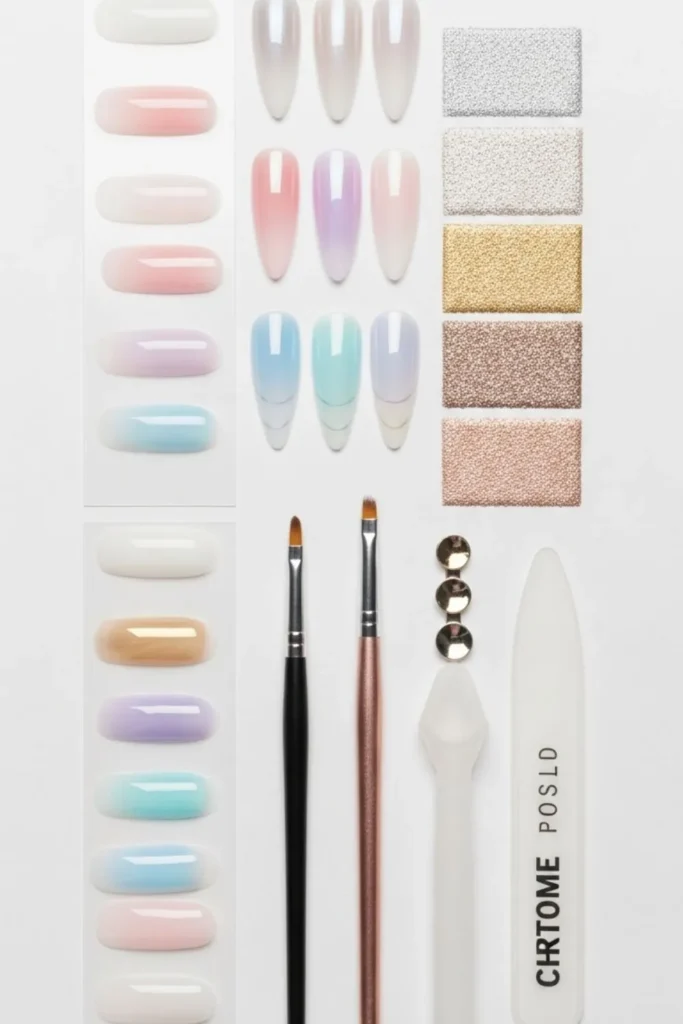
Sheer milky tints, chrome accents, and glazed finishes translate well to DIY because they’re technique-light and trend-forward. These looks deliver current style without demanding artistic skill.
Glazed nails (sheer white or pink with iridescent shimmer) require only two products and no precision apply sheer base, add shimmer topcoat. Chrome powders buff onto gel or regular polish in seconds, creating mirror finishes that look expensive but require zero painting ability. Milky neutrals are inherently forgiving; their sheer formula hides application errors while feeling fresh.
Avoid trending designs that demand freehand painting (intricate florals, detailed cartoon characters) or specialty techniques (complex marbling, watercolor effects). If a trend needs a tutorial longer than five minutes, it’s not truly DIY-friendly.
How Do You Make Simple & Easy DIY Nail Ideas Look Intentional?
Consistent placement, balanced spacing, and confident execution make simple designs look intentional rather than incomplete. A single dot placed precisely in the center reads as minimalism; five random dots read as unfinished.
Symmetry signals intention. If you’re adding metallic stripes, place them at identical positions on each nail all vertical, all centered, or all diagonal. When using accent nails, choose the same finger on each hand (typically ring fingers). Nail art fails when it looks hesitant; a bold single element beats timid multiple elements.
One thick gold stripe looks more intentional than three wobbly thin lines. Commit fully to simplicity rather than adding extra details to compensate for feeling like the design isn’t “enough.”
Read More About : Fall Plaid Nails Design: Master the Cozy Autumn Pattern Trend
What’s the Best Approach for Accent Nails?
Limit accent nails to one per hand, place them on ring fingers for balance, and ensure the accent contrasts meaningfully with the base color. Accent nails fail when they’re too similar or too scattered.
The ring finger naturally draws the eye due to its central position and cultural association with jewelry. Placing accents on random fingers (thumb and pinky) creates visual imbalance.
Your accent should be noticeably different if your base is nude, the accent should be bold or textured, not just a slightly different nude. Effective accents use different finishes (matte base, glossy accent), textures (smooth base, glitter accent), or colors (neutral base, metallic accent). Two accent nails per hand starts looking busy; four essentially reverses your design.
How Do Nail Stickers and Decals Compare to Hand-Painted Designs?
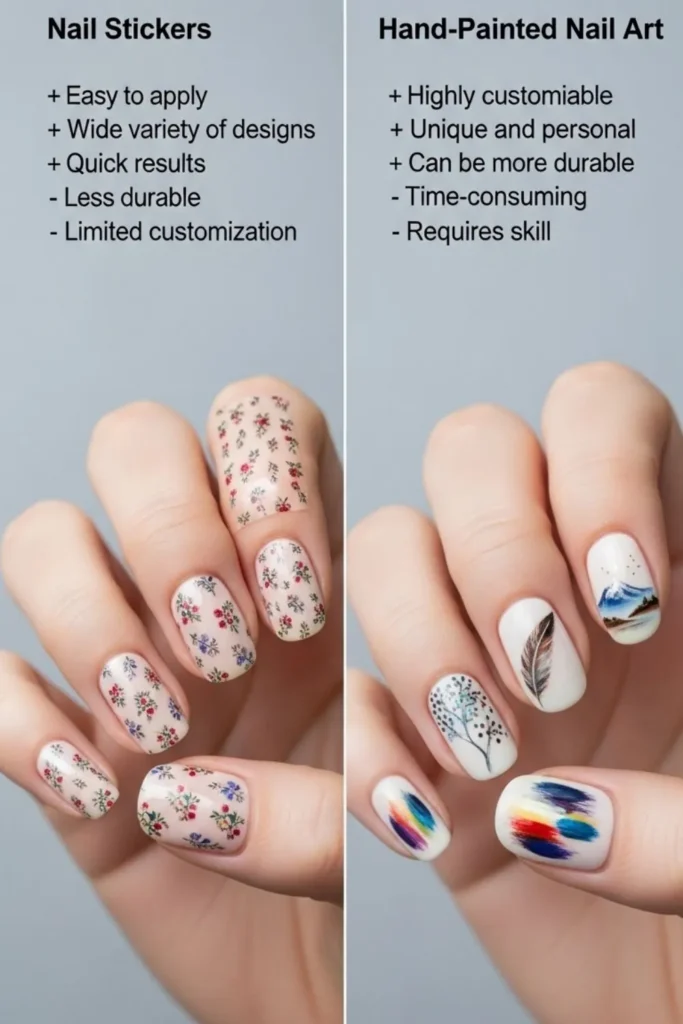
High-quality nail stickers deliver complex designs in seconds without artistic skill, but they chip faster than polish and require proper sealing. Hand-painted designs last longer but demand time and technique.
Stickers excel for intricate patterns impossible to paint freehand detailed florals, geometric layouts, or character art. Application takes under five minutes, and results look professional immediately.
The tradeoff: stickers lift at edges unless sealed perfectly with topcoat, and they add thickness that can feel bulky. They work best for special occasions or short-term wear (3-5 days).
Hand-painted designs integrate with the polish layers, lasting 7-10 days with proper application, but require practice and patience. For regular wear, painted designs win; for events or experimentation, stickers are practical.
Which Color Combinations Feel Modern Without Being Trendy?
Neutral bases with metallic accents, tonal monochromatic schemes, and black-and-white pairings feel modern without dating quickly. These combinations avoid trend cycles while maintaining contemporary edge.
Beige with gold, grey with silver, or taupe with rose gold read as current indefinitely they’re grounded in classic pairing principles but executed with modern restraint. Monochromatic looks using three shades of the same color (light pink, medium pink, deep rose) feel sophisticated and deliberate.
Black-and-white remains perpetually sharp, especially in graphic patterns like half-moons or negative space. Avoid: overly matchy color stories (rainbow nails, ombre from light to dark), neon combinations, or anything requiring specific seasonal context (pastels for spring, burgundy for fall).
Read More About : Autumn Chrome Nails Trend 2025: The Metallic Revolution Defining Fall Style
How Does Lighting Affect DIY Nail Application?
Natural daylight or cool-toned LED lighting dramatically improves application accuracy by revealing true color, brush placement, and coverage gaps that warm bulbs mask. Poor lighting directly causes uneven coats and missed spots.
Warm yellow lighting makes colors appear different than they’ll look in daylight and hides streaks or thin areas during application. You’ll think coverage is even, then see gaps in natural light.
Cool daylight-balanced LED lamps (5000K-6500K) show exactly what you’re doing in real-time, letting you correct mistakes immediately. Apply polish near a window during daylight if possible.
Evening applications under warm bulbs often require morning touch-ups once you see the actual results. Lighting quality matters more than tool quality for consistent DIY success.
What’s the Difference Between Gel Polish DIY and Regular Polish?
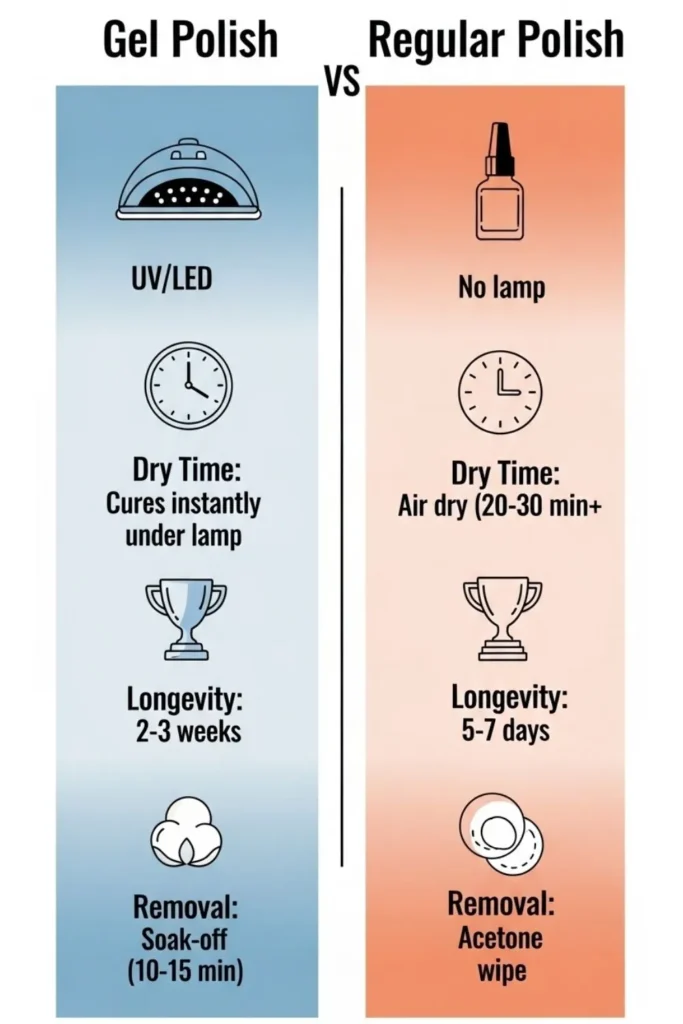
Gel polish requires UV/LED lamps and delivers 2-3 week wear with zero dry time, while regular polish air-dries in minutes but chips within 5-7 days. Gel demands more upfront investment but offers superior durability.
Regular polish wins for variety, quick changes, and minimal equipment you need only bottles and topcoat. Gel requires a $30-50 lamp, base and top gel coats, and acetone-soaked removal that can damage nails if done improperly.
Gel’s advantage is undeniable longevity and immediate cure time (60 seconds under the lamp means zero smudging). For frequent style changes or tight budgets, regular polish makes sense.
For low-maintenance wear or special occasions requiring perfect nails for weeks, gel justifies the investment. Gel also enables easier nail art since layers cure instantly without wait time.
Read More About : Rust & Gold Accent Nails 2025: The Complete Guide to Fall’s Most Sophisticated Manicure Trend
How Do You Prevent Common Smudging Issues?
Wait 2-3 minutes between thin coats, use quick-dry products, and avoid hand use for 30 minutes after topcoat to prevent smudging. Most smudging happens from rushing rather than poor technique.
Polish may feel dry to touch but remains vulnerable underneath for extended periods. The surface films over within minutes, but deeper layers need significantly longer. Quick-dry drops or sprays accelerate the process by creating a hardened barrier, but they’re not instant magic.
The biggest prevention: thin coats. Thick polish takes exponentially longer to dry through all layers and remains gummy underneath. Apply color so thin you can see your nail through it, wait three minutes, then add the second coat. After the topcoat, literally don’t touch anything for 30 minutes, no phone scrolling, no digging through bags, nothing.
Which Nail Art Supplies Are Waste of Money?
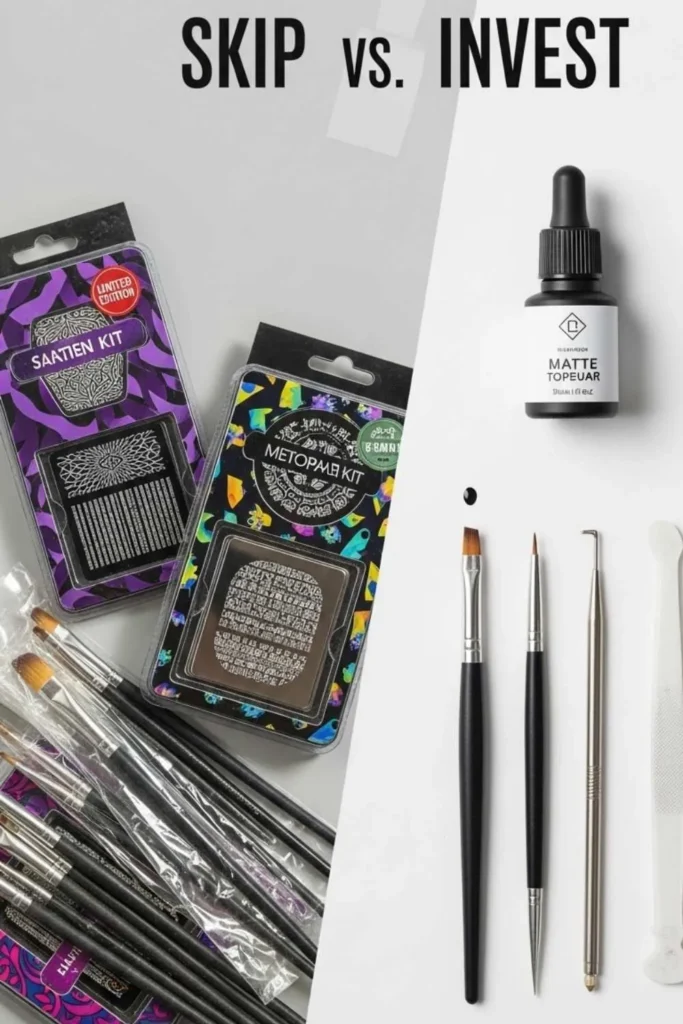
Elaborate stamping kits, tiny detail brushes sets with 15+ brushes, and expensive “all-in-one” nail art systems waste money because they promise simplicity but demand practice that negates their convenience. Most sit unused after failed attempts.
Stamping plates theoretically simplify complex designs but require precise pressure, perfect polish consistency, and specific timing, it’s not actually beginner-friendly. Large brush sets sound valuable until you realize you’ll only ever use 2-3 brushes; the rest are redundant sizes or impractical shapes.
All-in-one kits (50-piece sets with gems, stickers, tools, polishes) include mostly low-quality items you won’t use. Better investment: one excellent thin brush ($3), quality base and topcoats ($8 each), and a curated polish collection in colors you’ll actually wear. Quality over quantity consistently wins for DIY tools.
Read More About : Wedding Guest Nails Fall: The Ultimate Guide to Perfect Autumn Wedding Manicures 2025
How Do Nail Prep Steps Impact Final Results?
Proper prep filing, buffing, cuticle care, and dehydrating extends wear time by 40-60% and ensures smooth, professional-looking application. Skipping prep is the primary reason DIY nails chip within 2-3 days.
Polish adheres to clean, smooth, slightly rough surfaces. Natural nail oils cause immediate lifting and peeling. Pushing back cuticles prevents polish from catching on overgrown skin and creates clean edges. Light buffing (not aggressive filing) removes shine and creates texture for polish grip. Wiping nails with rubbing alcohol or acetone removes oils and debris.
These steps take five minutes total but transform three-day nails into week-long wear. Most beginners blame their polish quality when prep is actually the issue. Even drugstore polish lasts 7+ days with proper prep.
What Nail Shapes Suit Different Finger Types?
Short, wide fingers look longer with almond or oval shapes that create vertical lines, while long, thin fingers balance better with squoval or short square shapes that add width. Shape choice dramatically impacts hand proportion.
Almond nails taper to a rounded point, elongating short nail beds and making fingers appear slimmer. Round or oval shapes soften wide nail beds without extreme length. Squoval (squared tips with rounded corners) suits most hand types by offering flattering width and length balance.
Long, thin fingers risk looking skeletal with stiletto or extreme almond shapes; shorter, wider shapes add visual balance. Very short nails (bitten or naturally small) look best rounded or oval square shapes on short nails create a stubby appearance.
How Do You Salvage a Design That’s Going Wrong?
Add a matte topcoat to hide mistakes, convert errors into intentional texture, or embrace asymmetry by making the “mistake” a design feature. Salvaging beats starting over.
Wonky lines become “abstract art” with matte topcoat the flat finish disguises precision issues as deliberate texture. A flooded cuticle can be dabbed with glitter while wet, transforming the mistake into an accent. If one accent nail fails, replicate the “mistake” on the opposite hand’s same finger and call it intentional asymmetrical design.
Smudged polish can be covered with a contrasting color as a geometric overlay. The key is committing to the change rather than trying to fix the original plan. Strategic pivots look intentional; half-fixed mistakes look sloppy.
Which Application Techniques Require the Least Skill?
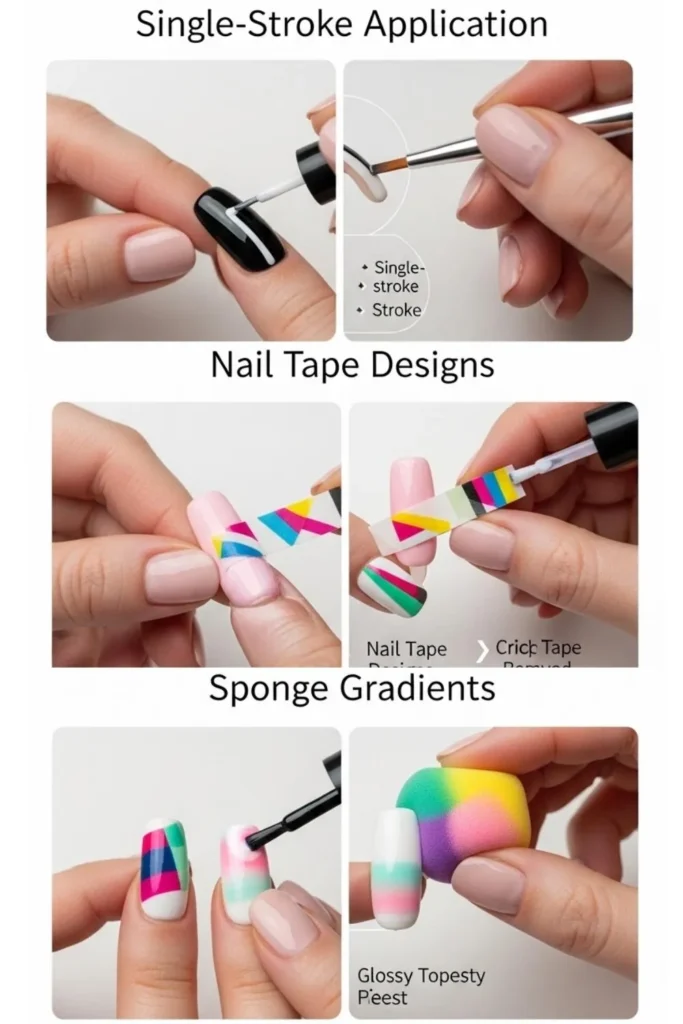
Single-stroke vertical application, stick-and-peel stencil methods, and sponge-dab techniques require minimal skill while delivering clean results. These methods eliminate the need for steady hands or artistic ability.
Vertical single-stroke application (brush from cuticle to tip in one motion, no side-to-side) naturally follows the nail’s shape and prevents streaking. Nail tape or vinyl stencils create perfect geometric designs place tape, paint over it, remove for crisp lines. Sponge-dab gradients involve pressing a makeup sponge with two colors onto the nail; the blending happens automatically through the sponge texture.
Unlike brush gradients requiring perfect blending technique, sponge methods are nearly foolproof. These techniques succeed because they’re guided by tools (tape, sponge) rather than relying solely on hand control.
Read More About : Neutral Fall Nail Colors: The Ultimate Guide to 2025’s Most Sophisticated Autumn Manicures
How Do Natural Nail Health and Polish Success Connect?
Healthy, moisturized nails hold polish 50-70% longer than dry, damaged nails because polish adheres to smooth, flexible surfaces rather than brittle, peeling ones. Nail health directly determines polish longevity.
Dry, brittle nails chip and peel, taking polish with them. Dehydrated nail beds prevent polish from bonding properly, causing lifting within days. Cuticle oil, hand cream, and biotin support nail flexibility and smoothness the ideal polish canvas.
Overuse of harsh removers or aggressive filing damages the nail plate, creating an uneven surface where polish can’t adhere uniformly. Ironically, constantly wearing polish without breaks can weaken nails; aim for 2-3 polish-free days monthly to let nails breathe and recover. Strong nails mean better-looking polish and longer wear, creating a positive cycle.
What Role Does Topcoat Quality Play?
Premium topcoats extend wear by 3-5 days, add superior shine, and resist chipping better than budget options because they contain flexible resins and UV inhibitors that cheaper formulas lack. Topcoat quality matters more than base polish quality.
A $2 polish with a $12 topcoat will outlast a $12 polish with a $2 topcoat every time. Quality topcoats create flexible, durable barriers that move with nails rather than cracking under pressure.
They also contain ingredients that prevent yellowing and maintain clarity. Budget topcoats thin quickly, requiring multiple coats for equivalent protection, and often chip at edges within 2-3 days.
Seche Vite, Essie Gel Couture Top Coat, and OPI Top Coat consistently outperform drugstore alternatives. This is the one product worth splurging on it protects your entire manicure investment.
How Do You Transition Designs from Day to Night?
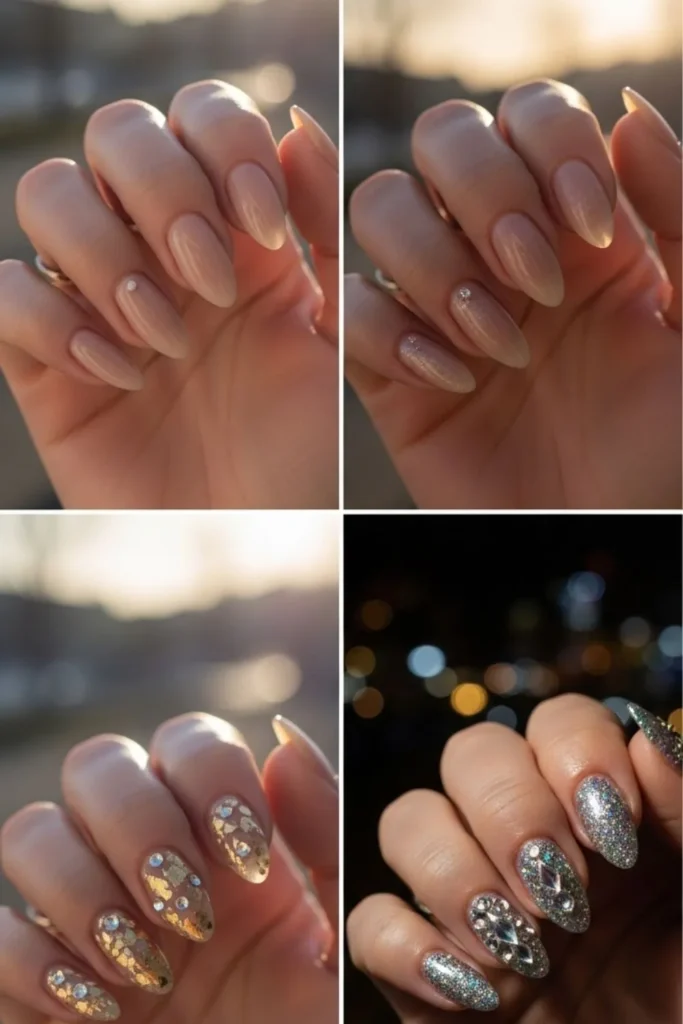
Add metallic accents, apply glitter topcoat over existing polish, or press on temporary gems to elevate daytime nails for evening without full removal. Strategic additions transform simple into statement.
A nude daytime manicure becomes evening-ready with gold foil pressed onto accent nails or a glitter topcoat on all nails. Press-on gems (available in peel-and-stick) add instant glamour and remove easily afterward. Metallic striping tape applied diagonally across existing polish creates dimension in seconds. The key is addition, not replacement you’re enhancing, not redoing.
This approach also works in reverse; remove accent elements after events to return to workplace-appropriate nails. Transitional design thinking maximizes wear time and versatility from a single manicure.
Which Design Elements Hide Growth Lines Best?
Glitter gradients, textured finishes, and designs with horizontal elements hide growth lines better than solid colors or vertical designs that emphasize the gap between polish and cuticle.
Solid dark colors make growth lines glaringly obvious the contrast between bare nail and polish creates a visible line within days. Glitter gradients (concentrated at tips, fading toward cuticles) camouflage growth because there’s no hard line where polish ends.
Textured or matte finishes break up the visual plane, making the growth line less noticeable. Horizontal stripes or geometric patterns near the cuticle area draw the eye away from growth.
Nude and sheer polishes blend with natural nail growth, essentially hiding the line altogether. If you need nails to look fresh for 10+ days, design with growth concealment in mind from the start.
Read More About : Fall Patchwork Nails: The Eclectic Autumn Nail Art Trend Taking Over 2025
What’s the Reality of DIY Nail Timing for Busy Schedules?
Realistic DIY timing is 20 minutes twice weekly for maintenance or one 30-minute session weekly for full manicures. Anything more demanding won’t sustain long-term without becoming a chore.
Busy schedules require honest assessment: if you can’t commit 20-30 minutes weekly, elaborate DIY nail art isn’t practical regardless of how easy tutorials claim it is. Build routines around your actual availability.
Two 15-minute sessions (polish application, then topcoat refresh midweek) often fit schedules better than one 40-minute block. Quick-dry products are non-negotiable for busy people they compress wait time from 30+ minutes to under 10.
Consider press-on nails for high-demand weeks; quality sets last 5-7 days and apply in 15 minutes. The best nail routine is one you’ll actually maintain, even if it’s simpler than ideal.
How Do You Build a Versatile DIY Nail Polish Collection?
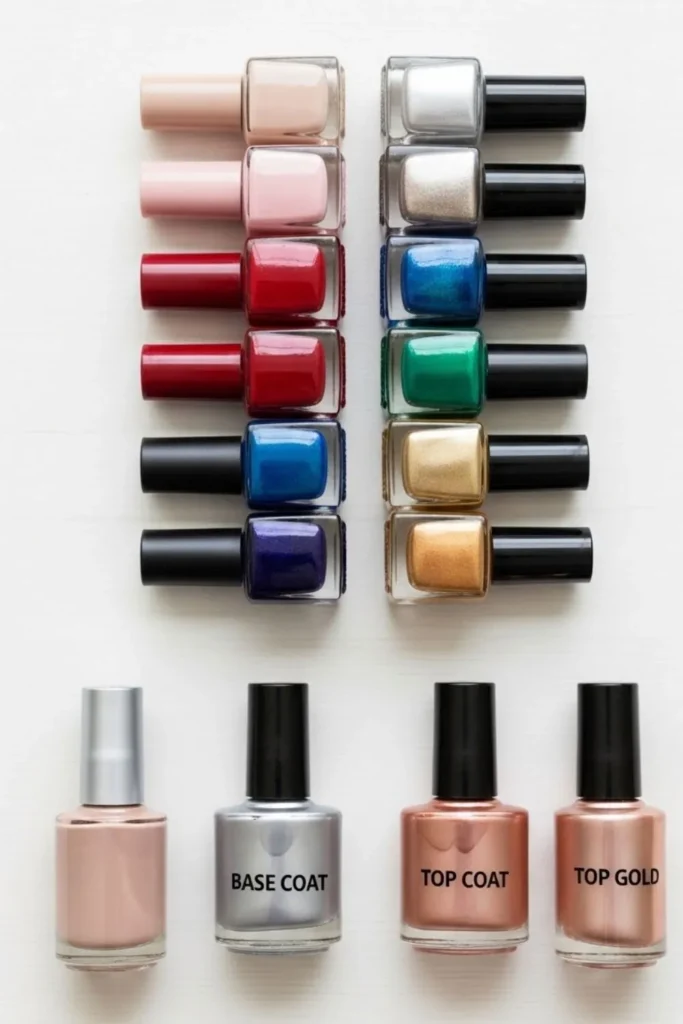
Start with three neutrals (nude, soft pink, greige), two statement colors (red, deep berry), one metallic (gold or silver), plus quality base and topcoats. This eight-item foundation covers 90% of occasions.
Most beginners buy dozens of trendy colors they’ll use once. Instead, build around versatility. Your nude should match your skin tone closely for natural looks and French tips. Soft pink works for professional settings and everyday wear. Greige (grey-beige) feels modern and pairs with everything.
Red and deep berries provide classic statement options. One metallic enables instant accents without buying multiple shades. Quality base and topcoats protect the investment. Expand slowly with specific needs and add seasonal colors only if you’ll wear them multiple times.
A focused collection of frequently-used colors beats 50 bottles of “maybe someday” shades collecting dust.
Read More About : French Tip Nails: Master the Ultimate 2025 Manicure Guide
Frequently Asked Questions
How long do DIY nails typically last compared to salon manicures?
DIY nails usually last 3–7 days with regular polish, while salon gel manicures often last 2–3 weeks without chipping. The difference comes from professional nail prep, curing under UV/LED lamps, and stronger top coats.
Can you do nail art without any artistic ability?
Yes, you can do nail art at home using nail stickers, stamping kits, dotting tools, and press-on designs that require no drawing skills. These beginner-friendly nail art tools create clean, professional-looking results in minutes.
What’s the minimum tool kit needed to start DIY nails at home?
A basic DIY nail kit should include nail clippers, a nail file, cuticle pusher, base coat, top coat, and at least two nail polish colors. These essentials are enough to create simple, long-lasting home manicures.
How do you prevent polish from staining natural nails?
Always apply a clear base coat before color to create a barrier between the polish and your natural nails. Limiting dark shades and removing polish within 7 days also helps prevent yellowing and stains.
Why do my DIY nails chip so quickly?
DIY nails often chip fast due to oily nail beds, skipping base or top coat, or applying thick layers of polish. Cleaning nails with alcohol first and sealing the edges can significantly extend wear time.
Are expensive nail polishes actually worth the cost?
High-end nail polishes often offer smoother application, richer color payoff, and longer-lasting formulas than cheaper brands. However, many drugstore nail polishes now deliver similar durability at a lower price, making them a smart budget-friendly option.
Key Takeaways
- Easy DIY nail designs prioritize technique simplicity over artistic skill textured finishes, strategic accent placement, and minimal-step processes deliver salon-quality results at home
- Matte topcoats, neutral color bases, and shorter nail shapes significantly increase success rates by hiding application imperfections beginners commonly make
- Proper nail prep extends polish wear by 40-60%; dehydrating nails, pushing cuticles, and light buffing matter more than expensive tools or polishes
- Quality topcoat is the single most important product investment it protects manicures better than premium base polishes and extends wear by 3-5 days
- Realistic DIY timing is 20-30 minutes weekly for sustainable routines; designs requiring longer aren’t practical for regular maintenance regardless of claimed ease
Conclusion
Easy DIY nails succeed when you match designs to your actual skill level and available time rather than aspirational tutorials. The 55 ideas shared here work because they’re built on strategic shortcuts matte finishes that hide mistakes, accent nails that minimize precision demands, and color choices that camouflage imperfect application. These aren’t compromises; they’re smart design decisions that deliver polished results without professional training.
Your nail routine should feel sustainable, not like a weekend project that derails your schedule. Start with simple single-color applications using proper prep techniques and quality topcoats. Master clean, even polish application before adding design elements.
Build your collection around versatile neutrals and strategic statement colors rather than chasing every trend. When you remove the pressure of perfection and focus on techniques that actually work for home application, DIY nails become genuinely easy and far more satisfying than any salon appointment.