
51 Colorful French Nails to Try in 2026
French manicures used to mean playing it safe. Colorful French nails flip that idea by keeping the clean structure you love while replacing white tips with shades that actually show personality. From pastel edges on short nails to chrome-tipped almond shapes, this look proves color doesn’t have to feel loud to feel modern.
The mistake most people make is assuming bold color ruins elegance. In reality, limiting color to the tips makes it more wearable than full-coverage polish, and far more forgiving when trends shift. Neon lines, rainbow tips, and metallic accents add impact without overwhelming your hands or clashing with outfits.
The fix is simple: choose smarter color placement, season-appropriate shades, and tip styles that enhance your nail shape. Done right, colorful French nails deliver trend energy with timeless balance and that’s why they’re everywhere in 2026.
What Makes Colorful French Nails Different from Classic Designs?
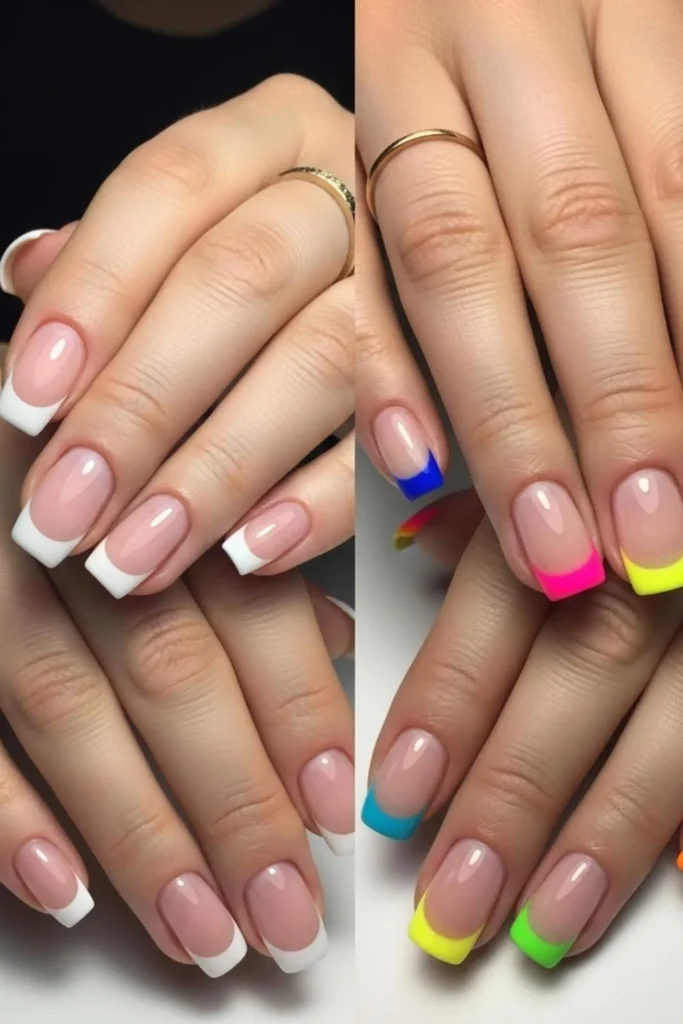
Colorful French nails swap traditional white tips for vibrant hues while maintaining the structural elegance of the original design. The key difference lies in the palette you’re using shades like electric blue, soft lavender, or metallic copper instead of the conventional white-and-nude combination.
This approach lets you embrace color without covering your entire nail, which keeps the look from feeling overwhelming while still making a clear statement.
Unlike full-color manicures that demand commitment to a single shade, colorful French tips offer flexibility. You can test bold colors at the tips while keeping a neutral base, making it easier to match outfits or transition between seasons.
The French silhouette naturally elongates fingers, and adding color to just the tips directs attention upward, creating a flattering visual effect that works on both short and long nails. This design strategy explains why colorful French manicures feel fresh yet familiar; they honor the classic framework while embracing contemporary color trends.
Why Are Neon French Tips Trending So Hard Right Now?
Neon French tips explode with vacation energy and instant brightness. This trend thrives because it delivers maximum impact with minimal coverage, a thin neon line at your fingertips creates the same visual punch as a full neon manicure, but feels more wearable for everyday life.
The contrast between nude or sheer bases and electric tips makes your hands look effortlessly put-together, like you planned your entire look around your nails.
Brands have responded to this demand by creating neon polishes specifically formulated for French tips, with pigments that stay vibrant without multiple coats. Celebrity manicurists pair neons with completely bare nails or clear bases for a fresh, almost athletic aesthetic that works year-round.
The trend peaks during summer months when bright shades feel most natural, but savvy nail enthusiasts layer neons over darker bases in winter for an unexpected twist. What makes neon French tips particularly smart is their adaptability swap the neon shade based on your mood or outfit, and the entire vibe shifts without requiring a complete manicure overhaul.
How Do Chrome French Nails Create That Mirror-Like Finish?
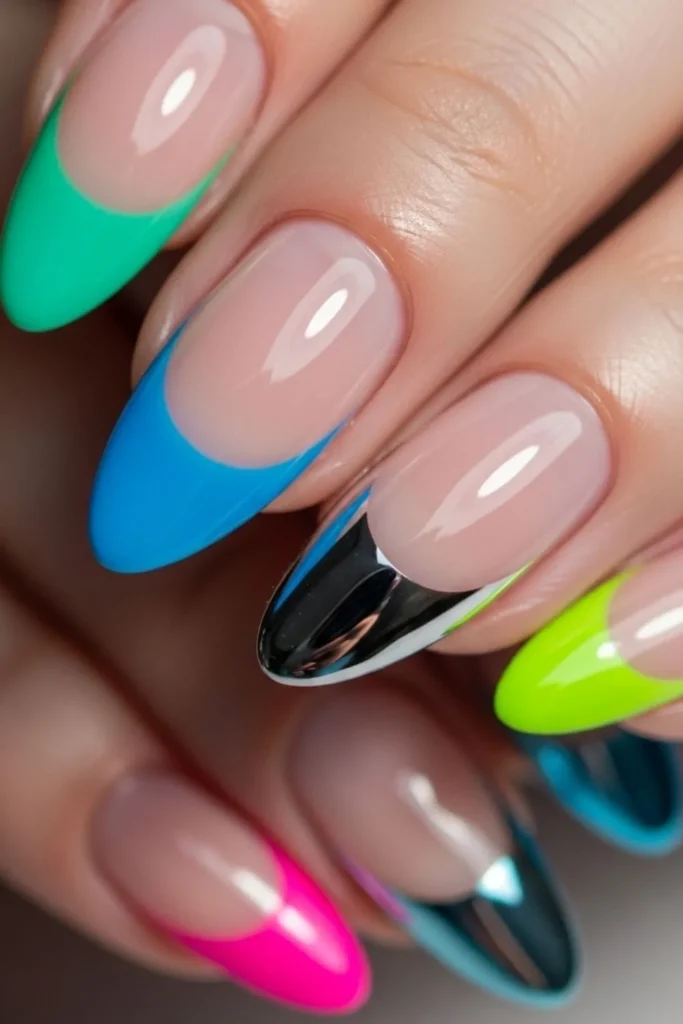
Chrome French nails achieve their reflective shine through chrome powder application over gel polish, not through traditional polish alone. The process requires curing a gel base, applying chrome powder with a silicone applicator while the nail is still tacky, then sealing with a no-wipe topcoat.
This layering technique creates that signature liquid metal effect light bounces off the chrome particles, producing a mirror-like surface that shifts as you move your hands.
The finish differs dramatically from regular metallic polish, which contains flakes suspended in liquid. Chrome powder sits directly on the nail surface, creating an uninterrupted reflective layer that looks almost wet.
Silver and rose gold remain the most requested shades, but 2026 trends lean toward champagne, bronze, and even olive tones that feel less conventional yet equally luxurious.
Chrome works particularly well on French tips because the reflective edge frames your nail like jewelry, adding dimension without busy patterns. For best results, apply chrome to smooth, well-filed nails any texture shows through the reflective surface, so proper prep matters more with chrome than with regular polish.
Read More About : Halloween Nails Designs: 2025 Complete Guide to Spooky Manicures
Which Color Combinations Work Best for Multi-French Manicures?
Multi-French manicures succeed when colors either share a tonal family or create intentional contrast. Pastels in different shades think baby pink, lavender, mint, and soft yellow flow naturally across fingers because they match in saturation and mood. This approach feels cohesive even when each nail wears a different tip color, creating a rainbow effect that looks curated rather than random.
For bolder impact, pair complementary opposites like electric blue with warm orange, or neon pink with lime green. The contrast makes each color pop harder, but the trick is choosing shades with similar intensity levels.
Mixing a neon with a pastel rarely works because the brightness imbalance creates visual discord. Monochromatic variations offer another strong option imagine cobalt, navy, and powder blue tips across one hand, creating depth through subtle shifts in the same color story.
When designing multi-French sets, consider your jewelry metals too. Cool-toned color combos (blues, purples, silvers) enhance silver accessories, while warm combinations (corals, golds, oranges) pair beautifully with gold jewelry.
What’s the Difference Between Chrome and Cat-Eye French Tips?
Chrome delivers an even, mirror-like shine across the entire tip, while cat-eye polish creates a concentrated band of light that shifts when viewed from different angles. The distinction comes from the particles used chrome powder reflects light uniformly, but cat-eye polish contains magnetic particles that align when you hold a magnet above wet polish, creating that signature glowing stripe.
Cat-eye tends to look more organic and gem-like, resembling actual tiger’s eye or moonstone with its concentrated shimmer band. Chrome appears more futuristic and deliberate, like liquid metal coating your nails. Both finishes work beautifully on French tips, but they suit different aesthetics. Choose cat-eye for subtle luxury that catches light without demanding attention, or select chrome when you want unabashed shine that photographs dramatically under any lighting.
Application differs significantly between the two. Chrome requires gel polish and powder buffing, while cat-eye involves regular or gel polish with magnet waving during the drying process. Cat-eye proves more beginner-friendly for DIY attempts since you’re working with polish rather than powder, though both techniques benefit from professional application when you want competition-level results.
How Do Rainbow French Tips Stay Wearable for Everyday Life?
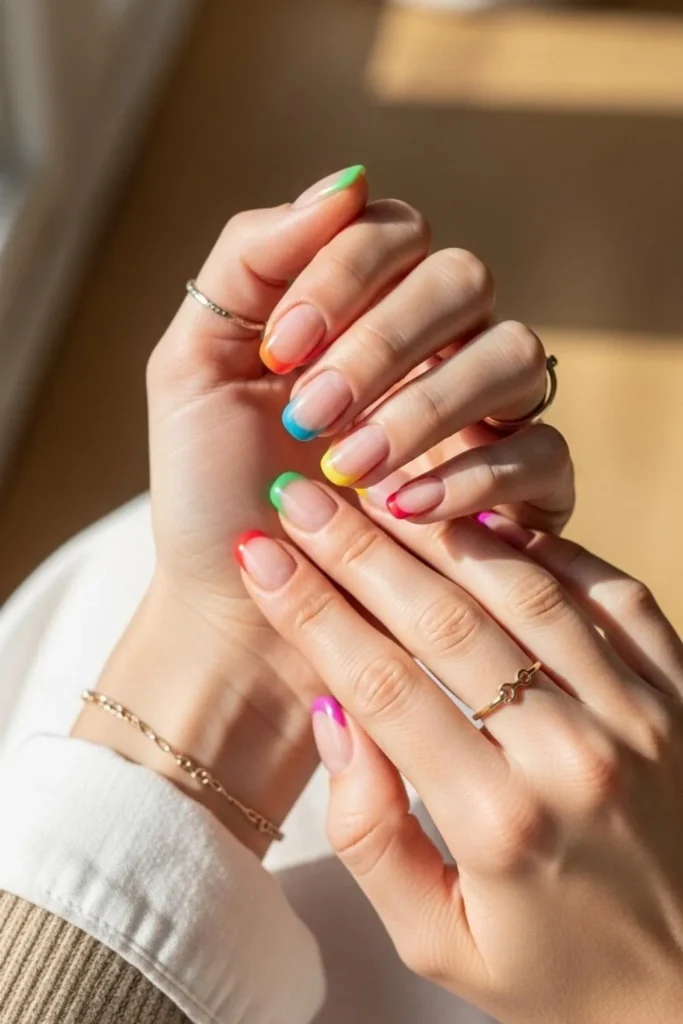
Rainbow French tips maintain wearability through strategic color placement and base selection. When you apply different colors to each fingertip over a nude or clear base, the result reads as playful rather than costume-like because most of your nail remains neutral. This creates visual interest concentrated at one point, letting the rest of your hand serve as a clean canvas.
The trick to making rainbow tips work daily is choosing either all pastels or all brights mixing intensity levels makes the design feel chaotic. Pastels skew more professional and spring-appropriate, while neons lean casual and summer-ready, but both approaches remain grounded through that neutral base.
Think of rainbow tips as wearing subtle stud earrings in different colors rather than statement jewelry they add personality without overwhelming your overall appearance.
For maximum versatility, arrange colors in a gradual spectrum from thumb to pinky, creating an ombre effect across your hand rather than random placement. This adds visual flow that feels intentional, making the manicure look designed rather than improvised.
The rainbow French approach works particularly well for people who love color but worry about commitment you experience multiple shades simultaneously without dedicating all ten nails to a single potentially regrettable choice.
Why Are Micro French Tips Becoming More Popular Than Thick Lines?
Micro French tips deliver sophistication through restraint, creating an almost barely-there accent that elongates nails without heavy visual weight. The ultra-thin colored line typically 1-2mm wide sits at the absolute edge of your nail, reading as refined detail rather than bold statement.
This subtlety makes the manicure appropriate for conservative professional settings while still participating in the colorful French trend.
Thick French tips can shorten the appearance of your nail by cutting it visually in half, but micro tips preserve nail length because they occupy minimal real estate. This matters especially on shorter natural nails where you can’t afford to sacrifice perceived length.
The delicate line also allows for bolder color choices, a micro tip in electric pink feels chic rather than overwhelming, whereas a thick band of the same shade might read as too aggressive for daily wear.
Technically, micro tips prove easier to DIY because you’re working with a tiny area where minor imperfections become less noticeable. A slightly wobbly thin line looks hand-drawn and charming, but a thick uneven tip appears sloppy.
Professional nail artists achieve perfect micro tips using striping brushes or stamping tools, but home enthusiasts can nail the look with steady hands and fine-tipped polish brushes.
Read More About : Cute Halloween Nails: 2025 Trends, Designs & Easy DIY Ideas That’ll Make You Fall for Spooky Season
How Do Gradient French Nails Differ from Traditional Ombré Designs?
Gradient French nails create color shifts specifically within the tip area, while traditional ombré transitions across the entire nail length. With gradient French, you might fade from pink to orange just along the tip, keeping the nail base neutral or clear. Traditional ombré starts at the cuticle with one color and blends to a different shade at the tip, involving the full nail surface.
This distinction matters because gradient French maintains that signature French silhouette the curved tip boundary remains visible even as colors shift within it. The technique requires sponging or airbrushing colors only along the free edge, then defining the French curve afterward. Ombré nails blend continuously without defined sections, creating a different visual effect that lacks the structured elegance of French tips.
Gradient French works particularly well with analogous colors (those next to each other on the color wheel) like coral blending to yellow or lavender fading to blue. The color shift feels natural because shades share undertones, creating smooth transitions even within the small tip space. This approach lets you experiment with multiple colors while maintaining the clean, groomed appearance that makes French manicures so universally flattering.
What Makes Metallic French Tips Look More Expensive Than Regular Polish?
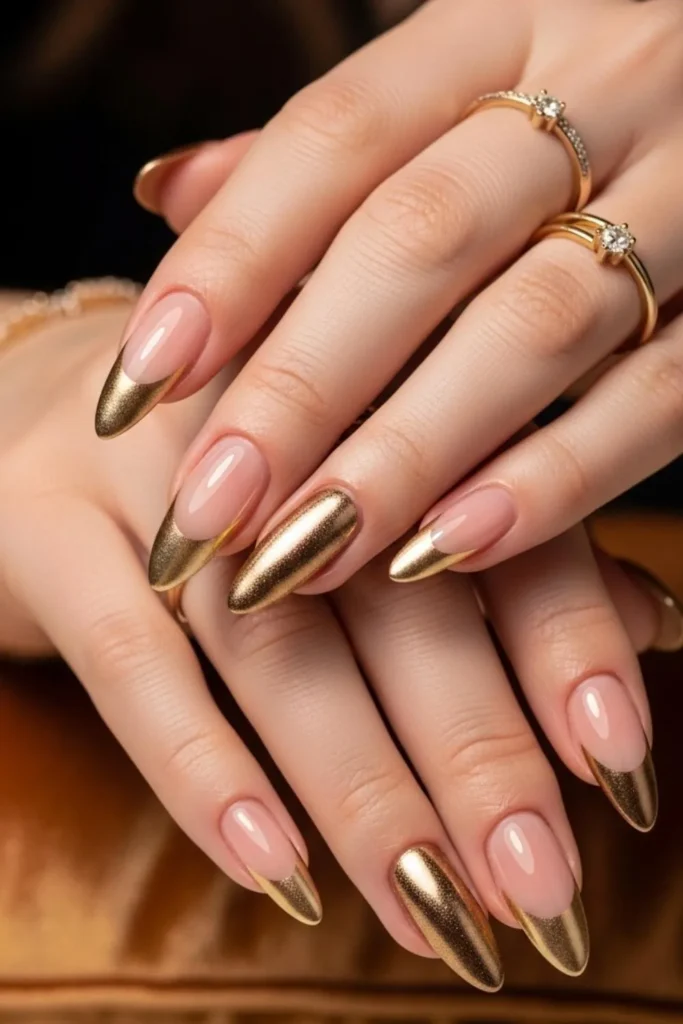
Metallic French tips create a jewelry-like effect through their reflective quality, making hands appear adorned even without rings or bracelets. Gold, silver, and bronze metallics catch light similar to precious metals, adding dimension that flat polish can’t achieve. This light-play creates visual interest from every angle, making nails look intentionally styled rather than simply painted.
The perceived luxury also stems from application difficulty metallic finishes show every imperfection, so well-executed metallic tips signal professional skill or dedication to proper technique.
Unlike regular polish that might hide minor flaws with opacity, metallics amplify texture issues, meaning perfect metallic tips indicate quality work.
Color choice impacts perceived expense significantly. Rose gold and champagne metallics appear more refined than bright silver, which can read as costume-like if not balanced properly.
Bronze and copper tones evoke expensive jewelry while staying unique enough to feel fashion-forward. Pairing metallics with neutral or nude bases maximizes the luxury effec,t the contrast makes the metallic pop without competing visual elements, similar to wearing fine jewelry against simple clothing.
How Do You Choose the Right Colorful French for Different Seasons?
Spring French nails thrive on pastels and soft brights think mint, baby pink, lilac, and butter yellow that mirror blooming flowers and fresh growth. These shades feel optimistic without overwhelming, pairing beautifully with the lighter fabrics and floral patterns dominating spring wardrobes. Micro tips in pastel shades particularly suit spring because they whisper rather than shout.
Summer demands boldness through neons, bright corals, and electric blues that match the season’s high energy. Thick French tips work better in summer because the bold color bands complement beachy, casual aesthetics.
This is when rainbow tips truly shine the playful variety mirrors summer’s carefree spirit. Chrome finishes in silver or holographic effects also peak in summer, reflecting sunlight with almost prism-like effects.
Fall transitions to deeper metallics like bronze, copper, and burgundy-toned chromes that echo autumn leaves. Rich jewel tones emerald, sapphire, deep purple create sophisticated French tips that pair with heavier textures like wool and leather.
Winter embraces silver chrome, icy blues, and deep navy tips that feel cool-toned and elegant. This is also when cat-eye finishes in darker shades become most appropriate, creating that cozy, jewel-box luxury perfect for holiday gatherings.
Read More About : christmas nails pink: 50+ Festive Designs to Elevate Your Holiday Manicure
What Are the Most Common Mistakes When DIYing Colorful French Tips?
The biggest DIY failure happens when people skip the nail prep filing edges unevenly or leaving cuticles ragged makes even perfect color application look messy. Your base nail condition matters more with French manicures than full-coverage designs because so much natural nail remains visible. Spend extra time shaping each nail identically and pushing back cuticles cleanly before any polish touches your nails.
Color bleeding into the nude base creates the second most common problem. This happens when you overload the brush with polish or start painting too far down from the tip edge. Use minimal product on your brush and build color through multiple thin coats rather than one thick application. Consider using French tip guides or stamping tools if freehand application consistently produces wavy lines no shame in using tools that professionals rely on too.
Poor color choices undermine otherwise solid technique. Avoid pairing warm-toned bases with cool-toned tips, or vice versa the temperature clash reads as unintentional rather than artistic.
Similarly, matching your tip color too closely to your base creates a monochromatic effect where the French tip disappears entirely, defeating the design’s purpose. Aim for either strong contrast or colors from the same family with different saturation levels.
How Long Do Colorful French Manicures Typically Last?
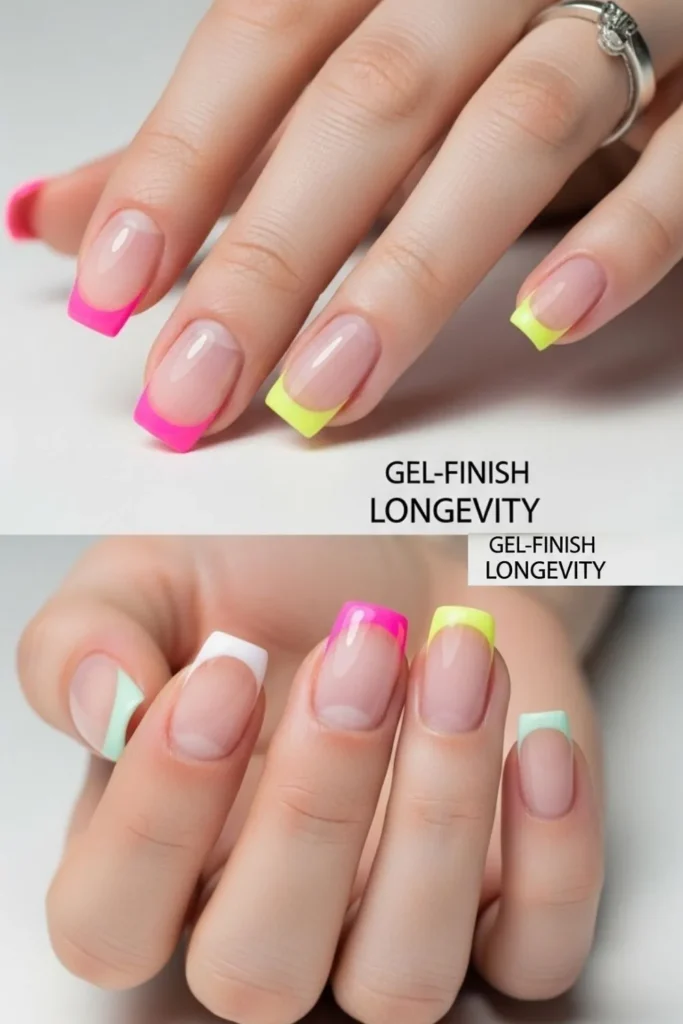
Regular polish colorful French manicures last 3-5 days before showing significant tip wear, which appears more obvious than with full-coverage manicures because the color sits at your nail’s most vulnerable point. Every time you type, open cans, or perform daily tasks, your tips take direct impact. Gel polish extends wear to 2-3 weeks with proper application and topcoat sealing, making it the smarter choice for colorful French designs you want to maintain.
Chrome and metallic finishes prove particularly delicate, the powder application can chip faster than regular polish if not sealed properly. Always use a quality gel topcoat over chrome powder and avoid no-wipe topcoats that might dull the reflective finish. Reapply topcoat every 3-4 days at home to extend wear time and maintain shine.
Press-on French tips in colorful designs offer another solution, lasting 1-2 weeks with glue application or up to several days with adhesive tabs. This route lets you experiment with elaborate designs like multi-chrome or complex rainbow patterns without committing to long wear or damaging your natural nails.
The trade-off is less customization and the need to find pre-made designs that match your natural nail beds properly.
Read More About : Winter Nail Designs: 50+ Stunning Ideas to Embrace the Cold Season in Style
Frequently Asked Questions
Can colorful French tips work on short natural nails?
Yes, colorful French tips look great on short natural nails when the tip line is thin and clean. Bright or pastel colors can add style without making short nails look bulky.
Do I need gel polish for chrome French tips?
Yes, gel polish is usually required for chrome French tips because the chrome powder needs a no-wipe gel top coat to bond properly. Regular polish does not hold the mirror effect well.
How do I prevent colorful French tips from looking childish?
Use muted shades, micro tips, or neutral base colors to keep colorful French tips looking modern and polished. Avoid thick tip lines and overly bright neon combinations for a more grown-up look.
What’s the best nail shape for colorful French manicures?
Squoval and almond shapes work best for colorful French manicures because they balance bold tips with a clean, elegant silhouette. These shapes are also practical for everyday wear in the U.S.
Can I mix different finishes in one colorful French manicure?
Yes, mixing finishes like glossy tips with a matte base or chrome accents adds depth and a designer look. This trend is popular for modern French nail designs and special occasions.
How often should I change my colorful French design?
Change colorful French tip designs every 7 to 10 days with regular polish or every 2 to 3 weeks with gel. Refreshing the design helps prevent visible tip wear and fading.
Key Takeaways
- Colorful French nails swap white tips for vibrant shades while maintaining the classic French structure, creating flexible, wearable color options
- Neon tips trend because they deliver maximum visual impact with minimal nail coverage, feeling bold yet surprisingly versatile
- Chrome finishes achieve mirror-like shine through powder application over gel polish, creating reflective surfaces that shift with light
- Multi-French color success depends on choosing either tonal families or intentional contrasts with matched saturation levels
- Micro French tips elongate nails better than thick lines while allowing bolder color choices that remain professional
Conclusion
Colorful French nails prove that classic designs can evolve without losing their essential character. The French manicure structure that has a clean tip and groomed base provides the perfect framework for color experimentation, whether you’re testing subtle pastels or committing to bold metallics. You gain the best of both worlds: the elegance and nail-lengthening effects of traditional French tips combined with the personality and trend-forward appeal of contemporary color choices.
The 51 ideas covered here demonstrate how adaptable this trend truly is. Your colorful French nails can shift with seasons, match your daily aesthetic, or simply reflect your current mood without requiring complete manicure overhauls.
Start with one approach that speaks to your style, maybe micro neon tips for summer or soft chrome in rose gold for year-round sophistication and let your nail journey unfold naturally from there. The colorful French manicure isn’t going anywhere, which means you have all the time you need to explore its possibilities.