
48 Beginner Nails That Look Professional in 2026
You want beginner nails that look professional, but the results rarely match the vision. Polish floods cuticles, streaks show up under bright light, and “easy” designs somehow expose every shaky movement instead of hiding it.
That frustration isn’t a skill issue. It’s a strategy problem. Beginners are often pushed toward high-precision looks like crisp French tips or opaque creams that magnify small mistakes and make at-home manicures feel harder than they need to be.
The shift happens when you choose techniques built for margin of error. Forgiving colors, texture-based finishes, and cleanup-first methods turn uneven application into intentional style, delivering polished, salon-worthy nails without advanced skill, expensive tools, or endless retries.
What Makes Beginner Nails Look Professional?
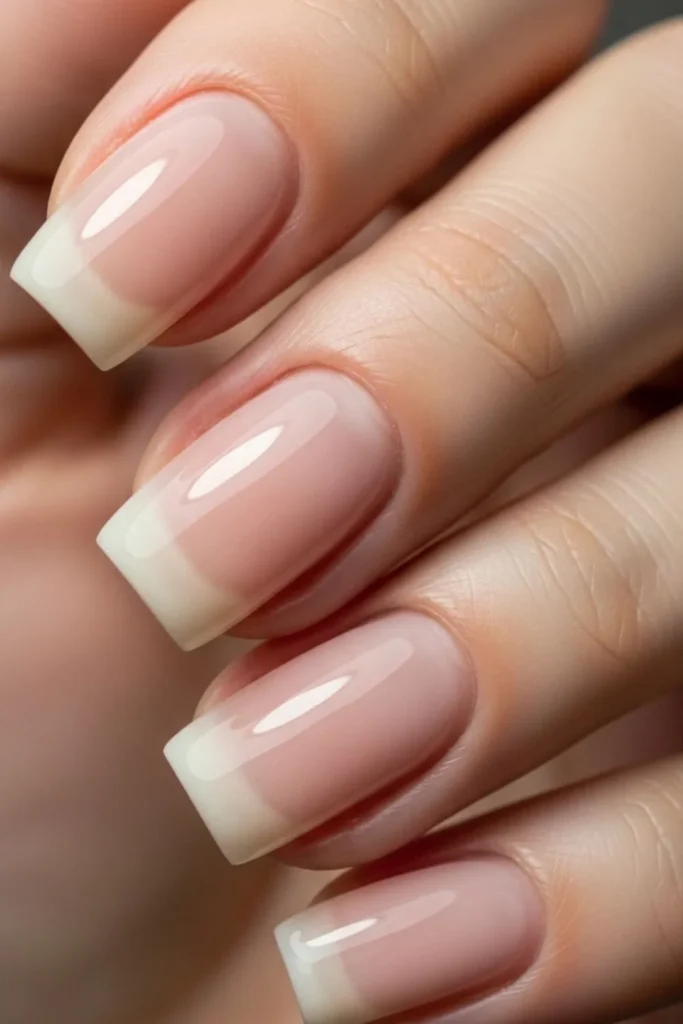
Beginner nails look professional when the finish quality, color placement, and overall symmetry appear intentional rather than accidental. The key difference between amateur and polished nails isn’t complexity, its control over three elements: clean cuticle lines, even polish distribution, and deliberate design placement that works with your natural nail shape.
Professional appearance comes from understanding margin of error. A classic red manicure shows every streak and gap. A sheer pink with subtle shimmer hides uneven layers. Similarly, negative space designs look intentional even when edges aren’t razor-sharp, while French tips demand precision most beginners don’t have yet. The best beginner nails use texture, finish, or pattern density to mask technical imperfections while still looking complete and considered.
Tools matter more than skill at this stage. Liquid latex or peel-off base around cuticles turns sloppy application into clean edges with one pull. Nail guides create straight lines without steady hands. Wide brushes cover more surface area with fewer strokes, reducing visible brush marks. These aren’t shortcuts they’re strategic choices that let technique catch up to ambition.
Why Most Beginner Nail Tutorials Fail You
Most beginner tutorials fail because they demonstrate techniques on already-perfect nails, skipping the prep work that makes or breaks the result. They show a steady hand applying polish in three smooth strokes without explaining how to stabilize your wrist, which fingers to paint first, or what to do when polish floods your cuticles. The disconnect between watching someone with years of practice and executing it yourself with zero muscle memory is rarely addressed.
The second failure point is assuming all “easy” techniques are equally beginner-friendly. Tutorials label water marble, stamping, and dotting tools as simple, but each requires different skills. Water marble needs timing and surface tension control. Stamping demands quick, confident pressure. Dotting looks easy until you realize controlling polish consistency and dot size takes practice. Unlike stamping which either transfers or doesn’t, some techniques have gradual learning curves that tutorials don’t map out.
Beginner content also underestimates how much hand dominance affects results. Painting your dominant hand with your non-dominant hand is fundamentally harder, yet most tutorials gloss over this with “just go slowly.” The reality is you need different strategies, longer dry times, more forgiving designs on your dominant hand, or embracing slight asymmetry as part of a deliberately casual aesthetic rather than fighting for impossible symmetry.
The Clean-Up Method That Changes Everything
The clean-up method that transforms beginner nails is using a small angled brush dipped in pure acetone to carve away mistakes after polish dries completely. Unlike trying to fix wet polish, which smears and creates new problems, this approach treats cleanup as a separate finishing step where you essentially sculpt clean edges around each nail.
This works because dried polish doesn’t move, so you’re removing excess rather than redistributing it. An angled eyeliner brush gives you precision that cotton swabs can’t match. The technique is straightforward: let polish dry fully, dip just the brush tip in acetone, then trace along your cuticle line and sidewalls with controlled strokes. The acetone dissolves polish on contact but evaporates quickly, so you can see exactly what you’re removing.
The psychological shift matters as much as the technical one. When you know cleanup is the final step, application pressure drops. You can prioritize coverage over precision, flood your cuticles slightly, and focus on getting polish where it needs to be without obsessing over perfect edges. This single change treating application and cleanup as two separate processes eliminates the main stress point that makes beginner manicures look rushed and unfinished.
Which Nail Shapes Are Most Forgiving for Beginners?
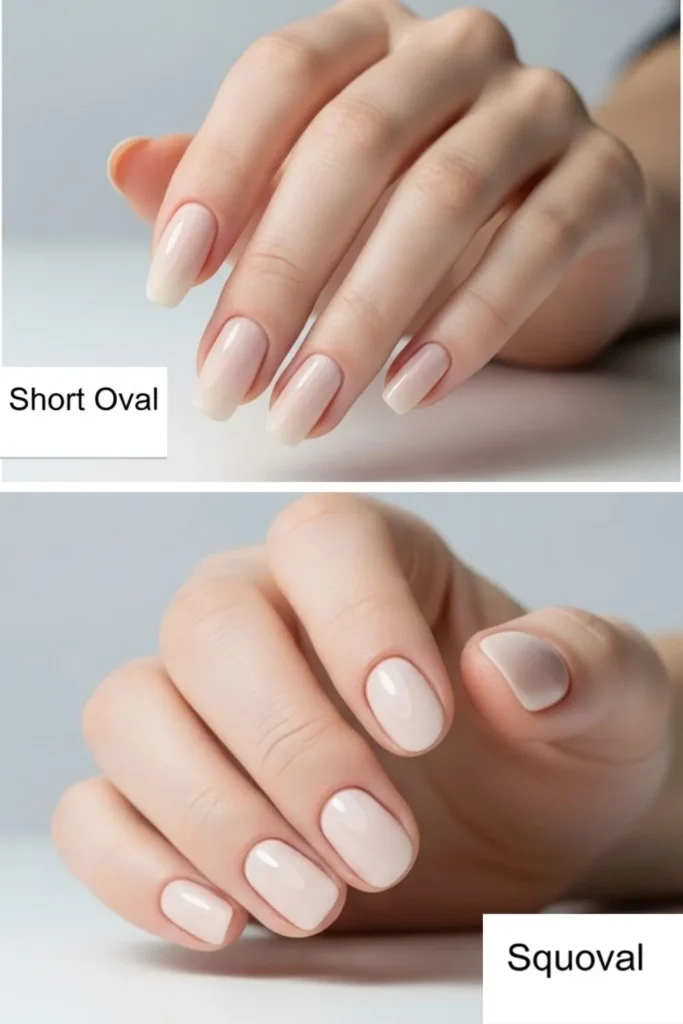
Short oval and rounded square shapes are most forgiving for beginners because they require minimal filing precision and naturally hide length inconsistencies between nails. Oval shapes follow your natural nail curve, so even slightly uneven filing still looks intentional. Rounded squares need only basic corner softening rather than the precise angle matching that sharp stilettos or perfect almonds demand.
The filing margin of error differs dramatically by shape. Almond nails require symmetrical tapering on both sides if one side is filed more than the other, the peak shifts off-center and looks obviously wrong. Squoval (squared oval) tolerates asymmetric filing because the rounded corners disguise slight variations. Similarly, coffin shapes need equal filing on all 10 nails to maintain consistent width, while natural rounds can vary slightly without looking mismatched.
Shape also affects how polish applies. Extremely long or sharply pointed nails create more surface area where brush control matters. Shorter shapes mean fewer strokes to cover each nail, reducing opportunities for streaking or flooding. If you’re struggling with application, filing your nails slightly shorter rather than practicing on your current length often yields faster improvement because you’re working with less challenging real estate.
How to Choose Colors That Hide Mistakes
Colors that hide mistakes have built-in visual texture or opacity variation that masks streaking and uneven coverage. Sheer jellies, shimmers, and multichrome finishes diffuse light in ways that make brush strokes invisible, while cream formulas in dark or saturated shades show every imperfection. The difference is how light interacts with the dried polish glossy creams create a mirror surface that reveals application flaws, while textured finishes scatter light and hide them.
Specific formulas perform differently even within the same color family. A sheer pink with fine shimmer applies forgivably in two coats, while an opaque bubblegum pink shows streaks if you go back over partially dried polish. Metallics are deceptively beginner-friendly because their reflective particles create a natural dimension that looks intentional rather than patchy. Conversely, stark white and true black creams are among the hardest colors to apply smoothly white shows every streak, and black shows every thin spot.
Color value also matters strategically. Medium-toned shades (soft mauves, dusty roses, muted corals) hide the visible gap between polish and nail bed better than extreme lights or darks. When your polish doesn’t quite reach the cuticle, a mid-tone blends with your natural nail, while stark white or deep burgundy creates obvious contrast. This isn’t about polish quality it’s about how human eyes perceive color transitions and what gets categorized as “intentional” versus “sloppy.”
48 Specific Nail Ideas for Beginners
1-10: One-Color Confidence Builders
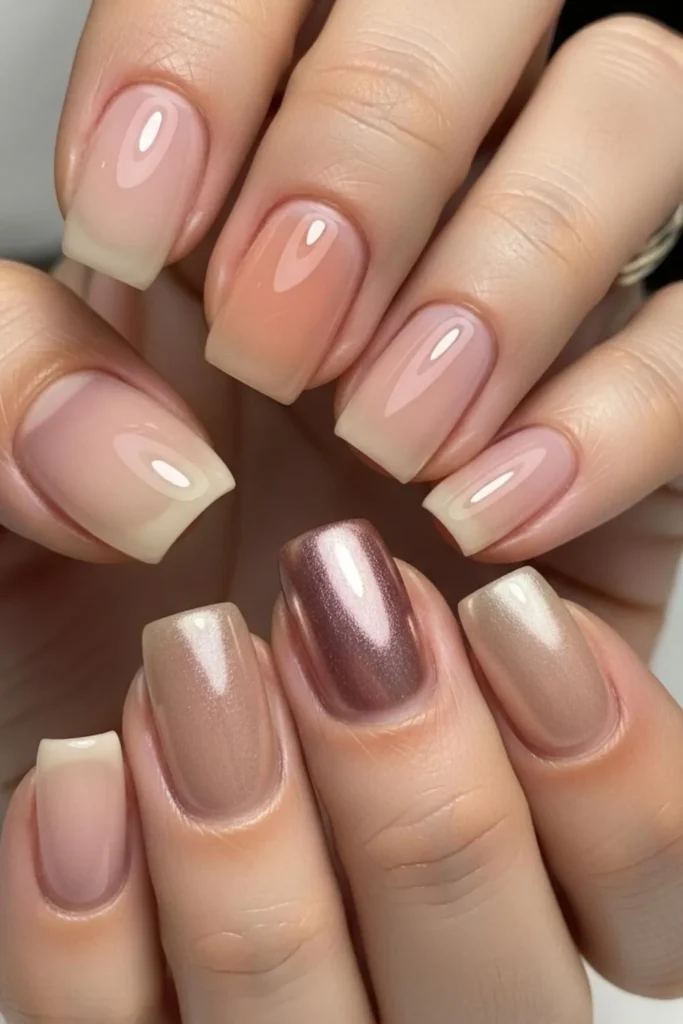
Sheer Pink with Shimmer applies forgivingly in two coats and looks polished even with slight streaking.
Cream Nude Close to Your Skin Tone hides application gaps and looks clean even when edges aren’t perfect.
Metallic Rose Gold reflects light in ways that disguise brush marks and uneven layers.
Dusty Mauve Cream offers enough pigment to look finished while being forgiving enough to layer smoothly.
Soft Peach Jelly builds color gradually, letting you control opacity without streaking.
Champagne Shimmer adds dimension without requiring precision, working on any nail length.
Milky White with Micro-Glitter hides streaks under sparkle while maintaining a clean aesthetic.
Greige (Gray-Beige) is neutral enough to hide mistakes but pigmented enough to look intentional.
Sheer Lavender applies like a wash of color, making uneven coats look like natural variation.
Bronze Metallic has built-in texture that makes application errors look like intentional depth.
11-20: Effortless Two-Tone Looks
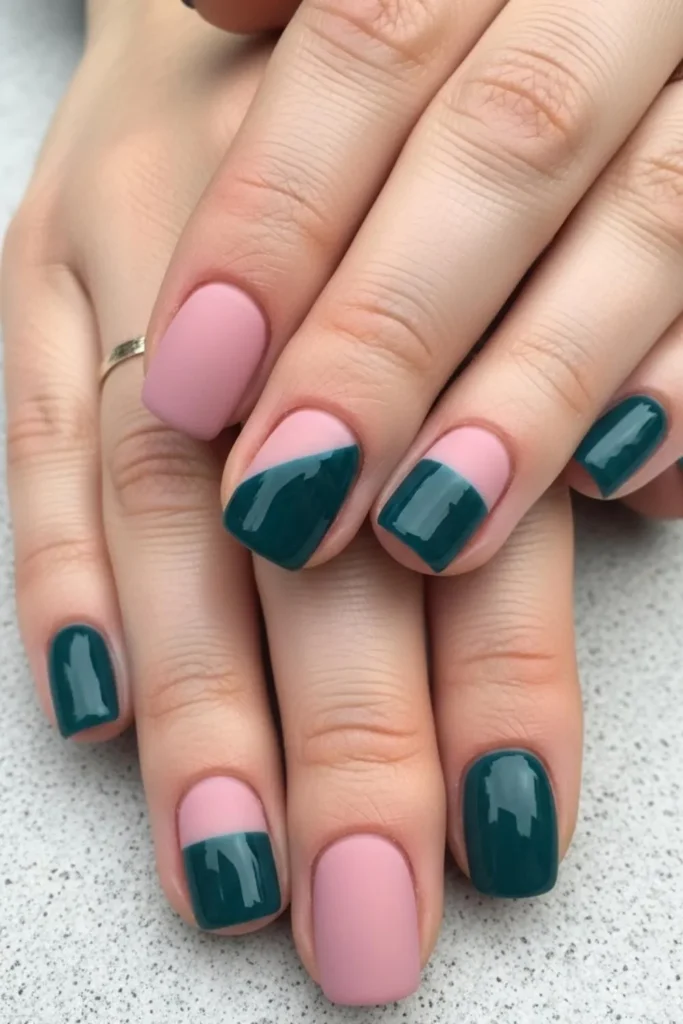
Nude Base with Single Glitter Accent Nail lets you practice application on neutral shades while the accent nail hides one potentially messy nail.
Half-Moon Negative Space using nail guides creates clean curves without steady hands.
Horizontal Color Block with tape gives you straight lines and only requires two colors.
Diagonal Split uses tape to divide nails into two shades with a clean edge.
Nude with White Tips (reverse French) is easier than traditional French because white over nude hides mistakes better than nude over white.
Matte Top Over Different Colored Base on each nail creates cohesion even if shades don’t perfectly match.
Sheer Pink Base with Gold Foil Accent applies foil randomly, so placement doesn’t need precision.
Two Shades of Same Color (light and dark nude) creates subtle contrast that looks intentional even with uneven edges.
Color-Blocked Cuticles using striping tape focuses detail at the base while keeping most of the nail simple.
Gradient Using Makeup Sponge blends colors so completely that uneven application becomes part of the effect.
21-30: Texture-Based Designs
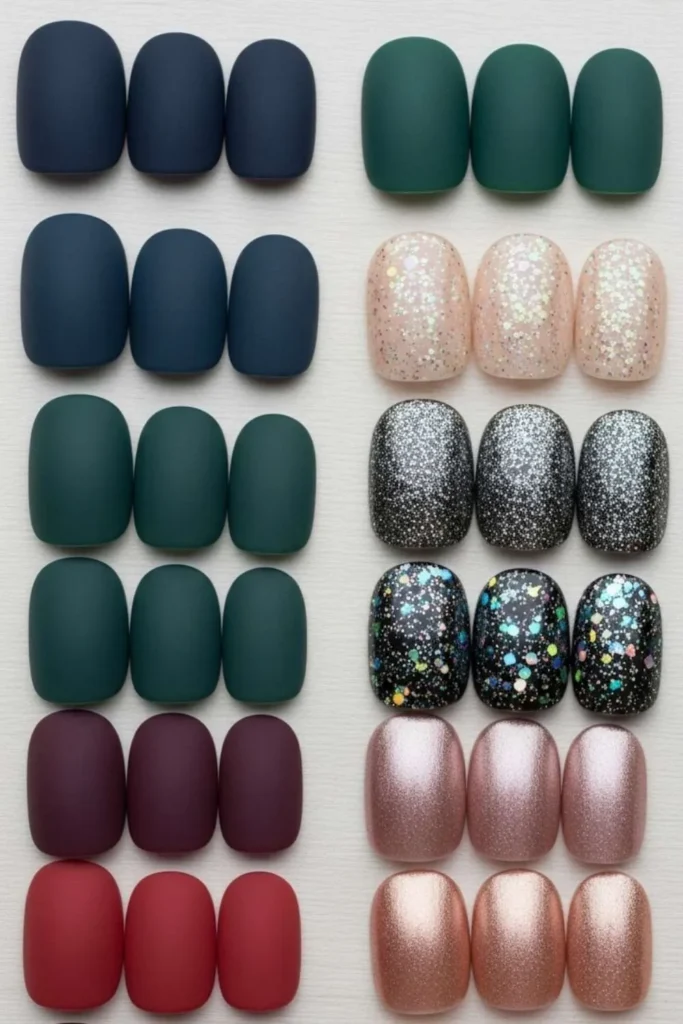
Matte Topcoat Over Any Color transforms even streaky application into an intentional velvety finish.
Sugar-Textured Polish has built-in grit that hides brush marks completely.
Crackle Top Coat over solid color creates random patterns that mask base coat imperfections.
Velvet Powder Applied to Wet Polish creates plush texture that completely obscures application issues.
Magnetic Polish forms patterns with a magnet, making the design element foolproof.
Textured Glitter Polish applies thick enough to self-level and hide uneven base layers.
Sand-Finish Polish dries to a gritty texture that looks intentional regardless of application smoothness.
Chrome Powder rubbed over gel or regular polish creates mirror finish that hides everything underneath.
Caviar Beads sprinkled on wet polish create dimensional texture with zero precision needed.
Holographic Top Coat adds rainbow dimension that distracts from and disguises base imperfections.
31-40: Minimal Nail Art
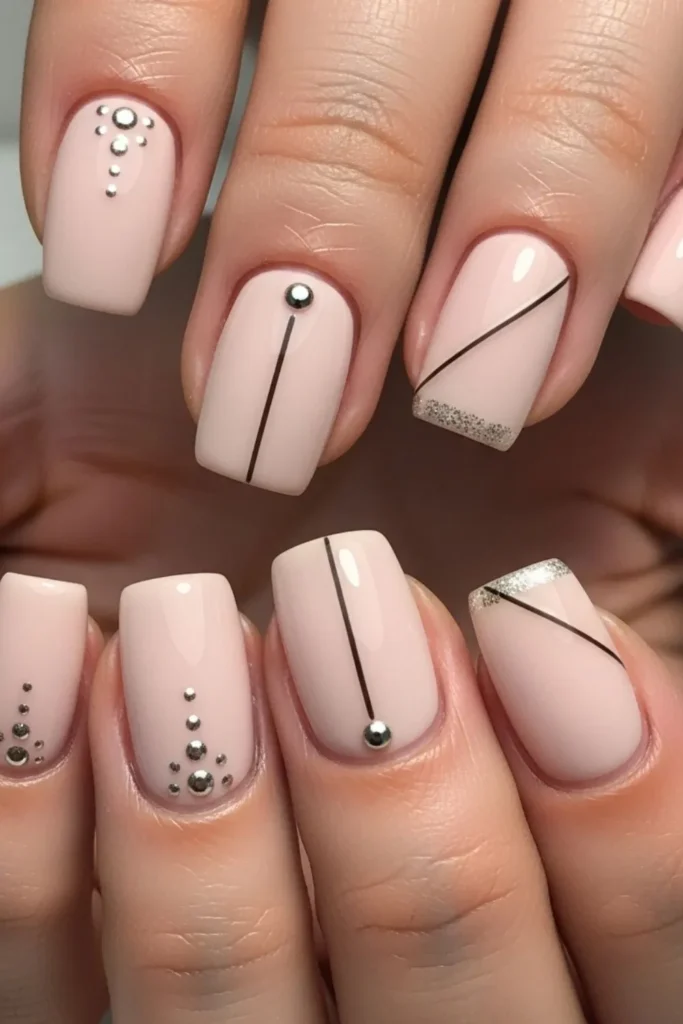
Single Rhinestone at Cuticle adds detail without requiring placement precision close to the cuticle always works.
Thin Gold Striping Tape down the center creates a clean line without hand steadiness.
Dotting Tool Flowers (five dots in a circle) look charming even when dots are slightly uneven.
Dry Brush Technique dragging nearly-dry polish creates intentional texture that hides uneven base coats.
Stamping Plates transfer complete designs, eliminating the need for freehand steadiness.
Watercolor Effect using diluted polish creates soft, blended looks where precision doesn’t matter.
Simple Geometric Stickers apply perfectly every time and need no artistic skill.
Splatter Nails flicking polish with a brush creates random patterns that can’t be “wrong.”
Minimalist Line Art Using Vinyl Guides gives you clean shapes without drawing ability.
Cloud Nails using a makeup sponge creates soft, abstract shapes with no right or wrong way.
41-48: Forgiving Special Occasion Looks
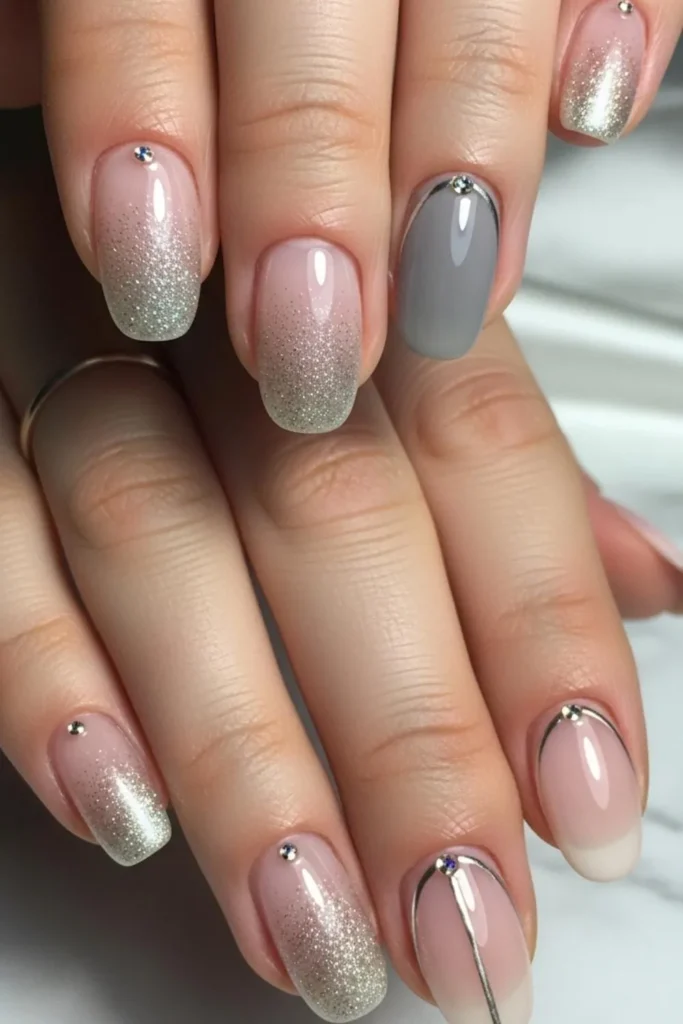
Sheer Glitter Gradient from cuticle to tip hides uneven glitter distribution as intentional fade.
Pearl Accent on nude base adds elegance with simple placement anywhere on the nail.
Metallic Foil Strips (pre-cut) apply with adhesive and create clean lines without tape.
Ombré Using Three Shades of Same Color blends mistakes into the gradient itself.
Confetti Glitter Top Coat over any base creates celebration-ready nails that hide everything underneath.
Sheer Tint with Gold Leaf Flakes applies gold randomly, making placement effortlessly artistic.
Subtle Marble Effect using plastic wrap creates organic patterns where no two nails need to match.
When to Use Nail Guides vs. Freehand Application
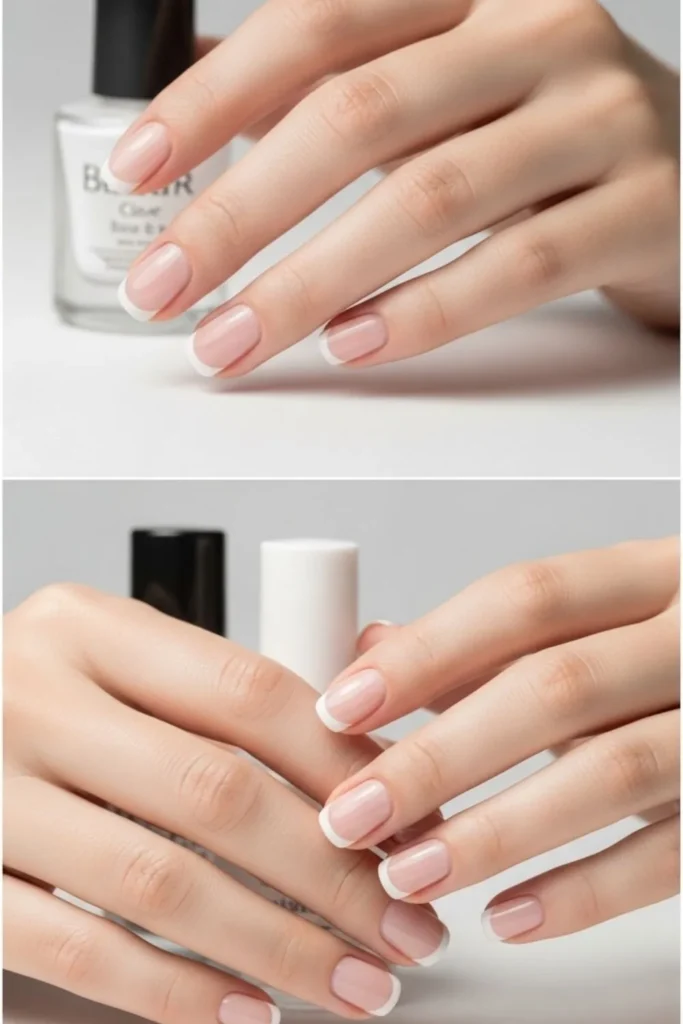
Use nail guides when you need geometric precision straight lines, perfect curves, or symmetrical shapes that freehand application can’t deliver without years of practice. Guides work best for French tips, chevrons, color blocking, and any design where the edge between colors needs to be sharp and deliberate. The physical barrier creates a clean line regardless of hand steadiness, turning a difficult technique into a simple one.
Freehand application works better for organic shapes, intentional imperfection, and designs where slight variation adds character. Abstract florals, watercolor effects, brush stroke art, and asymmetric patterns benefit from the natural movement of your hand.
Unlike guides which create identical results, freehand application on each nail introduces slight differences that make the overall manicure look hand-crafted rather than mass-produced.
The decision point is whether symmetry matters to the design. If you’re creating a look where both sides of the nail or all ten nails need to match exactly, guides eliminate the variable of hand control.
If the design concept is “loose” or “artistic” or relies on natural variation, freehand lets you work faster without the setup and removal time that guides require. Some designs benefit from combining both using guides for structural elements and adding freehand details on top.
How Long Should You Wait Between Coats?
Wait until polish is dry to light touch when you can gently press your nail without seeing a fingerprint before applying the next coat. This typically takes 2-3 minutes for thin layers of regular polish, but varies dramatically based on formula thickness, room temperature, and humidity.
Rushing this step is the primary cause of smudging, dragging, and the pilled texture that makes beginner nails look obviously DIY.
The drying progression happens in stages that affect what you can safely do next. Surface-dry (30-60 seconds) means you can carefully cap the bottle but shouldn’t touch anything. Touch-dry (2-3 minutes) means you can apply another coat without dragging the brush through wet polish.
Fully dry (10-15 minutes for regular polish) means you can use your hands normally without denting the finish. Most beginners work on surface-dry timing when they need touch-dry minimum, creating problems that don’t appear until the next coat.
Quick-dry top coats and drops accelerate surface drying but don’t fully cure polish faster, they create a hardened top layer while the middle remains soft. This creates a trap where your nails feel dry enough to touch but are still vulnerable to denting and sheet marks from bed covers.
If you’re going to sleep soon after painting your nails, either use a true fast-dry formula throughout or plan to paint them earlier. There’s no shortcut that makes fresh polish bedsheet-proof in under 30 minutes.
What Causes Polish to Bubble and How to Prevent It
Polish bubbles when air gets trapped during application, typically from shaking the bottle, applying thick coats, or painting over incompletely dried layers. The bubbles form as solvent evaporates and escapes through wet polish, creating tiny air pockets that dry into visible texture.
Unlike brush strokes which you can see while painting, bubbling often appears only after the polish starts drying, making it frustrating to diagnose and prevent.
Bottle preparation is the most controllable variable. Rolling polish between your palms mixes pigment without incorporating air, while shaking creates thousands of tiny bubbles throughout the formula.
Those bubbles transfer to your nail and expand as solvents evaporate. Similarly, old or thick polish needs thinning with dedicated polish thinner rather than shaking thinner restores proper consistency without adding air.
Application technique compounds the problem when you apply polish too thickly or don’t wait between coats. Thick layers trap air and release it slowly as they dry, creating bubbles that rise to the surface.
Painting over tacky but not dry polish creates a skin that traps evaporating solvents underneath. The solution is counterintuitive for beginners who want full coverage quickly: thin coats with complete drying time between layers always look smoother than thick coats applied rapidly, even though the total time is similar.
Why Your Dominant Hand Looks Worse and What to Do About It
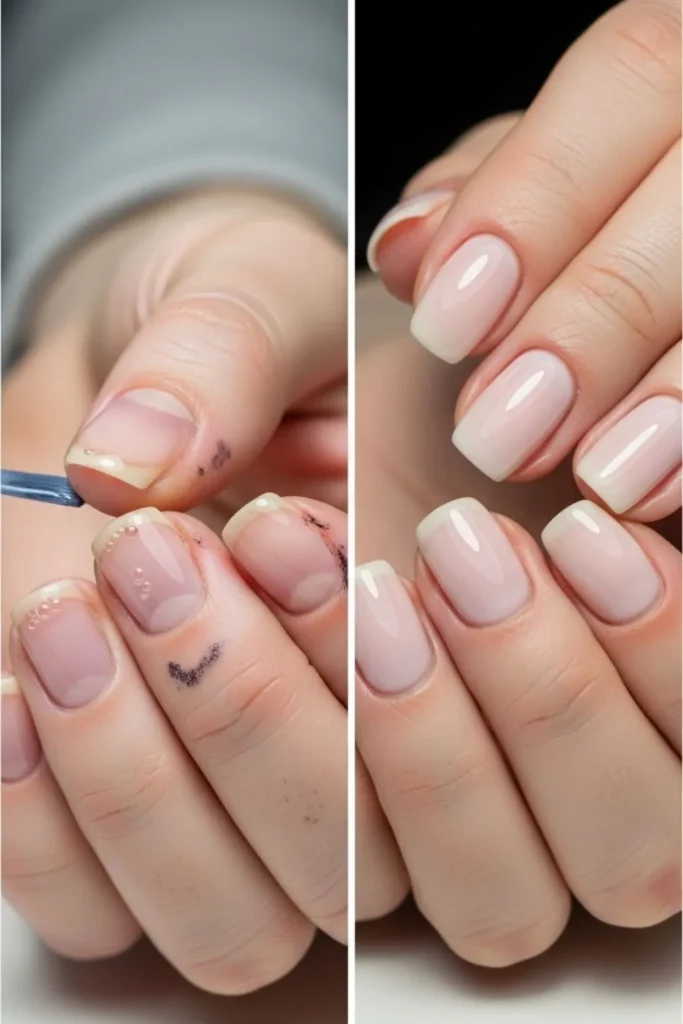
Your dominant hand looks worse because your non-dominant hand lacks the fine motor control and muscle memory that polish application requires. The same hand that struggles to write legibly or draw a straight line is being asked to execute precise brush strokes on a small, curved surface.
This isn’t a practice issue you can overcome in a few sessions it’s a fundamental coordination challenge that requires different strategies rather than just more attempts.
The mechanics of the problem are specific. Your non-dominant hand has less developed proprioception (awareness of where your hand is in space), weaker stabilization muscles, and slower reaction time for correcting mistakes.
When you paint with your dominant hand, you’re using muscle groups trained by decades of writing, eating, and detailed tasks. Your non-dominant hand is being asked to perform at a level it’s never reached in any other activity.
Strategic adaptation works better than fighting your hand’s limitations. Paint your dominant hand with simpler designs or more forgiving finishes if your non-dominant hand can execute a clean one-color manicure but struggles with nail art, do accent nails only on your non-dominant hand.
Alternatively, use your dominant hand’s imperfection as part of the aesthetic: slightly messier application can look intentionally casual and hand-done rather than amateur. The goal is results that look good, not proving you can achieve perfect symmetry through force of will.
How to Fix Mistakes Without Starting Over
Fix mistakes by letting polish dry completely, then using targeted removal and reapplication rather than wiping everything off. For small errors like polish on cuticles, the angled brush and acetone method removes only the mistake. For larger problems like smudges or dents, you can often smooth the area with a small brush loaded with fresh polish, feathering it into the existing layer once it’s fully dry.
The decision tree for fixes depends on when you notice the problem. Wet mistakes (flooded cuticles, polish on skin) are best left alone until dry trying to wipe them while wet spreads the problem and creates bald patches.
Semi-dry mistakes (smudges, dents) need to be either left to dry completely for sanding and recoating, or fixed immediately with a thick layer of top coat that can self-level over the imperfection. Dry mistakes (bubbles, thick areas, visible brush strokes) can be gently buffed with a fine-grit file and covered with fresh coats.
Complete removal and restart is actually rarely necessary. Most “ruined” manicures can be salvaged with localized fixes, especially if you’re willing to embrace slight imperfection. A dent on one nail can be turned into an intentional design element with a strategically placed sticker or rhinestone.
A flooded cuticle cleaned up with acetone leaves a clean edge even if the polish line isn’t perfectly uniform. The skill is recognizing which problems actually affect the overall appearance versus which ones you’re noticing only because you’re looking for flaws.
Tool Investment Guide: What Actually Matters
The tools that actually matter for beginner professional-looking nails are a good base coat, quality top coat, and cleanup brush; everything else has cheaper effective alternatives. Base coat prevents staining and creates adhesion that stops chipping.
The top coat provides the glossy finish and protection that signals “professional.” An angled cleanup brush gives you the precision that expensive application tools can’t match. These three items directly affect how your finished nails look and last.
Polish quality varies more within brands than between price points. Drugstore formulas can perform identically to salon brands, while expensive polishes sometimes have terrible brushes or streaky pigmentation.
The difference is usually formula consistency and brush quality rather than fundamental color payoff. Before investing in premium polish, master application with affordable options technique improvements show more than formula upgrades at the beginner stage.
Tools marketed specifically to beginners (nail stamp kits, dotting tool sets, detailed brush collections) often create more problems than they solve. A basic striping brush, single dotting tool, and nail tape will handle 90% of beginner designs.
The remaining 10% of specialized tools should be added only after you’ve exhausted what basic tools can do. Otherwise you’re collecting equipment for techniques you haven’t practiced enough to know if you’ll actually use regularly.
How to Make Polish Last Without Gel
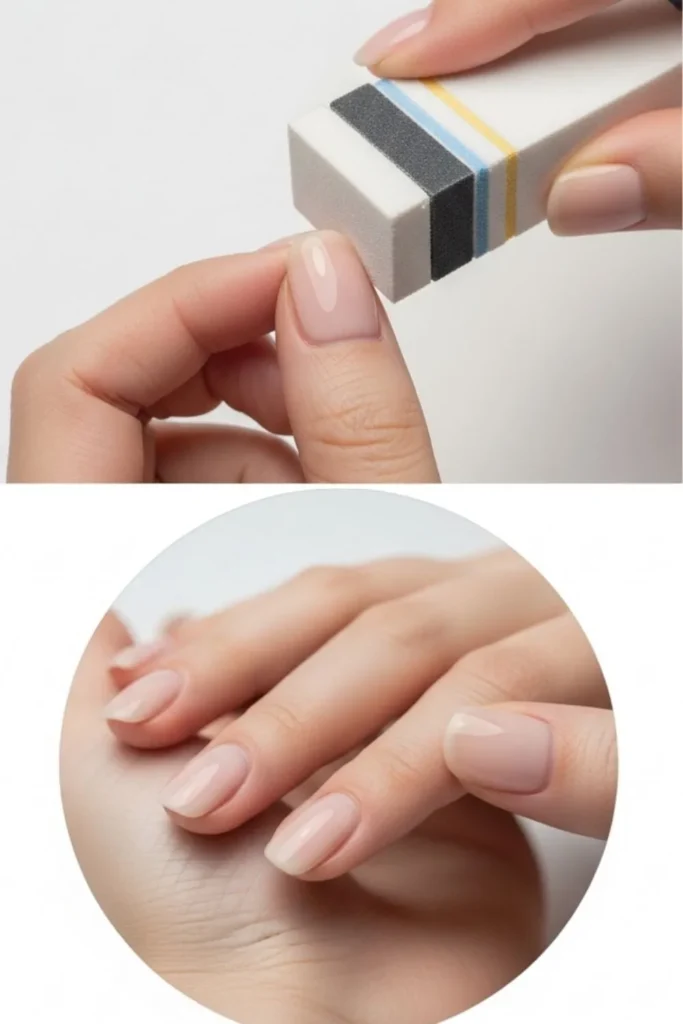
Make regular polish last by focusing on three things: thorough dehydration before application, thin coats throughout, and proper top coat application that caps the free edge.
Oil and moisture on the nail plate prevent adhesion wiping nails with rubbing alcohol or acetone immediately before the base coat removes the invisible barrier that causes premature chipping. This single step often doubles wear time.
Top coat application technique matters more than the specific product. Wrapping the free edge (brushing top coat under and over the nail tip) seals the most vulnerable area where chips start.
Applying the top coat 24 hours after the initial manicure and then every 2-3 days refreshes the protective layer and prevents wear. Most people apply a top coat once and expect it to last a week, when reapplication is what actually extends longevity.
Activities between applications affect durability more than formula quality. Hands in water for extended periods (dishes without gloves, long baths) cause polish to lift. Using nails as tools creates stress that even gel can’t withstand.
Applying lotion and cuticle oil after your manicure is complete helps, but applying them before polish is fully cured (24 hours for regular polish) softens the formula and reduces adhesion. The timing of your hand care routine determines whether it helps or hurts polish longevity.
FAQ’s
How can I stop polish from getting on my cuticles?
Use a thin nail brush or cleanup brush dipped in acetone to remove excess polish around the cuticles as you paint. You can also apply liquid latex or a peel-off barrier around the nail for cleaner, mess-free manicures at home.
Why does my polish chip within 24 hours?
Nail polish often chips fast because of oily nail beds, skipped base or top coat, or applying thick layers that don’t fully dry. Washing hands right before painting and sealing the nail edges can significantly extend wear.
What’s the easiest nail art for someone with shaky hands?
The easiest nail art for shaky hands is using nail stickers, decals, or press-on accents that don’t require precise drawing. Simple dot designs made with a toothpick are also beginner-friendly and forgiving.
How do I know when polish is actually dry enough to apply top coat?
Your polish is ready for top coat when it feels dry to the touch and no longer dents when lightly tapped with a fingertip. Waiting 2–3 minutes between thin layers helps prevent smudging and bubbling.
Can I make drugstore polish work as well as salon brands?
Yes, drugstore nail polish can last just as long as salon brands when you use proper nail prep, thin coats, and a high-quality top coat. Many affordable U.S. brands now offer long-wear formulas and rich color payoff.
Why do my nails look good at first but terrible the next day?
This usually happens because the polish wasn’t fully cured or sealed, causing dents, chips, and shrinkage overnight. Sleeping too soon after painting or skipping edge sealing can quickly ruin a fresh manicure.
Key Takeaways
- Professional-looking beginner nails rely on choosing forgiving techniques, colors, and tools that hide small mistakes rather than mastering advanced precision skills
- The cleanup method using an angled brush and acetone after polish dries transforms sloppy application into clean edges without starting over
- Texture-based finishes like matte, shimmer, and metallic formulas disguise application flaws that cream polishes expose
- Your non-dominant hand will always struggle with detailed work use simpler designs on your dominant hand or embrace slight asymmetry as intentionally casual
- Polish longevity comes from proper nail dehydration, thin coats, wrapping the free edge, and reapplying top coat every 2-3 days rather than formula price
Conclusion
Professional-looking nails as a beginner aren’t about eliminating mistakes they’re about choosing techniques where mistakes either don’t show or enhance the finished look. The gap between inspiration and execution closes when you understand which colors hide streaking, which designs work with shaky hands, and which tools compensate for inexperience.
Texture finishes, strategic cleanup methods, and forgiving shapes do more for your results than expensive polish or hours of practice with techniques that expose every wobble.
The shift from struggling amateur to confident beginner happens when you stop fighting your limitations and start working with them. Your non-dominant hand doesn’t need to match your dominant hand perfectly.
Your application doesn’t need to be flawless if your cleanup is thorough. Your designs don’t need complexity when a single well-placed accent creates the same polished impact. These 48 ideas give you specific starting points that look intentional and complete, building the muscle memory and confidence that eventually make harder techniques accessible.